

15 Things You Should Never Ask Alexa
We may receive a commission on purchases made from links.
Though it was not the first, Alexa is probably one of the best-known smart home assistants today. In the early days of these devices, the technology was novel, and our household had a lot of fun playing around with what Alexa could do. There are a lot of fun things to ask Alexa, like getting her to host a trivia game or tell you interesting facts about animals. Day to day, Alexa can also be great for things like answering simple queries you'd normally search for online, setting timers, or playing music.
When I met my first Alexa, I was impressed by everything the device could do. Now, Amazon models are a common household item. After all, it's one of the many smart home devices available on Amazon. But whether you call it Alexa, Computer, Echo, Ziggy, or something else, it turns out there are some things you really shouldn't trust your Amazon voice assistant with. Note that all of Amazon's voice assistant devices are named Echo. Here, we'll primarily use the Amazon-provided nickname Alexa, but the smart assistant also answers to Computer, Echo, and Ziggy, depending on your settings. Generally, we'll also refer to the voice assistant as "she."
Anything personal
After you have owned an Alexa device for a while, it might start to feel like a family member rather than a smart device. The problem with humanizing Alexa is that you really shouldn't share anything personal with your smart devices, because it could be used for unintended purposes.
Alexa is always listening, per Amazon's explanation of the technology. Amazon states that Alexa listens but like a sieve; everything passes through, and only the wake word activates her actual perception and thus recordings. Although we obviously want Alexa listening to take care of things like voice-activated automation sequences and answering our burning questions, it's clear that everything she hears after the wake word is recorded. Thus, you'll want to avoid telling her personal stuff that might be recorded in her memory bank.
Amazon states that your Alexa interactions are used to "train Amazon's machine learning models," among other things. Some of that training involves humans reviewing recordings, which doesn't sound as private as some of Amazon's other disclosures.
Emergency assistance

While Alexa can do many things, the voice assistant cannot dial 911. Fortunately, it is possible to get Alexa to make phone calls on your smartphone if you have the Alexa app and everything enabled. Thus, you could voice-command Alexa to call someone if you're having an emergency and can't reach the phone, the same as you could with other voice assistants. You can also use Alexa Drop In to make free phone calls from one Echo device to another if both the caller and receiver have drop in enabled.
However, on a standalone Echo device, you won't be able to dial 911. The only official way to get emergency help via an Echo device is with a paid subscription to Amazon's emergency assistance program. Alexa Emergency Assist allows Prime members to subscribe for $5.99 per month. Benefits include the ability to "reach urgent response professionals," notify specific emergency contacts, and share your personal information with emergency responders. Basically, you can ask Alexa for help, and she will connect you with an agent, similar to an emergency dispatcher, who will then contact emergency services.
Crime-related questions
Along the same lines as our list of things you shouldn't ask ChatGPT, you also should not ask Alexa or her brethren any kind of question that could land you in hot water legally. Questions related to criminal methods, legal statutes specific to certain crimes, or the kinds of things you might Google while writing a murder mystery novel are probably a big no-no for Alexa. But why?
Smart assistant technology is changing all the time, and laws often change, too. However, courts have set some precedents relating to the involvement of smart devices. The government seized an Echo as evidence in one court case while pursuing murder charges against the owner. The case also included subpoenaed data from the cloud connected to the Echo; Amazon resisted the request, however.
In the case of Echo devices, the recordings from your interactions with Alexa could, theoretically, be part of a court case should you end up involved in one, because law enforcement can ask for access. Unless you're actually a novelist or true crime podcaster — and even if you are — things could go south if questionable material is found in the cloud.
Legal queries
Even if you haven't committed a crime, asking Alexa for legal advice is not a great idea. If you have participated in illegal activities, it's possible that you could be compelled to provide smart device records in court. Also, if someone you know is involved in illegal activities, your smart device data could do things like identify suspects or victims, evaluate alibis for involved parties, and establish relationships between people who are recorded.
Another aspect of asking Alexa for legal advice is that you could get plain old bad advice. Generally speaking, if you're involved in a legal issue, you probably want a lawyer to help, especially if you're facing jail time. Just like Googling is not an ideal method for handling legal paperwork or determining a defense, neither is asking a voice assistant — especially because you can't quote Alexa while making your case in court.
Plus, in my experience, asking Alexa just about any question could lead to a random and not necessarily correct answer. In many of our household and just-for-fun queries, Alexa quotes its own Alexa Answers forums when providing an answer. That means it's a crowdsourced answer, and not necessarily one from a professional.
Money advice
When it comes to money, not everyone is well-versed in investing or the stock market. If you have questions about money, it might make sense to ask your internet-connected voice assistant to figure things out for you. However, just like you wouldn't ask Alexa for legal advice, you probably shouldn't trust her with your money, either.
In terms of accounts and access, you definitely shouldn't share your logins, balances, or other information with Alexa, and it's for a few different reasons. For one thing, Amazon saves your recorded data in the cloud, and its human workers may have access. Plus, Amazon uses its data for training and marketing purposes, stating that it "may use your interactions with Alexa to improve other Amazon products and services."
That's not to say Alexa will tell Amazon to start promoting more expensive products to you just because you told her how high your account balance is ... but thinking about the possibilities might be enough to warn you off sharing that kind of info with Alexa in the first place.
Password help
Passwords generally aren't fun, no matter what account you're trying to set up (or access). Asking Alexa for help coming up with passwords — or remembering your passwords — is not a good move. The primary reason for not trusting Alexa with your passwords is that Echo devices could be vulnerable to hackers.
Alexa could get hacked in a few different ways, but one is via the skills marketplace, according to the Information Security Institute at Johns Hopkins University. A group of cybersecurity students successfully released malicious skills to the Amazon Alexa store, which suggested that Amazon's security could use some work.
Beyond that potential security risk, there's always the possibility for devices (and cloud storage) to be hacked, which is why password apps exist. Fortunately, most smartphones and computers have built-in options for creating, saving, and protecting your passwords. To that end, you shouldn't need Alexa's advice on securing your accounts anyway.
To delete things
If you've used an Echo device voice assistant, you may have realized that Alexa is not always smart. Clearly, the technology is still evolving, because many times our Echo device has misheard us, mistakenly responded to a non-wake word, done tasks we didn't ask for, or said something totally off the wall in response to a reasonable question.
With that in mind, one thing I would absolutely not trust Alexa with is deleting anything. Especially since a lot of smart gadgets work with Alexa, there are connections between devices that could be disrupted if Alexa thinks you want her to remove connections or change settings.
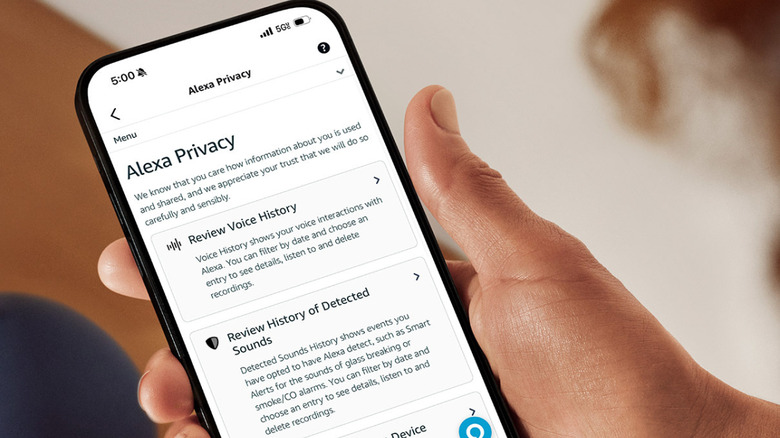
When it comes to deleting your Echo device's data — and yes, you can do that — you also don't want to trust Alexa with that task. Since she can't delete that stuff, you could wind up deleting other important things instead. To delete your device's saved data, you'll need to go to More > Alexa Privacy in the Alexa app, according to Amazon.
Specific dates or facts
Though Amazon does not seem to declare it explicitly, it is generally accepted that Echo devices use Bing as their go-to search engine. While Bing hasn't risen to the level of becoming a verb the way Google has, it's often referenced as the second-most-popular search engine.
In my experience, using Bing isn't necessarily a great thing for Alexa. I've asked what I thought were simple questions and gotten answers that were clearly not correct. For example, I might ask how many movies are in a multi-movie series (knowing the number is at least two), but Alexa responds that there's only one.
Plus, when asking Alexa questions, the answers often come back in the form of quotes from forums. Although the Alexa Answers program was intended to get better answers through crowdsourcing, I sometimes wish I could just get a summary of the top search results instead. All of that said, if you have a quick question to ask Alexa, don't fully rely on it being factual.
Info about public figures
Asking Alexa any question, in my experience, may be hit or miss. Even silly things, like how tall a celebrity is, won't get a reliable answer. When my son was building a 3D printed Iron Man suit, we went on a tangent of asking Alexa how tall various celebrities were (starting with Robert Downey Jr.). Sometimes we wouldn't get an answer at all, and other times we would get numbers that did not sound realistic — all ostensibly because Alexa was trolling forums for answers.
Sometimes Alexa misunderstands questions, and that's also a point of contention when it comes to getting information out of her. Apparently, other Alexa users have experienced the same phenomenon, with one Redditor complaining that, among other things, Alexa could not answer "basic topical news questions."
While other commenters shared similar experiences, some suggested that Echo users experiencing significant issues might have been part of the Alexa+ Early Access program without knowing (or understanding) it. Either way, it's evident that Alexa is not always reliable, even if you just want to know your favorite celebrity's height.
Add things to a grocery list
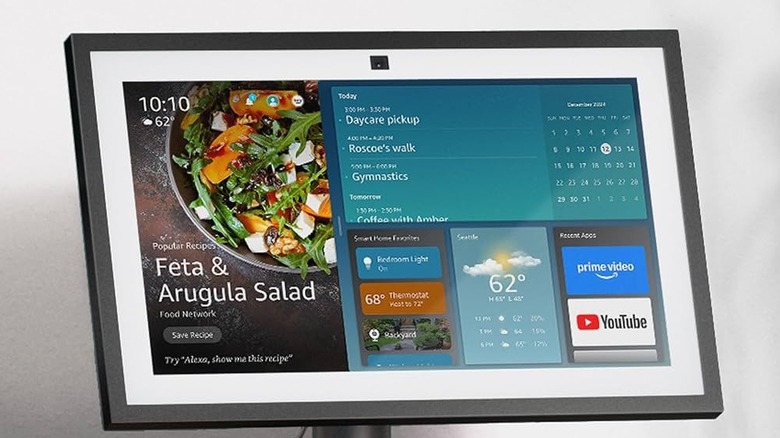
One thing that has always bothered me about my household Echo devices is that somehow, without me asking, they wind up making grocery lists. I've never used Alexa to make a list of any kind, and yet I once had a hundreds-item-long grocery list of items.
According to Amazon, of course, it's meant to be very easy to use Alexa to make a grocery list. You can ask what's on the list, clear the whole thing, and add items at any time. Because of past experiences, though, I don't recommend making grocery lists or shopping lists for Amazon with your smart assistant. Either she had a severe glitch, or Alexa misunderstood requests so many times that she thought we'd eaten ourselves out of house and home.
One caveat is that Alexa+ has more food features on the way, which could change the experience for consumers who have run into issues before. The Alexa+ features are said to include a conversational experience where Alexa will take dietary needs into consideration and create menus and shopping lists.
To order things on Amazon
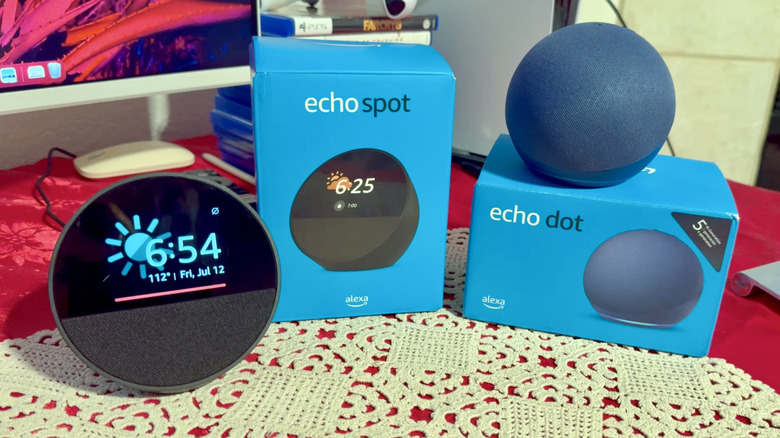
Although it wasn't advertised that way, I've always thought that Amazon's original intention with the Echo devices was to get people to order more things from Amazon. Our Echo Show will often display items from Amazon that I've browsed or suggest things it thinks I may like. If you dislike being advertised to on your social media feed based on what you've previously bought, an Alexa with a screen might not be the right fit for you, either.
I also remember searching for items on our Echo Spot at one point, where I had to swipe to see the results, thinking I may as well get out my phone and get on the Amazon app anyway. I prefer to read reviews (and the fine print) before buying something, so I'd never rely on Alexa's recommendations on what to buy.
I also don't love that Alexa will sometimes ask if I want to re-order things that I've previously purchased on Amazon — who needs to auto-ship socks every month?
How to translate words or phrases
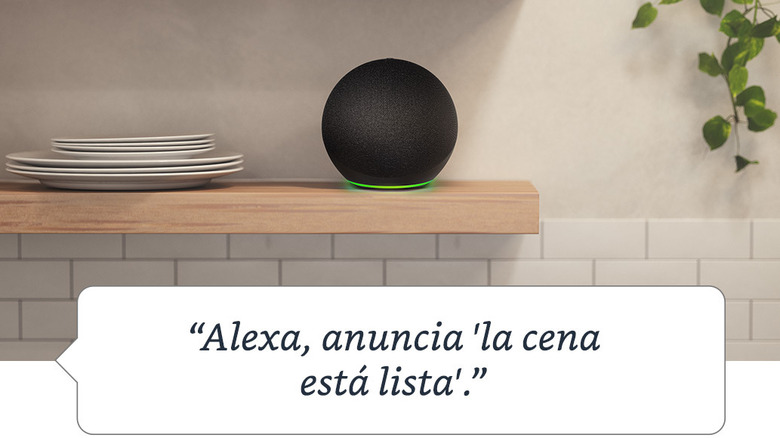
As a bilingual household, we rely on Alexa to understand both English and Spanish. Despite Alexa supporting Spanish for years (since 2019, in fact), our experience has been hit or miss. When using multilingual mode — which enables Alexa to detect what language you're speaking and respond in that language — she gets confused.
For example, when a Spanish-speaking family member asks for a particular Spanish-speaking radio station, Alexa says she can't find it or puts on the wrong station. When an English-speaking family member asks for it in English, she finds it. Sometimes, someone whose first language is not Spanish has to speak the Spanish phrase for her to understand. If Alexa can't understand people who speak Spanish as their first language, there is still work to be done on the back end.
Plus, Alexa often can't translate properly. As someone who's been learning Spanish for years, I realize there's a lot of nuance in language. Yet Alexa doesn't seem to have an expansive Spanish dictionary or the capacity to translate phrases as well as, say, Google Translate currently can.
Tell a joke
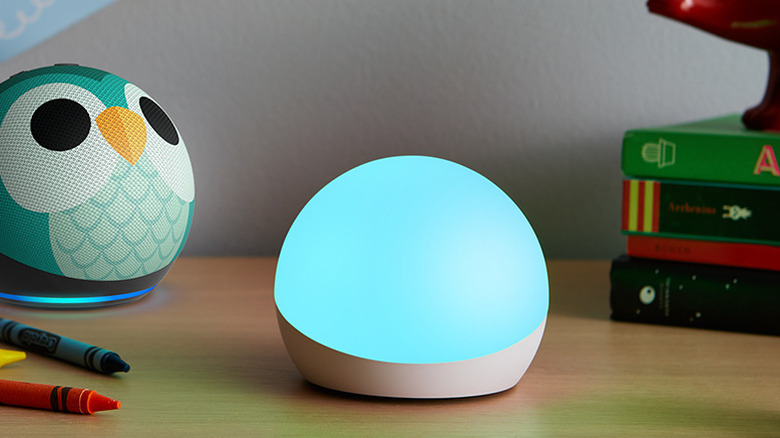
Though the Echo Dot has a lot of handy uses, Alexa's ability to tell a joke is not my favorite. I feel like I have probably heard every Alexa joke there is at this point, although maybe more are being added over time. The problem with our Alexa is that sometimes the jokes go over my kids' heads. Sometimes they make me a bit uncomfortable, like those 1990s-era, anything-goes jokes.
The solution might be a simple one for my family — never ask Alexa for a joke. But there is at least one other option if you want your device to be more kid-friendly. You can make any Echo device kid-friendly by enabling Amazon Kids on Alexa, with a ton of customization options to suit your child's needs.
It might be handy to limit your kid's Echo's volume, monitor their activity, and set daily time limits. However, the device is then kids-only and it's locked in, which isn't ideal for my family, where our Echo sits on a shelf in the kitchen and is used by the entire family.
Contact information
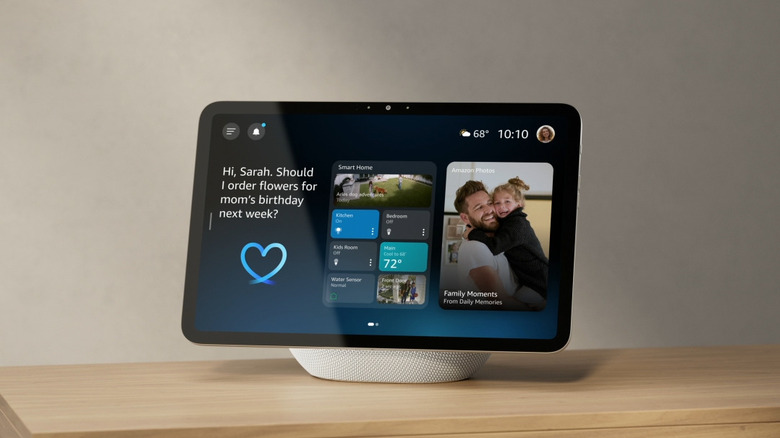
The same way that Alexa sometimes gets facts wrong when asked to search the internet for answers, she often relays incorrect contact information. In my experience, Alexa has not been reliable for providing phone numbers for businesses, working hours for specific business locations, or even weather for a specific city when given the city name.
Other Echo users on Reddit have had similar experiences, from getting inaccurate information to incorrect information for the wrong location. Given how many improvements have been made to Alexa over the years, it's disappointing that so many basic things don't work properly. Especially since there are over 130,000 skills available for Alexa, I generally expect more from the "smart" device.
As far as reliability, whether you need contact info or something else, Alexa seems to get mixed reviews from users. The contact information, in particular, is something I would expect to be more consistent if Alexa used a different search engine (since Google hosts business listings), but maybe that's too grand a wish.
Medical stuff
Similar to criminal and legal issues, it's probably best not to trust Alexa to save your life if it comes down to it. Alexa cannot get you emergency help (without a subscription), and although she will keep cool in an emergency, it's probably not ideal to rely on her to walk you through CPR or how to stop an injury from bleeding.
Not only should you never ask Alexa for medical advice or treatment solutions, you should also be aware that she can go off the rails sometimes. An Alexa gone bad is just one of many scary cases of technology going evil, with one family saying that their voice assistant told a child to harm themselves, including step-by-step instructions.
I also have learned not to trust Alexa on allergies and what you should or shouldn't eat. For example, you wouldn't want to trust Alexa to tell you whether a certain food has gluten in it, because she can't read a label. Besides, the information she quotes could have come from an unreliable source. Also, I've asked whether certain foods are safe for our guinea pigs before, and when I do a follow-up Google search, she's completely wrong or otherwise misinformed. In general, it's probably best to do your own research on health information, and let Alexa handle things like your playlist or kitchen timer.