

Nikon Zr Review: Can RED DNA Make Hollywood Quality Affordable At Last?
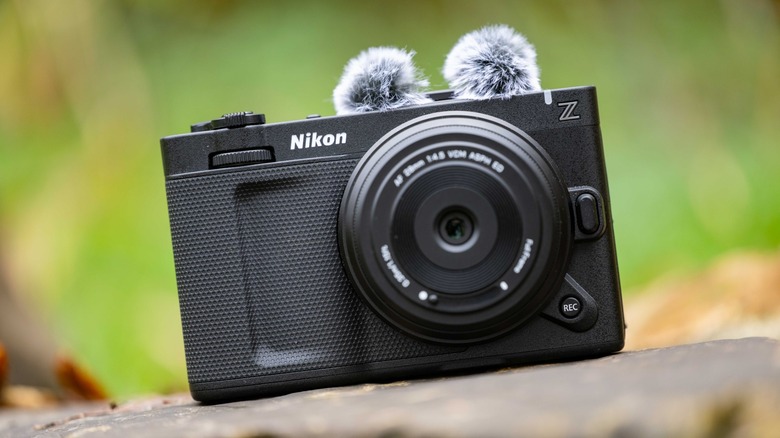
While Nikon cameras have long been my personal go-to solution for video creation as well as still photography, the Nikon Zr is the first real "cinema camera" the brand has produced. The definition of a "cinema camera" is somewhat vague, and it is a topic of some disagreement whether the Zr is one or not, but there's no question that the Nikon Zr is an impressive camera for video creators, at least on paper.
The Zr is the product of Nikon's acquisition of RED, a cinema camera brand, the products of which have been responsible for the recording of many Hollywood films over the years. Their cameras are notoriously expensive and deliver famously great results. In theory, the Nikon Zr is supposed to bring that film-industry DNA and distill it into a relatively compact and affordable camera. To what extent it accomplishes this is the question, and it is a topic on which the photographic community seems somewhat split on.
There's a few features in this camera that have me really excited, so I decided to buy one for myself. I spent the past month putting it through the paces to see if that money was well spent.
Video/image quality
With a full frame sensor and the capability to shoot at up to 6K 60fps (even in RAW formats), the Nikon Zr delivers gorgeous video quality. I've shot a lot of video over the years on Nikon cameras, and the Zr certainly lives up to the level of quality I've come to expect. Thanks to dual-base ISOs, you can achieve clean results in many different lighting scenarios, and the camera offers great dynamic range and color rendering.
 Andy Zahn/SlashGear
 Andy Zahn/SlashGear
 Andy Zahn/SlashGear
While 4K 120fps slow motion is available, it does involve a serious 1.6X crop factor, which is unfortunate, though I do appreciate that the Zr allows you to go as high as 240fps slow motion if you drop down to 1080p. By contrast, the Nikon Z8 can shoot 4K 120fps with the full sensor, but it can't do 240fps at any resolution.
 Andy Zahn/SlashGear
 Andy Zahn/SlashGear
 Andy Zahn/SlashGear
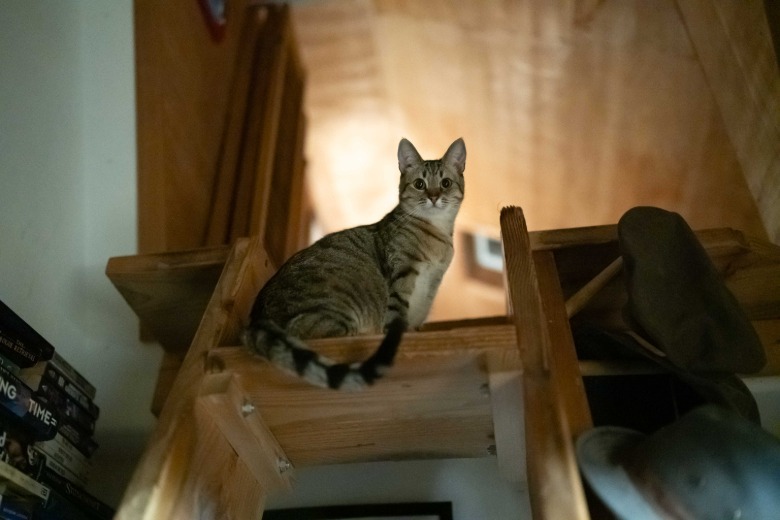
For still photography, the Nikon Zr is clearly a little barebones, but it gets the job done by rendering very nice 24.5MP images. I captured a fair number of stills in my time testing the camera, and was quite happy with the results.
Codecs and software
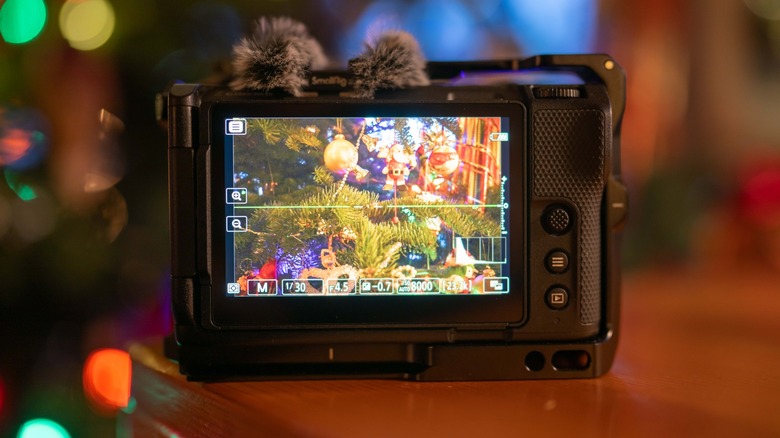
A big part of the appeal of the Nikon Zr is its capability to shoot in REDCODE RAW format, as well as Nikon's own RAW video format. You can also shoot using RED picture profiles when filming in the less demanding H.265 format. This gives you a lot of flexibility when editing your footage, and if you're shooting with a high end RED cinema camera it's much easier to match the look of your footage if you're using the Zr as a B-cam.
The software of the Zr will be familiar to anyone who has been shooting using Nikon's mirrorless cameras, though due to the relative lack of physical controls I did find myself hunting through menus more than with the Nikon Z8 or Z9. Nikon's mobile Snapbridge app is compatible with the Zr, and offers a great route for upgrading firmware, downloading footage, and controlling the camera remotely.
Flexible and compact design
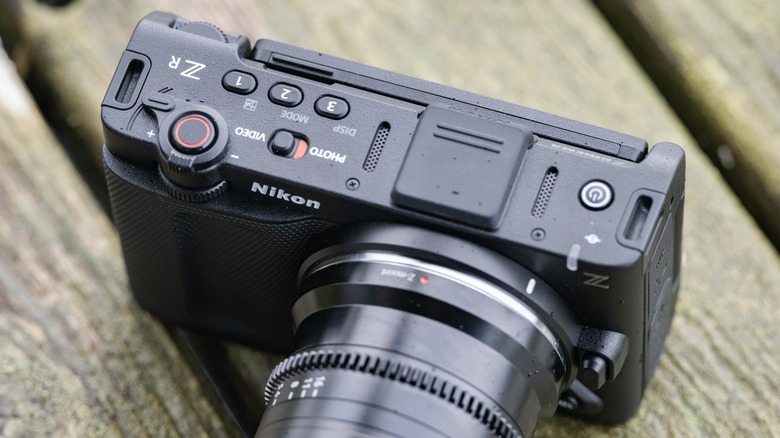
As much as I love large, bulky cameras, there's certainly something to be said for the compact and lightweight design of the Zr. It's closer to the form factor of the Nikon Zf, though unlike the Zf, the Zr lacks a viewfinder. This makes the Zr both an excellent option for when you want to carry less gear, and a great base to which to add various accessories and build out into an advanced cinema rig.
 Andy Zahn/SlashGear
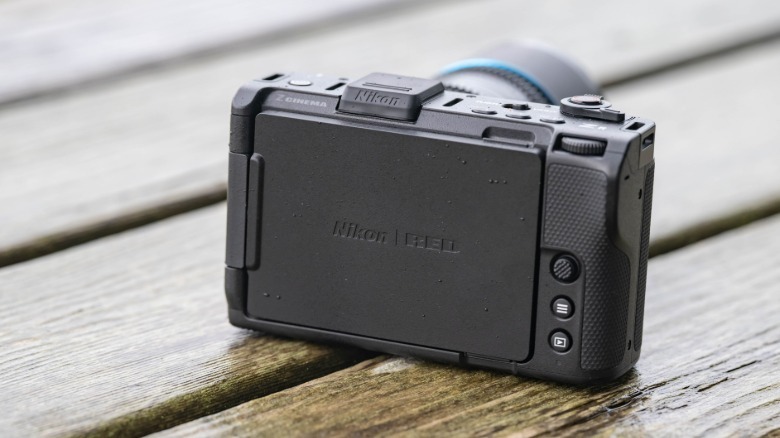
While the grip is slim, I still found it surprisingly comfortable and secure. Controls are somewhat minimalist (I'd like a few more buttons, dials, and switches), but they get the job done. The zoom rocker makes up for any deficiencies in this regard, as in addition to compatibility with power zoom lenses, it enables the user to quickly check focus by digitally zooming into your image, even while recording. I wish all Nikon cameras were equipped with this feature, even those primarily intended for still photography.
Port selection is adequate, but could be better. There's headphone/microphone jacks, as well as USB-C, but unfortunately Nikon opted for a Micro-HDMI port, which is fragile and unreliable compared to a full size port. The material Nikon uses for these port covers tends to warp and degrade quickly, unless covered by a protective 3rd-party skin. The camera is water and dust resistant, which I certainly appreciated while recording crashing waves and enduring the heavy, persistent rain of a Pacific Northwest winter.
Display, storage, and battery
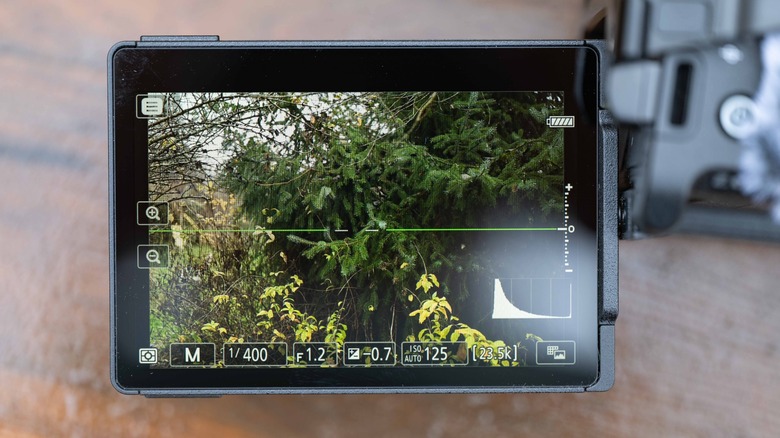
The gigantic 4-inch fully articulating touchscreen display of the Nikon Zr is of immense value to video creators. It's extremely bright, and is of such quality that many videographers will likely not need to attach an external monitor. Being able to flip it around to face the front of the camera is a major benefit over the less flexible Nikon screens which I'm more used to. Battery life seems to be very good, with the camera lasting the duration of a 3 hour shoot where I was intermittently recording clips.
For storage, the Zr accepts CFExpress Type-B, as well as MicroSD cards. While the MicroSD storage is limited in what can be recorded to it, it's a great option as a backup in case of emergencies (such as forgetting to put a CFExpress card in the camera), and I intend to put a 1TB MicroSD card in there for that very purpose. However, I do very much wish that it was possible for the camera to automatically backup or transfer data from the CFExpress card to the MicroSD, and thereby either ensure your footage is protected, or enable you to capture more without having to change cards.
The first camera to feature internal 32-bit Float audio recording
While there's a lot of different factors which add up in favor of the Nikon Zr, it's the camera's internal audio recording capabilities which really sold me on it. I film a lot of videos where I'm talking to the camera in a lot of different scenarios, and often I don't have much time to spare for dealing with the extra workflow steps involved with shooting with an off-camera microphone. In fact, I will often use the onboard microphones of a camera. When I learned that the Nikon Zr would be the first camera to feature fully internal 32-bit float recording, among other impressive audio features, I got excited.
Think of 32-bit float as essentially RAW photo/video capture, but for audio. It means that you have a lot more leeway in which to rescue audio after it is captured. For example, if my audio is too soft or too loud, it's easy to fix it without any awful artifacts. To me, 32-bit float is an essential feature. I also love the fact that Nikon put actually decent microphones in the Zr, so an external microphone is much more optional than with other cameras. There are even internal tools to choose the direction which these microphones record, from a more focused pattern, to binaural recording.
Audio accessories
That all sounds great, and of course you can still plug in an external mic and still use that 32-bit float recording. I shot with an external Sennheiser mic for one video shoot, because I needed the more focused pattern of a shotgun mic. You can also pick up the new Nikon ME-D10 shotgun mic, which I unfortunately did not have on-hand to test. The ME-D10 records audio directly through the digital connection of the Nikon Zr hotshoe, so you don't need to go through the onboard mic jack on the camera, reducing the number of cables you have hanging off the camera.
 Andy Zahn/SlashGear
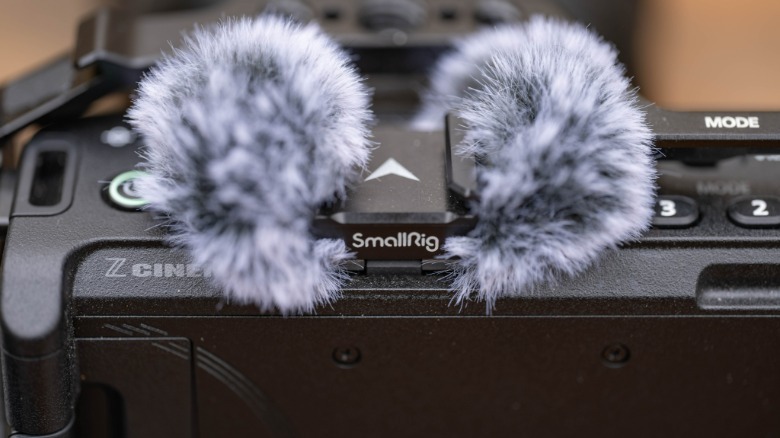
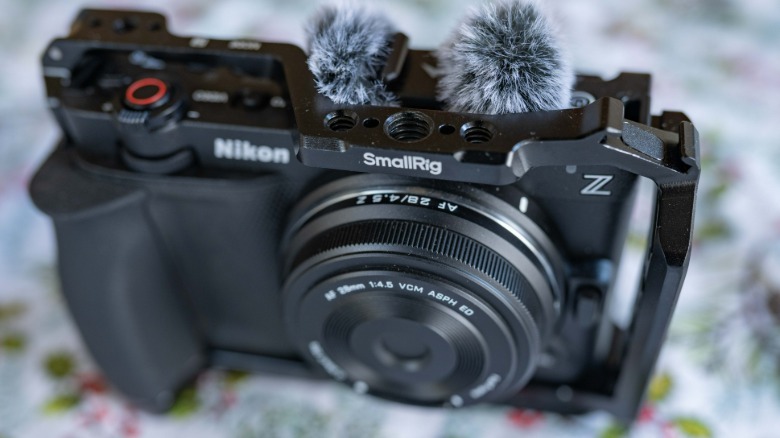
Regarding the internal mics, their Achilles Heel is a definite susceptibility to wind, so a 3rd party windscreen (also known as a "Deadcat"), is highly advisable. I tested the Zr with SmallRig's windshield, which attaches to the hotshoe and covers both microphone grills with a fuzzy "Deadcat". It works great, and it basically lives on my camera now. If I put googly eyes on the front of the camera, it would look as if the windscreens were big bushy eyebrows. It's only $10 on SmallRig's online store.
SmallRig's camera cage kit is also a smart add-on
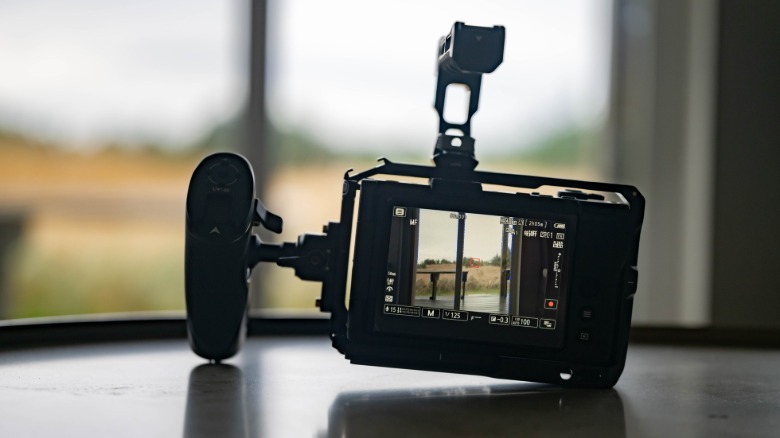
I knew from the moment I first saw the news announcing the launch of the Nikon Zr that this would be a camera which would greatly benefit from certain accessories. The svelte body of the Zr is great in many scenarios, but there are key upgrades which add-ons can offer. SmallRig was kind enough to send along their new Nikon Zr camera cage kit to test, as well as the wind muff for the internal microphone of the Zr.
 Andy Zahn/SlashGear
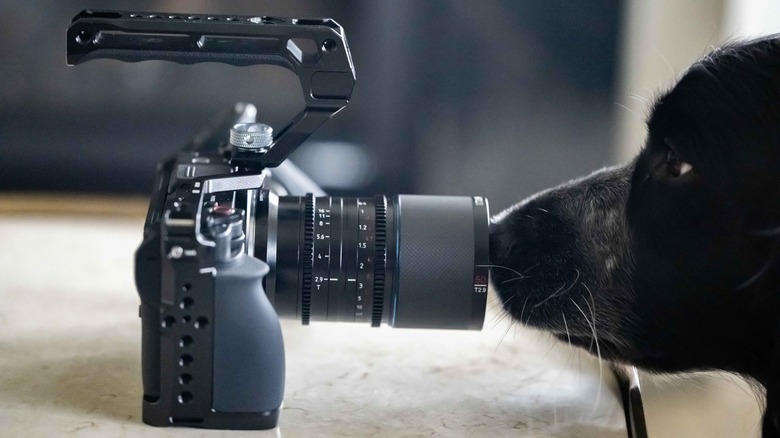
The camera cage features both numerous additional mounting points, an integrated Arca-Swiss compatible plate, and a magnetic screw driver tool which attaches to the underside of the cage in its own slot. The kit I tested also includes a top handle, side handle, and a locking mechanism to keep cables securely attached to the onboard ports of the Zr. It also importantly adds a large grip to the Zr, making the camera much more secure and comfortable to hold. The cage is lightweight and strong, providing much-needed protection for the camera from bumps and scrapes. I've had a similar cage on my
Anamorphic lenses and needed firmware updates
I love filming with Anamorphic lenses. They deliver really striking results with effects which have long been associated with feature films. I had the opportunity back in 2024 to test and review Viltrox's EPIC line of anamorphic lenses, which delivered truly gorgeous results. With an eye to replicating that to some degree, I recently decided to pick up one of my own, the Sirui Saturn 50mm T2.9. This is a wonderful little lens. It's extremely compact and lightweight, being partially composed of carbon fiber, and it's perfectly suited to use with the Nikon Zr, except for the fact that the camera is missing a few crucial features.
 Andy Zahn/SlashGear
 Andy Zahn/SlashGear
 Andy Zahn/SlashGear
Two things I most want to see added to the Nikon Zr in future firmware updates are the ability to de-squeeze anamorphic footage in camera, and to do open gate recording (video captured using the full camera sensor), which is the optimal method for capturing anamorphic video.
Other useful upgrades which could potentially be delivered by firmware updates include true 24p recording, and improvements to H.265 codec capture. There's definitely signs that the Zr is a first generation product, and that Nikon is still figuring out how to make a video-first camera.
The Viltrox AF 28mm f4.5 pairs well with the Zr
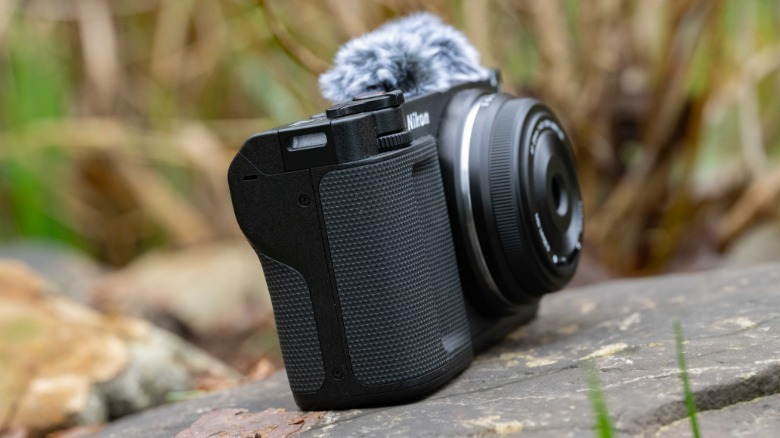
Viltrox kindly provided their rather unique AF 28mm f4.5 lens to use with the Nikon Zr, and together they make a rather exciting hyper-compact full-frame setup. This lens is called the "chip" lens for a reason; it's not much larger than a body cap, and can in fact be used as such. It's so thin and light that it barely affects the weight or profile of the camera, making it ideal for when you desire a minimalist rig that's inconspicuous and easy to carry, and which is easy to fly on even relatively small gimbals or large drones. I love its built-in switch-operated lens shutter, which means you don't have to deal with a detachable lens cap. The incredible thing is that Viltrox has built autofocus into this tiny little lens, which greatly expands its usability.
 Andy Zahn/SlashGear
 Andy Zahn/SlashGear
In terms of image quality, while the far corners are a bit soft and there's definitely vignetting present, it's still quite sharp, and looks great when you add extra contrast in post production. That corner sharpness and vignetting also isn't as apparent when shooting video, further improving the appeal of the Viltrox AF 28mm f4.5 as an ideal lens to use with the Zr. A few quirks to keep in mind are that this lens has a fixed f4.5 aperture, and is autofocus-only.
 Andy Zahn/SlashGear
 Andy Zahn/SlashGear
 Andy Zahn/SlashGear
What really makes this a must-have lens for Nikon Zr shooters is the fact that the Viltrox AF 28mm f4.5 only costs $99. That's about what you are likely to pay for a memory card for the Zr, and it really puts all the eccentricities of this lens in perspective. There's really no reason not to have it in your kit.
An ultra-compact camera that's perfect for content creators
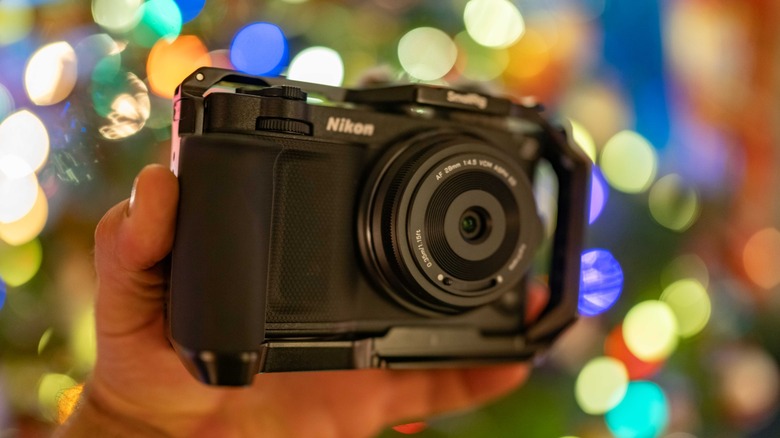
It's important to consider different use cases for the Zr in order to get a good idea of whether it's right for you, and that's why I chose to focus on testing the Zr with small, light, and relatively inexpensive lenses such as the Viltrox AF 28mm f4.5 and the Sirui Saturn 50mm T2.9. With the miniscule Viltrox lens, the Zr is well placed to function as an incredibly capable camera to document travel while not taking up much room in your bag. It's also an obvious first choice for any content creator looking to film themselves out and about, and I could even see more serious professionals reaching for this when they're shooting with big cinema rigs, but want something to easily shoot behind the scenes content.
 Andy Zahn/SlashGear
Nikon does have a full frame Z mount pancake lens of their own in the Nikkor Z 26mm f2.8, but that will set you back $446, more than 4X what the Viltrox alternative costs. Regardless which you choose, I do certainly suggest picking up at least one very small and light lens to use with the camera and fully take advantage of the form factor.
 Andy Zahn/SlashGear
I intentionally chose to test the Zr with the most compact and affordable lenses possible, because given the way this camera is designed and the way it is priced, I suspect it will be very attractive to people on limited budgets looking to get into more serious video work. The lenses which I have focused on represent extremely budget-friendly options which are also nice enough that they likely won't be gathering dust further down your journey as a creator.
Native Nikkor lenses and adapted glass
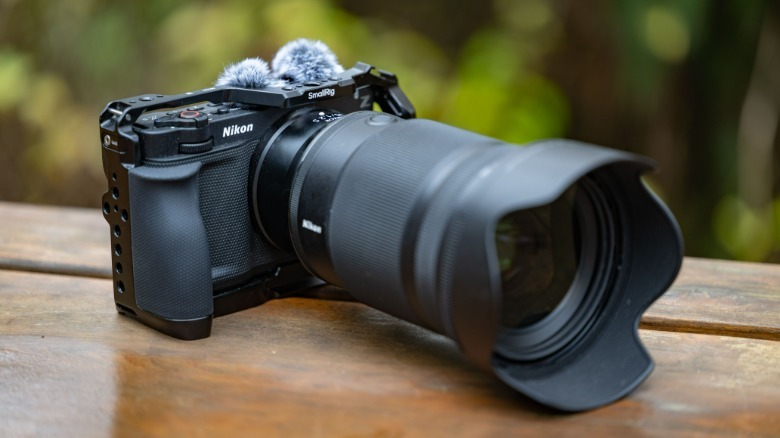
We can't wrap things up without talking about the Z mount and Nikon's own lens options. Most of my own Nikon lenses are certainly on the larger side, but smaller, lighter options such as the Nikkor Z 26mm f2.8 are available. I particularly enjoyed filming with the gigantic and glorious Nikkor Z 35mm f1.2 S, but the more flexible Nikkor Z 24-120mm f4 S was great for when I needed something more flexible. Nikon also makes a 28-135mm f4 power zoom lens, which is a very compelling option due to the fact that it's intended to be used for video work, and the Zr's zoom rocker can be used to control that power zoom.
 Andy Zahn/SlashGear
Thanks to the nature of the Z mount, it's also easy to adapt lenses to it, from vintage and DSLR glass, to modern mirrorless lenses from other manufacturers such as Sony. That cross-platform compatibility is something I value highly, since I enjoy shooting with quirky retro gear, and it makes the switch to Nikon from a different system a much smoother and less expensive transition.
 Andy Zahn/SlashGear
 Andy Zahn/SlashGear
 Andy Zahn/SlashGear
Autofocus and the in-body image stabilization both work great in the Zr. It seems very comparable to what I see from my Nikon Z8 and Z9, which is impressive in such a small and lightweight camera.
A price that won't break the bank
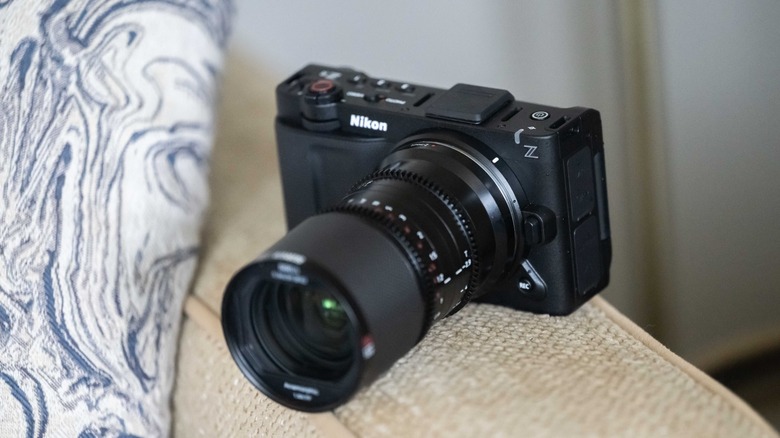
The Nikon Zr is very attractively priced. At $2199, it's the same price as the Nikon Zf was at launch, which in many ways is the photo-first counterpart to the Zr. These two cameras are two sides of the same coin; the Zf is capable of recording great video footage despite its focus on stills, while the Zr can capture beautiful still images despite its focus on video. They also share a similar form factor, though the control schemes involved could not be more different.
It's also worth mentioning the Nikon Z8 here, as that camera shares and even exceeds a number of the Zr's video capture capabilities, as it can capture 8K RAW video at up to 60fps, and 4K 120fps slow motion using the full sensor. However, it lacks the 32-bit internal audio and REDCODE RAW capability, among other features. The Z8 is considerably more expensive than the Zr at $3,499 at time of writing, and considerably larger than the Zr as well.
The Sony Fx3 is an obvious comparison to the Nikon Zr, but despite offering some advantages, it costs around $4000, and falls behind the Zr in a number of key regards such as maximum resolution, available codecs, and internal audio recording.
Conclusion
Thanks to its impressive feature set, reasonable price, and small, lightweight design, the Nikon Zr should appeal to a wide range of video creators with different needs. Whether you're looking to upgrade your setup to something capable of doing real professional work, or are a professional in need of a secondary or backup camera, the Nikon Zr is a deeply compelling option. It's ideal as a standalone videography rig, or as part of a multicamera setup.
I put this camera to the test in real-world professional scenarios, and was delighted by the results I achieved using it. It's also great to see so many excellent 3rd party accessories and lenses already available for the Zr from companies such as Viltrox, Smallrig, and Sirui. If you're looking for a video-first content creation powerhouse, then the Nikon Zr is well worth considering.
The Nikon Zr is available now for $2196 from B&H online.