

I Review Tablets For A Living: Here Are My Top 5 All-Time Favorites

Tablets aren't (and probably never will be) as popular as smartphones — after all, they're not as portable and pocketable. However, they're pretty great devices in their own niche, and those who find a particular use for these gadgets often consider them an indispensable part of their kit.
Apple popularized the tablet when it launched the iPad in 2010, although the idea of this form factor has been around for much longer. In fact, although the iPad launched some three years after Steve Jobs announced the iPhone, it actually predated the smartphone. "I actually started on the tablet first," the Apple founder said. "I had this idea of being able to get rid of the keyboard and type on a multitouch display." But when the company finally finished working on the touchscreen for the iPad, he realized that it was better suited for a phone. "I thought, 'Oh my God, we can build a phone out of this,'" Jobs said. "And I put the tablet project on the shelf, because the phone was more important."
What Jobs said rang true for me, and I didn't appreciate tablets that much even though I received my first device way back in 2011 and have owned one continuously since 2019. But it wasn't until I reviewed a particular unit this year that I truly realized how useful they were to me. That said, I've been reviewing tablets for several years now ever since I started working as a tech journalist, and after owning a few and checking out several more tablets, I can say that these are my all-time favorites — at least until a better one comes my way.
RedMagic Astra
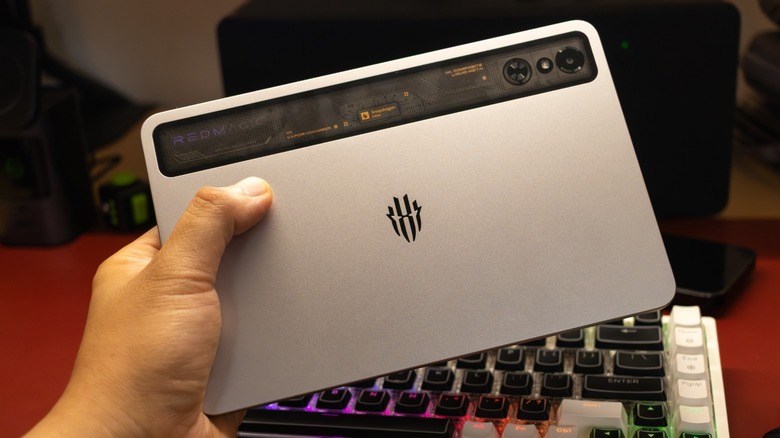
I've always thought of tablets as a niche gadget that didn't really have a place in my day-to-day life as a tech journalist. Sure, I have a 13-inch iPad Air that serves as a secondary display for my MacBook Air and as a backup device where I can do my writing if I don't have my laptop with me, but that's about it. I also preferred tablets over 12 inches, so smaller options like the 11-inch iPad or iPad mini never appealed to me.
However, this changed when I reviewed the RedMagic Astra — I found the 9-inch screen to be the perfect size because I can easily carry it around in my bag without weighing me down too much. It's also much easier for me to use for gaming and consuming media at home, especially as I can securely hold it with just one hand. The 9-inch screen size is also perfect for reading, as its lighter weight and smaller size make it more comfortable to hold during long reading sessions. I still miss the extra space that my iPad Air gives me for productivity, but I'd rather use my laptop for that purpose.
Aside from its more compact form factor, I love the Astra's OLED screen, its long battery life, and the high-performance Snapdragon 8 Elite chip that powers the entire system. I'm a bit disappointed with its built-in speakers because, even though they're loud, they don't have the quality that iPads (and even iPhones) deliver. But that's not a dealbreaker, as it doesn't take away from the overall gaming and entertainment experience.
iPad Pro (12.9-inch)
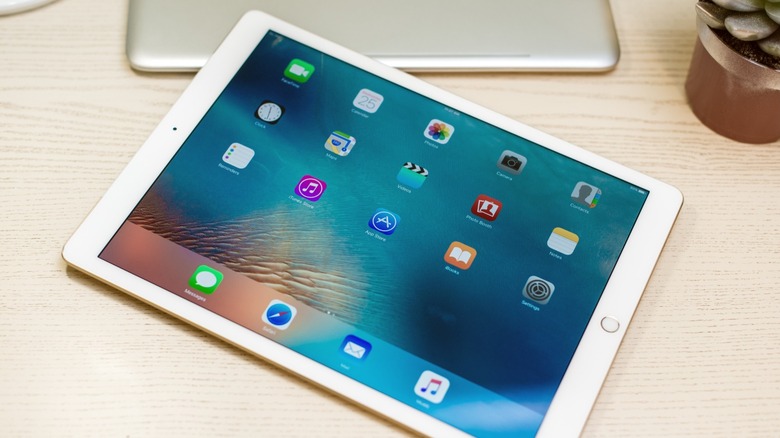
As I mentioned earlier, I find tablets with small screens more difficult to use for productivity, which is why I was ecstatic when Apple finally launched the 12.9-inch iPad Pro in 2015. The larger display on this model allowed users to make the most of its improved hardware, and the release of the Apple Pencil alongside it meant that you could use it like a notebook for taking notes and making sketches. This move was actually controversial because Jobs famously hated the stylus. Nevertheless, the Apple Pencil proved successful, especially as Apple has since made a version of it for most iPad models available today.
Apple eventually released an iPad Pro with an Apple M-series chipset, giving it hardware powerful enough to run advanced and demanding apps and games. Beyond that, its screen grew to 13 inches, giving it a similar footprint to the MacBook Air. Unfortunately, iPadOS held it back for the longest time, and even though iPadOS 26 has started to make these tablets more of a MacBook alternative, it still does not offer a true laptop experience.
Nevertheless, the 13-inch iPad Pro is a great tablet, especially for creative work. Its large screen and the accompanying Apple Pencil make it ideal for drawing, touching up photos, and even editing videos. It's also available with larger storage capacities — up to 2TB — so you can keep more files on the device without worrying about running out of space or needing external storage. If not for the nerfed operating system, limited number of ports, and high price, the iPad Pro could arguably be the perfect tablet you can buy today.
Asus Transformer Pad TF300T
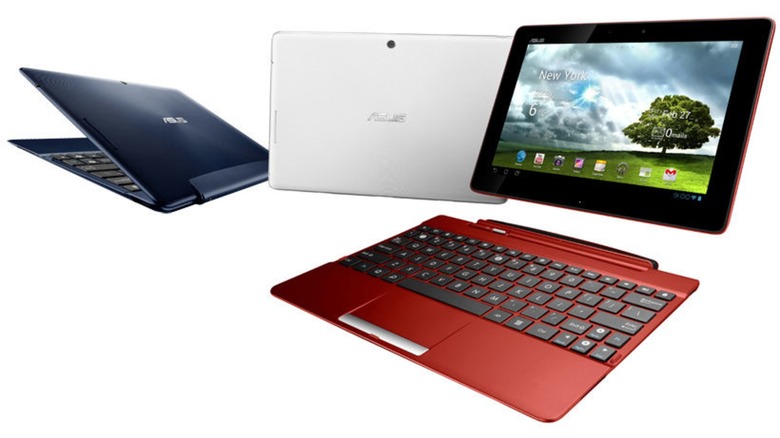
Tablets are designed for use with your hands, but it's still much faster to type on a physical keyboard, where you can feel the placement of each key, than to write with the on-screen keyboard, stylus, or your finger. So, in 2012, I pestered my parents to buy me the Asus Transformer Pad TF300T. I loved this gadget because it came with an optional keyboard dock that transformed it into a laptop or netbook. The dock included a full-size SD card slot and a USB-A port, as well as a touchpad, and the tablet featured a micro-HDMI port, microSD slot, and a 3.5mm headphone jack.
This made the Asus Transformer Pad great for basic typing jobs and online browsing, and all the ports made it easy to add peripherals to the tablet and use it as a light laptop replacement. I could easily expand storage with the microSD slot, read photos from my camera using the SD card slot on the dock, and plug in a hub to attach accessories like a mouse or an external hard drive. And if I wanted to use the tablet with a larger screen like a TV or monitor, I could easily do so with the micro-HDMI port.
Unfortunately, the Asus Transformer Pad line did not pan out, with the last model being released in 2014. It wasn't as powerful as a proper laptop, and there were only a few apps specifically designed for tablet use. Nevertheless, it was ahead of its time, with Apple releasing the Magic Keyboard for the iPad Pro — an accessory that essentially turned the tablet into a laptop — six years after Asus ended the Transformer Pad line of Android tablets.
iPad Air (13-inch)
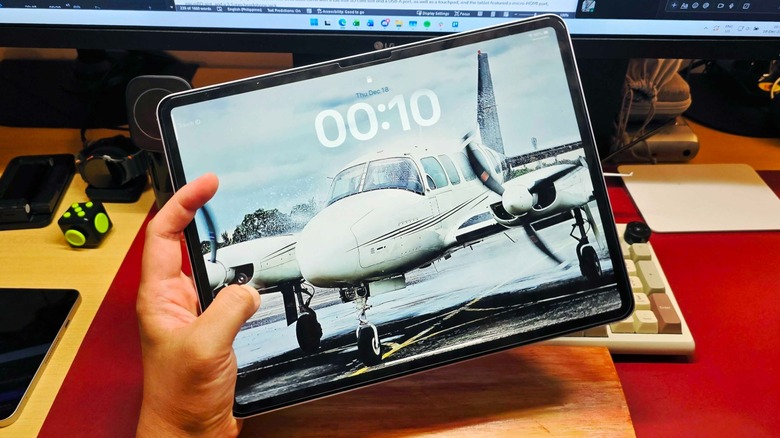
I've always wanted the 13-inch iPad Pro, but given that I do not need the performance it offers, I cannot justify spending at least $1,299 on it. So, when Apple launched the 13-inch iPad Air in 2024, I immediately bought one because it cost $500 less than the Pro version while still giving me the larger display. While there are other large tablets out there, the reason I picked the iPad Air is how well it works with other Apple devices. In fact, I primarily bought this tablet because of its Sidecar feature, which allows me to use it as a secondary display for my MacBook Air alongside my portable monitor — giving me a triple-monitor setup wherever I go.
Despite its limited software, I can still use the iPad Air as a viable alternative to my MacBook Air — at least for light tasks like writing and editing photos on the go with Adobe Lightroom. I even wirelessly pair it with my camera when I shoot in the studio to check for sharpness, especially since its larger display (compared to the camera's tiny screen) is perfect for scrutinizing images.
The larger display is also great for watching movies or playing some of the top-rated iPad games when I'm traveling and sharing the screen with my wife, especially on long flights on budget airlines. I also use it for taking notes during face-to-face meetings, as it's less bulky than my laptop, especially when I detach it from the Magic Keyboard I use for typing.
Microsoft Surface Pro
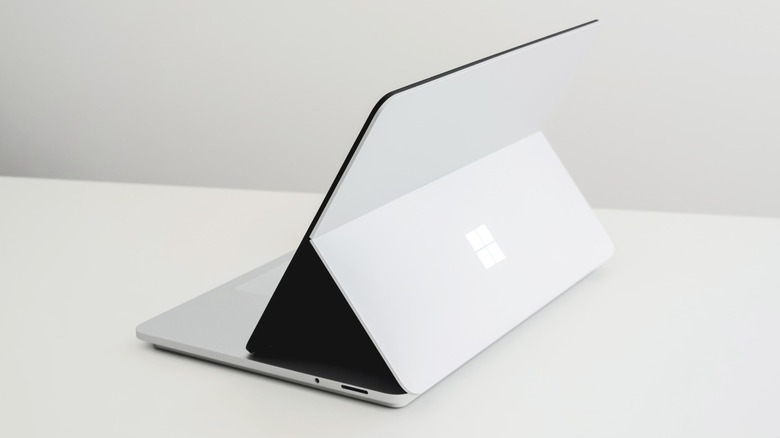
Many people equate tablets with iPadOS or Android, but Microsoft predated both of these operating systems by introducing Windows for Pen Computing 1.0 in 1991, which was designed to make Windows usable with a stylus instead of a keyboard and mouse. By 2003, it released Windows XP Tablet Edition; however, it didn't catch on because the devices were heavy, expensive, and mostly designed for enterprise use.
Microsoft went through many iterations of the Surface Pro, but the modern versions are what I appreciate the most. They give Windows users a sleek form factor comparable to the iPad while still offering the operating system they're familiar with. The latest Surface Pro models have switched from Intel to Qualcomm Snapdragon X Elite SoCs, resulting in much better battery life than what we're used to with traditional Windows PCs.
These tablets may not be suitable for intensive computing, but they're good enough for most productivity tasks without forcing users to change their workflow, especially if they're already comfortable with Windows. You can also use them for some light gaming, but if you want something more robust that can handle demanding games while retaining a tablet form factor, you should look at the Asus ROG Flow Z13, which offers higher performance and can even connect to an external GPU. Incidentally, it also ranks among my top tablets, tying with the Microsoft Surface Pro.