

5 Reasons Your Dashboard's Red Brake Light Is Coming On
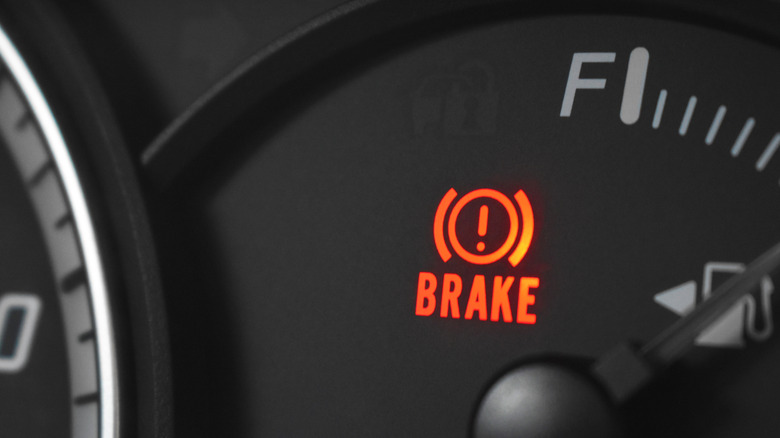
Imagine getting up in the morning for that road trip that you have planned for weeks only to start your car and see your brake light show up on the dashboard. It might be tempting to think that angry red light is just a glitch or that you can get it checked out later, but doing so is highly unadvisable. Your vehicle's warning lights are there for a reason, and that reason is to alert you that something is potentially wrong with your car. Your car's brakes are integral to not just your own safety but also about the safety of others on the road; your braking system is the most important safety feature of your vehicle, so when your brake light turns on, that's your car's way of letting you know that there could be a potentially serious issue.
We as car owners sometimes might not pay attention to dashboard warning lights as much as we should. This is a mistake, though; you can end up paying hefty service charges for replacing damaged parts later. What could have been a simple, inexpensive fix — like changing the brake fluid or swapping out a malfunctioning sensor — could result in a massive repair job requiring replacement of the entire braking system if you ignore that brake warning light for too long.
Modern vehicles come with advanced sensors and computer systems that scan the vehicle's operations constantly to monitor the vehicle's health. If any of its warning lights are on, chances are that the system has detected a real hazard. But what actually could be the issue? While a professional mechanic should handle the diagnosis, here are five common reasons why that red brake light is showing up on your car's dashboard.
Your parking brake is engaged
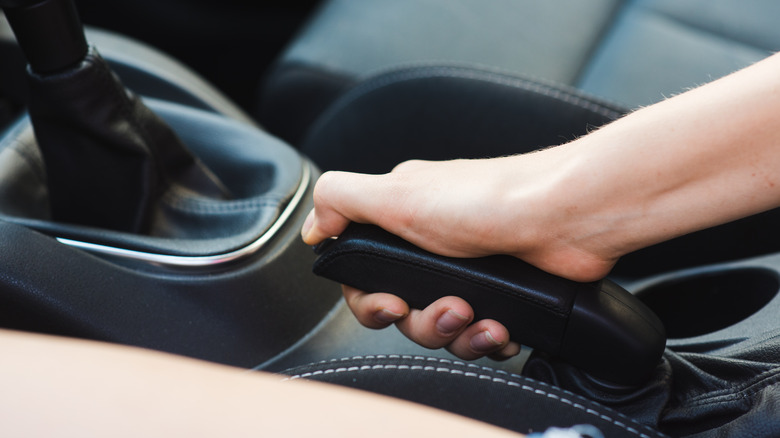
Parking brakes, also known as emergency brakes, are provided in cars to make sure that the vehicle doesn't move when parked on a flat or inclined road. It doesn't matter if your car is equipped with an electric parking brake, a foot pedal brake, or a hand lever type brake (which is slowly vanishing from modern cars); their main aim is to prevent the car from rolling when parked. The cost of repair will differ depending on the system; a push-button electric parking brake is generally more expensive than a traditional hand-lever or even a foot pedal brake. This is because the electric parking brake (EPB) uses a specialized motor to engage the brake, whereas the other two systems make use of steel cables to activate the brakes.
The only thing in common between all of these different types of brakes is that, if they are engaged, the red brake light on your dashboard will light up. It's one of the most common reasons for the brake light to activate. While modern push-button brakes disengage automatically when the accelerator pedal is pushed, this may not be true for hand-lever-type brakes. If you have an older style e-brake system, it is critical that you check the position of the parking brake and release it once you are ready to drive.
Driving a car with parking brakes engaged will not only turn on that red brake light; it could also warp your brake rotors over time. This is because your parking brake applies continuous pressure to the brake mechanism. Driving around with your brake mechanism under load like this generates the kind of excessive heat and friction that can lead to costly repairs.
Your brake fluid level is low
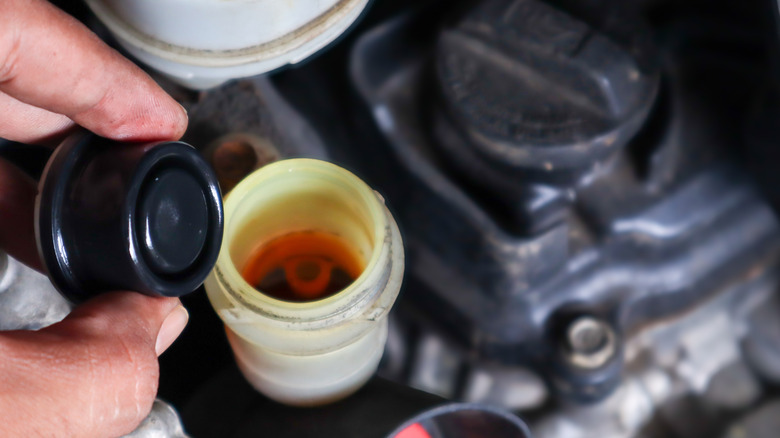
Most brake systems are hydraulic, relying on brake fluid to function. The fluid is used to create pressure on the brake calipers, which in turn push the brake pads to rub against the rotors to stop the vehicle. This is why brake fluid should be regularly replaced; without it, the brake system won't be able to generate or transfer enough force to the rotors to bring the vehicle to a standstill. There are different types of brake fluids available in the market, such as DOT 3, DOT 4, and DOT 5. Your car likely requires a specific type of fluid, which is detailed in your owner's manual.
One of the common ways to know if your car's brake fluid needs replacement is when your brakes are soft, which means that it takes more time and pressure to stop your vehicle when you depress the brake pedal. You might also hear strange noises when you step on the brake, suggesting that it is time to attend to your brake fluid. However, one of the easiest ways to know that your car might be running on low brake fluid is the red brake light on the dashboard.
Of course, there are a dozen other reasons why that brake light has lit up, but low brake fluid is one of them. If the amount of fluid in your system drops below the minimum level, your car's sensors will trigger that warning light. Low fluid levels could be because you haven't replaced them in years, or there might be a leak somewhere in your brake lines. Leaks allow air to enter the brake system and prevent the fluid from putting pressure on the brakes, leading to brake failure.
Your master cylinder needs replacement
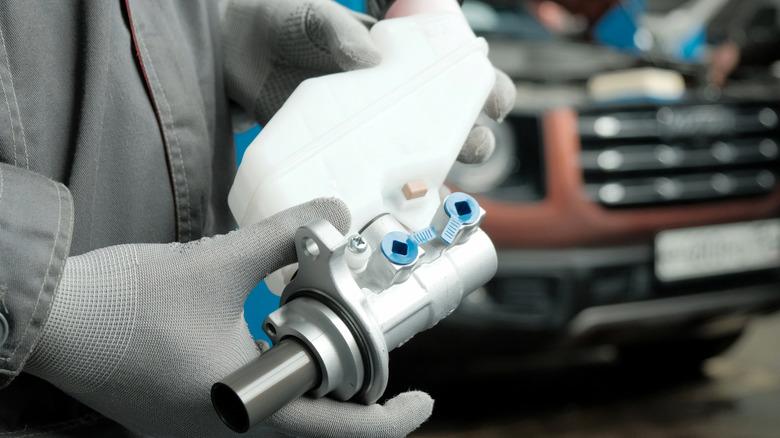
The brake system is complicated and has several parts. Apart from calipers, pads, fluid, and levers, there is also a master brake cylinder. The main role of the master cylinder is to convert mechanical force into hydraulic pressure that activates the brake calipers to stop the vehicle. It is crucial for the master cylinder to be in good shape, as your car's brake system (and how quickly your vehicle can stop) depends on the condition of the master cylinder.
Your car's red brake light will illuminate if your vehicle's system detects an issue with the master cylinder. There are other things that could indicate a problem with the master cylinder, such as reduced brake power and excessive brake noise. Additionally, your brake may start feeling spongy — your brake pedal will sink in slowly when you depress it — if your master cylinder is damaged.
When that red brake light shows up on your dashboard, you should get your car to your trusted service station to have the health of your master cylinder checked out. Usually, a master cylinder is designed to last for up to 150,000 miles, which is often the lifetime of any given vehicle. However, regular maintenance and care are necessary if you want the master cylinder to remain in good condition throughout that period.
Your brake pads are worn out
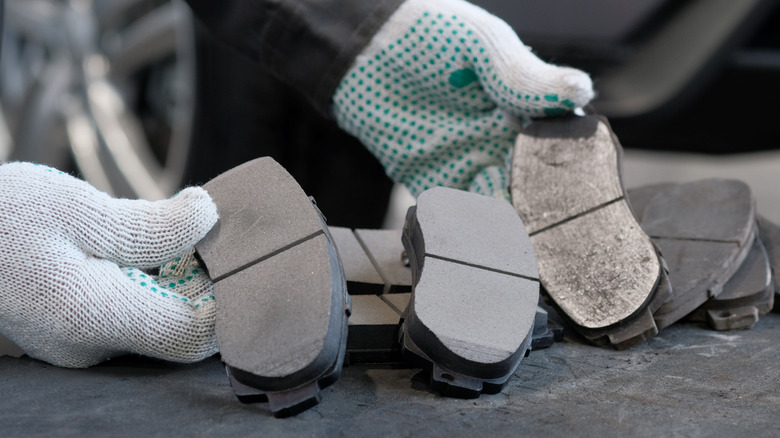
Another common thing that could trigger the red brake light on your dashboard is worn brake pads. Brake pads are available in different materials and varieties, such as organic, ceramic, metallic, and semi-metallic, each having their own unique characteristics. However, regardless of the material, every type of brake pad has a finite lifespan. Using them beyond this limit can be extremely risky for your safety and the overall health of your vehicle. When the friction of the brake pads wears away, your vehicle's sensor system triggers the warning light on the dashboard, indicating that it is time for new brake pads.
While it is not always necessary to replace all four brake pads at once, it poses no harm in getting all four of them inspected. This ensures balanced performance from all tires. Mileage and longevity of your brake parts rely heavily on your driving habits. If you are an aggressive driver with frequent and heavy braking, it results in brake pads engaging more intensely than normal, thereby increasing wear and tear. You can save money by learning to replace brake pads yourself; however, it is critical that you purchase the brake pads from a trusted brand. SlashGear has found that some of the best brake pad brands come from companies like Akebono, Wagner, PowerStop, and Raybestos.
It goes without saying that brake pads are as important as other parts of the entire braking system. If you see a warning light, or if you hear a scratching sound or the sound of metal grinding together, it may be time for you to pay a visit to your mechanic.
Your sensor is failing
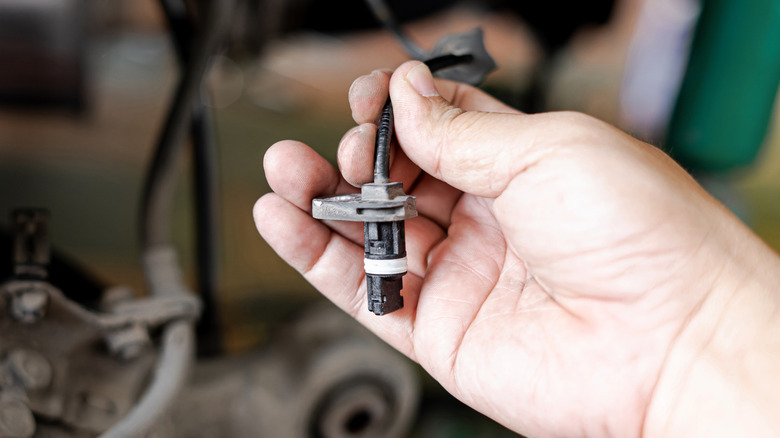
Sometimes, even though there is nothing wrong with your brake system, the red brake light will appear on your dashboard. Why? Because there might be an issue with the sensor itself. Modern vehicles are full of sensors and advanced mechanisms. Everything from fluid levels and engine health to wheel alignment and brake pad thickness is monitored by sensors. A malfunction in any one of these sensors can send a false positive, causing your dashboard light to turn on.
Just like every other part of your vehicle, sensors also age with time. Debris, electrical wiring issues, or impact due to an accident can easily damage the sensors. Sensors related to the brake fluid level can sometimes get stuck and trigger the red brake light even though you have recently topped off the brake fluid. Similarly, sensors monitoring the parking brake or anti-lock braking system can glitch, leading your car's computer to believe that there is something wrong.
However, you should never ignore a brake warning light, because there is no surety that it is due to a sensor failure. You should always let a trained technician diagnose the issue using a computer and an onboard diagnostics (OBD) scanner and get to the root cause of the actual problem.