

5 Smart Home Gadgets You Should Be Using In 2026
We may receive a commission on purchases made from links.
A decade ago, it was understandable to avoid smart home tech. It was fragmented, unreliable, and expensive. These days, there are still smart home devices you really shouldn't buy, but mostly to avoid unhelpful or unpleasant experiences, like persistent subscriptions and hyper-niche use cases that don't really feel worth the effort to make "smart." By and large, smart home devices are good enough to have in the home, and a few will genuinely make your life easier.
For the most part, these devices are things you've likely seen before, like video doorbells and smart thermostats. They extend the functionality of existing tech in to make it more useful, rather than bring anything experimental or quirky into your life. For example, video doorbells can do all sorts of things from identifying who's knocking on your door to catching porch pirates in the act, even if you're note at home.
Brands that make these products have gone from young upstarts to juggernauts in their various segments, and the products they offer have been refined to a point where most of them simply work. If you're curious about finally getting into the smart home arena, here are a handful of products to get you off on the right foot and extend the use of things you already have installed in your home.
Ecobee Smart Thermostat Premium
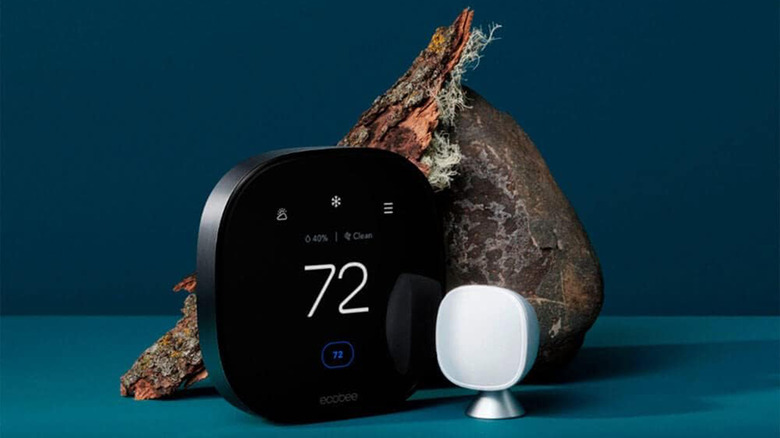
A smart thermostat was the first thing I installed in my house when I bought it in 2019. It was an Ecobee3 Lite thermostat, the brand's least expensive model, because I wanted something I could control from my phone, but not something so "smart" that it did stuff I didn't want. I still have my Ecobee3 Lite and I would recommend it to you right now if they still made it. Sadly, it's discontinued, so instead I'll recommend the Ecobee Smart Thermostat Premium.
Despite being six years newer, Ecobee's latest products aren't significantly different from the one I bought. The menu system is simple to understand, and the screen is responsible and informative. The most premium model in the lineup has all of the features that the brand offers, including support for Apple HomeKit, Amazon Alexa, and Google Assistant. Also included is a built-in air quality monitor, some optional automations you can enable (or disable), and reminders to change your furnace filter. In short, Ecobee has earned its spot among the best smart thermostats in the game.
As part of the bundle, you also get a secondary temperature sensor that you can stash elsewhere, allowing the thermostat to get a better glimpse at the actual temperatures in your house. In all, it's a great way to dip your toe into smart thermostats without going wild. Plus, there is no subscription to speak of (for thermostats at least), so once you buy it, you get every feature.
Google Nest Hub (2nd Gen)
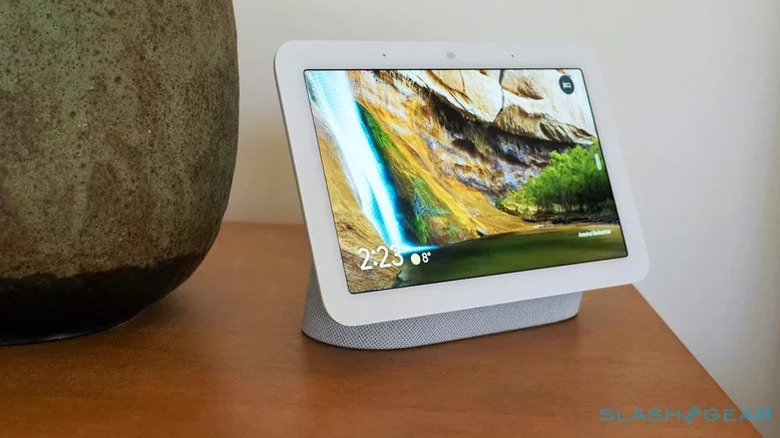
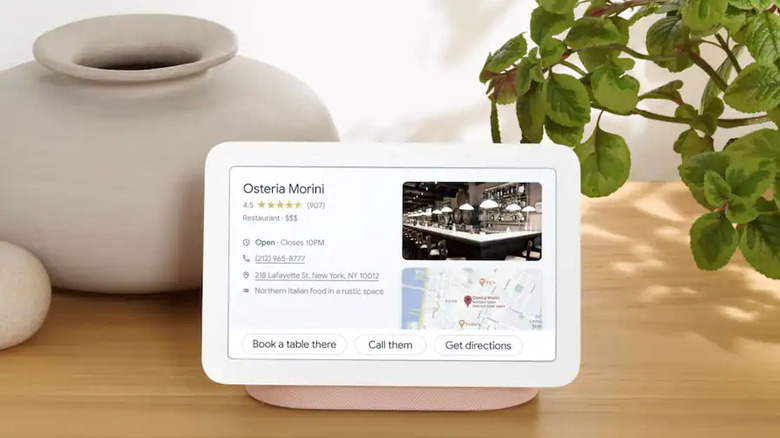
You don't necessarily need a smart home hub to make your smart home function, but it can make everything a little easier to use. If you want Google's experience, there are two options to choose from: the second-gen Google Nest Hub and the larger Google Nest Hub Max. For this article, we'll go with the second-gen Google Nest Hub. My wife bought one of these for me in 2022, and it's been sitting in my kitchen ever since, where it gets plenty of use.
The benefits of a smart home hub are threefold. First, you get an interface that you can interact with using your voice, and you can tell it to change the temperature, turn lights on or off, or even check the front door video camera from a single spot. Secondly, you can do everyday stuff like listen to music or watch videos, so it's not just sitting there inert all the time. Finally, the display adds more functionality over regular smart speakers in that you can see what you're doing.
In terms of raw functionality, the Google Nest Hub is definitely among the less capable offerings, but when it comes to things that are nice to have, a smart display is right up there. However, you could also go with other offerings, such as the Amazon Echo Hub for you Alexa users out there. It has the same benefits as Google's offerings, and the differences largely come down to personal preference.
Kasa HS103P4 Smart Plug

You may not recognize the Kasa brand right out of the gate. It's actually owned by TP-Link, one of the biggest Chinese tech brands in the world. As it turns out, TP-Link can make a pretty good smart plug, and it currently sells two models: the Kasa HS103P4, and the TP-Link Tapo Smart Plug. You could realistically buy either one, as the feature set comes down to personal preference, but for this list, we'll go with the Kasa HS103P4.
Smart plugs are useful because they can turn dumb products into smart ones, and that can save you a lot of time. Right now, all of my Christmas lights are hooked up to Kasa HS103P4 plugs, and those plugs are set to turn on at sunset and turn off at sunrise, thus saving me the twice-daily, five-minute trip around the house to flip light switches. That's going to save me a few hours of Christmas light management this year and every other year.
Christmas lights are a timely example, but far from the only one example. You can use it to turn regular lights on and off at various times without investing in smart bulbs, turn humidifiers (or dehumidifiers) on and off automatically, and more. Kasa plugs also have the benefit of measuring power consumption, so you can keep an eye on how much power you draw and, ergo, how much money you spend.
Eufy E340 Video Doorbell
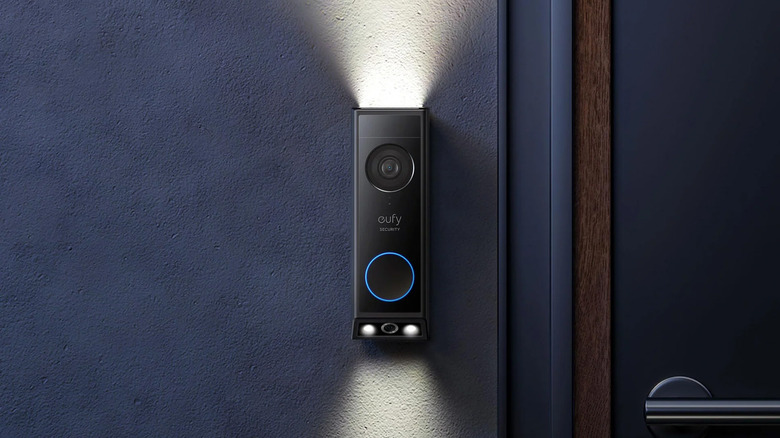
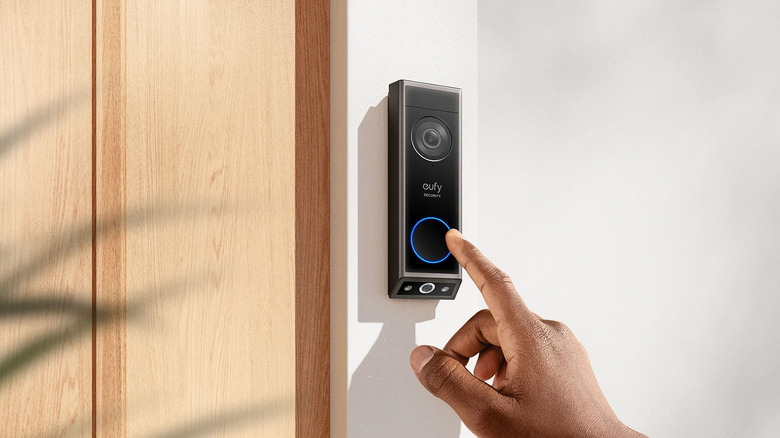
Video doorbells are arguably the best smart home product to start with. My neighbors all have one, and it's kind of nice having so many eyes on each other's houses to watch out for things. There are tons of video doorbells on the market, and things can get a little complicated quickly, as many of them require a subscription for video playback. We don't like that around here, so the Eufy E340 Video Doorbell is a good place to start if you want to avoid that nonsense.
The E340 is battery powered, so you can stick it to an apartment door frame without messing with wiring, though there is a wired option (that powers the battery) in case you want a more permanent fixture. It has two cameras, including one that faces down at your porch to keep an eye on packages. Add in all the usual stuff like being able to see who's at the door while you're not home, video playback for security purposes, and two-way audio, and the number of things you can do with it just keeps going up.
Eufy is good for this because it doesn't require a subscription like some other brands do. It has onboard storage to save videos so you can them view at any time. There is a subscription if you want cloud storage, but it's not required to use all the features of the doorbell.
Philips Hue Smart Bulb with Hub
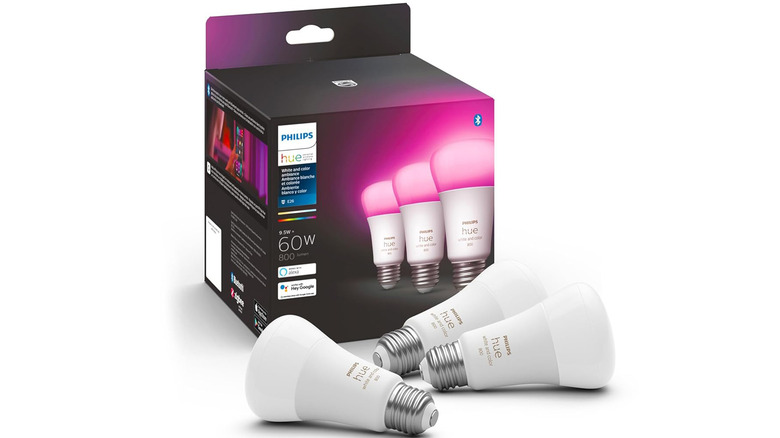
Philips Hue is arguably the biggest of the smart lighting brands, and for good reason. Its products tend to work quite well and for a long time, though they're also expensive. I currently have two Philips Hue light strips in my house for accent lighting, and those strips are six and eight years old. They just chug along with no drama. Currently, I have them set to turn on at dusk and off at dawn, and I change the colors depending on the season or the holiday.
Light strips are a bit hardcore to start with, so instead, a good deal to get in on smart lighting is this Philips Hue Smart Lighting Bundle. It comes with the requisite hub along with a three-pack of A19 LED smart light bulbs. The bulbs can plug into any regular light bulb socket, so you can use them in most standard light fixtures. You can change colors, set them to turn on or off using any number of variables, and Philips Hue is compatible with Alexa, Google Assistant, and Apple HomeKit.
The benefit is mostly that you can control your lights from anywhere, so you can turn them off if you forget while you're at the office, or have them turn on when you get home automatically. The sky is the limit, and you can buy just regular A19 bulbs (you only need one hub) as you get more comfortable with replacing your lights.
How we chose these smart home gadgets
For this list, we focused on items to replace things that people who are new to smart home tech may already have in their house. You already have a doorbell, thermostat, and lights, so replacing them with smart home versions is much easier than installing an entire smart security system, no matter how cool security cameras may seem.
After that, I leaned heavily on products that I've used. I either personally own every product above or I've used some variant of it. Thus, I can speak based on personal experience, in addition to my years of covering the tech industry, with what it's like to live with these things day-to-day, and whether or not it's worth your money. For consumer tech, there's often no better research than hands-on experience.
Finally, as mentioned at the beginning of the article, products weren't considered if deemed too niche. For example, smart motorized blinds may be super cool, but ultimately they're not must-have pieces of tech. Same goes for smart toasters and smart oil diffusers, and a litany of other devices.