

10 Reasons Your Next Drone Should Be Smaller
We may receive a commission on purchases made from links.
It's been the common wisdom for some time that higher-end drones are bigger than lower-end ones. With heavier frames, bigger motors, and more room for electronics, it's natural to assume that the drones with the best specifications are the ones with the most heft.
This is still true on average. However, small drones today perform as well or, in some cases, even better than the larger drones of yesterday. In other words, the floor of drone performance has been steadily rising. If you've been ignoring these little guys in favor of the flagship mainstream drone, you may in fact be overpaying.
If a current-generation compact drone's capabilities exceed your needs, there are genuine benefits to going small. The obvious one is saving money, but as drones scale down in size, they also become much less of a pain to maintain and operate. So, let's unpack the current state of baby drone technology and see if you're in the wrong tier of the drone pyramid.
A smaller drone no longer means a tiny camera sensor
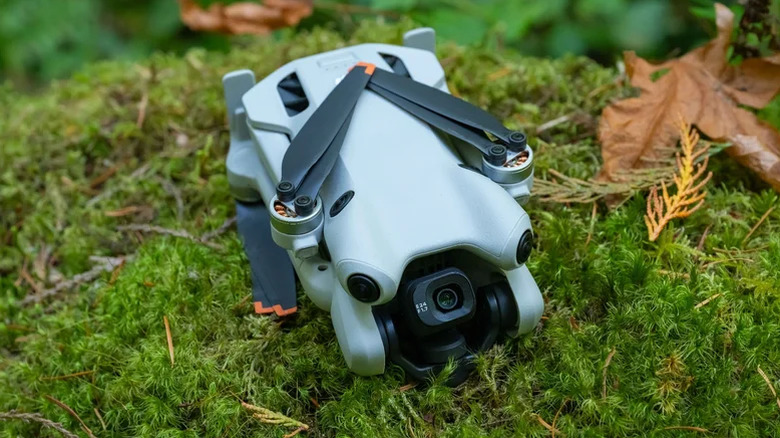
If the reason you're buying a drone has anything to do with photography or videography, then obviously the quality of the camera is high on the list of requirements. Now, if you know anything about handheld cameras like DSLR and SLR models, you know there's always a debate about cropped-sensor and full-frame cameras. Sensor size matters, and small drones have generally been equipped with smaller camera sensors.
This reduces power requirements, cost, and helps make the drone physically smaller. However, DJI's "Mini Pro" family of drones has been bucking that trend lately. The DJI Mini 4 Pro has the same 1/1.3-inch 48 MP cameras as the DJI Air 3. The DJI Mini 5 Pro has the same camera sensor as the DJI Air 3S.
As a result, the photo and video quality you get from the relevant Mini and Air drones is quite similar. As our own reviews have shown, the video and photo quality of the smaller options stands toe-to-toe with the bigger quadcopters.
You can keep the video features that actually matter
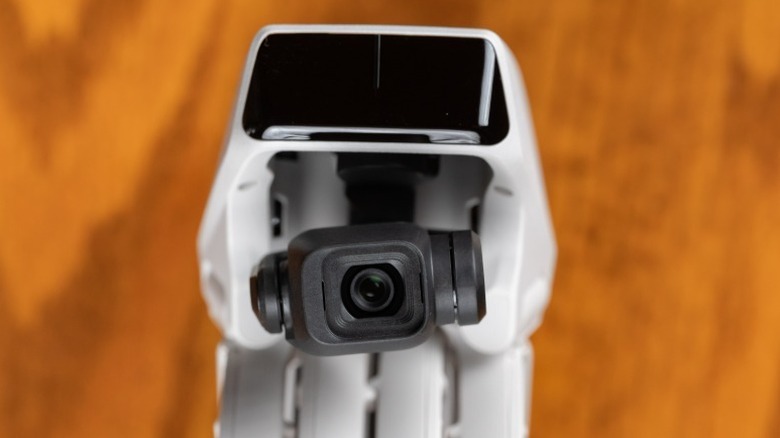
If you wanted 60fps footage at a 4K UHD resolution, then for a long time your only choice was to buy a larger model of drone, perhaps even a flagship. Smaller camera drones would be limited to 1080p 60FPS, and later "2.7K" (2720×1530) drones like the original Mavic Mini or the DJI Mini 2 SE. This intermediate resolution allows you to crop down to a clean 1080p in editing, or cleaner results when upscaling to 4K.
Eventually, smaller drones would come to support 4K 30fps, which was a big step up, but today it's possible to get 4K 60fps performance from a mini drone. While bigger drones might offer higher resolutions and frame rates than this, 4K 60fps is a great sweet spot since TVs top out at 4K and only newer TVs support refresh rates higher than 60Hz. Certainly, if you're putting out your drone footage on social media (or platforms like YouTube), you're unlikely to need more than this level of camera performance.
Of course, these higher-resolution cameras benefit drone photography as well. For one thing, you can now extract 4K stills from your footage, and you can take even higher-resolution still photos in the drone's dedicated still photography mode. Ultimately, if all you need is 4K 60fps footage, then buying a bigger drone may not be necessary at all.
Flight times are long enough to get useful work done
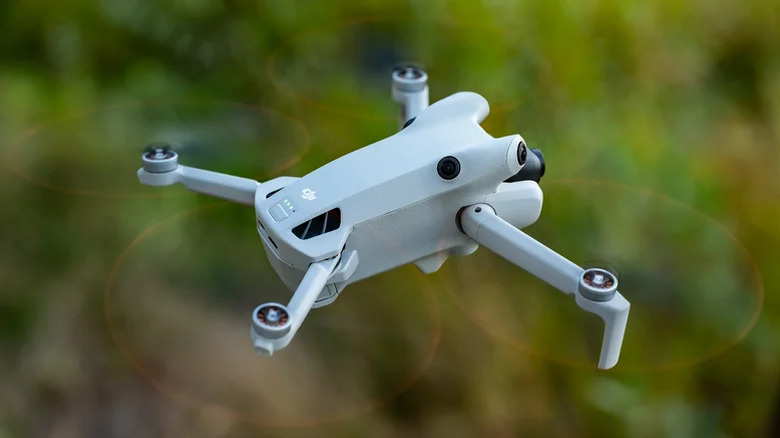
When the Parrot AR drone was released in 2010, it offered an average flight time of 12 minutes on a full battery. In the years since, multiple technologies that affect total flight time have come together for much better endurance. A key example is the Antigravity A1 camera drone. The standard flight battery yields up to 24 minutes, and the extended battery gives you 39.
For the DJI Mini 5 Pro, the specifications are 36 minutes of flight time with the standard battery and 52 minutes with the extended battery. These are all, of course, flight times done under ideal testing conditions, and in the real world they'll be shorter. However, the relative difference (or lack thereof) between regular and smaller drones remains the same.
As long as you buy the right model, battery anxiety no longer has to be a penalty for buying a small drone. If your main concern is flight time, you can confidently go smaller.
You don't necessarily lose obstacle sensing or subject tracking
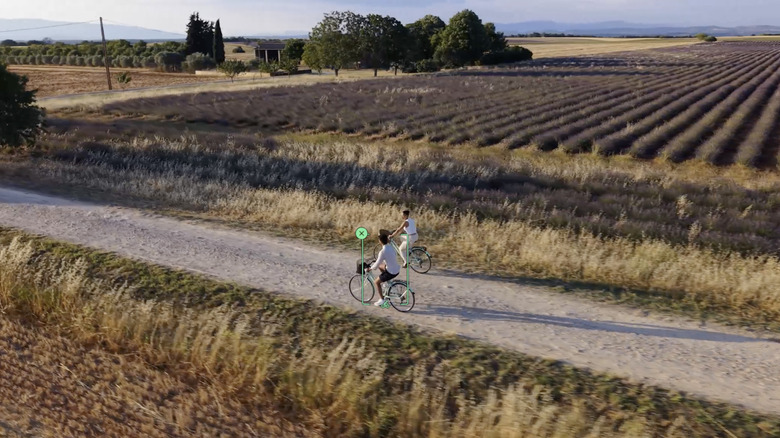
When the original DJI Mavic Mini hit the market in 2019, it lacked any sort of rear or front obstacle detection. Even though this cheaper, smaller drone may have been seen as an entry-point drone compared to the much more expensive mainstream Mavic, it was actually harder to fly safely because it lacked automatic obstacle detection and avoidance.
In 2019, it was necessary to leave the sensor system out of the Mavic Mini to hit the weight, price, and size goals. Today, the technology has improved to the point where that's no longer necessary. When we reviewed the small foldable DJI Flip, we were impressed with its obstacle-avoidance features, including the ability to automatically brake for obstacles at night.
Mini drones have also lacked some of the automation features, such as subject tracking, due to a lack of sensors as well as lower-spec processors. Now, however, you'll find the same type of autonomous features as in larger drones. Though they might not have as many modes or the same degree of sophistication. Drones like the DJI Mini 5 Pro have plenty of object-tracking features, likely enough to meet the needs of most people.
Small drones aren't automatically helpless in a breeze
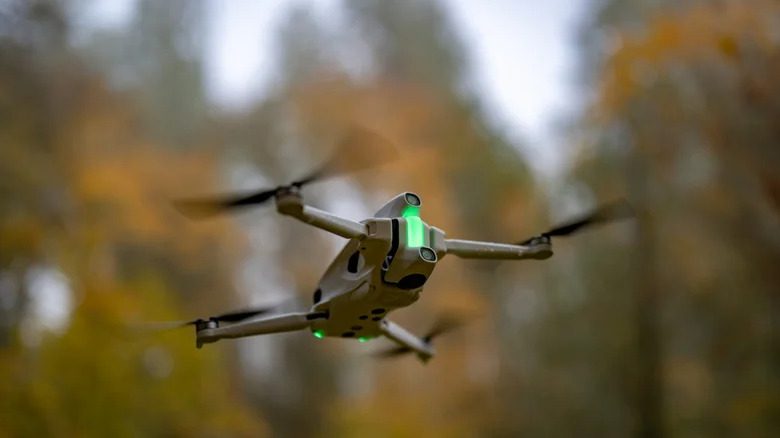
While drones need air to function, wind can be the enemy of any aircraft. When wind tries to push a drone in a direction, it automatically resists. If you've let your drone hover in windy conditions, you've certainly heard it dynamically speed up and slow down its rotors to compensate and hover in place.
Logically, bigger, heavier drones need more wind to move them against their will through sheer added mass alone. On top of that, they tend to have bigger rotors and more powerful motors. But smaller drones have been getting better at handling higher levels of wind. Consider that the 2019 Mavic Mini has an official wind-resistance rating of 8m/s (28 km/h or about 17.4 mph). The DJI 5 Mini Pro has a rating of 12m/s. That's exactly the same level of resistance as the DJI Mavic 4 Pro flagship!
While you certainly shouldn't fly in high wind conditions, it's no longer the case that buying a larger and more expensive drone will necessarily give you better wind endurance. Unless perhaps we're talking about drones that need a pickup truck to transport, but that's another story.
You're more likely to bring it along
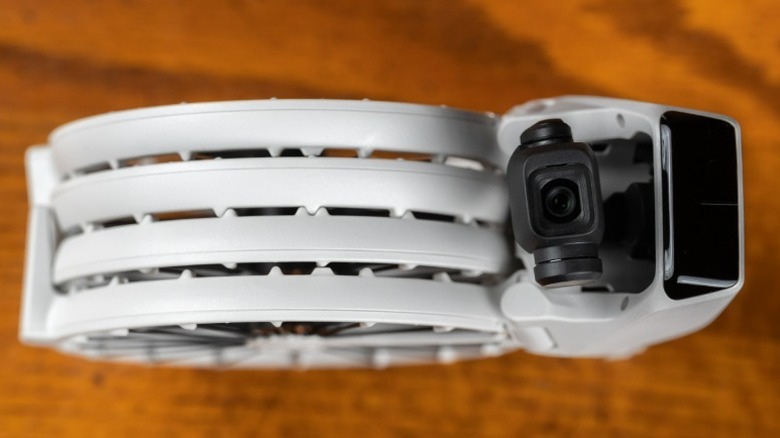
The bigger a drone is, the more effort is involved in transporting it. While mainstream, average-sized drones aren't exactly enormous, they are big enough to require their own bag. These are the type of drones that you plan to take along for a specific reason.
Mini drones that fall into the ultra-lightweight class can live in your glovebox, inside your car's central console storage, and even slip in next to the rest of your stuff in a backpack or messenger bag. That makes them ideal for capturing footage you weren't planning to get. If you always have a small drone with you, you can capture things through luck and opportunity.
They're also better for air travel and going on vacation. Again, thanks to the simple fact that you don't need to do any special preparation or effort to bring one along. Some models can be controlled using only a smartphone, and DJI's Mini drones, for example, generally support charging the onboard battery directly via USB-C. This means you don't have to bring an extra dedicated drone battery charger. You can even top up your drone from a power bank while it's in your bag. However, whether charging from the wall or from a power bank, check DJI's specific wattage recommendations for your drone to ensure you get the charging speed you want. Standard and fast-charging rates will have different requirements, and if you don't need fast-charging, you can save some money by buying a lower-spec charging solution.
Getting below a weight threshold can reduce the paperwork
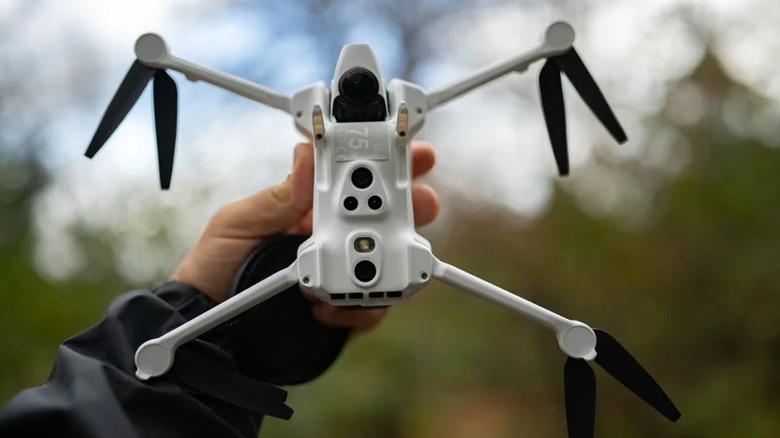
In the U.S., if you are flying a drone purely for recreational purposes and it weighs less than 250g, then you do not need to register it with the FAA. Of course, you still need to adhere to all drone laws in the state or country you're flying in, but unless you actually violate those laws, you don't have to get the government involved with sub-250g drones.
However, that only counts for non-commercial drone use, and sometimes the interpretation of that can be broad. For example, if you earn money from a monetized YouTube channel with your drone footage, the FAA might see that as commercial operation. In the U.S., you still need to take and pass the free online TRUST test as a recreational flyer, even if you don't have to register the drone itself. The certificate you get after passing must be kept with you when flying, since you must present it if an official asks.
Having a sub-250g drone can also be a boon when traveling to another country. While as a non-resident, you may not always be able to use it there without registration, the requirements can be lower for small, purely recreational drones. However, you should always carefully research the laws of your destination country, or you may end up with a confiscated drone or even fines. You want to avoid getting in trouble when flying your drone!
Proper mechanical stabilization no longer requires a large drone
A key part of a camera drone's design is the gimbal. This is a mechanical device that keeps the camera stable regardless of how the drone's body rolls or tilts. Mainstream, larger drones use a three-axis gimbal. This allows the drone to keep the camera level when it pitches, rolls, and yaws. However, early mini drones like the DJI Spark only had a two-axis gimbal. This type of gimbal can only compensate for pitch and roll.
Since the camera's yaw axis is linked to the movement of the drone's body, it limits your banking angles, and yawing the drone pans the camera, making certain tracking shots impossible. This was one of the major selling points of the Mavic Mini, since it had a proper three-axis gimbal like its bigger Mavic siblings.
Today, you can expect any half-decent mini drone to have a three-axis gimbal, giving you the full range of basic camera moves larger drones are capable of. On the DJI side, the DJI Mini 3 Pro, DJI Mini 4 Pro, and DJI Mini 5 Pro all have three-axis mechanical gimbals. Non-DJI examples include the Autel EVO Nano+, Potensic Atom 2, and Ruko U11 Mini 4K. The Antigravity A1 is a notable exception here because it uses 360-degree camera technology to make a gimbal redundant, but it is a rather unique example.
You don't have to sacrifice a reliable video connection
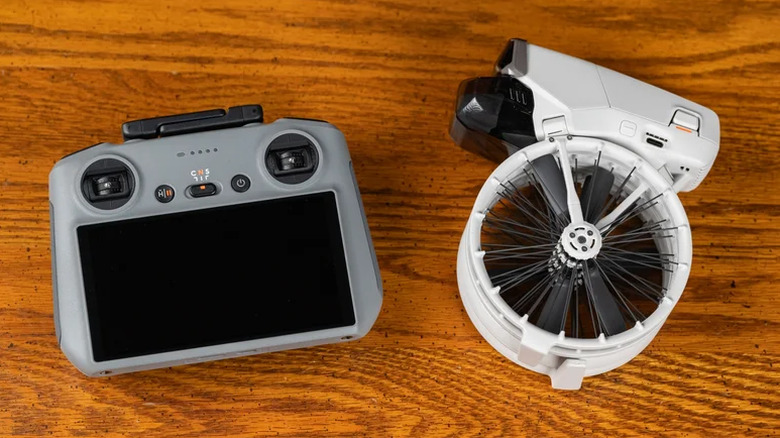
When the original Mavic Mini arrived, among the various compromises it came with was the reliance on DJI Enhanced Wi-Fi to handle remote control and video transmission. This made the Mavic Mini more prone to video signal breakup in areas with lots of Wi-Fi interference. In the meantime, DJI's other larger drones used the proprietary OcuSync technology, which has better range, is more resistant to interference, and is more reliable.
One of the biggest upgrades in the DJI Mini 2 was the introduction of OcuSync 2.0, which led to a significant improvement in remote video quality and control. Now you could fly your mini drone with the same confidence as its larger versions, because the underlying wireless technology was the same.
Today, these small drones have very similar wireless performance to larger drones, especially when you compare mini drones to mid-size consumer models. The DJI Mini 5 Pro uses Ocusync 4+, which is the same system you'll find in the DJI Mavic 4 Pro and similar to the massive DJI Matrice 400 commercial drone.
Getting into the air can be quicker and easier
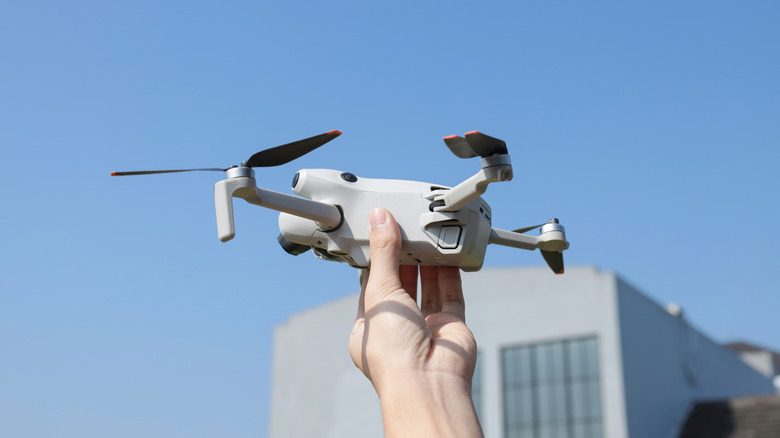
Like any aircraft, you need an appropriate takeoff and landing area for your drone. The larger the drone is, the harder it is to find suitable places to set up. Depending on the local safety regulations where you live or intend to fly, you may even have to put down a landing pad and set out cones to show other people there's potential danger.
Small drones give you more options for takeoff and landing spots. In particular, while it's not impossible with larger drones, having your mini drone take off from and land on your open palm is an incredibly useful trick. The DJI Flip even makes palm takeoff and landing a standard part of its tutorials.
Obviously, if your drone can take off from the palm of your hand, there are very few places that don't have enough space for it to take off or land, so that could be a deciding factor in your choice of drone size.