

Mazda Got The CX-5 Price Right, But Something Else Is Missing
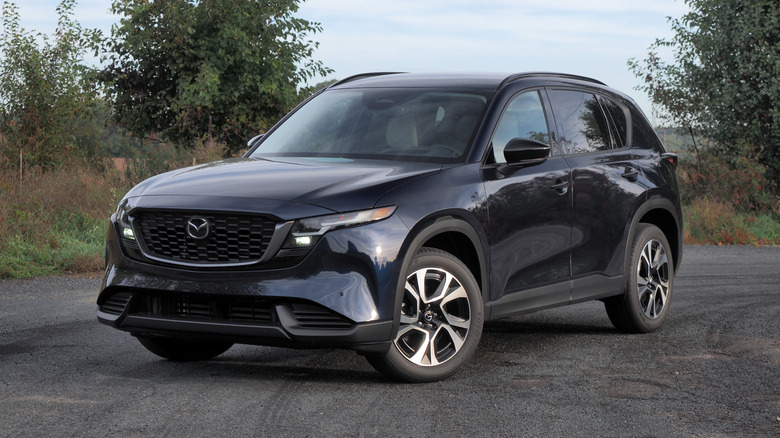
If new car shopping decisions are half-heart, half-head, it's not far-fetched to conclude that Mazda was focused on the latter when it designed the 2026 CX-5. Then again, revamping your perennial best-seller at a time of tightening budgets demands some rational thinking. Even more so, when you're trying not to step on the toes of your other popular models.
 Chris Davies/SlashGear
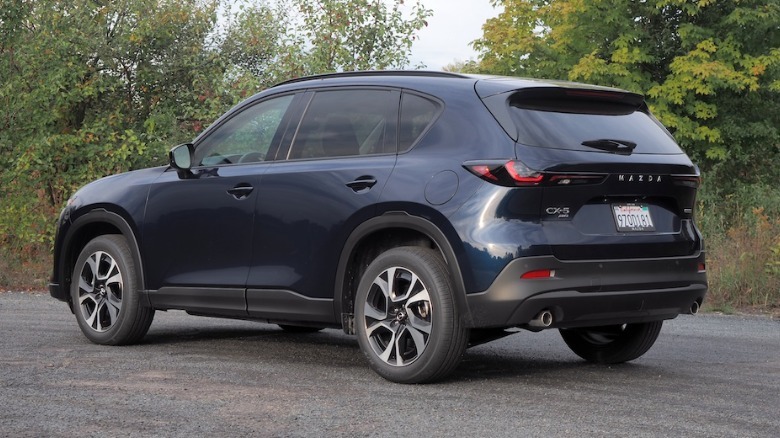
So, the new CX-5 starts just shy of $30k (albeit before the $1,595 destination fee) but for an SUV that's larger and more lantern-jawed than before. Hints of CX-90 at the front and rear better distinguish the CX-5 from Mazda's more off-road styled crossovers, and there's a clear push for greater practicality.
 Chris Davies/SlashGear
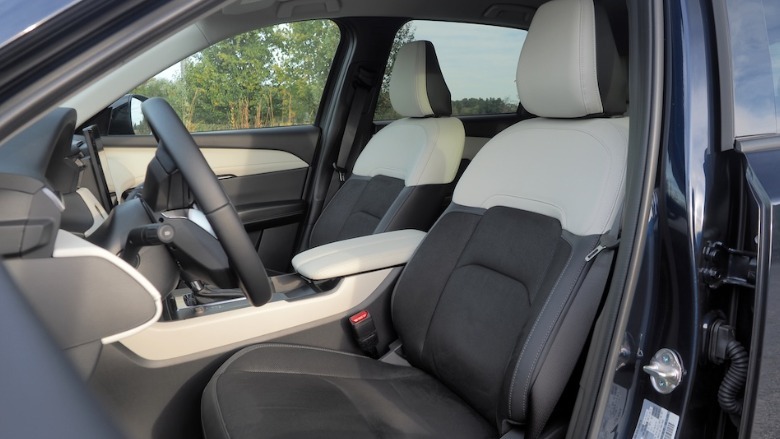
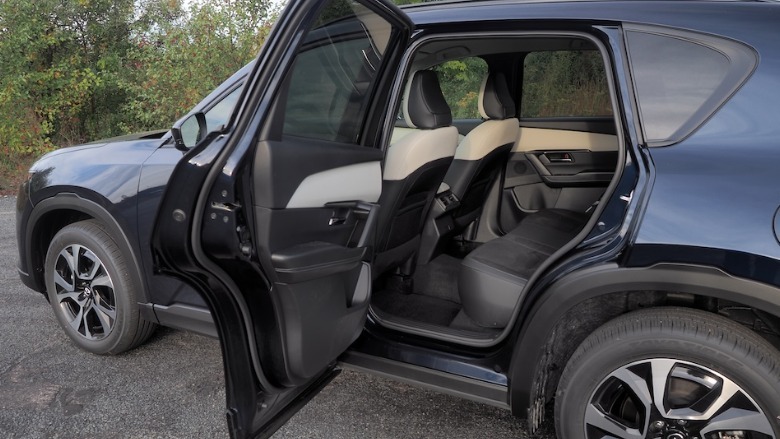
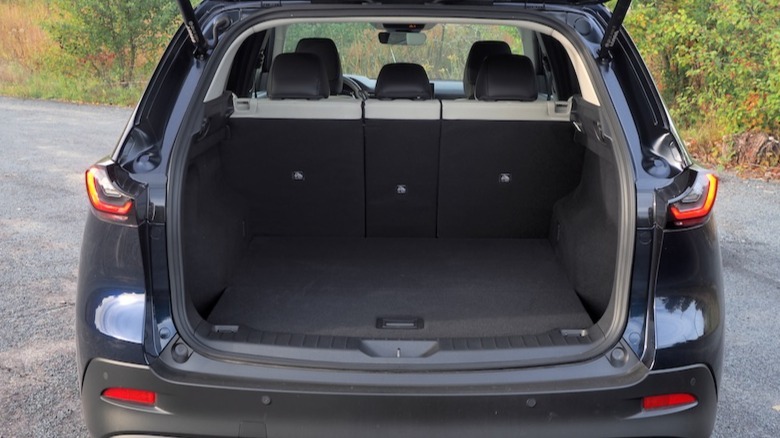
Not only is the wheelbase 4.5 inches longer — that space benefiting both passengers and cargo — but the rear doors open wider, a genuine boon when loading people, child seats, and stuff. There's a healthy 39.9 inches of rear legroom, and 33.7 cu-ft of trunk space (or 66.5 cu-ft with the rear seats folded).
 Chris Davies/SlashGear
I just wish the doors themselves didn't sound so hollow and tinny when you close them. It's an early sign that Mazda couldn't work miracles, and you may not necessarily agree with the automaker's priorities.
Touch all the things
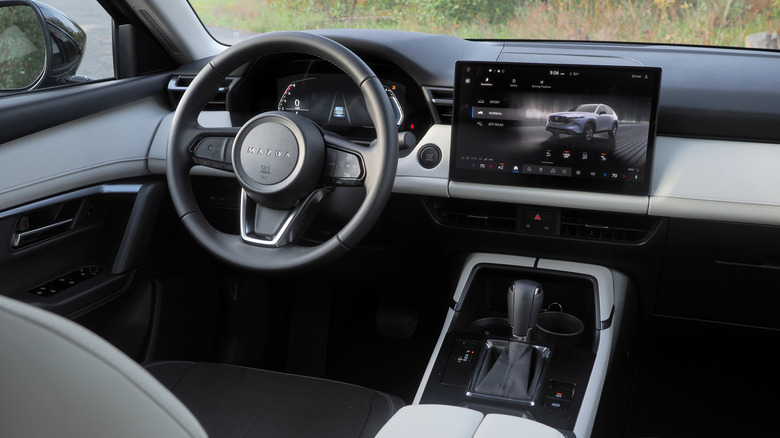
Happily, the primary controls up front don't smack so obviously of building to a price. That said, Mazda's approach to avoiding cheap-feeling switchgear has been to remove most of it — climate control and media are entirely handled through the touchscreen. The 2026 CX-5 introduced the automaker's new infotainment system, and while it's a step up on the old version, there's still room for improvement.
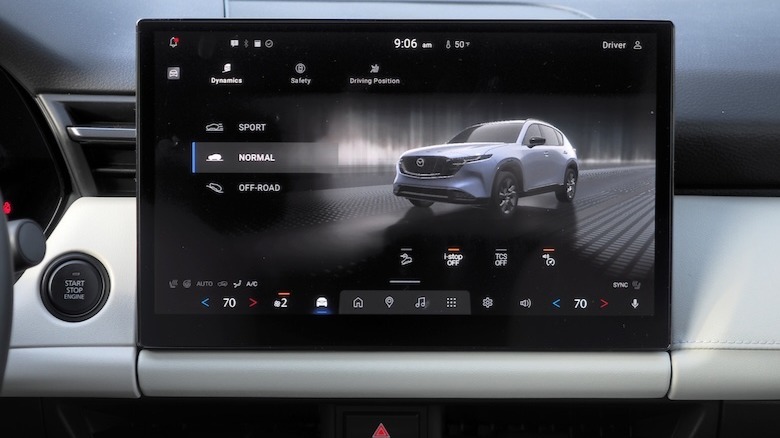 Chris Davies/SlashGear
This Premium Plus example gets a larger 15.6-inch touchscreen than the 12.9-inch version on the other trims, but either way the real-estate could be used better.
 Chris Davies/SlashGear
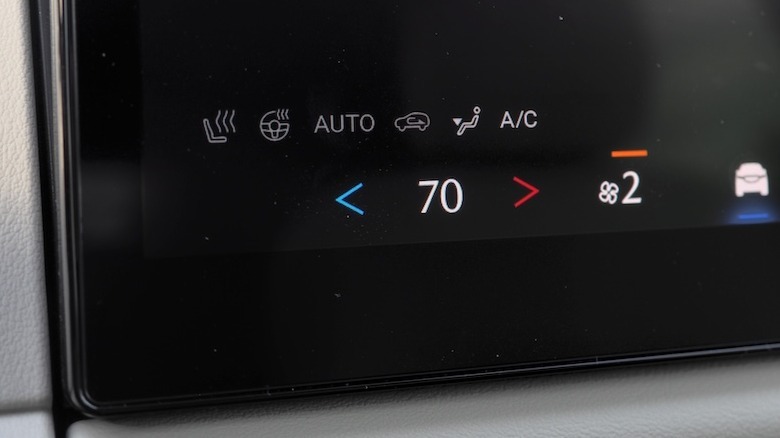
Mazda's HVAC buttons are tiny; accessing seat heating/ventilation — standard up front on the Premium Plus; heating only coming standard in the front on the Preferred and Premium — demands a couple of taps at even smaller icons.
 Chris Davies/SlashGear
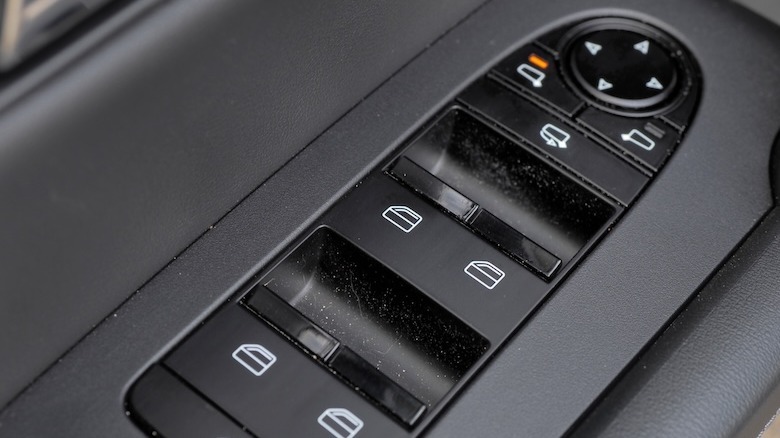
Apple CarPlay and Android Auto are standard (hooking up wirelessly on all but the base trim), though I found the CX-5 reluctant to reconnect to my iPhone at times. And why, Mazda, are your electric window switches so darn tiny?
Only one engine, and it's merely adequate
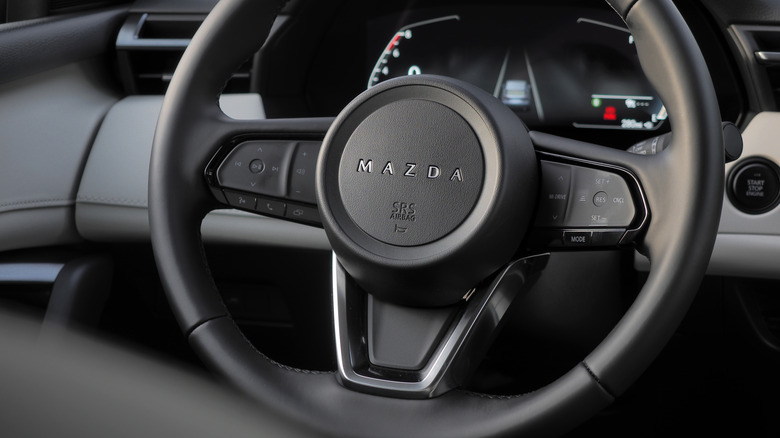
On the plus side, Mazda scatters some useful buttons — like for changing drive mode — on the steering wheel, where they're easy to stab at. Sadly, I wasn't much inclined to press them.
For all Mazda talks up the CX-5's driving dynamics, we're a long way from the days of zoom-zoom, here. With 187 horsepower and 186 lb-ft of torque, the single 2.5-liter non-turbocharged inline-four engine option delivers power that's adequate but nothing more; the six-speed transmission feels lacking in granularity, shortchanging more eager drivers. Switching to Sport mode forces it to hold lower ratios for longer, but the result is loud — though not pleasingly so — and with no great improvement on performance.
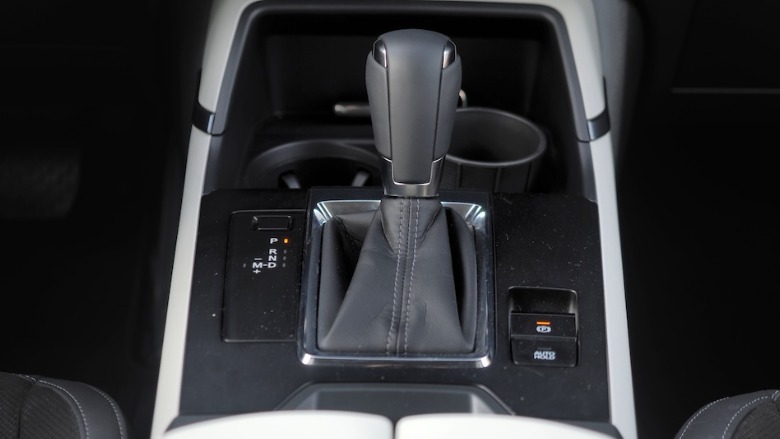 Chris Davies/SlashGear
AWD is happily standard but claims of suspension tuning "inspired by" the Miata feel like a slight on the MX-5, meanwhile. I can understand Mazda's motivation to boast — and in the case of some of its crossovers, the swagger is justified — but the CX-5 never rises above its placid dynamics. The ride is decidedly soft, if not outright wallowy, doing nothing to encourage anything beyond ambling.
The CX-5 Hybrid can't arrive quickly enough
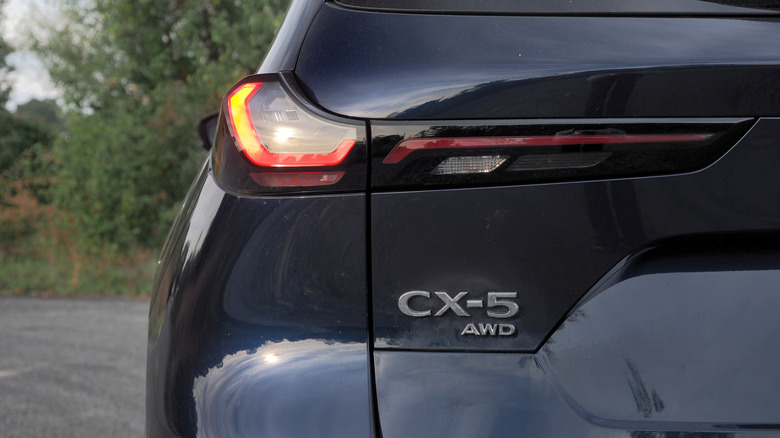
Strong fuel economy would help offset that disappointment, but there the CX-5 is only middling. The EPA claims 24 mpg in the city, 30 mpg on the highway, and 26 mpg combined; my own, mixed driving landed at just over 27 mpg. Mazda says a hybrid is incoming, and it's vitally important for the sort of gas-mindful budget buyer likely to be considering this crossover.
A CX-50 Hybrid AWD, for example, starts at $34,750 (plus destination), or about what a mid-range CX-5 will set you back. It's EPA-rated for 38 mpg combined, however. Or there's the perennially popular Toyota RAV4 Hybrid AWD with its 41-mpg combined rating, albeit with a starting price that almost matches this top-spec CX-5.
 Chris Davies/SlashGear
Budget won't stretch there? Kia's Sportage Hybrid starts at $30,590 (plus destination), is rated for 41 mpg combined, and has 232 horsepower to play with.
2026 Mazda CX-5 verdict
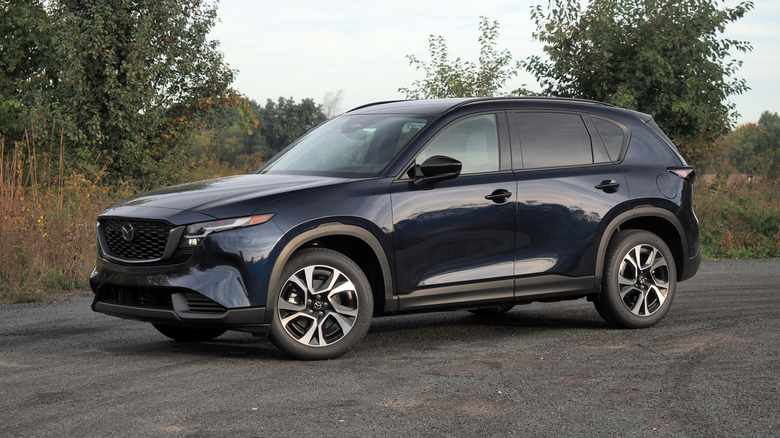
Ironically, the CX-5's strongest competition is coming from inside the house. There was no shortage of head-scratching when the CX-50 launched in 2022, as to how the similarly-sized and -priced crossovers would coexist. Fast forward to today, and while the CX-5 remains Mazda's best-seller in the U.S., the CX-50 — which I think looks better, drives better, and offers both turbocharged and hybrid upgrades — is literally only a couple of thousand sales behind it so far this year.
You get more rear legroom and more cargo space in this redesigned CX-5, it's true. Problem is, you get more of both in the Kia Sportage Hybrid.
In isolation, it's hard to argue with Mazda's priorities here. Drivers want affordable crossovers; they want more space for families and their stuff; they want more gadgets and more active safety tech. Delivering that in a car starting — for the 2027 model year — at $31,585 (including destination) requires tough decisions about what to put in, and what to leave out. Step back and look at the CX-5 in relation to the rest of the market, though, and I'm not sure Mazda remembered to add enough Mazda magic.