

4 Retro Handheld Gaming Consoles You May Have Never Heard About
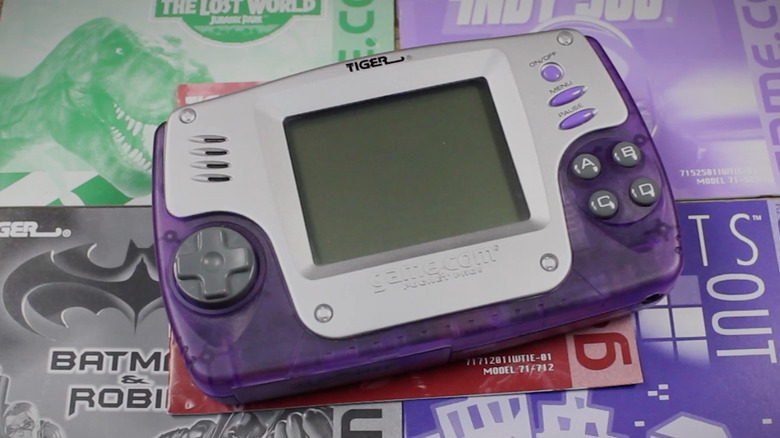
From the Steam Deck to the Nintendo Switch 2, handheld gaming consoles thrive in the modern era. To be fair, there hasn't been much of a time in which they have gone away, since portable gaming has been popular for decades now. Be that as it may, there have been a few devices that almost feel lost to the sands of time.
Some of these handheld consoles had grand ambitions, but they didn't have the lasting power of something like Nintendo's Game Boy. In some instances, they may have been ahead of the curve, or trying to rewrite the standards of their era, yet gamers weren't quite ready to open their arms and welcome them into their homes and hearts. Or maybe they were just too darn expensive!
Even so, it's fun to look back at the history of gaming and see the retro handheld gaming consoles that you may have never heard about — unless you were there in the moment, of course. From the Sega Nomad to the Milton Bradley Microvision, let's explore these blasts from the past.
Sega Nomad
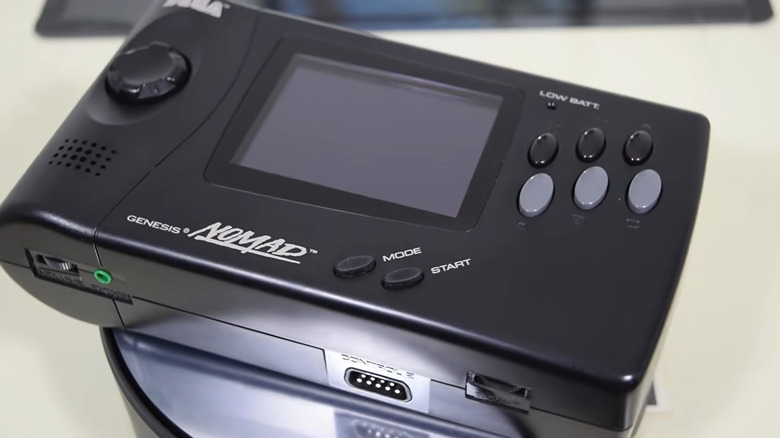
Sega fans remember how the Game Gear tried to challenge the Game Boy's dominance of the handheld market in the '90s. While it was a tidy console with a color screen and a great range of underrated games, everybody remembers its practically nonexistent battery life that made it a tough sell. Sega wouldn't be deterred, though, creating the ultimate what-if situation: what if it took its highly popular Genesis console and just made it portable? Thus the Sega Nomad was born and released in the U.S. in 1995.
This retro handheld console's origins can be traced back to the release of the Mega Jet in Japan, but the Nomad improved upon it by including its own built-in color screen. It also featured a D-pad and six-button configuration similar to its bigger brother's. What made it really nifty was the compatibility with the Genesis. You played the same cartridges, while you were also able to insert a second controller for co-op and use the A/V out port to hook up the handheld to the TV.
The Nomad didn't deserve to fail, but it did. For one, it arrived at the tail end of the Genesis' lifespan — plus, it didn't have any compatibility with the Sega CD or 32X. Two, its price point of nearly $180 was far too high, while the later price reductions arrived too late to turn its fortunes around. And finally, its battery life was its own worst enemy — even shorter than the Game Gear's.
Atari Lynx
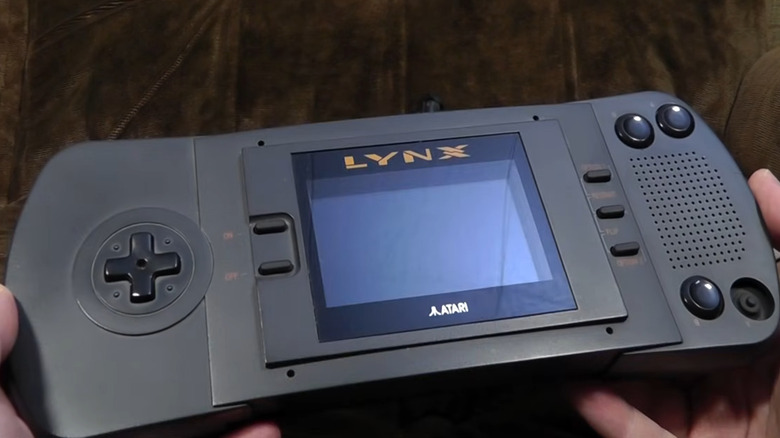
In the same year that Nintendo released its Game Boy, Atari unveiled the Lynx — a 16-bit handheld gaming console — in 1989. For all intents and purposes, it was a more advanced console than the Game Boy, offering a color screen, ComLynx capability for up to 16 players, and serious hardware.
According to R.J. Mical, one of the console's designers, the Lynx was more than comparable to other computing options at the time. "Our sprite engine (that creates the graphics for the Lynx) is easily 20-30 times more powerful than the Amiga sprite engine," Mical told Electronic Gaming Monthly (via The Atari Times). "The CPU, which controls the game logic, enemy intelligence, and stuff like that, is the same one found in the Commodore 64. But our microprocessor runs at a clock speed four times faster than the 64."
Yet the $179 price point was always going to work against it, especially since the Game Boy was half the price. Initial sales weren't that bad, though, as Atari reported 500,000 units sold in 1990. However, the arrival of the Game Gear only put further strain on the Lynx and provided a challenger in the color portable market. It also didn't help that Nintendo and Sega had access to bigger licenses than Atari at the time, thus making the Lynx the less appealing option among handheld enthusiasts. In the end, the Lynx turned out to be one of the biggest gaming console flops of all time.
Tiger's Game.com
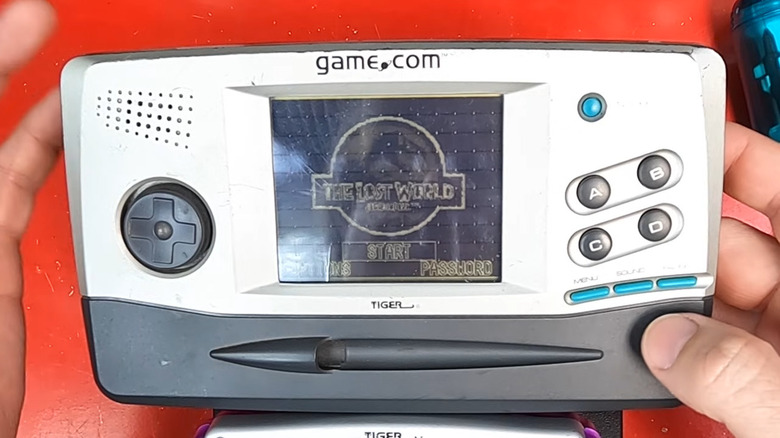
Once upon a time, Tiger Electronics was the king of LCD handheld games. Its releases were slices of classic nostalgic fun that leaned toward the budget-friendly side of gaming. In 1997, however, Tiger decided that it wanted to make a more advanced handheld system, complete with cartridges, so it unleashed the Game.com on the world.
This black-and-white console featured a stylus, touchscreen, and internet connectivity, while it offered a range of big-name licensed games, including "The Lost World: Jurassic Park," "Duke Nukem 3D," and "Batman & Robin." It was also decently priced at just under $70.
Yet there were two conflicting issues at play here: One, Game.com appealed to much older gamers through its titles, even though it was sold predominantly in toy aisles. And two, it found itself in between gaming generations; while it had futuristic features that other handheld consoles would later borrow, it still felt very much like an older console — and who was about to switch from the Game Boy to this? The Game.com struggled to make a dent in the market, and Tiger introduced a new version known as the Pocket Pro, but this didn't change much. This handheld device seemed doomed to be forgotten from the start.
Milton Bradley Microvision
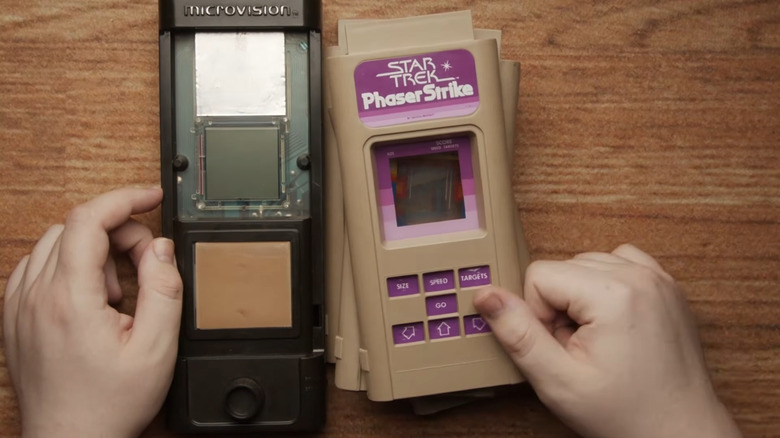
A decade before the Game Boy arrived, the Milton Bradley Microvision laid claim to being the first LCD handheld gaming console to use cartridges in 1979. Technically, though, there wasn't much happening on the actual console itself. The Microvision had a 16 x 16 LCD screen, battery slots, buttons, and a knob, but all the actual processing happened on the cartridges that slid and snapped into place over the console. By today's standards, it doesn't sound like much, but these cartridges held up to 2,048 bytes of ROM as well as 64 bytes of RAM.
The Microvision cost around $50, while the game cartridges went for about $18 a pop. The handheld didn't last very long, being discontinued in the U.S. after 1981 and only having 13 cartridges produced. Even so, there's an appreciation for how it tapped into LCD technology and achieved something new for its era. You could argue that if it weren't for the weird but wonderful Microvision's ambition, many others might not have followed in its footsteps. Even if it's largely forgotten, it's an important milestone in the history of gaming.