

9 Video Game Consoles That Didn't Deserve To Fail
The video game landscape is always changing. New consoles allow for development of games that would have been impossible on older hardware. Every once in a while, a game like "Fortnite" or "Grand Theft Auto" completely changes the industry and everyone pivots in an attempt to replicate that success, for better or for worse.
When it comes to the hardware itself, console manufacturers have a difficult task in balancing affordability with cutting-edge technology that can entice players to upgrade from older consoles to the new systems. A successful video game console not only continues the legacy of its predecessors but also offers new features that attract new players, even ones who may already be loyal to other brands.
Alas, not every system is successful. Over the years, many video game consoles didn't hit the way their creators intended. Some systems, like the Nintendo Virtual Boy or the Philips CD-i, were doomed to failure from the start, and few would argue otherwise (though the Virtual Boy, indeed, still has its fandom). The consoles we're discussing today, however, deserved better than to fail and be forgotten. These systems had tremendous potential but, for one reason or another, things just didn't work out. Let's take a look at nine video game consoles that didn't deserve to fail.
PlayStation Vita
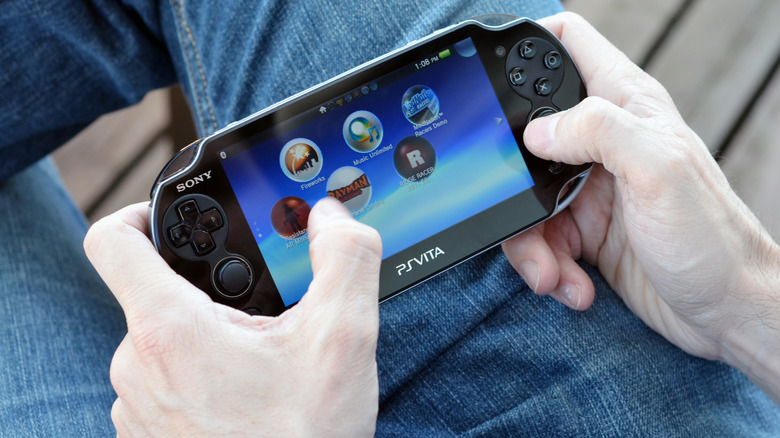
Ever since the blockbuster launch of the original Game Boy in 1989, Nintendo had a death grip on the handheld video game market. Sure, the Sega Game Gear did okay and the WonderSwan Color has a cult fandom, but nobody really threatened Nintendo's dominance. That changed with the success of the Sony PSP, or PlayStation Portable, which launched in late 2004 and went on to sell over 80 million units. Sure, that's only about half of what the Nintendo DS sold, but it was still quite successful, which led to Sony moving forward with a follow-up handheld gaming system, 2012's PlayStation Vita.
Unfortunately, the Vita was not nearly as successful, stalling out with an estimated 13 million units sold. It's worth noting that on Sony's official hardware sales charts, the Vita is conspicuously absent. Vita failed against the 3DS, which sold 75 million units, and Sony has yet to release a proper third handheld console (the Remote Play-powered PlayStation Portal doesn't count)
It's a shame, too, since the Vita was ahead of its time. It was the first major handheld gaming system to feature dual analog sticks for FPS games like "Killzone: Mercenary" and "Duke Nukem 3D: Megaton Edition." It also featured superior visuals over the 3DS, with games like "Uncharted: Golden Abyss," "Dead or Alive 5," and "Hot Shots Golf: World Invitational" looking on par with their PS3 counterparts. It boasted a sleek 960 x 544p OLED screen, front and rear touch sensitivity, and those dual analog sticks made the Vita feel like a true current-gen gaming system in the palm of your hand.
Sega Genesis Nomad
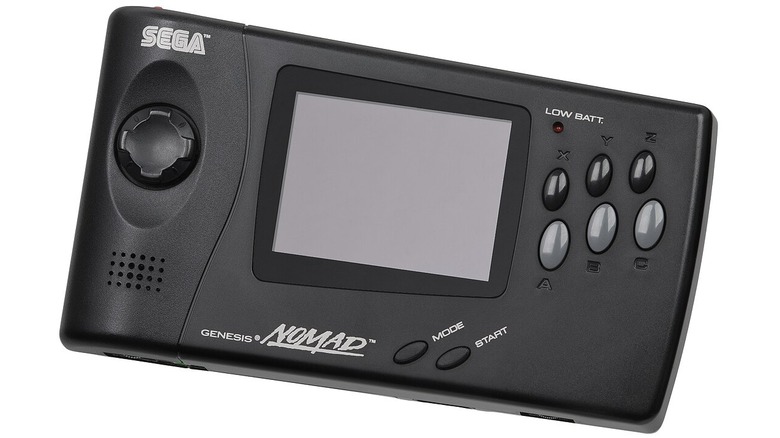
Speaking of the idea of "a home console in the palm of your hand," that's exactly what the Sega Genesis Nomad was. The Nomad wasn't a portable facsimile of a Genesis the way the PSP was based on the PS2 and the Vita was based on the PS3. The Nomad was literally a Sega Genesis redesigned to be a handheld. It utilized a handheld design based on the six-button Genesis controller configuration, played Genesis cartridges, and even had a video out so you could use the Nomad as a proper Genesis plugged right into the television.
The Sega Nomad released in 1995, after Sega had already launched the Sega Saturn, the 3D-capable successor to the Genesis. As such, players really weren't interested in a new version of the Genesis, even if it was a handheld. The Nomad also didn't support the numerous Genesis add-ons, like the 32X or Sega CD, which limited its use for players who had invested in those ill-fated ecosystems.
Today, handheld gaming systems are popular, especially ones that support emulated ROMs from retro systems like the Sega Genesis. Products like the Analogue Pocket do what the Nomad did, but with the benefits of modern technology, HD screens, and internet connectivity. The Nomad was a decade or three ahead of its time, but it was an early example of a handheld system striving to replicate the home console experience. It succeeded in that goal, but at only around 1 million units sold audiences just weren't interested at the time.
Sega Saturn
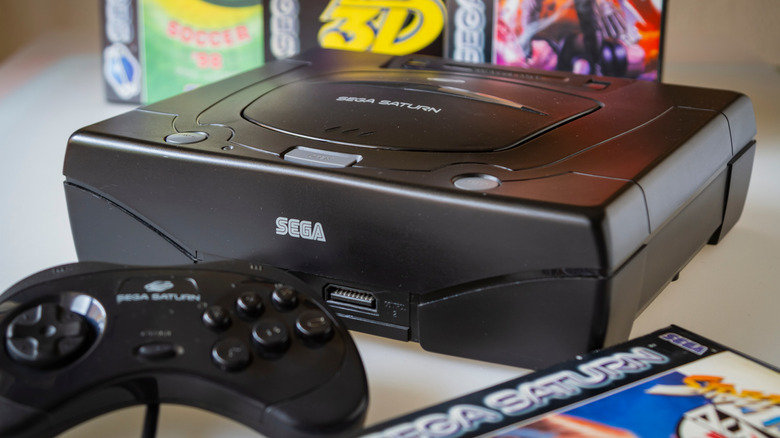
Not to pick on Sega, but their follow-up to the Genesis wasn't enough to put them ahead of the competition. Released in 1994 in Japan (1995 in the USA), the Sega Saturn launched for $399 and brought Sega into the third dimension. While it featured impressive ports of arcade games like "Virtua Cop" and "Virtua Fighter", the problem was that Sega was banking on strong arcade ports when the industry was moving away from that and more towards bespoke home experiences.
Most of all, though, the Sega Saturn just didn't have the horsepower to compete with the Sony PlayStation. At a glance, PS1 games looked similar to their Saturn counterparts, but with transparencies and higher poly counts, games just looked better on Sony's hardware, which launched at $299, a full hundred dollars fewer than Sega's machine. It's also worth mentioning that the Saturn was rushed to market ahead of schedule, ostensibly to get the jump on PlayStation. However, this threw a wrench into the marketing cycle and led to an early perception that there simply weren't enough games for Sega's console, so this move was seen as a mistake in hindsight.
The Saturn performed decently in Japan, selling well over 5 million units, enough for it to carve out a niche for itself among the Japanese gaming community. But it failed to sell even 2 million consoles in the United States and was completely obliterated by the PlayStation and Nintendo 64. As such, games like "Panzer Dragoon," "Nights into Dreams," and "Radiant Silvergun" didn't get their proper accolades until they were ported to other consoles. Meanwhile, the tremendous "Panzer Dragoon Saga" is still waiting to be discovered, since Sega's answer to "Final Fantasy VII" has never left the Saturn and is forgotten by all but the most hardcore JRPG enthusiasts.
Sega Dreamcast
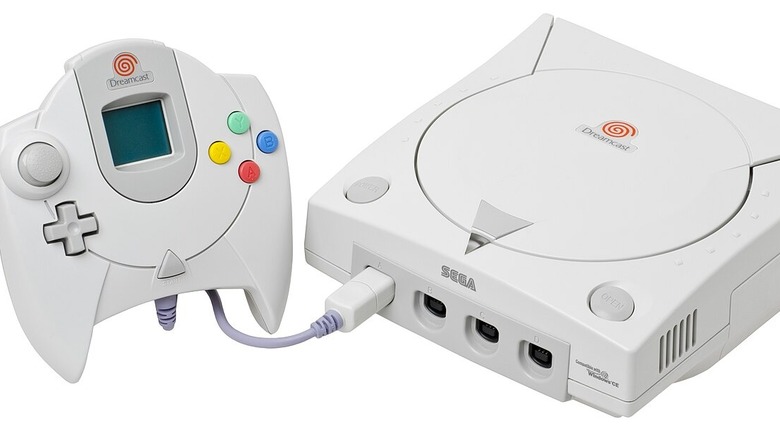
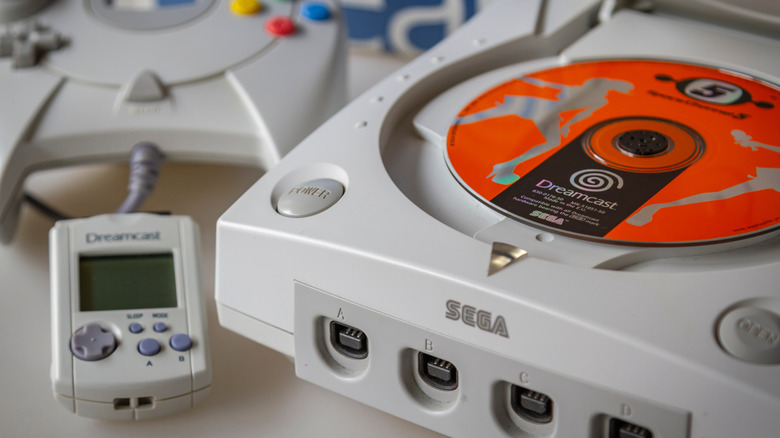
Okay, maybe we are picking on Sega a little, but this is the last time, since it's Sega's last console. The Dreamcast was a make-or-break system for the company; while it started off strong with loads of hype and breathtaking visuals, it ultimately released at the wrong time, wedged between two generations and not fitting into either.
The Dreamcast released on September 9, 1999 (the numbers "9-9-99" played a role in its marketing) with a competitive $199 price tag. Its flagship title was "Sonic Adventure," which showcased a 3D sandbox that rivaled "Super Mario 64" in some ways. Though critics weren't universally in agreement on the game, seeing Sonic run away from a rampaging Orca was a formative gaming experience for many young players of the era. The Dreamcast also had incredibly imaginative and innovative games like "Shenmue," "ChuChu Rocket!," "Jet Grind Radio," and "Skies of Arcadia," not to mention arcade-perfect ports like "Soul Calibur," "Crazy Taxi," and "Virtua Fighter 3." It also had a roster of ports from the PS1 era that looked better on Dreamcast, like "Spider-Man," "Tony Hawk's Pro Skater 2," "Dino Crisis," "Toy Story 2," and multiple "Tomb Raider" games.
Unfortunately for Sega, the Dreamcast was pretty much steamrolled by the 2000 launch of the PlayStation 2. The PS2 was more powerful than the Dreamcast, so multiplatform games like "Quake 3 Arena," "Silent Scope," and "Half-Life" all performed better on PS2. Not to mention, the Dreamcast only had one analog stick, and this was the era when dual-analog controls started becoming the gold standard. As a result, players forgot all about the Dreamcast and flocked to the PS2. Defeated, Sega dropped out of the hardware business entirely and focused squarely on making video games for other consoles.
Wii U
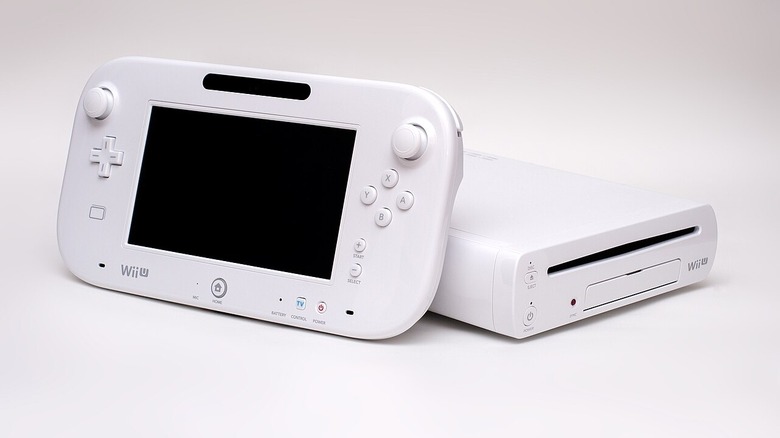
As mentioned before, the Dreamcast suffered from being released between console generations. It was more powerful than the PS1 but couldn't compete with the PS2. Nintendo's Wii U, which launched in 2012, faced a similar predicament, with graphics comparable to the PS3 and Xbox 360 just a year before the release of the PS4 and Xbox One. Nintendo hoped to overcome the generational hurdle with its main gimmick, the "GamePad" controller. This unique mechanism was to be its greatest strength but turned out to be the Wii U's biggest weakness.
The Wii U was the next-generation Nintendo console, the successor to the massively popular Wii. However, due to its weird naming convention and perceived lack of visual upgrades (aside from the jump to HD), many erroneously believed that the Wii U was an accessory or upgrade kit to the Wii, rather than a proper new console. The Wii U never recovered from that miscommunication, not to mention high profile duds like "Star Fox Zero" and "Animal Crossing: Amiibo Festival." It also suffered from constant delays to the release of "The Legend of Zelda: Breath of the Wild." By the time it released, "BoTW" was both the swan song for the Wii U and a massive launch title for its successor, the Nintendo Switch.
As for the Gamepad, you either loved or hated it. It served as a tablet/controller hybrid, with a screen that could display maps, alternate angles, and inventory screens. It also had a stylus-compatible touch pad, which meant "Super Mario Maker" played better on Wii U than its sequel did on Switch. Games that were built with the Wii U in mind, like "The Wonderful 101," "Rayman Legends," and "Super Mario 3D World" all played best on Wii U, a truly unique Nintendo system.
Nintendo 64 DD
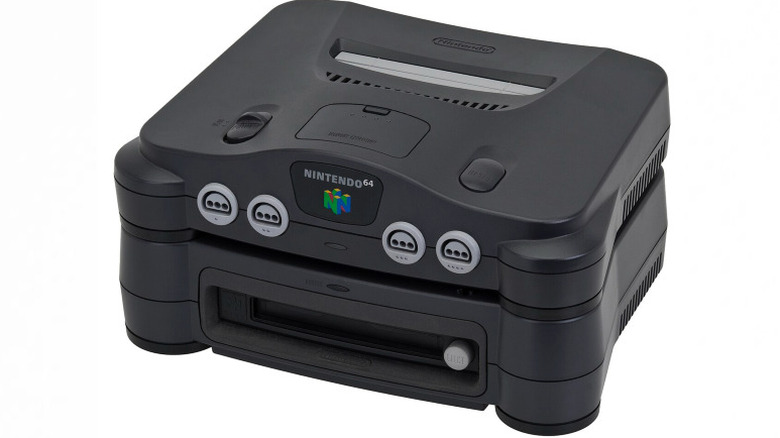
While fondly remembered by players who spent countless hours blasting their friends in "GoldenEye 007" or hunting down all 120 stars in "Super Mario 64," the Nintendo 64 failed to match the success of its main competitor, the Sony PlayStation. Part of the problem was that the N64 launched with one hand tied behind its back, so to speak. Before the system was even released in 1996, an add-on peripheral was announced, called the 64DD.
The 64DD was supposed to unlock the true potential of the N64, with games launching not on CDs or even cartridges but on proprietary floppy disks. The 64DD was supposed to allow the N64 to run games like "Super Mario 64-2" and "The Legend of Zelda: Ocarina of Time." Despite being announced in 1995, the 64DD didn't launch until December of 1999, when the N64 was already on its way out. As a result, the 64DD failed in Japan and never launched in other territories. Had Nintendo found a way to combine the 64DD into the N64 from the start and integrate its online capabilities years before online gaming services like Xbox Live, maybe things could have turned out differently.
"Super Mario 64-2" never came to fruition, and "Ocarina of Time" was retooled to be a regular N64 game, not unlike how games planned for the Famicom Disk System were released as regular NES games. Only a handful of games were ever released for the 64DD, including "Sim City 64" and the "Expansion Kit" for "F-Zero X," which added a track editor, two new cups, and other extras. Sadly, when "F-Zero X" was brought to the Nintendo Switch online service, this 64DD content was left out. Today, 64DDs are sought by Nintendo collectors and can cost thousands of dollars.
Nokia N-Gage
These days, phone gaming is in a tricky spot. Apps fueled by microtransactions dominate the virtual landscape, but services like Netflix and Apple Arcade have many games that can be enjoyed without being inundated with ads or being asked to spend a few dollars every couple minutes.
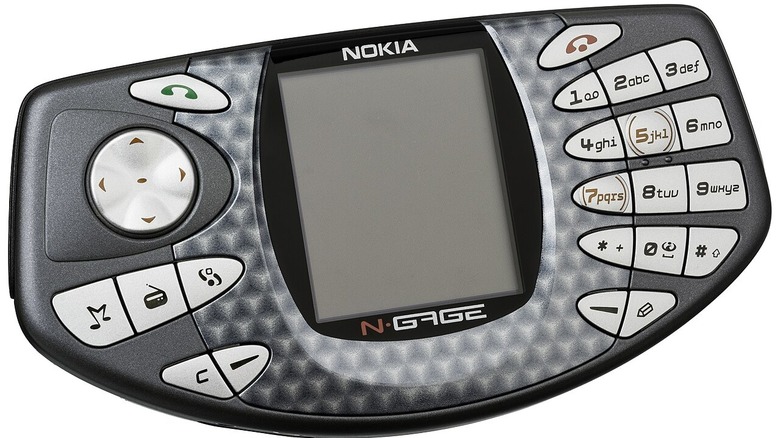
Back in 2003, before the iPhone had been invented, Nokia tried to revolutionize cell phone gaming with the N-Gage, a cell phone with gaming capabilities that eclipsed that of the Game Boy Advance. Take, for instance, "Tony Hawk's Pro Skater." In order to run "THPS2" on the Game Boy Advance, the whole game had to be completely redesigned to support 2D backgrounds and flat-shaded 3D polygon characters. The N-Gage version of the original game, however, was a proper conversion of the PlayStation original, with fully 3D graphics. The N-Gage also boasted heavy hitters like "Tomb Raider," which remains unique for being a port of the PS1 original but used a new model of Lara Croft based on her appearance in "The Angel of Darkness."
At a glance, the N-Gage was quite impressive, but if you've ever held the system in your hands, well, it would quickly become clear why the N-Gage was a complete failure. The number pad control scheme was unwieldy and the D-pad was as stiff as a stale gummy bear. Then there was the screen, which was small and vertically oriented, leading to terrible screen crunch that made games like "SonicN," a port of "Sonic Advance," practically unplayable. Still, it was an innovative system and a huge leap for cell phone gaming; if it had been successful, the whole trajectory of mobile gaming could have changed forever.
PlayStation Classic
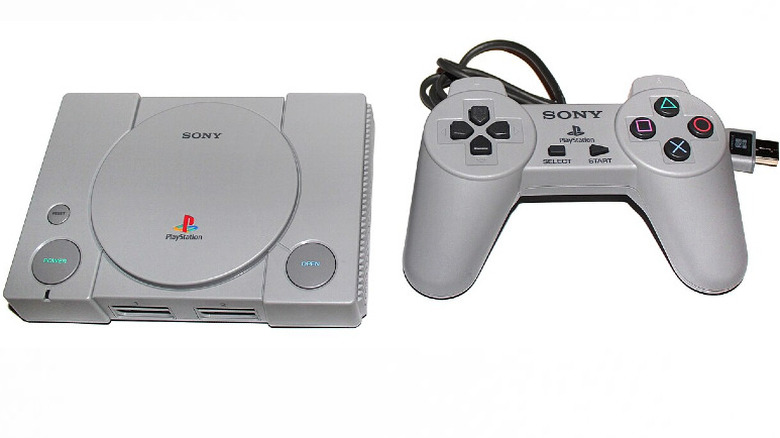
After the success of the NES Classic Edition in 2016 and the Super NES Classic Edition in 2017, Sony sought to get in on the action and crafted their own "mini-console," the PlayStation Classic, released in 2018. Like Nintendo's Classic Editions, the PlayStation version took the form of a miniature replica of the console on which it was based and came pre-loaded with 20 games. The roster included all-time classics like "Metal Gear Solid," "Final Fantasy VII," "Syphon Filter," and "Resident Evil: Director's Cut."
On paper, this sounds like a total win. However, the emulation was underwhelming, since all the games ran on PCSX ReArmed, an open source emulation solution, rather than anything proprietary. As such, it was easy for savvy players to hack and load the system with their own ROM files. Bizarrely, the PlayStation Classic also included many PAL versions of games on the North American version. This was a mistake since PAL versions of games from that era were notorious for running at a slower frame rate than their American counterparts, leading to a lesser gaming experience for European players. Why they would include those versions instead of the North American ones is a mystery.
The PlayStation Classic should have been so much better, but even so, it's hard to argue with a device that comes pre-loaded with "Wild Arms," "Twisted Metal," and "Super Puzzle FIghter II Turbo." It's the kind of thing you can throw in your luggage and bring out for some quick and casual gaming at a hotel room or a friend's house.
Ouya
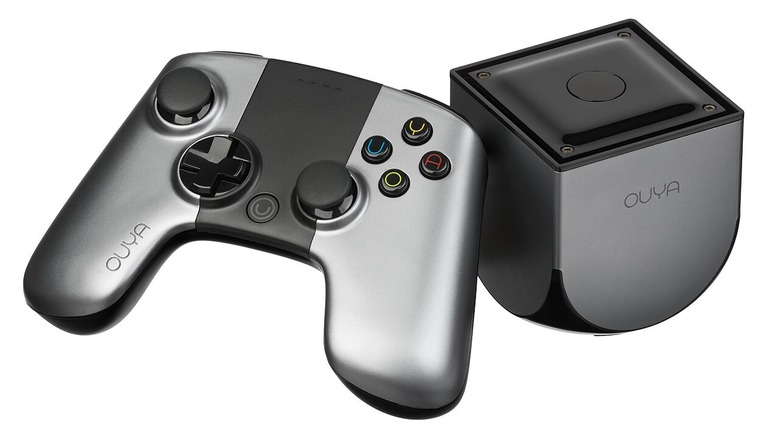
Kickstarter is always a gamble. It's a way to crowdsource projects and products that aren't necessarily mainstream but still have an audience. With that in mind, it's no wonder why the Ouya was one of the platform's biggest early successes. The Ouya was an Android-based home console with a focus on local multiplayer, indie sensibilities, and casual play. The Kickstarter campaign asked for $950,000 but ultimately brought in a whopping $8.5 million in crowdfunding.
Alas, that initial excitement didn't translate into mainstream success. The Ouya is estimated to have only ever clocked 200,000 users following its 2013 launch. Despite its $99 price point, the Ouya just couldn't compete with the juggernaut debut of the PlayStation 4 the same year and was quickly forgotten. The Ouya's online store was officially shut down in 2019.
At the end of the day, a game console is measured by the strength of its titles, and the Ouya, honestly, didn't have a stellar lineup to compete with the likes of the PlayStation 4 and Xbox One. There wasn't much on the system that wasn't possible on a contemporary smartphone. But there's an exception, and it's one heck of one: "TowerFall," a four-player multiplayer combat game inspired by "Super Smash Brothers" but with wholly unique archery mechanics. Simply put, it's one of the greatest local multiplayer games of all time. Following the Ouya's failure, the game was ported to the more mainstream consoles in 2014. If you wish to see what all the fuss was about, "TowerFall: Ascencion" (as the port is known) is a glorious tribute to the imagination and spirit of innovation that fueled the Ouya during its brief lifespan.