

13 Classic Cars With Better MPG Than The Mazda3
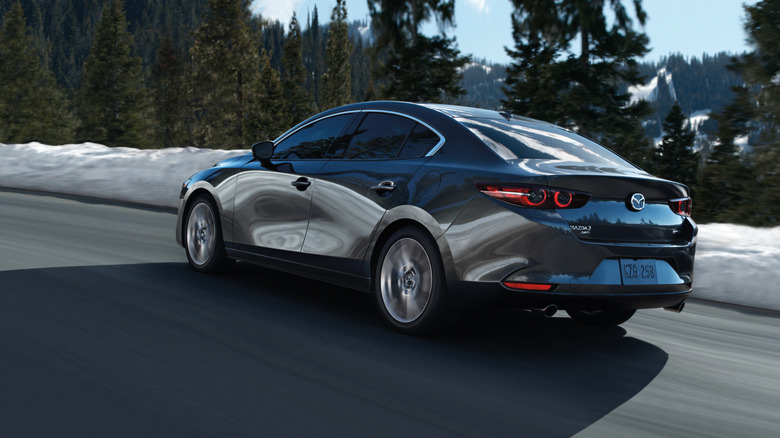
Modern economy cars have come a long way, in no small part thanks to the brilliant engineering that goes into their powertrains. Even if you take hybrid systems out of the picture and focus on pure gas-powered vehicles, there are plenty of cars that manage a good balance between power and efficiency. Most of the time, this means that classic cars just can't keep up at the fuel pump.
A great example of this is the 2026 Mazda3. The EPA claims that it can manage up to 30 mpg combined, which is pretty good. It is especially good when you recognize that the engine under the hood of the compact car is a 2.5-liter four-pot that puts down 186 hp, enough to get it up to 60 mph in as little as seven seconds.
However, As good as the Mazda is, there are quite a few classic cars that don't just keep up with its EPA ratings, but actually beat them, and not by a small margin either. History is loaded with some economical little cars with interesting stories to tell and fuel-sipping engines chugging away under the hood.
2000-2006 Honda Insight – 53 MPG Combined
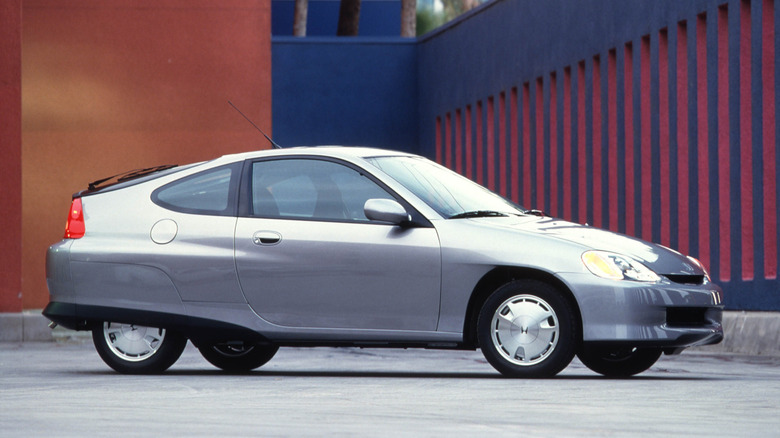
It might be a little newer than some of the other cars on this list, but the Honda Insight hybrid has quickly grown into a modern classic and gained a cult following today. Its unique coupe-like styling, and its skirts at the back that cover up most of the rear wheels are a big part of the charm that has made it so popular. It also only had two seats. In a lot of ways, it feels quite similar to the brand-new Honda Prelude coupe.
There are a lot of things that make Honda's little hybrid coupe so special. The first is that it is considered to be the first mass produced hybrid electric car in North America, which is a pretty massive achievement. It also held the title of the most efficient hybrid without a plug for an incredibly long time.
The first generation of the Honda Insight also came equipped with a highly praised five-speed manual transmission. This is quite rare for a hybrid in general, and it got a whopping 53 mpg combined, according to the EPA. Honda did offer a continuously variable transmission from the 2001 model year onward, but it wasn't quite as efficient as the manual models.
1989-1994 Geo Metro XFi – 47 MPG Combined

The Geo Metro is a little bit of a complicated car. Underneath everything, it is really a Suzuki Cultus, later renamed the Suzuki Swift. The first generation of the Metro ran from 1989 to 1994 in the United States. In other parts of North America, the little economy car was also sold as the Pontiac Firefly and the Chevrolet Sprint.
The Geo Metro isn't a classic car in the sense that it was particularly low-production or sporty, but more in the sense that it is exceptionally representative of the era that it was born in. The Metro having the Geo badge does also make it more interesting as well, though. Geo was a brand under the General Motors umbrella, but it was only around from 1989 to 1997, which is not much longer than the lifespan of the Metro.
Every Metro in the United States came with the same G10 1.0-liter inline-three engine. The Geo Metro XFi was the most efficient variant, though, being detuned to produce a humble 49 hp. It also came exclusively with a five-speed manual. This combo allowed it to achieve its stellar EPA rating of 47 mpg combined. It is also a lot rarer than the average Metro, with it being estimated that only around 10% of all Metros produced were XFi models.
1988-1991 Honda Civic CR-X – 44 MPG Combined
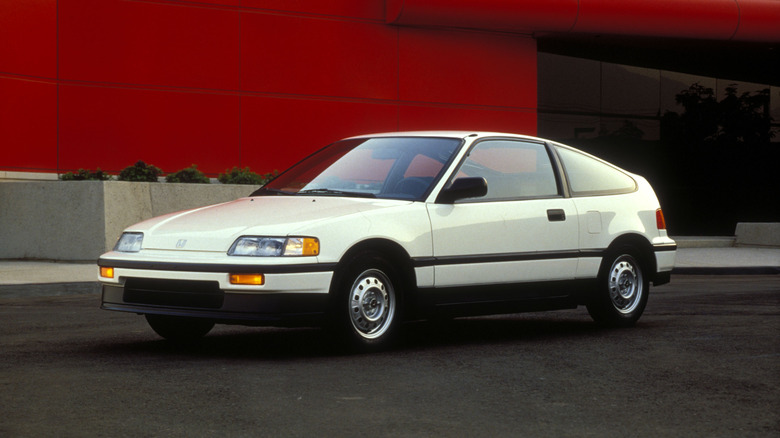
The Honda CR-X, marketed as the Honda Civic CR-X in a lot of regions outside of Japan, was a cool looking early '90s coupe. While it had a set of rear seats in some other markets, models in the United States were pure two-seater coupes. The 1988 to 1991 models represent the second generation of the car and are generally a little more desirable.
Despite its low fuel consumption and its relatively economical price point, the CR-X was praised pretty heavily by critics for its driving dynamics. It is a lightweight, three-door, sport compact that owners say felt like an absolute go-kart from behind the wheel. It is everything that enthusiasts love about cars from this era, with everything feeling exceptionally analog. It also came loaded with a ton of cool features.
The CR-X featured a standard 1.5-liter 16-valve four-cylinder engine. Variants with the HF badge featured a high fuel efficiency version of the engine, which is how it achieved up to 44 mpg combined. There was also a sportier 1.6-liter engine which found itself in the more thrilling Si model, but these didn't quite reach the same level of efficiency.
1992-1995 Honda Civic hatchback – 43 MPG Combined
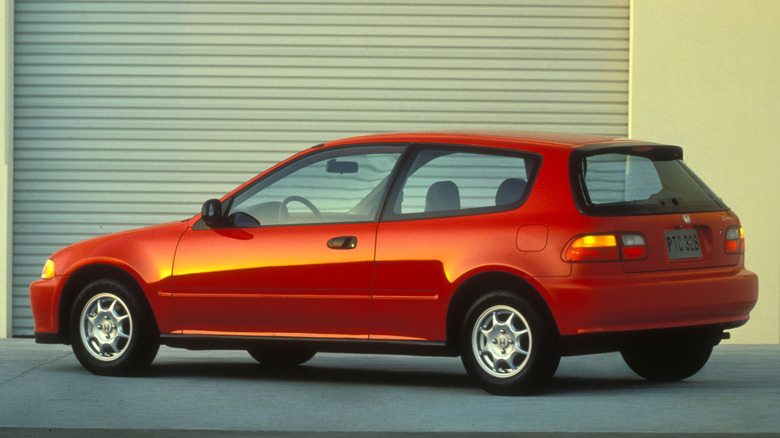
The fifth generation of the Honda Civic hatchback is legendary in the automotive world. It became a cornerstone of car culture, with its lightweight and agile chassis combining with a legendary engine. The reason that it has remained so popular is that its platform allowed for basically endless levels of modification. The fifth generation ranks among the best Civic generations to date.
This generation of the Civic hatchback came with a couple of different engine outputs. Most models featured a 1.5-liter inline-four. Also offered as an option in the top-trim Si was a 1.6-liter VTEC engine, which was key in this little economy car finding its place in automotive myth and legend. The Si wasn't particularly efficient, though.
If you're looking for a fifth gen Civic that is going to beat a modern car like the Mazda3 when it comes to efficiency, then the VX is the way to go. It was specifically designed to keep fuel consumption low and has become a go-to option for hypermilers. Every one of these Civics with a 1.5-liter engine and the five-speed manual achieves a higher EPA rating than the current Mazda3, though.
1985-1988 Suzuki SA310/Forsa – 42 MPG Combined
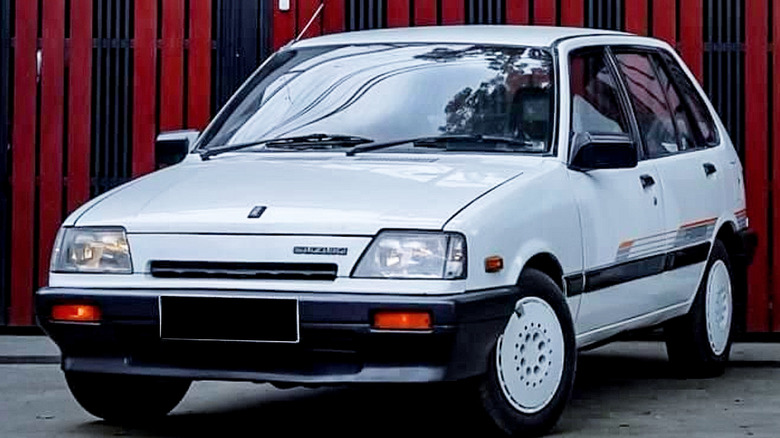
In the '80s, General Motors worked on a small, fuel-efficient car that it dubbed the M-Car. Pretty quickly, the brand realized that the project wasn't going to be profitable enough for it, so it sold the project to Suzuki in exchange for a 5% stake in the business. It has had a lot of names depending on the region, from the SA310 to the Forsa to the Cultus.
What makes the Forsa so interesting is its rarity in the continental United States. Rebadged versions, like the Chevrolet Sprint, are much more common. Suzuki tested the waters in America with a very small number of models wearing the Forsa nameplate. This means that while they aren't exactly super valuable, they are pretty rare, and they come with an interesting story.
Because the SA310/Forsa were distributed in places like Hawaii and Puerto Rico, the EPA did rate the model's efficiency. The 1985 SA310 was rated up to 42 mpg combined, while later Forsa badged models were rated for up to 39 mpg combined.
1981-1990 Ford Escort – 40 MPG Combined
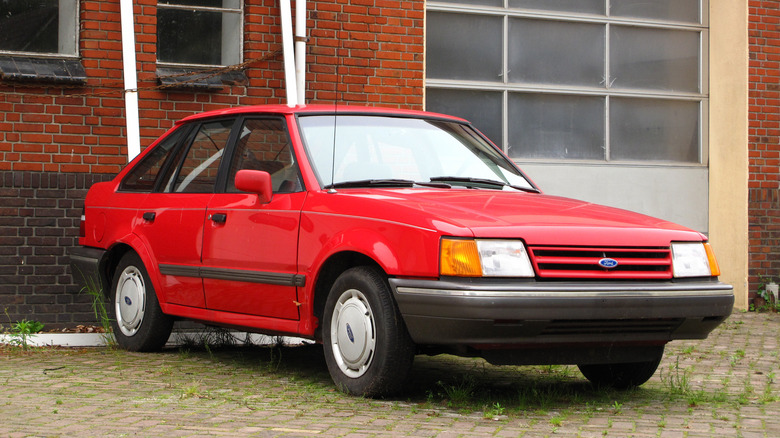
In Europe, the Escort nameplate had been around and on the roads since 1968. In America, it wasn't until 1981 that an Escort hit the market. This particular generation of the nameplate was designed to be what the brand called a "world car," which essentially meant that it would meet the needs of any buyer around the world. This is a goal that Ford achieved pretty well.
The first-generation American Escort was essentially an evolution of the iconic Ford Pinto. It was offered either as a three-door hatchback, five-door hatchback, or five-door station wagon. It was an incredibly successful car that became instantly recognizable just about anywhere in the world, defining an era of transportation.
Ford put a number of different engines under the hood of the Escort throughout its lifetime, but if you're looking to maximize efficiency then you're going to want the 2.0-liter Mazda inline-four, which managed a rating of up to 40 mpg combined. However, some models with the much higher output 1.9-liter Ford CVH engines still managed over 30 mpg combined, depending on the body style and transmission setup.
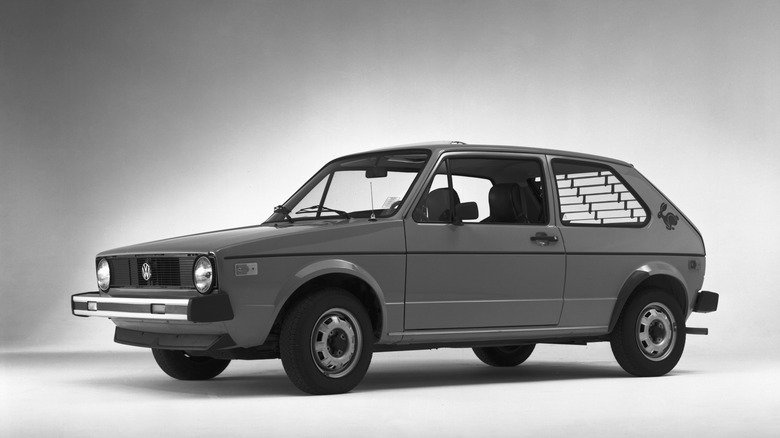
1975-1984 Volkswagen Rabbit – 38 MPG Combined
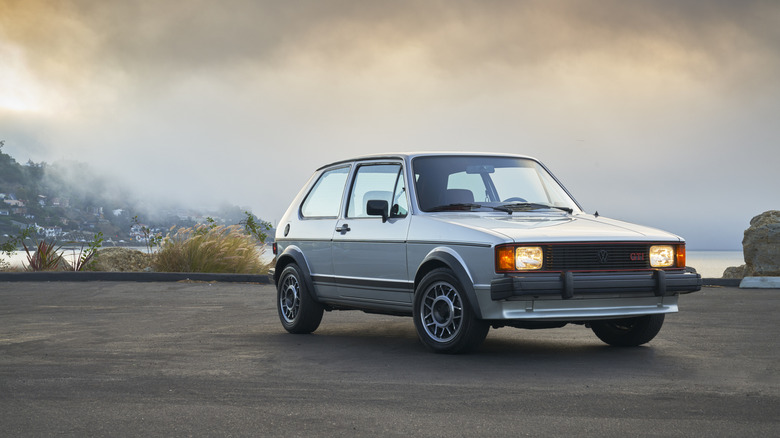
Those in other parts of the world will instantly be able to recognize this entry as the Mark I Golf. It was, however, marketed in the U.S. and Canada as the Volkswagen Rabbit. It is a car that pioneered a whole new era of automotive enthusiasm, existing as the basis for the modern hot hatch.
The Rabbit was an economy car that was built for just about anyone, and it looked fantastic. A little-know fact is that it was designed by Giorgetto Giugiaro through his studio, Italdesign. Giugiaro is responsible for some pretty iconic cars, like the BMW M1 and the Lotus Esprit S1. The Rabbit is more than just its good looks, though, and it is considered to be exceptionally fun to drive by critics and owners alike.
Volkswagen introduced a plethora of different engine options for the Rabbit. According to the EPA, though, the 1.6-liter diesel models were the most efficient, getting up to 38 mpg combined, and by a pretty decent margin. You'd want to skip the automatic transmission, though, and instead opt for the four-speed or five-speed manuals.
1991-1997 Volkswagen Golf – 38 MPG
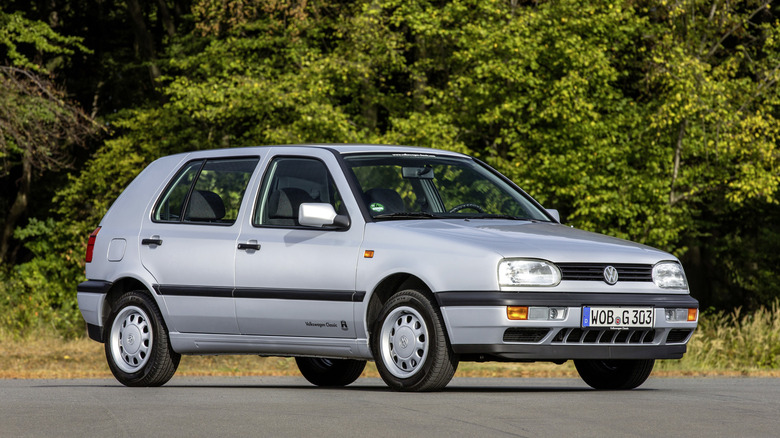
After the Rabbit, Volkswagen introduced the Golf nameplate to North America. The third generation of the Golf, sold in North America from 1994 to 1999, has pretty recently started getting the appreciation that it deserves, bridging the gap between retro hot hatches like the Rabbit and the more modern, civilized comfort we've come to expect from the nameplate.
The car was a bit controversial at the time for steering away from the boxier design elements that defined the first and second generations of the Golf. The more rounded look has, however, become synonymous with the '90s. It hasn't quite reached the same icon status as the MK1 and MK2 Golfs yet, but that does mean that it is a whole lot more affordable on the used market today.
Part of what made the MK3 Golf so desirable was the VR6 model, which came with a narrow-angle 2.8-liter six-cylinder engine that has become quite iconic. That model definitely doesn't meet our efficiency criteria, though. Some late model years came equipped with a very thrifty 1.9-liter diesel four-cylinder that could manage up to 38 mpg combined.
1981-1984 Toyota Starlet – 36 MPG
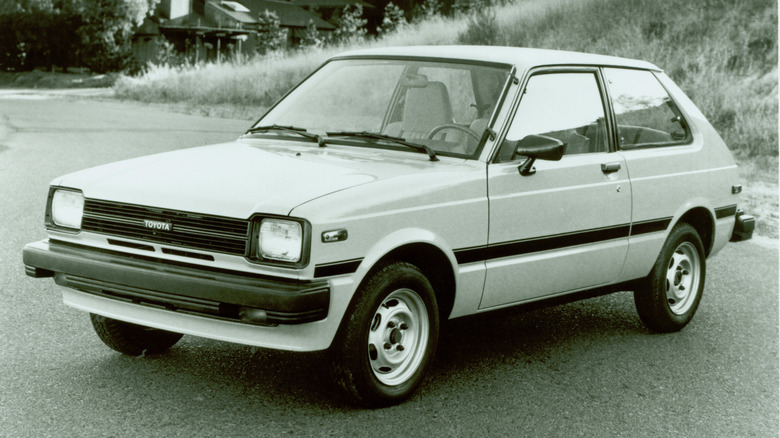
This is the second generation of Toyota's little Starlet hatchback. It is much more well known than the first generation as it was the first model to be extensively sold outside of Japan. Also important is the fact that it was the last generation of the nameplate to feature a rear-wheel drive layout, which is part of what makes it so appealing to enthusiasts.
Along with its boxy yet handsome exterior styling, the Starlet came with some performance-oriented mechanical components that made it a really great car to throw around. It was the first Toyota passenger car to feature a rack and pinion steering system, and it also featured a four-link coil spring rear suspension. On top of this, it weighed around 1,800 pounds. Sadly, it was sold in America for just four years.
The United States only ever got the three-door hatchback version of the Starlet. It initially came standard with a five-speed manual transmission, but the late 1983 and 1984 models only came with a four-speed. You also only got the 4K designation engine, the largest of the global offerings. The EPA says models with this setup managed up to 36 mpg combined.
1987-1994 Subaru Justy – 34 MPG
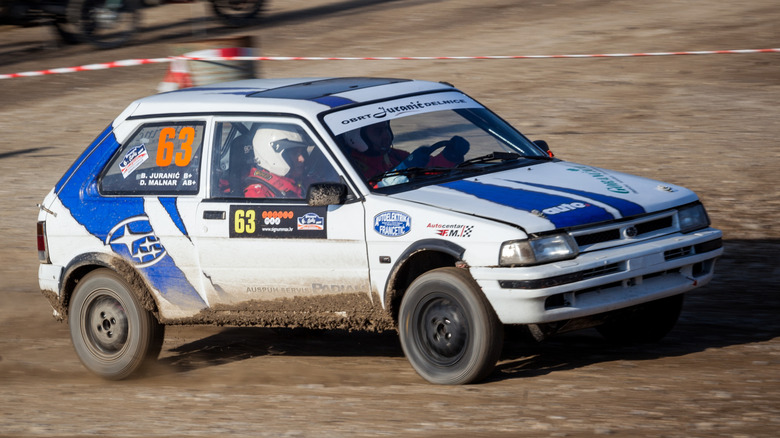
Where sometimes enthusiasts are captured by perfect driving dynamics or excellent styling, sometimes quirkiness is all it takes to win hearts. Enter the Subaru Justy. It does check some of those enthusiast boxes, being lightweight and agile. Where its fame really comes from, though, is the fact that it could be had with part-time or full-time four-wheel drive.
While rivals like the Fiat Panda have gained acclaim in enthusiast circles for being a little car with strong off-road capabilities, the Justy has been somewhat forgotten. Its off-road capability was great, though, and that put it in a pretty unique class.
When the Justy was first introduced to the American market, it arrived with front-wheel drive. These 1987 models were rated for 34 mpg combined. Its EPA rating steadily went down after this point but still remains competitive with a modern Mazda3. While the four-wheel drive models are cool, they didn't quite hit the 30-mpg combined mark.
1983-1987 Renault Alliance – 33 MPG
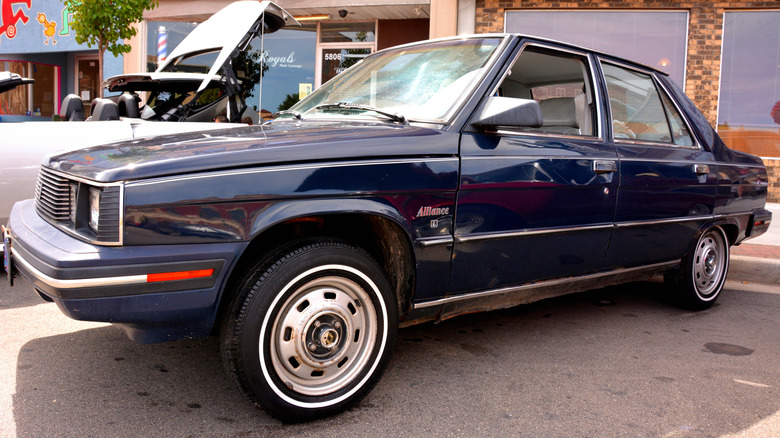
Renault is a brand that has never really had a strong presence in the United States, which is part of what makes this entry so interesting. Look below the surface and you'll find out that, despite its badge, the Alliance is actually a car manufactured by American Motors Corporation (AMC). In fact, because more than 70% of its parts were American, it was considered a domestic car.
The Alliance wasn't flashy, or even particularly sporty. It was built to be a sensible post-Oil Crisis car, something it achieved quite well. That being said, it was good enough to make Car and Driver's top 10 list in 1983 and it also won MotorTrend's Car of the Year award in the same year. This was mainly thanks to its superb build quality and great ride.
Models with the base 1.4-liter four-cylinder engine were the most efficient, with the thriftiest models being rated for up to 33 mpg combined. Renault and AMC did, however, introduce a sportier 1.7-liter engine, though it wasn't quite as light on fuel.
1981-1987 Isuzu P'up/Pickup – 32 MPG

Cheap and simple trucks are slowly but surely starting make a comeback in the United States, which is fantastic. The truth is that most people don't need a massive pickup. This was the ethos behind the Isuzu P'up. It was a simple and stripped-down truck that was meant to be cheap, efficient, and capable.
The P'up has gone by a couple different names, with the first generation being called the Isuzu Faster. Some might know the truck's rebadged sibling a little better, the Chevrolet LUV. General Motors didn't keep the LUV around for a particularly long time. Isuzu, which had been selling the pickup in parallel under the P'up and Pickup nameplates in the U.S., continued to keep its model on the market until 1987.
Another big part of what made both the Chevrolet LUV and the Isuzu P'up so appealing was the fantastic 2.2-liter diesel inline-four. It wasn't exceptionally powerful, but it received an EPA estimated rating of 32 mpg combined, which was much more efficient than other trucks on the market at the time.
1993-1997 Honda Civic Del Sol – 31 MPG
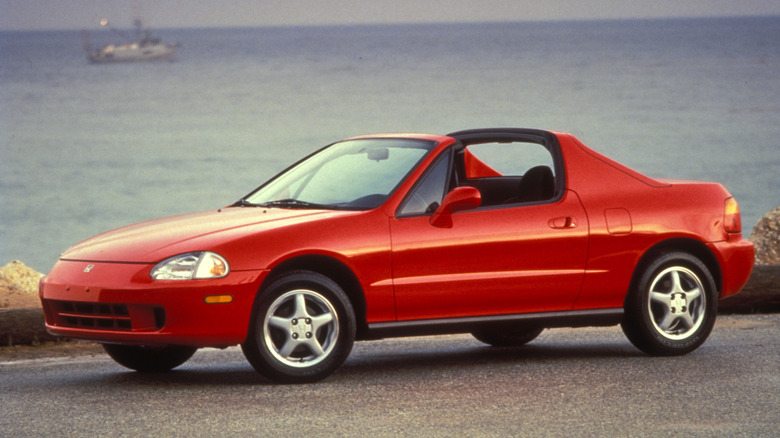
This is the direct evolution of the Civic CR-X that featured earlier in this article, with the Del Sol taking things further in a quite a few areas. As well as being a sleek two-door model, it also featured an extremely cool targa-top roof. This removable roof could be stored in the trunk, which made it great for weekend drives.
The Del Sol was built on the same chassis as the fifth generation of the Honda Civic, which meant that it was lightweight, nimble, and incredibly easy to tune. It was also pretty reliable, unlike a lot of other sports cars of the time, and quite practical. Despite all this, it was fairly underrated in its time. It is the perfect modern classic for someone looking for a car that can do just about everything. There are a couple of things to consider before you buy a used model, though.
There is no getting around the fact that the 1.6-liter VTEC engine was the star of the show, with a redline that sat at 8,200 rpm. The EPA rated some later models with this engine for 31 mpg combined. Earlier models with the 1.5-liter four-pot were still a good choice, but they weren't quite as exciting.
Methodology
We utilized data from the EPA to compile this list, sticking to official estimates rather than outlying data experienced by some owners. The 2026 Mazda3 was used as a baseline, with the most efficient model managing a rating of 30 mpg combined. This means that only classic cars that achieved an EPA rating better than that were considered.
The definition of a classic car isn't something set in stone, but we mainly stuck to the widely accepted standard that anything 20 to 40 years old could be considered a classic car. While we haven't included every classic car from this era that met the efficiency criteria, we have included some of the most culturally impactful options from this era.