

5 Of The Most Fuel Efficient Non-Hybrid Compact Cars You Can Buy In 2026
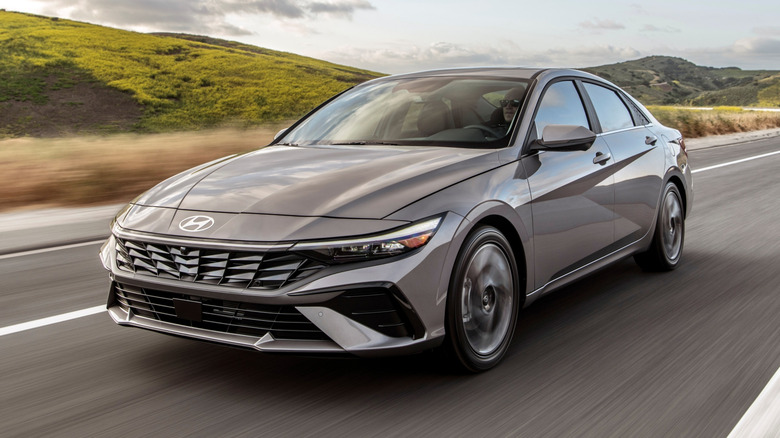
Continuing conflict in the Middle East means that gas prices aren't likely to drop significantly in the near future. As a result, many buyers are paying extra attention to the efficiency figures of their new cars. Increasing numbers of buyers are turning to hybrid cars to keep their fuel bills down, and all of the most efficient new cars on the market now feature some degree of electrification. Even so, if you prefer to give hybrids a miss, there are still plenty of affordably priced gas-powered cars on the market that offer good efficiency figures.
Japanese automakers are especially adept at making efficient non-hybrid cars, but certain German and Korean manufacturers aren't far behind. According to EPA data, the average new car sold in America in 2025 achieved 27.2 mpg, but the best non-hybrid cars hit combined mpg figures in the mid-30s. If you're looking for the most frugal new compact cars without electrification in 2026, these five currently boast the best combined ratings on the market.
Nissan Sentra — 33 mpg
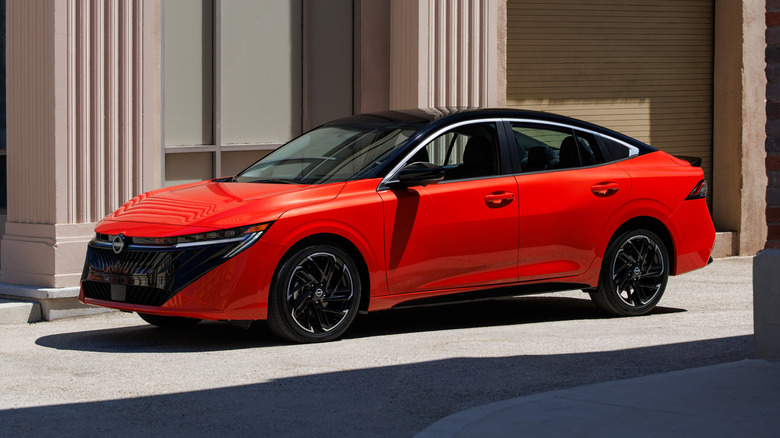
After spending time with the latest Nissan Sentra, our reviewer came to the conclusion that a hybrid variant of the car would make it a more competitive offering compared to the likes of dependable mainstays like the Toyota Corolla and Honda Civic. The thing is, the Sentra also can't match up to its non-hybrid Corolla and Civic counterparts on efficiency either.
Still, it's not far behind the class leaders, with an EPA-estimated combined rating of 33 mpg. According to the agency, driving solely around the city will see the car's economy drop to 30 mpg, while highway journeys should achieve 38 mpg.
In almost every other aspect, there isn't much to dislike about the Sentra. It's very affordably priced, with the base trim starting from just $22,600 (plus a $1,245 destination fee). Higher trims get niceties like faux leather upholstery and a Bose audio system. It's decent to drive too, by segment standards at least. Its rivals just do things a little bit better, but the Sentra still shouldn't be overlooked.
Volkswagen Jetta — 34 mpg
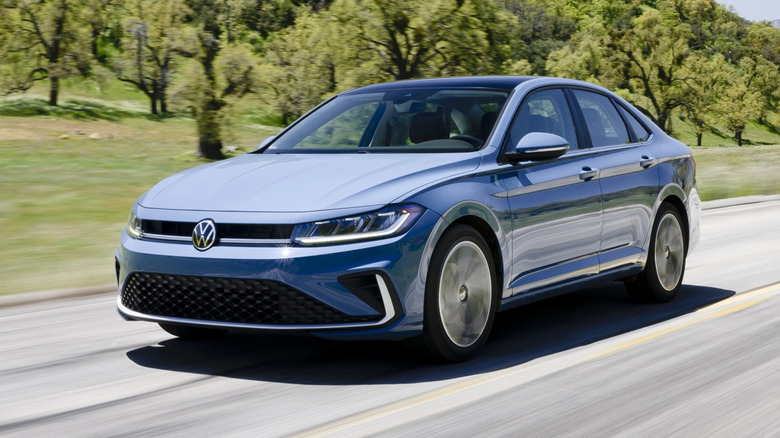
The cheapest new Volkswagen in the U.S. is also the brand's most efficient non-hybrid car, achieving a combined 34 mpg. In the city, Jetta drivers can expect 29 mpg, and on the highway, they should see 40 mpg. The current generation Jetta has been around for years now, and it hasn't changed a whole lot over that time.
The same 158 horsepower engine is still available for 2026, and there are still a range of trims that stretch from bare-bones to well-equipped. The pricier SEL trim offers a heated steering wheel, a sunroof, and ventilated front seats. It's also still affordably priced, although it's not quite as cheap as some of its rivals. The base 2026 Jetta starts from $23,995 (plus a $1,275 destination fee), while top trims start north of $30,000 once fees are taken into account.
There is one key difference between today's Jetta and those of years past though: its manual transmission, or rather, its lack of one. When we last reviewed the Jetta in 2023, it was still possible to get the sport trim with a manual. In 2026, only the sporty Jetta GLI is available with a stick shift, and that's also set to change soon. From the 2027 model year onwards, VW is axing manual transmissions from its U.S. lineup altogether, with the Jetta GLI receiving a standard auto gearbox instead.
Hyundai Elantra — 35 mpg
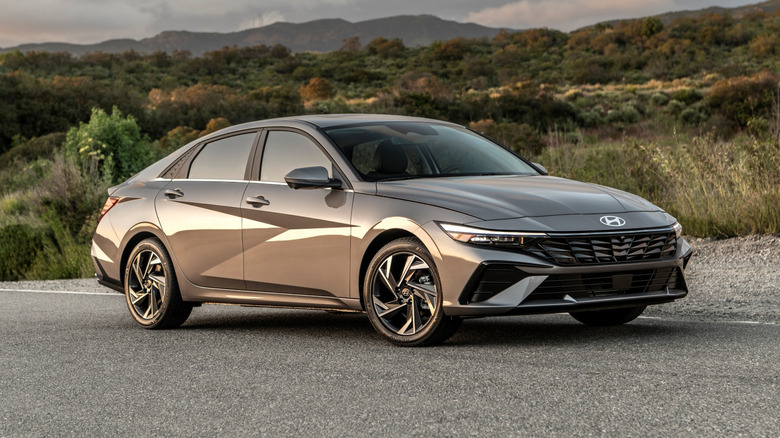
With a starting price of $22,625 (plus a $1,245 destination fee), the 2026 Hyundai Elantra is another car that's both affordable to buy and cheap to run. It should achieve a combined 35 mpg, putting it comfortably among the most frugal non-hybrid cars on the market. That's enough to save $2,250 in fuel over the course of 5 years compared to the average new car if you drive 15,000 miles each year.
Both its city and highway efficiency figures are among the best in class, hitting 31 mpg and 40 mpg respectively. Even base models receive a good level of standard tech, including wireless Apple CarPlay and Android Auto and USB charging ports in the second row. At the top of the trim range, the Elantra Limited adds a Bose audio system and H-Tex faux leather-trimmed seats. The Elantra is one of several Hyundai models that's available both with and without a hybrid powertrain, with the hybrid offering even better fuel economy but costing around $3,000 extra in base form.
Toyota Corolla — 35 mpg
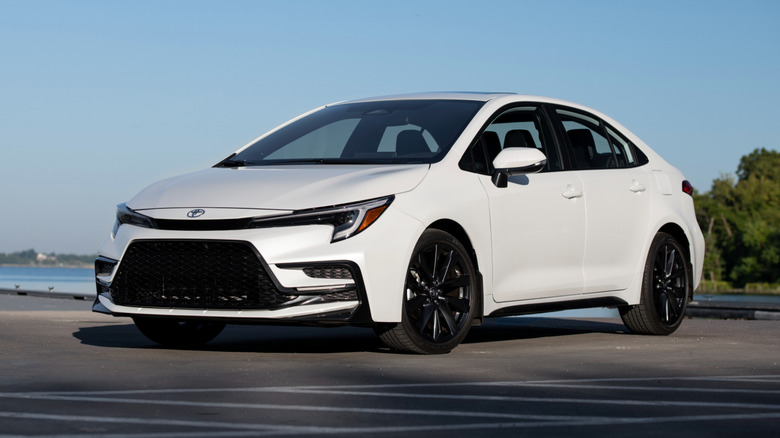
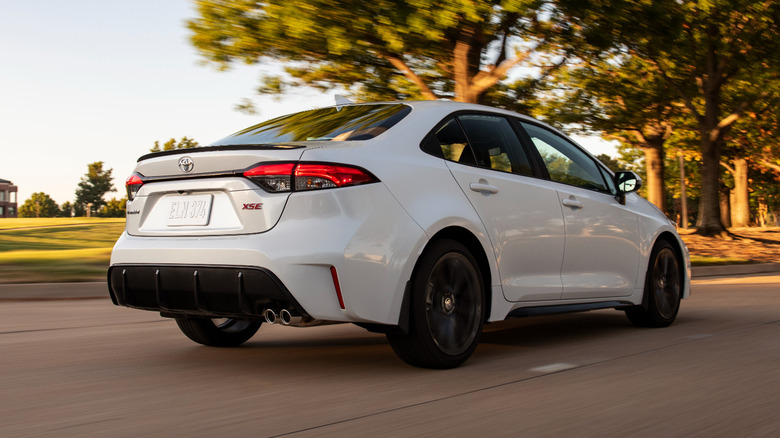
The sedan and hatchback variants of the non-hybrid Toyota Corolla are equally efficient, offering a combined rating of 35 mpg, a city rating of 32 mpg, and a highway rating of 41 mpg. However, the sedan starts at a lower price for 2026, with the base LE trim available for $23,125 (plus a $1,295 destination fee). Meanwhile, the Corolla hatchback will cost at least $24,580. The sedan is also available as both a non-hybrid and a hybrid, while the hatchback isn't available with an electrified powertrain.
When we tested the non-hybrid Corolla sedan in 2025, we didn't find it the least bit surprising. That's no bad thing, since buyers flock to the Corolla specifically because it has retained its familiar mix of reliability and affordability throughout its six decades of existence. The Corolla's base engine can get loud when it's being asked to overtake on the highway, but at lower speeds, it remains a fuss-free and efficient way to get from A to B.
Honda Civic — 36 mpg
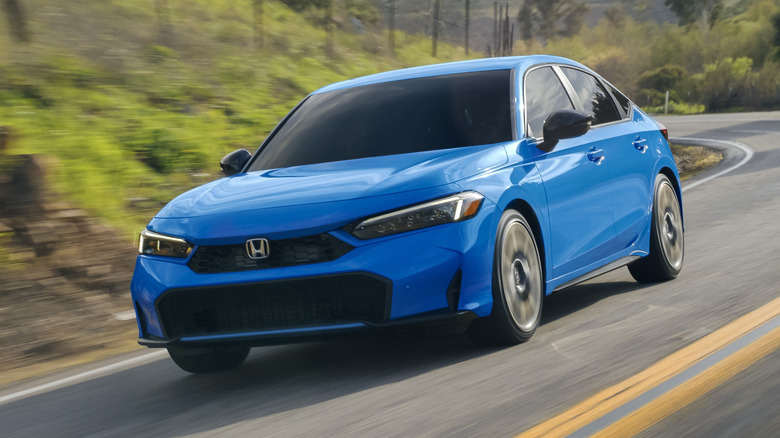
Honda offers the latest version of its long-running Civic in both hybrid and non-hybrid form, with the hybrid being the high economy hero and the traditional gas-engine version sporting a cheaper starting price. The base non-hybrid 2026 Civic sedan starts from $24,695 (excluding a $1,195 destination fee), while the hatchback starts from $27,895.
Both are cheaper than the base hybrid sedan, which costs at least $29,395. Leaving out the electrification does significantly lower the Civic's EPA-estimated mpg, but it's still impressively efficient even in non-hybrid form. So efficient, in fact, that it's currently the most frugal non-hybrid compact car on the market.
The EPA says that the most gas-sipping non-hybrid variant of the Civic will hit 36 mpg combined, which will rise to 41 mpg on the highway. Even in the city, drivers can still expect to see 32 mpg. According to the agency, that's enough to save $2,500 in gas over the course of five years compared to the average new car, assuming an annual mileage of 15,000 miles.
Honda hasn't changed the core formula of the Civic much over the years, and it's not difficult to see why. From the start, the Civic was designed to be affordable and efficient, and that combination has kept it highly competitive in an ever-evolving field of rivals, regardless of whether you buy it in hybrid or non-hybrid form.
How we picked these efficient non-hybrid cars
To find the most frugal non-hybrid cars in 2026, we used the EPA's fuel economy database, which contains efficiency figures for every mass-produced new car on sale. We searched the database for non-hybrid cars with a 2026 or 2027 model year, excluding segments such as large sedans, minivans, and pickup trucks. We then identified the top ranked compact cars on the market using the results returned. All rankings are based on EPA-supplied figures, and real-world consumption may differ.