

10 Cars Middle-Class Families Drove In The '50s
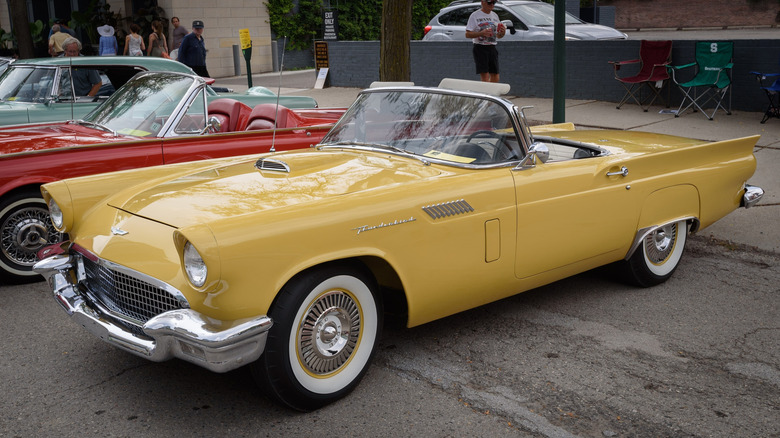
The '50s were an important time for American car culture. It was an era of hot rods, greased lightning, and cars really taking their place in the American way of life. Cars had been on the market for decades by then, but it wasn't until the middle of the twentieth century that automobiles became accessible to the average family.
Automobile registration data shows about 8,000 registered cars and trucks on American roads in 1900. Fifty years later, that number had risen to nearly 50 million. As a percentage of the population, the number of drivers rose from 8,000 out of roughly 76 million people, or about 0.01%, to more than 49 million out of about 152 million people, or about 32%. Put another way, at the beginning of the century there was only one car for every 1,000 people in the United States; by 1950 there was one car for every three people. Cars had become so common that we could have all gone on a collective road trip together, though the traffic would have been terrible.
The '50s also saw the passage of the 1956 Federal Aid Highway Act, which approved and funded 40,000 miles of interstate highways over the next decade. The 1950s were the decade when cars really took their place in American culture, and these 10 were among the most popular on midcentury roads.
Chevrolet Bel Air
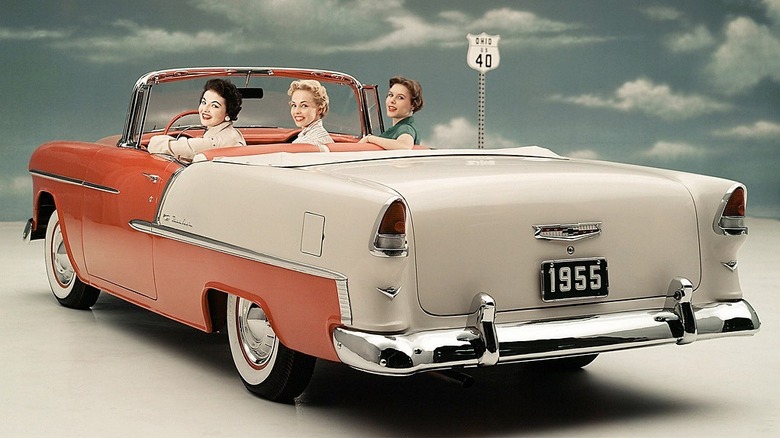
A few decades before the Fresh Prince made his way to Bel-Air, the city lent its name to one of the most iconic automobiles ever. As the 1950s began, the automobile industry was transforming, not just aesthetically. While automobile exteriors gained chrome details, fins, and other space-age features, the interiors became more powerful and comfortable, with technologies like power steering and automatic transmissions.
First produced for the 1950 model year, the Bel Air label originally referred to a specific design. Starting in 1953, the name came to refer to a trim that could be applied to various models, including a two-door convertible, two-door coupe, four-door sedan, and more. When the Bel Air first launched, it cost roughly $1,500, about $24,000 in 2026 dollars.
The second-generation Bel Air hit the roads during the 1955 model year and continued through 1957. Powered by the newly introduced 265-cubic-inch Small Block V8, the second-gen Bel Airs added flashy features like gold script, chrome fender spears, optional air conditioning, and more. These three model years, also known as the Chevy Tri-Fives, remain beloved by car collectors today.
Studebaker sedan
Between car payments, fuel, insurance, maintenance, and other costs, driving can easily become one of our most expensive expenses. Just as today, when mid-century families bought a car, they made a significant financial commitment. Median household income in the '50s ranged from $3,300 in 1950 to $5,400 in 1959 (about $47,000 and $63,000 in 2026 dollars, respectively), giving many folks enough disposable income to buy a car for the first time.
It's also worth mentioning some historical context. During the '40s, the government largely co-opted domestic manufacturing for military operations. After WWII, many of those same factories shifted from tanks to station wagons.
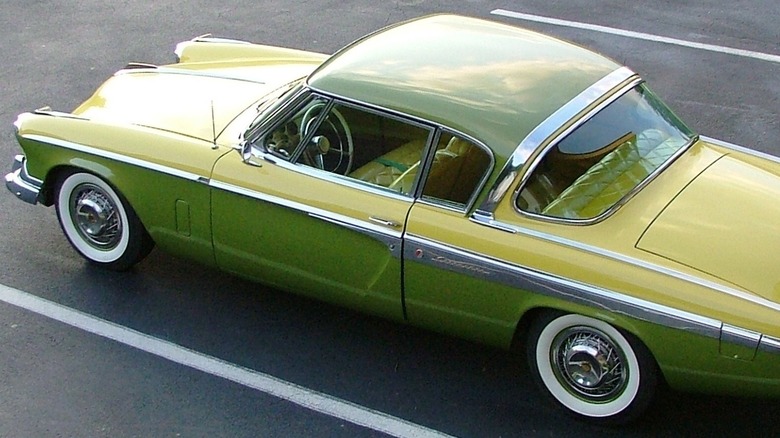
Studebaker was a major part of the post-WWII automotive landscape, and the company carried that momentum into the 1950s with an aerospace-inspired update. The 1950 Studebaker introduced a bullet-nose design that car dealers widely reported was hugely popular with buyers and looky-loos. Most importantly, a family could buy one for under $1,500 (about $21,000 in 2026 dollars), making it one of the most affordable full-size cars on the mid-century market. Despite its popularity, the Studebaker has since gone the way of the dodo.
Plymouth Belvedere
For readers of a certain age, the name Belvedere might conjure images of an English TV butler. For others, it reawakens memories of cruising down the highway in a classic mid-century car.
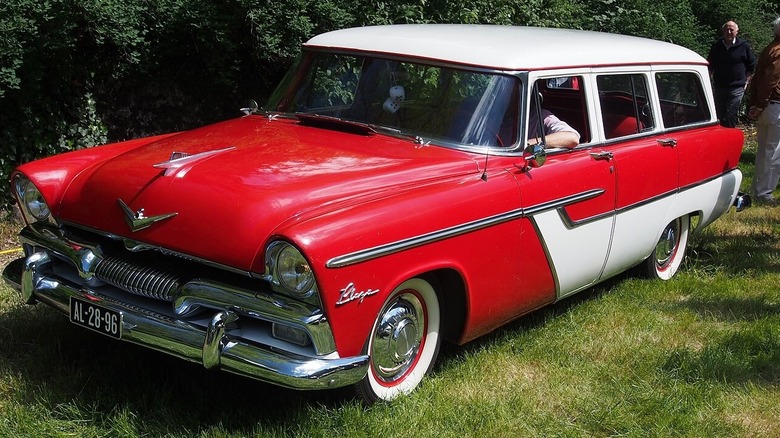
First introduced in 1951, the Belvedere originally referred to a variant of Plymouth's Concorde and Cambridge models. Starting in the 1954 model year, the Belvedere became a more robust part of the Plymouth lineup, with sedans, convertibles, station wagons, and more, all under the Belvedere name. These second-generation Belvederes cost about $2,100 in 1954, equivalent to about $26,000 in 2026.
The third generation hit the road in the 1957 model year. The newer version sported tail fins, a broader grille, and a lower overall profile. It also had luxury features including two-tone upholstery, an electric clock, AM radio, power steering, and more. If the radio wasn't enough, you could even get an optional portable record player called the Highway Hi-Fi, which let drivers take their music collection on the go, provided they purchased special 7-inch records.
Cadillac DeVille
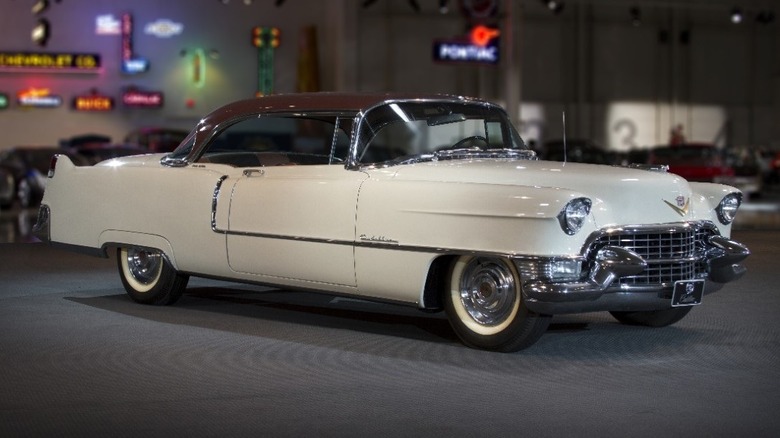
Like many classic cars, the DeVille began as a trim option for another vehicle, in this case the Cadillac Series 62. The DeVille didn't become a standalone vehicle until the 1959 model year, sneaking in just under the temporal wire.
GM first showed it as a prototype at the 1949 Autorama. That original prototype featured a short-wave radio telephone in the glove box, hydraulic windows, chrome interior hardware, and other flashy features. GM President Charles Wilson drove that prototype personally for nearly a decade, until he handed the keys over to his secretary in 1957.
When the DeVille became a model in its own right, rather than just a trim option, it featured tail fins, bullet taillights, rooflines, an updated grille design, power steering, reverse lights, two-speed windshield wipers, automatic transmission, and more. The convertible option also had power windows and powered seats. When it hit the proverbial shelves, it retailed for $5,252 (about $60,000 in 2026), making it one of the pricier options still accessible to a middle-class family. Even so, more than 21,000 families sprang for one.
Buick Roadmaster
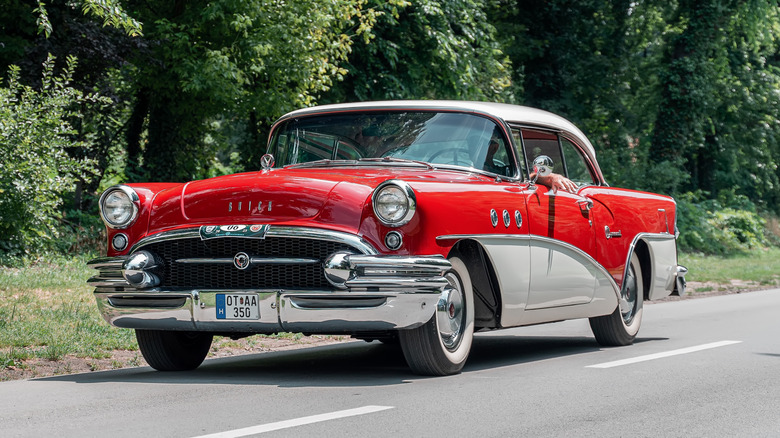
Introduced in the mid-1930s, the Buick Roadmaster targeted the middle class, positioned between Buick's Series 60 Century and the higher-end Series 90 Limited. Eventually, the Roadmaster lived up to its name and earned top billing in the Buick lineup.
Those earliest Roadmasters featured rounded corners, angled windshields, and sound-reducing materials. Drivers could also choose leather or cloth upholstery. More than 16,000 were sold. The Roadmaster continued to evolve over the decades, receiving a post-war overhaul for the 1949 model year, which drove a roughly 50% increase in Buick sales.
Buick kept experimenting with the form throughout the '50s, including some less popular innovations like the 1950 Roadmaster's "buck-tooth" grille. By the 1953 model year, the Roadmaster got a more powerful V-8 engine and came as a convertible, hardtop, four-door sedan, and one of the coolest station wagons of its era. By 1955, the Roadmaster had a longer hood and a lower overall body, and it sold more than 64,000 that year. The last mid-century model was 1958, which retailed at a base price of about $3,500, or about $40,000 in 2026 dollars. The Roadmaster wouldn't return to production until the '90s.
Ford Mainline
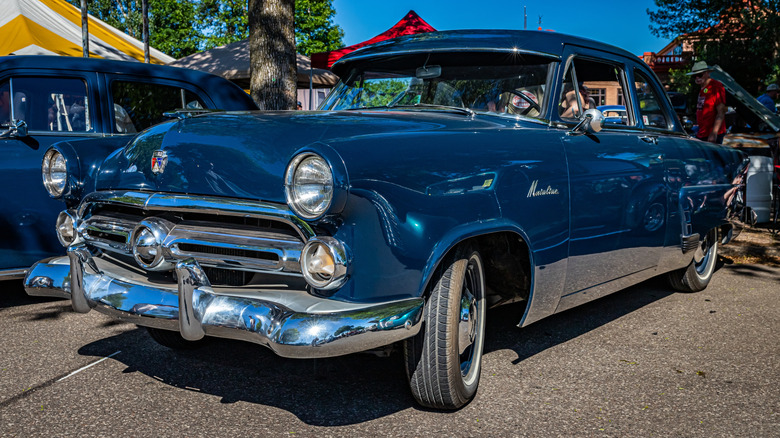
Ford offered the Mainline from 1952 to 1956, and it was the marque's most affordable model, priced at around $1,700, or $22,000 in 2026. The Mainline was best known for what it lacked, namely flashy accessories and features. While other cars were sporting chrome accessories and leather upholstery, the Mainline featured plain fabrics and black rubber floor mats. Outside, you found no embellishments; inside, you found only a driver's-side sun visor. They even pulled out the cigarette lighter and replaced it with a metal plug.
While some have argued that the Mainline's real purpose was to lure buyers into the showroom so salespeople could upsell them on more expensive models or aftermarket upgrades, it was an affordable option for families with a smaller transportation budget.
Ford Fairlane
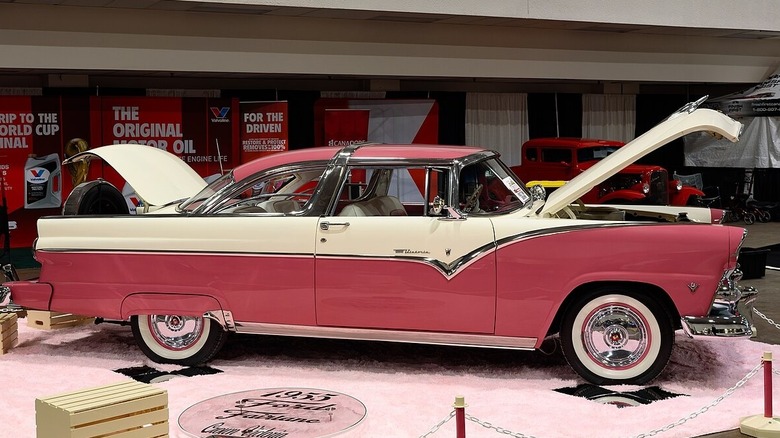
Ford first produced the Fairlane in the 1955 model year and kept it in the lineup through 1970. The vehicle derives its name from Fair Lane, the estate where Henry and Clara Ford lived for many years near Dearborn, Michigan. The name fit because the Fairlane was destined to become an important part of Ford's automotive history.
The first-generation Fairlane came as a two-door convertible, a two- or four-door sedan, and a two- or four-door hardtop. The second generation hit the streets in 1957 with an updated design and even offered a hydraulic hardtop convertible that lowered the top into the trunk when you wanted to let your hair fly.
Early 1955 models retailed for about $2,300 (approximately $29,000 in 2026), and the 1959 model year had a suggested retail price of about $2,600 (approximately $33,000 in 2026), making the Fairlane affordable for middle-class drivers. The Fairlane and the rest of the midcentury Ford lineup were so popular, in fact, that they helped Ford outsell competitor Chevrolet (depending on how you look at the numbers), though the popularity of the '57 Chevy made it a close competition.
Plymouth Fury
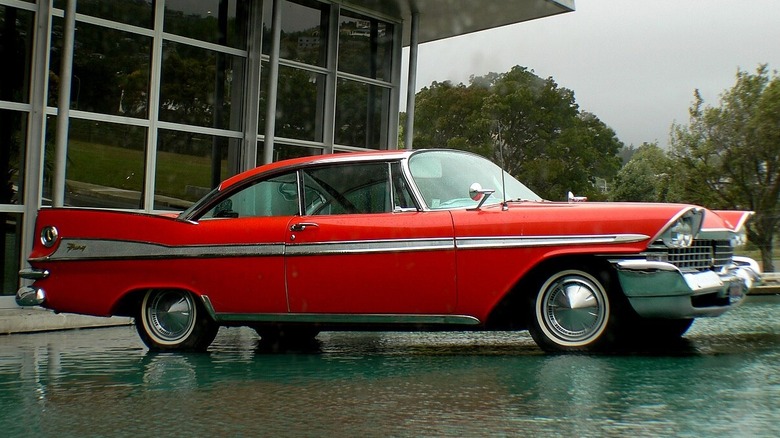
The mid-'50s were tough for automakers, and Chrysler sales had started to slip. The folks at Plymouth, a Chrysler division, set out to win people back. The redesigned body present in the Plymouth Fury went a long way toward that goal. The Fury even starred in an iconic horror movie, something few automobiles have the honor of claiming.
The Fury began as a subset of the Belvedere, which retailed for about $2,900 (roughly $36,000 in 2026), before graduating to its own full-size line by the end of the decade. Starting in 1959, drivers could choose a Fury as a two-door hardtop, four-door hardtop, or four-door sedan. The Sport Fury variant also came as a two-door hardtop and a convertible. The '59 Sport Fury sold like gangbusters, with more than 23,000 units.
The Fury had updated fenders, and drivers could choose between a single color or a two-tone paint job. The Fury also featured swiveling front seats, a padded two-tone steering wheel, and a new instrument cluster, all standard on the '59 Fury Sport. The glove box even had a nameplate reading, "Sport Fury Built Especially For ___ By Plymouth." The buyer's name would be engraved in the available space. It's a nice touch for original buyers but might make resale a little awkward.
Chrysler New Yorker
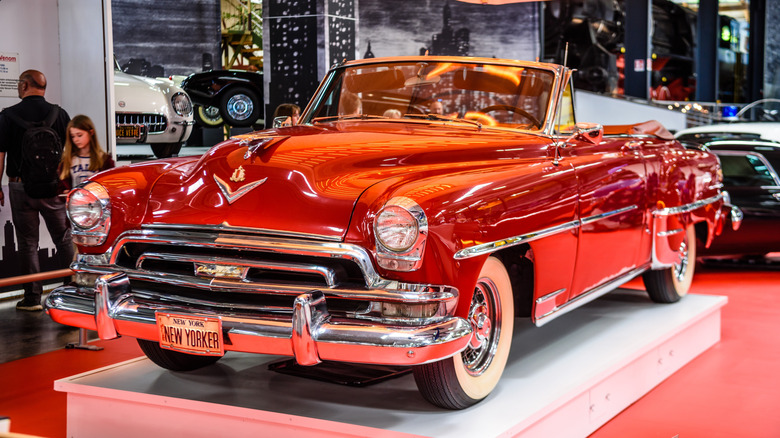
In 1938, Chrysler offered a trim level called the New York Special. A year later, the naming convention evolved, and Chrysler used it to refer to a model rather than a trim. The New Yorker was originally available only for a few years, during the 1940 to 1942 model years, then again from 1946 until 1996.
The New Yorker was among Chrysler's more popular offerings through the first half of the '50s, and despite improved sales in the 1956 model year, Chrysler kept reworking and improving the lineup. Famed automotive designer Virgil Exner designed the 1956 PowerStyle model, which incorporated high-end features like leather interiors and the Highway Hi-Fi mobile record player. Exner also designed Chrysler's Forward Look mid-century models with sweeping fins and characteristic space-age elements.
The Forward Look design remains popular largely because it evokes a hopeful future, even today, nearly 70 years after its release. The combination of a bold look and innovative features is why Chrysler billed the New Yorker as the most glamorous car on the road not just in the '50s, but in a generation. Maybe that's why President Harry Truman bought one for himself as soon as he left office.
Ford Thunderbird
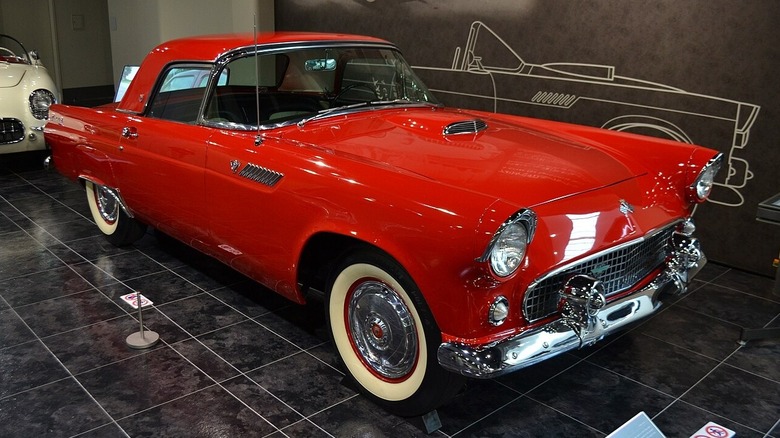
Lovingly known as the T-bird, the Ford Thunderbird was loosely inspired by the Ferrari Barchetta; its creators, Louis Crusoe and George Walker, began dreaming up the car after seeing the Barchetta at the 1952 Grand Palais car show. It was also partly inspired by the popularity of the Chevrolet Corvette, which debuted in the 1953 model year.
Stylist Alden Giberson named the Thunderbird after 5,000 failed attempts to find a suitable name, and the car was revealed at the 1954 Detroit Auto Show. As is often the case, the Thunderbird was still a prototype at that point, not yet ready for production, but it would hit the road in time for the 1955 model year. The Thunderbird remained on the road as part of Ford's lineup until the 2005 model year, 50 years after its introduction.
At its introduction, the 1955 Ford Thunderbird was only available as a two-seater convertible and retailed for about $2,500, roughly $30,000 in 2026. The Thunderbird brought a sports-car feel to the average driver, which likely contributed to its longevity.