

10 Auto Shop Customer Habits That May Earn You Better Service

Many aspects of car maintenance are quite straightforward, written in black and white in your owner's manual, such as when to change your oil, rotate your tires, or flush your vehicle's coolant system. However, another important layer of the vehicle service process can be murkier: how to interact with the people who actually do the work.
I spent many years in the automotive industry, doing almost every job from technician to GM, and I understand that for many customers, dropping off their vehicle for service feels like approaching a black hole. Their money threatens to disappear over the event horizon while word of their vehicles' status seems never to escape. This can certainly be intimidating.
You can improve the service experience by developing a few habits that help your shop deliver a better customer experience. Automotive professionals are, for the most part, dedicated and conscientious, trying to do a mentally and physically demanding job well and quickly in a line of work where time is money. By keeping a few tips in mind, you can help improve that experience. Being courteous, communicating clearly, and avoiding pitfalls can make your repair progress smoothly. You don't need to bring donuts, although they probably wouldn't be refused, but being the type of customer shops want to see again won't hurt the overall experience.
Dropping off a filthy vehicle

Auto repair shops never have a clipboard column that says, "Customer brought a dirty car, so treat this car differently"; human nature is at play here, as in all aspects of society. It is hard to say a filthy car gets the same respect as one that is obviously cared for and presentable.
Sometimes customers assume that if something on the car needs cleaning, the shop will just clean it quickly and move on, but that's a mistake. You wouldn't ask a neurosurgeon to get you a Tylenol; don't ask a skilled technician for a free car wash. If they have to clean it, labor charges may apply.
Showing up dirty impedes progress, disguises issues, and adds time and frustration. If a technician tries to work around mud and dirt, grit and foreign material may get into sensitive components. Diagnosing a strange sound is made much harder when the cabin is full of junk that bounces and shifts during maneuvers, masking any clues. Take a little pride in your ride and show your technician some consideration by arriving with a clean car, if at all possible.
Playing Google Sherlock and demanding certain repairs

It's tempting to diagnose the issue with a chatbot's help. While it is good to know enough to have a meaningful conversation with your service provider about the issue that brought you to the shop, relying too heavily on a chatbot can cause trouble.
Requesting a specific job or part based on a quick search can lead to communication errors and mistaken assumptions. If you walk into the work bay and tell them you need new fuel injectors because Google pointed to them as the issue, they'll give you new injectors. If a leaking fuel regulator caused the slow start or sluggish performance, that work won't help. It is always better to talk about the symptoms rather than the fix.
At best, it is a little condescending to insinuate that a quick Google search equals a tech's skill and experience. At worst, it can end with a mechanic raising his hands in the air and saying, "Alright, let's have it your way, Boss," then doing what he's told, in the spirit of malicious compliance, even when that may not fix the problem.
Showing up with a box of parts and pieces
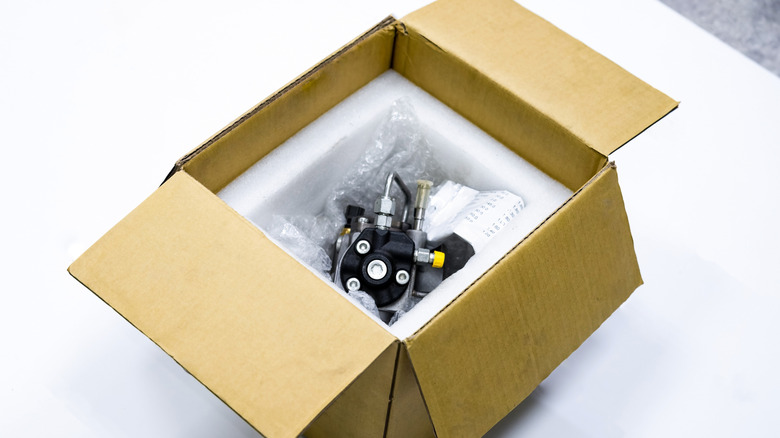
In the age of eBay, Facebook Marketplace, Amazon, and a myriad of other ways to find discount parts, it's tempting to save a few bucks by buying needed parts wherever they cost the least. However, bringing a box of parts you got a deal on to an auto repair facility can create many issues. Even if the shop is willing to work with outside-supplied parts, it will likely void any labor warranties it would normally provide.
The parts may also be the wrong application, broken, or incomplete. For a shop, finding out midway through a repair that not every needed part is there can cause expensive work stoppages, which some shops will charge you for.
Your shop may offer competitive pricing on parts and may be willing to use salvage or junkyard parts if they deem it safe and economical. Your shop likely receives a discount or wholesale pricing on the parts you need. This lets them charge you roughly what you would pay at the counter of a discount auto parts store or online, while still making a little profit. Warranty considerations also come into play. If the shop supplies the part and it is bad or fails, they're responsible, rather than making you reach into your pocket again for a replacement part and additional labor to do it all over.
Looking over shoulders and riding the tech
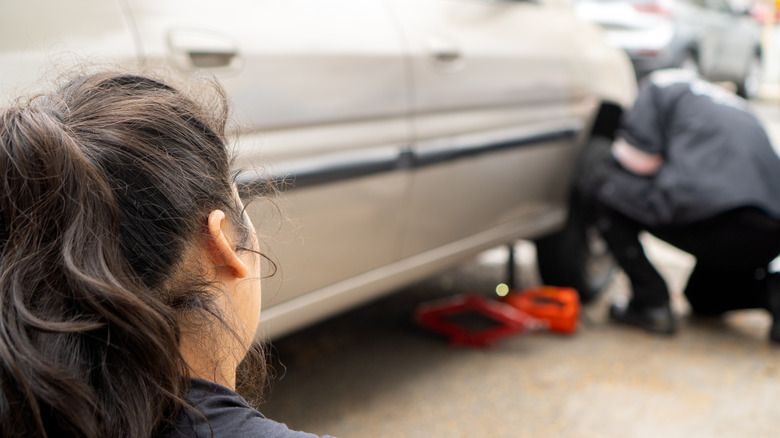
It is good to stay in touch with your repair facility while your vehicle is in the repair process, and there is nothing wrong with touching base for an update. However, if you act like your technician is your employee, or like they are trying to rip you off, it will be alienating and often lead to delays and frustration for you, the tech, and the shop. For the most part, mechanics treat your car like their own and are diligent and honest about the process.
The simple act of calling and asking to speak with the technician working on your vehicle brings the work to a standstill. Every time a technician answers the phone, he stops making money, and the work on your vehicle doesn't move forward.
The drag all of this can cause on a repair job is why most larger repair shops and dealerships have service advisors on staff. These professionals facilitate communication with customers while insulating technicians from time-consuming interactions. If you and the shop are clear with one another about expectations, time frames, and issues going into the repair, it will make the process easier and prevent the worries that often prompt customers to play the "are we there yet" game.
Haggling over diagnostics and pushing for freebies

Very often, during my time behind service counters, someone who wasn't on the schedule but was dealing with a minor automotive crisis would burst through the front door in a tizzy, asking if someone could just come out to the parking lot and check their vehicle. It can be tempting to ask a shop to "just take a quick look" or something similar, but diagnosing a car issue correctly is a core skill a mechanic develops over years of hard-earned experience.
A professional is not inclined to give away that skilled assessment. It can be awkward to refuse to help, and it often leads techs to do what amounts to free diagnostic work in the parking lot.
If you think your car would benefit from a mechanic taking a look, call and make an appointment. Very often, shops will charge a fee for that diagnosis, but may apply it toward the repair if one is needed. If you wouldn't open your mouth wide at a party when you discover another guest is a dentist, don't ask an automotive technician for free work in the parking lot.
Leaving a car seat in the car
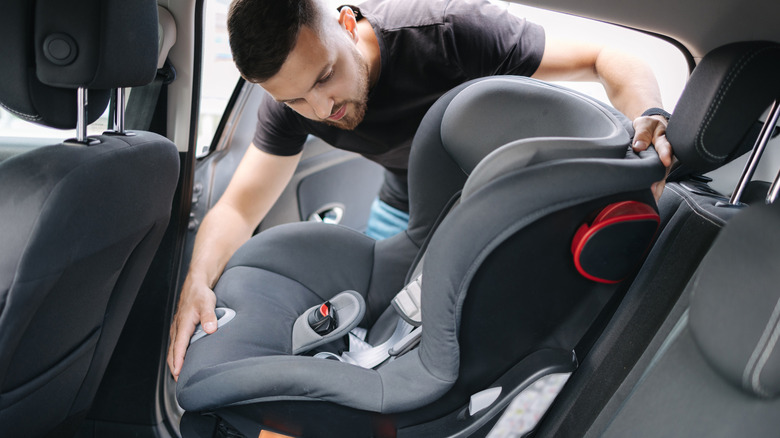
This may not be as evident to some folks as the previous points, but it can bring work to a grinding halt as quickly as bringing in mud-covered wheels and tires for a balance. Technicians at most shops and dealerships won't disconnect or install a car seat because that action carries legal and liability implications they don't want to take on.
If the shop can't remove your car seat when it needs to complete a repair, it can halt your progress and delay getting your car back on the road. This isn't limited to work in the car's cabin or on its seats. It can also delay repairs that appear unrelated to the seats.
For instance, servicing a fuel pump or regulator on some vehicles with assemblies on top of the fuel tank requires removing the rear seat and carpet. If you come in because your car is slow to start, you may not think a car seat in the back will be an issue, but it can stop the work cold by blocking access. These aren't always obvious before diagnosis begins, so be safe and pull your car seat out before dropping off your vehicle.
Asking for little extras on the way out the door
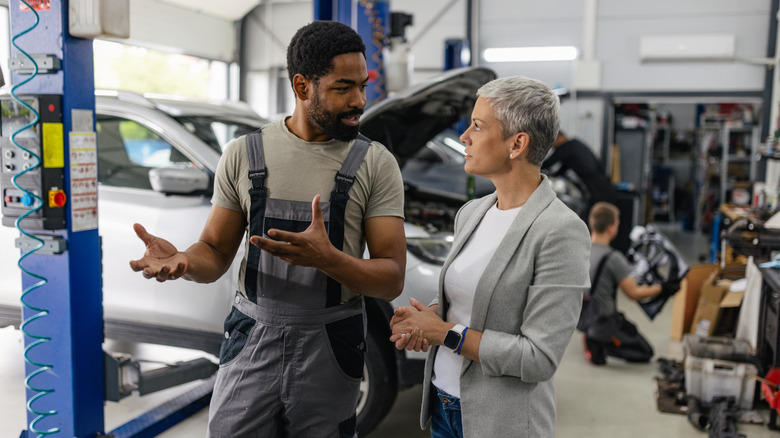
Many times, customers picking up their car after a repair would hit me up for "just one more thing..." I understand the dynamic here. Often, having the car in the shop for one issue brings to mind other back-burner complaints that slipped under the radar or weren't serious enough to warrant an appointment on their own. These are often little nagging issues: a glove box that rattles, a visor that won't stay put, or a rattle from a piece of trim.
It may not seem like much to a customer to ask the shop to knock these little extras out while they work on the primary issue. If these things are brought up in the initial work order at drop-off, most shops will be more than happy to knock them out. However, it can be frustrating to install a new heater core, button up, pull the car out of the bay, and wipe everything down, only to be asked at pickup for an oil change.
When a customer asks for a little extra work at the last minute, a technician has to stop work on another car, breaking the choreography of arriving parts, promised deliveries, and lift openings. This leads to chaos that most shops struggle to avoid. If your vehicle has any minor issues beyond the main repair, bring them up as early as possible, and your shop will be happy to help.
Being vague or even deceptive

It was never fun to roll into work and find an unexpected car waiting in the lot, the key in the drop box, with a vague note saying, "The engine is making a strange noise." A cryptic note saying it "feels weird when you drive" may get a response like, "It feels weird to read your note."
Being as specific as possible helps narrow down the suspects, which often reduces billable diagnostic time. A strange noise could be a worn bushing, an aging belt, or a family of chipmunks. If you can provide specifics, such as the speed at which the noise occurs, whether it happens only when the vehicle is cold or hot, or while turning, it helps the job go more smoothly and keeps diagnostic time to a minimum.
Worse than being vague, however, is when customers feel the need to be deceptive. This deception often comes from misplaced shame. Customers don't want to admit they have let something go for a long time in a bad state, or that, while running from the cops through a field, they may have run over some fences. Whatever it is, just be straight with your shop. They are there to help you, not judge, and most technicians are polite enough not to laugh until you leave the building.
Going MIA when the shop tries to contact you for work authorization

Often, customers have to wait before a technician can look at the car they brought in, so it is natural to assume it's a two-way street. Customers can be forgiven for thinking, "If it takes a while to get back to me, you will have to wait a minute before I get back to you." After all, life happens, and work and family come first.
But if a tech calls, texts, or messages via a repair portal, they're likely discussing a diagnosis, authorizing part purchases, and offering an updated quote, and the vehicle is probably sitting on the lift, ready to be worked on. If you don't take the call and make a decision, the vehicle may be pulled off the lift and possibly shuttled to the back of the line.
Nobody can be available all the time. Please be as available as possible to communicate with the shop while your vehicle is being repaired. I have seen vehicles completely torn down, waiting on work authorizations, only for the customer to go radio silent. This puts the shop in a tough spot, either leaving the lift tied up, which limits work on other vehicles, or putting parts back on and rolling it to the side while waiting for a callback. Either option is likely to lead to some attitude when the customer finally checks in.
Not leaving the wheel lock or explaining aftermarket alarms
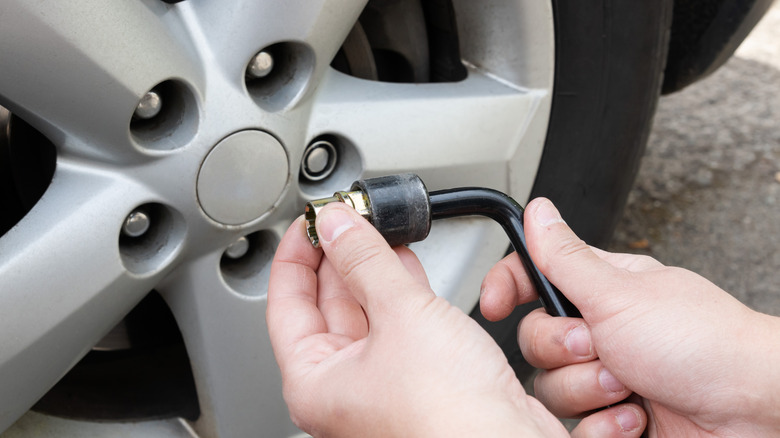
It can be frustrating to pull a vehicle into a bay, roll in a set of tires, or round up brake parts, only to find the wheel-lock key nowhere in sight. Many modern cars use a semi-unique wheel-lock lug nut, so a standard socket set isn't enough to remove an expensive set of wheels. Not having the key in a readily available spot can cause problems.
Technicians do not like to root around in the center console and glove box, digging through personal effects. Over the years, I have encountered everything from drugs, guns, and various... ahem... unmentionables in the hunt for a wheel lock key. Save your tech the trouble, save yourself an awkward moment, and ensure the fastest turnaround time by bringing the wheel lock key in yourself before the job calls for the wheels to come off the vehicle.
Do the same for aftermarket alarms, court-appointed DUI-preventing devices, and immobilizers. If it isn't standard OEM, let the tech know and give them a chance to ask questions so it won't hinder the work. By being considerate and putting yourself in your technician's shoes, you will likely save time and money and improve the customer experience.