

10 Common Mistakes Mechanics Rarely Make With Their Own Cars

As an automotive professional who has done every job in the dealership, from changing oil to overseeing the service department as a GM, I have seen many common mistakes made by members of the driving public that would just not be done by mechanics to their own vehicles. Therefore, it would be good practice, in order to stay safe on the roads and get the most value from your vehicle, to consider what mistakes the pros won't make when it comes to car care, and take a word of advice from the technicians who have seen it all.
From freestyling with your choice of oil, to exceeding maintenance intervals, to abusing your vehicle by making it take on challenges it wasn't built for, there are many instances of easily avoided mistakes that can endanger you and others. In fact, not only is it unsafe, it can cut years of life from your ride and drastically increase your vehicle's lifetime maintenance costs.
Treating oil changes as an afterthought
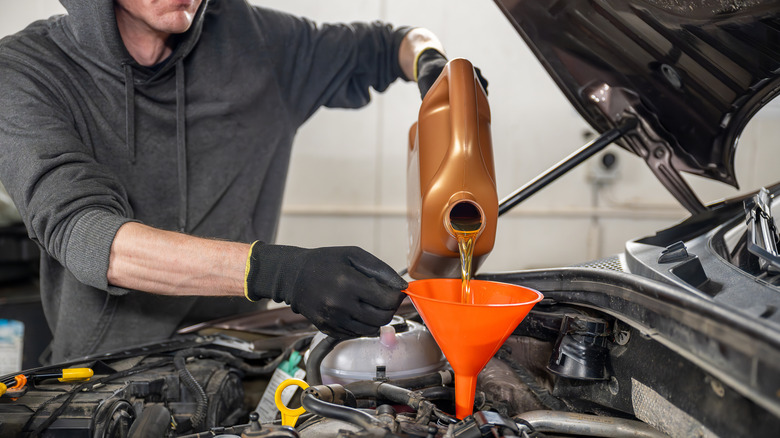
If you ask a mechanic what kind of oil they prefer to put in their vehicle, you are apt to get more answers than you bargained for. A mechanic is liable to climb up on a soap box and begin a technical lecture, a pledge of brand devotion, or possibly a lengthy diatribe that hedges with a phrase like "well... it depends." An answer you are unlikely to hear is some version of "it doesn't matter" or "whatever is cheapest."
But, too often, that is exactly what mechanics hear from customers when they inquire as to what kind of oil they want to use. Every engine requires a certain classification of oil. Engineers at the factory didn't throw a dart at a board when determining what viscosity and additives your vehicle requires. An oil from a quality brand, in the manufacturer's specifications, will ensure proper functioning, adequate protection from friction and deterioration, and correct additives and will not compromise your vehicle's warranty. Changing oil is not the most expensive or time consuming piece of maintenance you can do, and, accordingly, it is not advisable to make the decision of what oil to use based solely on price.
Also, be cautious when listening to advice on forums or from influencers. Just because one poster's brother-in-law's truck went a quarter million miles on his own peculiar blend of motor oils and witches' brew does not mean you should jump on the trend.
Adding fluids without confirming their suitability

Garages and storage spaces tend to be like black holes. Over the years, all manner of coolants, oils, lubricants, and cleaners make their way into boxes and on to shelves. There are things you pick up, stuff handed off to you by neighbors, buddies, and your father-in-law, or even just left behind by the last resident during the Reagan administration.
It can be tempting to grab something you have sitting around when your car needs a top off. Mechanics resist that urge and confine themselves to using the right, in-spec product for the job, as detailed by the manufacturer. While in extreme situations it may be tolerable to mix different brand oils and viscosities, such as in an emergency in a desolate area where help is hard to come by, it is imperative to remedy the situation as soon as possible by getting an oil and filter change per the manufacturer's recommendations.
The color of coolant is not just a cosmetic difference. You should not add one color coolant to another unless it is specifically a universal coolant. These colors denote varying chemical bases, such as AT, OAT, or HOAT. Combining them may induce chemical changes that risk – at a minimum – reduced performance, and can, in some instances, gel up and cause lasting damage to your engine. Even something as simple as windshield wiper fluid should be checked for suitability. If you use summer blends and later find yourself in an icy storm, the fluid may freeze. Mechanics try to stick with the recommended fluids, and consider the environment and workload the vehicle will be encountering before pouring in a product.
Relying on fixes in a bottle
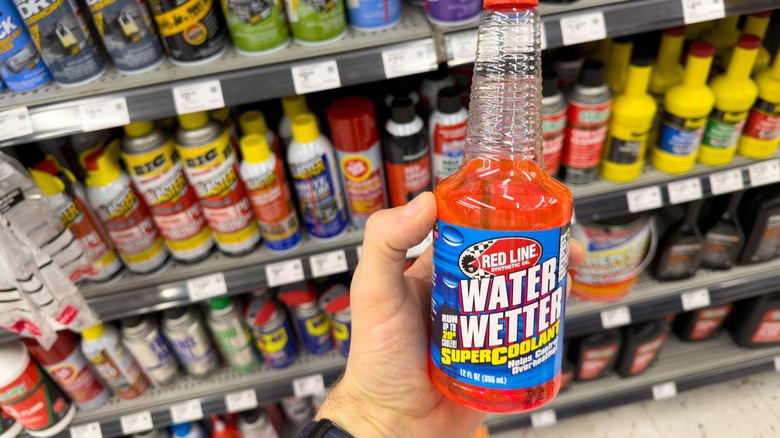
Walk into any auto parts store and you could be forgiven for thinking that there is a fix for whatever ails your rig just sitting on the shelf in a bottle, ready to pour into your car to wash away your worries and troubles. From stop-leak products to fix-a-flat in a can, they all proclaim a message of hope that real professionals don't fall for. Although some products, such as fuel injection cleaning additives, may have a place in your routine maintenance schedule, many of these products can offer only temporary help. Others may actually exacerbate the issues they are intended to treat.
For instance, products that are marketed to stop coolant leaks in your radiator have been known to also clog small channels in the block that should be distributing that coolant throughout the engine. This can lead to uneven heating and thermal expansion, causing hot spots and excessive heat buildup, which may result in even costlier repairs than simply replacing an aging or damaged radiator.
Drivers also turn to these products in an effort to just "get there now" and deal with a repair down the road. However, a mechanic knows that there are times when you just have to bite your lip, call a tow truck, change your plans, and have an issue fixed correctly rather than pour in a bottle of misplaced hope into your expensive and finely crafted engine.
Using warning lights as maintenance reminders

Often, a customer will pull into the shop and ask for an oil change because their oil light came on. However, it is not the best practice to rely on warning lights to indicate when an important service is due, whether it's something as simple as an oil change or more involved, like draining, flushing, and refilling a transmission. Instead, pros consult their owner's manual and track their mileage to stay on top of important service items before warning lights come on.
In ages past, such warning indicators were called "idiot lights," and, some would say, with good reason. By the time your check engine light comes on you may have already wandered blissfully into the territory where regularly scheduled maintenance gives way to expensive repair. For instance, a gasoline direct injected engine that throws a code for an inoperative O2 sensor may have already built up a damaging amount of un-burnt hydrocarbons in the valve train, and begun the process of clogging your expensive catalytic converter. Adhering to your car's official maintenance schedule will be more likely to prevent any issues than simply waiting for a warning light. If you do not have an owners manual you can order one for minimal cost from a dealer or download a PDF copy, often for free.
Being forward leaning on maintenance, adhering to the schedule, and not relying on warning lights to motivate you to act will have you treating your vehicle the way a conscientious mechanic treats their ride.
Turning to the aftermarket to save money
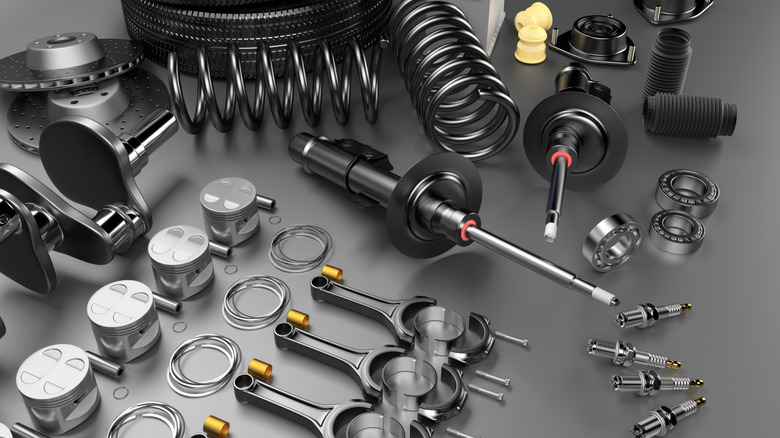
If you are building your Jeep into an unstoppable rock crawler or your muscle car into a track monster, then the aftermarket has some premium options that will take your car to the next level. Mechanics are happy to turn to these parts to serve a specific purpose. But, when it comes to basic maintenance on your daily driven sedan, the aftermarket, and its plethora of non-OEM parts, is often filled with what are essentially cheap imitations.
While your mechanic may know when it is appropriate to take advantage of a lower priced aftermarket part, the non-professional in the habit of always deferring to the cheaper option can often experience degradation of a vehicle's performance. Dangerously, that can include issues such as diminished braking distance or uncertain handling. Low quality parts may require earlier replacement, negating any benefit to the consumer.
Instead, stick with the factory option, unless a pro can explain to you the benefit you may get from a reputable aftermarket upgrade. If that explanation sounds like it comes directly from the marketing copy, rather than from their own professional experience, it would not be out of line to ask follow-up questions, both to your technician or an online forum. As in financial matters, do your own due diligence.
Using universal floor mats

It can be tempting while walking around the car section of a big box retailer or your local auto parts store to grab an inexpensive set of universal floor mats to replace dirty, aging factory mats, but real technicians know that there is no such thing as a truly universal fit. Rolling around with an ill fitting floor mat underfoot is not just an aesthetic no-go. It can actually be very dangerous. These mats are prone to sliding and bunching, and can wedge themselves under a pedal, impeding your ability to operate your vehicle safely. In accordance with Murphy's law, this can seem most likely to happen in an emergency situation, compounding the danger.
However, to achieve a custom fit it is not always necessary to pay dealership prices for an OEM replacement to your worn out mats. There are numerous companies with solid reputations who utilize tools like laser scanning to achieve factory-like fit and protection, often for a reduced price or with added features, benefits, and styling. A mechanic will tell you that the important thing is to choose something designed specifically for your vehicle. If you choose hot pink, or a set boasting a pistol-packing Yosemite Sam... well, there is no accounting for taste.
Being casual with tires
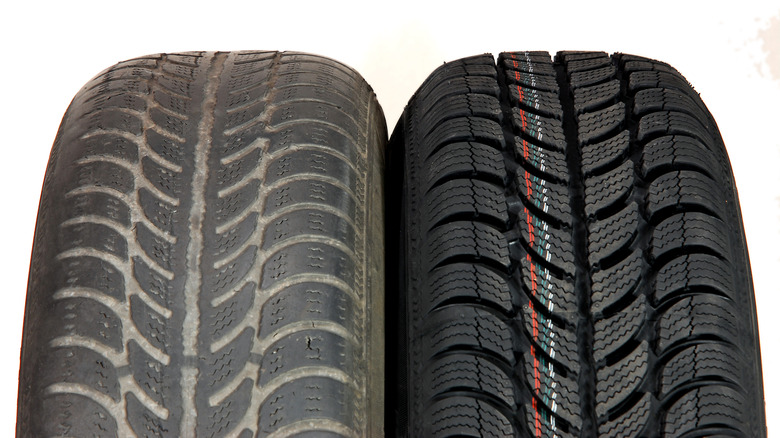
It is not for nothing that we have the expression "where the rubber meets the road" as a euphemism for what is significant or important. Tires are so critical and impactful on a vehicle's performance, that professionals will never be casual when it comes to equipping their own vehicle with the right tire for the job. On the other hand, at many of the shops I have personally worked at, we would often joke that another customer was asking for some CRBs; in other words cheap, round, and black.
The desire to get a good deal on an expensive set of tires is understandable, but a mechanic will not make the common mistake while tire shopping of cheaping out on a set of tires if it means added risk, counterfeit tires, degraded performance, or reduced expected useful life. Even "new" tires that have been sitting on a shelf will be degraded by the passage of time. If they have been taken off of a vehicle that was sitting immobile they can lose their true roundness and be difficult, or even impossible, to achieve a proper run out when a shop attempts to balance them. This can lead to vibration and poor ride and handling characteristics.
Letting needed repairs pile up

It can be frustrating to find yourself being "nickel and dimed" by your own vehicle. A non-closing glove box, a squeak from the sun visor, and a headliner that is starting to sag are all little issues that can be tempting to put off. But by ignoring the little things drivers can put themselves in a tough spot when a significant and costly repair or maintenance item eventually rears its ugly head.
At that point, many car owners throw up their hands, exclaim that their car isn't worth fixing, and sell it below its fair market value. Their next move is to then spend thousands on a new vehicle only to begin the process over again. Mechanics often say that it is generally the best financial route to fix the car you have rather than replacing it,particularly if age and mileage have not piled up. But that assumes that you are driving a car that is in solid shape other than the newly needed repair.
If you let your ride go until your car is less a single entity and more a collection of parts flying together in loose formation, you will end up replacing your car before its time is due, damaging your budget and undercutting efforts to improve your financial future
Ignoring warning signs

You do not have to be a car whisperer to know when something with your vehicle is not quite right. Many issues with a vehicle do not appear suddenly, but rather begin to make themselves known gradually. Does your car sound slightly different today than usual? Does it feel sluggish? Is it not tracking as straight as it once did?
Automotive technicians don't fix a squealing belt by turning up the radio, and you should not stick your head in the sand when your vehicle starts giving you hints that something is rotten in the state of Denmark. A common refrain heard in shops is that a vehicle is "not going to fix itself." In the automotive universe it is especially true that things tend toward a state of entropy. A small vibration, hesitation, or looseness is often the first sign that something is beginning to fail.
Mechanics do not ignore these signs in order to "see how it goes." Their work has taught them that there is really only one direction such things go. Addressing the problem as soon as it hints at its presence is the only viable path to safe driving and the most limited repair bill possible.
Using take-off parts casually
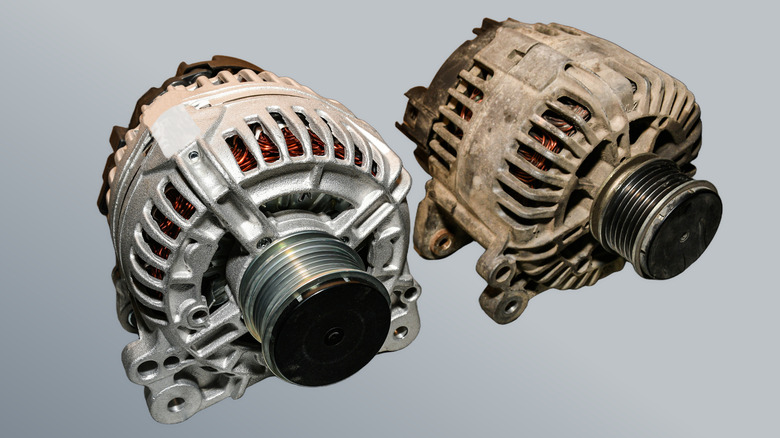
When you find out that you have an expensive repair bill coming, it can be tempting to take to the internet's thriving, though occasionally shady, private marketplaces to see if you can buy that needed part from some guy who just happens to have one laying around he does not need. While a professional who knows what they are doing, and has the technical skills to take the Pepsi challenge, may occasionally pick up something taken off of another car, it can be a bad decision for the average car owner.
Even well-intentioned sellers can be mistaken about the quality and suitability of the part they are offering for sale. For hustlers and con artists these sites can be a thieves' paradise. Rust can be concealed under a fresh coat of paint, and a seemingly solid plastic cover or case can conceal age and degradation of a system's inner parts. Plastic and rubber seals break down over time, even if they are simply sitting on the shelves.
Taken together, these risks mean that even seasoned professionals can find themselves on the raw end of a deal. The average driver is well advised to exercise extreme caution when considering this route as a path to saving a few dollars.
Using a car in a way it was not built for

The halls of Reddit and social media are full of galleries and collections of shorts showing drivers putting their vehicles through challenges better suited to Hercules than your average family truckster. Mechanics rarely make the mistake of treating their sports sedan like a rented mule, or their half-ton truck like a stump-pulling tractor. Just because your Tacoma can fit 2 tons of sand in the bed does not mean it can actually haul it in safety.
So too for commuter cars; there may be room for five big boys and a trunk full of toys, but chances are you have far exceeded important loading and weight limits set by the manufacturer's engineers with your safety, and the vehicle's wellbeing, in mind. Overloading your vehicle can cause handling issues, excessive wear, and possible outright damage. Excessive weight in your vehicle's cargo area can change its balance point, causing loss of steering authority in turns or low traction situations, blind oncoming drivers if traveling at night with misaligned headlights, and dramatically reduce your brake's effectiveness.
Mechanics know that you can not abuse your vehicle in these ways and expect to get the most out of it, or even to get there at all.