

11 Of The Best-Sounding Turbocharged Engines Ever Made
When it comes to power, there was once a time when displacement and the number of cylinders an engine had were by far the most important factors. Once forced induction became mainstream, however, everything changed. Turbochargers essentially saved performance cars, giving automakers an alternative to big gas-guzzling engines in the wake of the '70s oil crisis. Now a turbocharger is something you can find in anything from a family minivan to a track-focused hypercar.
There are plenty of turbocharged engines out there with the ability to deliver soundtracks that can draw the passion out of any car lover. While naturally aspirated engines often get a lot of the glory as far as acoustics go, some of the most iconic cars in history have utilized forced induction, and the noises they make aren't to be underestimated.
The world is moving away from internal combustion and toward electrification. The roar of an engine and the whistle of a turbocharger are noises that may, within our lifetime, go extinct. While that might be a pretty sad thought, it means that there is no better time to celebrate the history of gas-powered engineering and the symphonic turbocharged engines that defined generations of car enthusiasm around the world.
Mazda 13B-REW
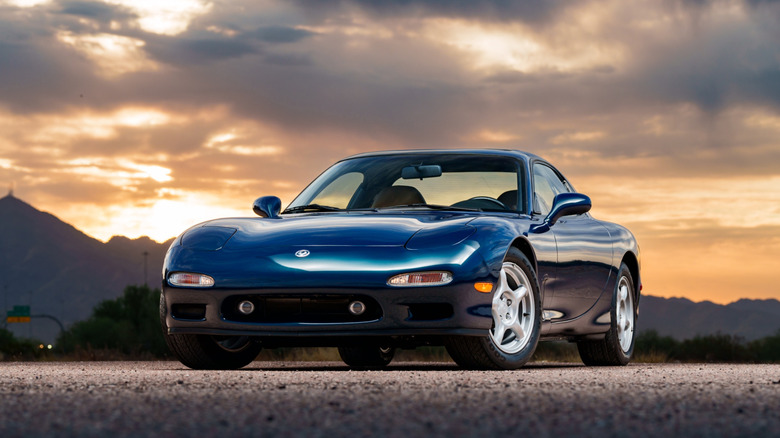
While the rest of the world was focused on how many cylinders made the best engine, Mazda took a different path. Back in the '60s, the Japanese automaker had already started producing Wankel rotary engines, which actually didn't have any cylinders at all. Instead, it made use of a triangular shaped rotor. These engines were small, light, and revved incredibly high, which gave them a fantastically unique sound when they were pushed hard.
One of the most famous iterations of Mazda's iconic rotary engines was the 13B-REW. It was a 1.3-liter sequentially turbocharged twin-rotor engine. It first found itself under the hood of the 1990 Eunos Cosmo, but it was, more notably, the powerplant behind one of the JDM era's biggest icons, the FD3S RX-7. Considering its small size and weight, the fact that it made a maximum of 276 hp is beyond impressive.
The rotary setup in the final generation of the RX-7 was iconic. It went against the norm and, while it had its flaws, it delivered some fantastic levels of performance. It sounded completely unique, producing the iconic rotary "brap" when idling, and screaming loudly on its climb up to the red line, which sat at a staggering 8,000 RPM. The 13B-REW is a big part of the success of Mazda's 90s sports car.
Alfa Romeo 690T
If anyone knows how to bring passion and soul to a sporty car, it is the Italians. Alfa Romeo in particular is an expert in delivering engaging and entertaining cars that offer a driving experience well beyond what their spec sheets might suggest. Over the automaker's long history, it has developed some especially intriguing engines to power some exceptionally gorgeous machines, and despite what some might think, it's something Alfa still does to this day.
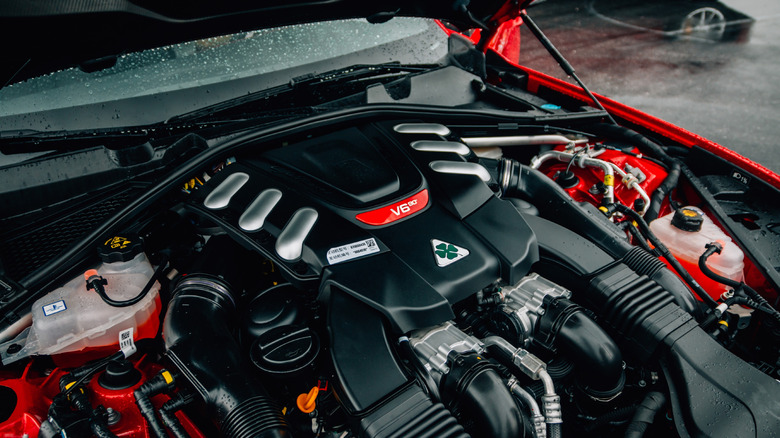
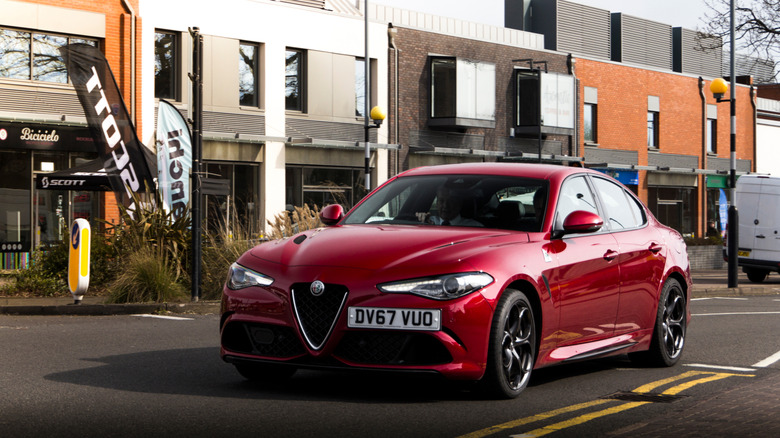
Powering the brand's modern powerhouses is the Alfa Romeo 690T, a 2.9-liter twin-turbocharged V6 with a raspy, uneven sound profile that can bring a tear to an enthusiast's eye before they've even stepped on the gas. While the brand is hesitant to confirm this neat fact, there is plenty of talk that the engine is actually derived from a Ferrari V8, sharing the same bore, stroke, and 90-degree crank angle as the Ferrari F154. Either way, it is a brilliant piece of engineering that has almost singlehandedly kept Alfa's identity alive in the modern age.
The twin-turbo V6 powers a couple different Alfa Romeo products, including the Giulia Quadrifoglio, the Stelvio Quadrifoglio, the Giulia GTA, and the 2023 revival of the 33 Stradale. It puts down a staggering amount of power, producing anywhere between 503 and 540 horses depending on the model you're talking about. The orchestral sound the engine produces also perfectly complements the way that Alfa Romeo's sporty models dance along twisty backroads.
Porsche MDH.NA
Turbochargers have played a pretty big part in Porsche's history, from iconic air-cooled legends, like the 930 Turbo and the 993 Turbo, to modern powerhouses, like the 992.2 Turbo S. While the German automaker has put out some seriously fantastic naturally aspirated engines, forced induction has always had its place at Porsche. All of this history and engineering experience has culminated in the MDH.NA.
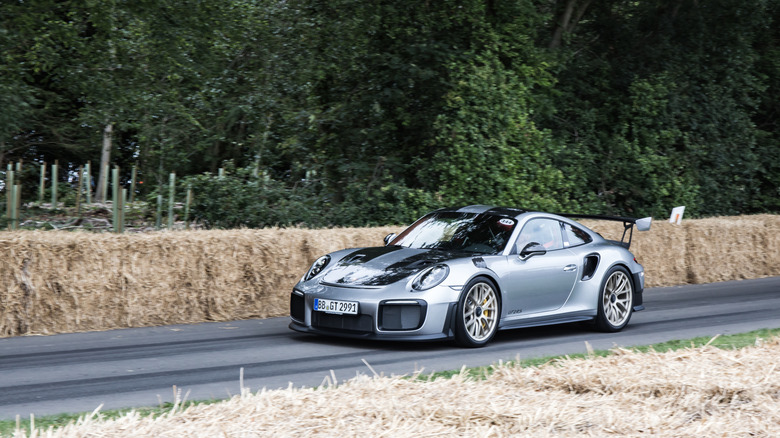
In the conversation about the best track-focused Porsche's, the 911 GT2 RS (991.2) dominates. It is an absolute weapon that has set track records across the globe, including being the second fastest production car to ever go around the Nürburgring. A huge part of what has made it so successful is the engine. The MDH.NA 3.8-liter twin-turbocharged flat-6 puts out 700 hp and is found exclusively in the 911 GT2 RS. This makes the GT2 RS the most powerful road-going 911 without electric assistance.
Going beyond its impressive horsepower figure, the MDH.NA builds on everything that makes the 911 Turbo S special, with track-focused upgrades that take it to another level. It is a special car with a special engine, and it marks what could be the end of an era. With Porsche investing more and more in electrification, gearheads will likely look back on the MDH.NA as a defining moment in the brand's history, where pure internal combustion power was pushed to its absolute limit.
Ferrari Tipo F120A
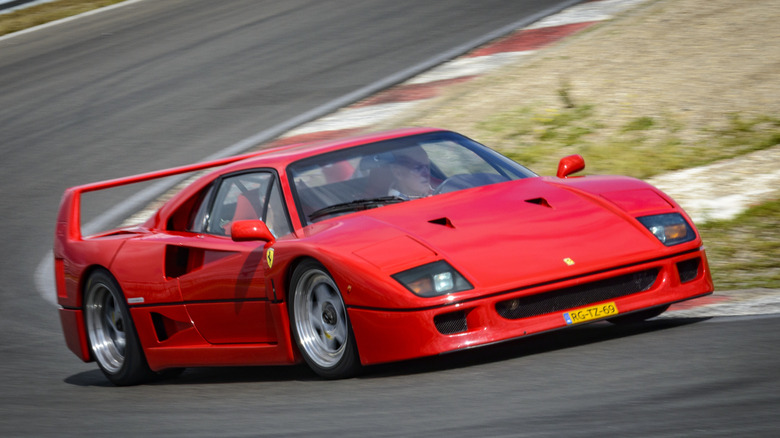
There are few names in the automotive world with as much weight as Enzo Ferrari. It is why every enthusiast should know about the Ferrari Tipo F120A, which powered the last car that was personally approved by Enzo Ferrari. Both the car and the engine were a love letter to the legacy that he built, and you can feel it in every mechanical click and whir.
If you ask any gearhead what they think the best Ferraris ever built are, there is no doubt that the F40 would at least get a mention. It debuted in 1987 and was built to mark the 40th anniversary of the Italian automaker. The aim was to build a car that was mechanically raw, focusing on the driving experience above all else, which meant as little electrical interference as possible. It truly was in a league of its own. It was also the first production car to ever go over 200 mph. Part of what made this all possible was the Tipo F120A.
Mounted in the middle of the F40 was a 2.9-liter twin-turbocharged 90-degree V8 that made up to 478 hp. Without turbo mufflers or much sound insulation, you could hear everything. It produced the high-pitch growl we've come to expect from European V8s and some dramatic overrun noises, coming together to make pure automotive music.
Fiat 1.4-Liter FIRE
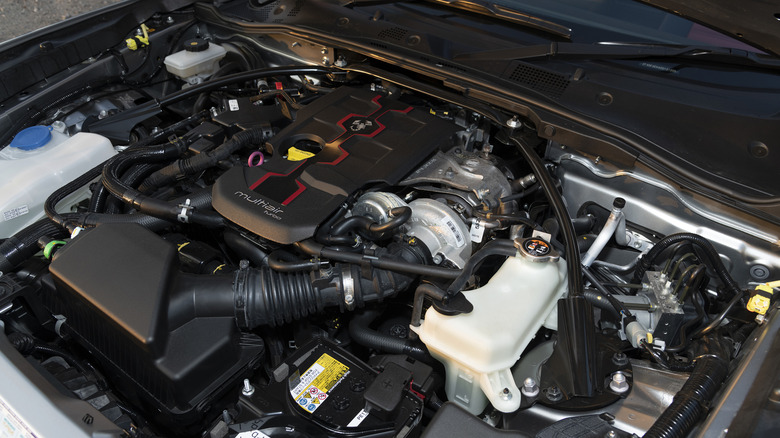
Fiat is not a company that is often talked about in terms of sporty cars, particularly in America. It has built its legacy by developing cute and quirky city cars, with the Fiat 500 being its most popular nameplate. However, Fiat has also built its fair share of raucous little cars in its time, and have secretly developed one of the most thrilling turbocharged inline-four engines in history, at least as far as our ears are concerned.
The Italian automaker's Fully Integrated Robotized Engine (FIRE) family, is pretty vast, and there are many variants within the family that power a pretty wide range of Fiat products. The turbocharged 1.4-liter variants with either MultiAir or T-Jet technology are the ones that attract the attention of enthusiasts around the world, producing a famously deep and aggressive note. Fiat have also done some extensive exhaust testing and tuning to produce the best sound possible from its little four-pots.
There are a number of cars that sport 1.4-liter turbocharged engines from Fiat's FIRE engine family. The most iconic, of course, are the Abarth 500, Abarth 595, Abarth 695, and the revived Abarth 124 Spider. Despite all being pretty tiny cars, the noise that they make is beautiful. The short wheelbase of the Fiat 500-based hot hatchbacks puts you as close to the engine and exhaust as possible, while the drop-top roof on the 124 means that you can really hear it sing as you put your foot down.
Subaru EJ257
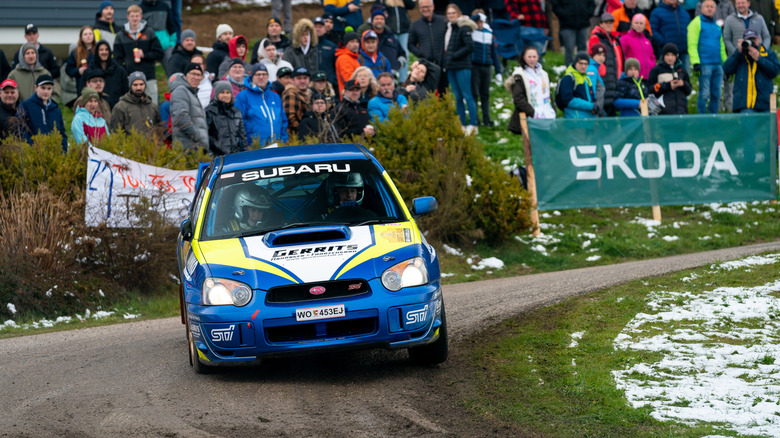
Sometimes, an engine is so good that an automaker will use it for years, refining it along the way. That is exactly the case with Subaru's EJ25. It was in production from 1994, only ending up on the chopping block a couple of years ago in 2021, giving it a long lifespan of 27 years. Within this family, there is one particular variant that has captured the heart of many a driving enthusiast, producing an instantly recognizable rumble.
The EJ257 is a 2.5-liter turbocharged four-cylinder boxer engine, meaning the cylinders are horizontally opposed. It is famous for powering the Subaru Impreza WRX STI from 2004 to 2021. It is just as well known for its reliability issues, particularly when it comes to the head gaskets, as it is for its stellar performance and gorgeous exhaust note.
The boxer engine layout already produces a pretty distinct sound, but the EJ257 takes things a step further. It is so unique that it has garnered its own name, with the "Subie rumble" being pretty well known. In large part, this is thanks to the unequal length headers, creating staggered exhaust pulses. It was a brilliant engine and it made the WRXI STI a legendary rally car.
Audi EA855 R5
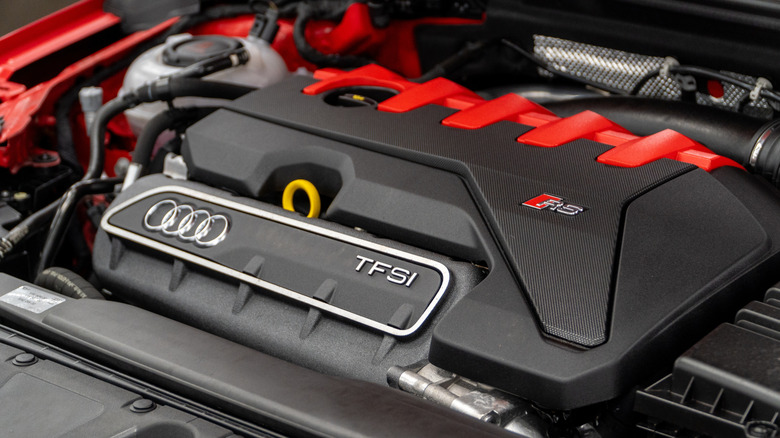
One of the most legendary cars that Audi has ever built is its Quattro group B rally car. The nameplate features a long and successful motorsport history, completely changing the way that manufacturers approached the sport in its entirety. In 2009, long after the era of the Quattro, Audi decided that it wanted to build something that celebrated that history, and it needed a very special engine layout to truly capture the that essence.
The ES855 R5 is a turbocharged inline-five engine that was developed by Audi Sport GmbH, the automaker's high-performance division. It found itself under the hood of a concept car wearing the Quattro nameplate, but it would also go on to power two cars that would help to take the brand into a new era. Both the RS3 and the TT RS featured this unique five-cylinder engine, and it continues to power the RS3 to this day. These are some of the best cars ever built with an inline-five engine.
Audi's turbocharged five-cylinder engine was specifically designed to evoke the Quattro, down to the sound that it made. Its specific firing order is the main reason for its distinct soundtrack, featuring a 1-2-4-5-3 firing order. At idle, its deep and uneven warble makes it instantly recognizable, and when it gets close to its redline it delivers a howl that can only be compared to exotic supercars with much higher cylinder counts.
Mercedes-AMG M158
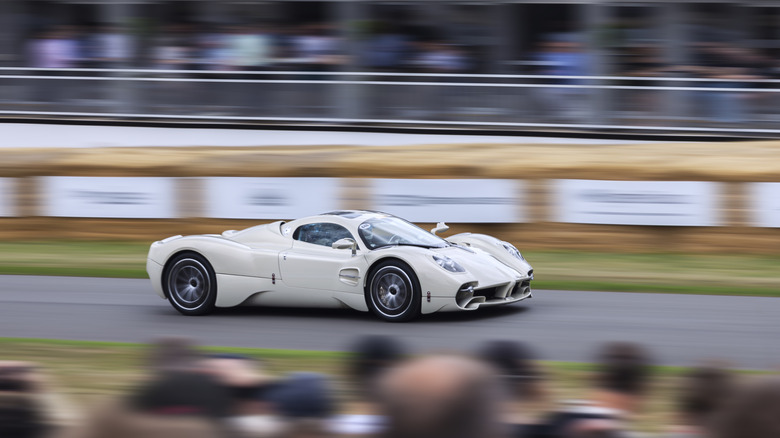
Every gearhead has dreams of one day owning a hypercar. Ask enthusiasts what their dream hypercar is, and a pretty large portion of them are likely to say something made by Pagani. Debuting itsfirst car, the Zonda C12, all the way back in 1999, and the automaker has been at the top of people's wishlist ever since. It is a manufacturer that also only seems to get better with age, something that its most recent hypercar proves unequivocally.
One distinct part of the Pagani formula is that it exclusively uses bespoke, hand-built engines, supplied by Mercedes-AMG. Every major Pagani model since the manufacturer's inception has followed this rule. The Mercedes-AMG M158 is the latest made for the hypercar brand, and it is a 6.0-liter twin-turbocharged V12 engine that puts down up to 864 hp, which is pretty staggering.
The M158 is primarily used in the Pagani Huayra and Imola, as well as the shiny new Utopia. Instead of focusing on high-pitched exhaust notes, which is par for the course with ultra-rare hypercars, the Mercedes-AMG V12 delivers a dramatic mechanical acoustic profile, with heavy turbo induction noises, aggressive turbo blow-off sounds, and a brilliant rumble while idling. It is one of the rare cases where turbochargers don't detract from or muffle the sound of a V12 in an exotic car.
Lancia Tipo 233 ATR 18S
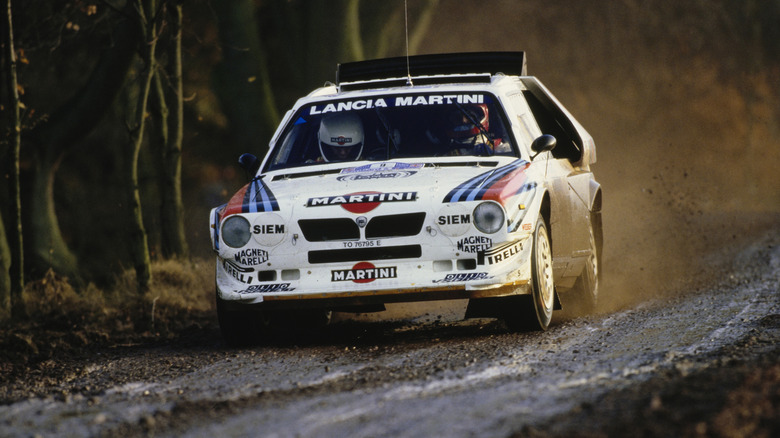
There is no place where forced induction shines more than in the rally world. Essentially all of the rally legends that we now look back on had a turbocharger under the hood. The engineers over at Lancia came up with a way to get the best out of both core forms of forced induction, though, adding a supercharger into the mix and birthing a legend in one stroke.
The 233 ATR 18S is a legendary four-cylinder engine, built by Abarth to power one of the fastest rally cars in history, the Lancia Delta S4 Group B rally car. One of the things that made the mid-mounted four-pot so special is that it made use of both types of forced induction. The supercharger would give you boost at low RPM ranges and then the turbocharger would kick in at around 4,500 RPM and take over.
Back in 1985, when the Delta S4 took the stage, twin-charged engines like this were pretty rare, and the noise the engine made was quite unique. It would rev all the way past 8,000 RPM, with a harsh and raw snarl. This was underlined by the iconic whine of the supercharger as the car started accelerating, followed by the roar of the turbo spooling, ending with a pretty pronounced flutter and a flurry of pops and bangs.
Honda JNC1 V6
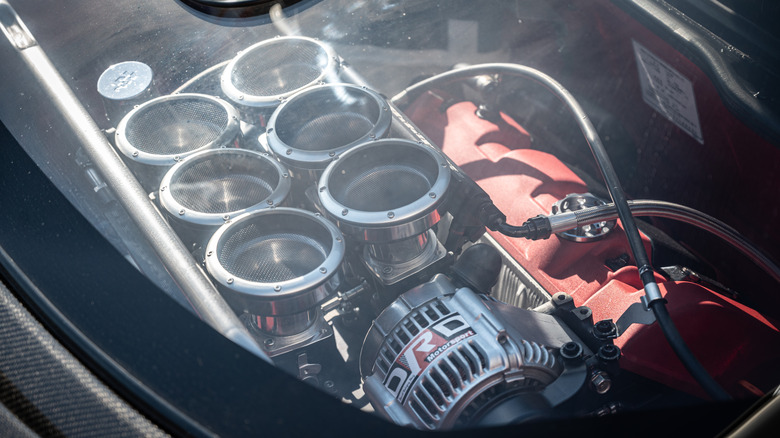
The history of the Honda JNC1 begins well before it was even thought up. It is a product of Honda's racing heritage and can trace its existence back to one of the greatest Japanese sports cars ever built, the NSX. The nameplate has earned itself a place in automotive legend, with it striking a balance between exotic car performance, everyday usability, and reliability. It continues to be one of the most influential sports cars ever built, and while its successor might not garner the same level of praise, it is still an utterly fantastic car.
The JNC1 V6 was produced specifically for the second generation of the NSX. With the first generation being a naturally aspirated V6, enthusiasts were always going to be at least a little disappointed by the twin-turbocharged V6 that replaced it. However, the JNC1 is brilliant in its own right, sharing over 80% of its core architecture with the NSX GT3 car, as well as featuring some genius hybrid integration. The Type S model took this even further, upgrading the turbochargers, fuel injectors, and intercooler to bump horsepower up to a total of 600.
It is no naturally aspirated V6, but the bass heavy tone that the JNC1 produces blends fantastically with the whistle of the turbochargers under acceleration. Some criticize it for being a little too muted compared to some other exotics, but the focus on delivering a mechanical feel and soundtrack, as well as its more lowkey character, help etch it out a place among the best engines out there.
Hyundai Theta II
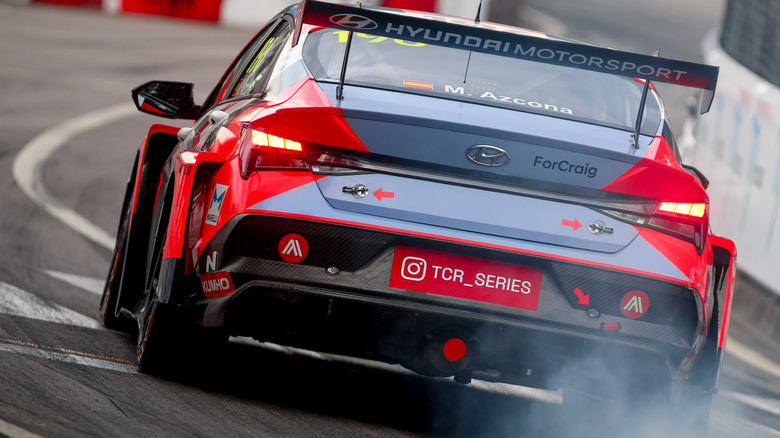
It wasn't long ago when Hyundai coming up in a conversation about performance-focused cars or engines would have been a somewhat absurd prospect. Over the last couple of years, however, the Korean automaker has really established itself as a serious player in the world of car enthusiasm. All you have to do is take a look at the last couple of models that its N performance division has churned out for proof.
Hyundai's G4KH turbocharged four-cylinder engine has been the cornerstone of Hyundai's N models. It has sat under the hood of cars like the i30N, Elantra N, and the Kona N, which mixes a little hot hatch DNA with an SUV, all of which are criminally underrated. It might be a fairly simple 2.0-liter turbocharged four-cylinder engine, but it produces plenty of pep and makes a fantastic sound while doing so. This is especially true of the TCR models, which are heavily modified for racing.
In the modern age, there are quite a few budget-oriented turbocharged sporty four-door cars to choose from, but in terms of acoustics Hyundai has a lot of them beat. A huge part of this is the fact that the Korean automaker has put a ton of time and effort into exhaust tuning, with N models featuring a distinctly deep growl and making a ton of noise on the overrun when in N mode.