

8 Car Parts You Can Buy From A Junkyard (And 3 To Avoid)
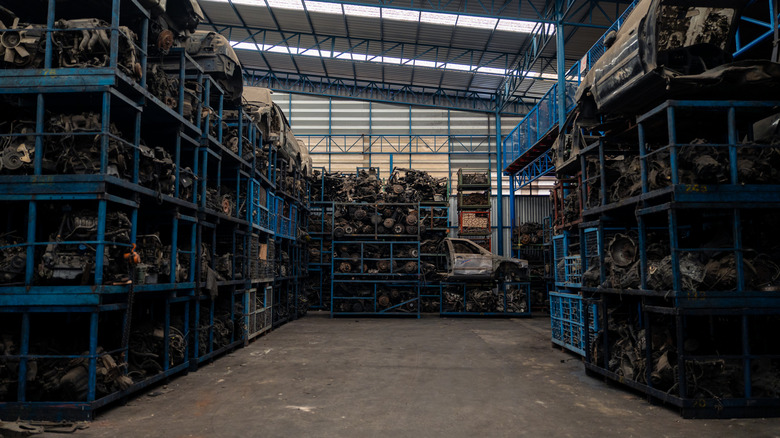
Junkyard car salvage trips can be a real winner for those looking to repair their own ride or rehabilitate a project car that's in a poor state. Seeking spare parts from vehicles that are no longer on the road can be a great way to prolong the life of materials that still have more to give. You're not always going to come away from a trip to the junkyard with the diamond in the rough you were searching for, but that's true of any bargain hunting adventure you might embark upon. In reality, there are plenty of great car parts you can pluck from a defunct automobile that will still work just as well as a brand new component. Plenty of long lasting gear can give you a serious bargain on a still-good part, and all it takes is a little knowhow and some adventurous spirit.
On the other hand, while some parts will give you a solid second life, there are some other car parts that are better left where they lie. Pulling certain components that play a role in safety systems or those that might be classified as "consumables" may be more trouble than they're worth.
All prices and price ranges are valid as of publish time for this article — and may change at any time.
Junkyard rims and wheels can be low-cost upgrades
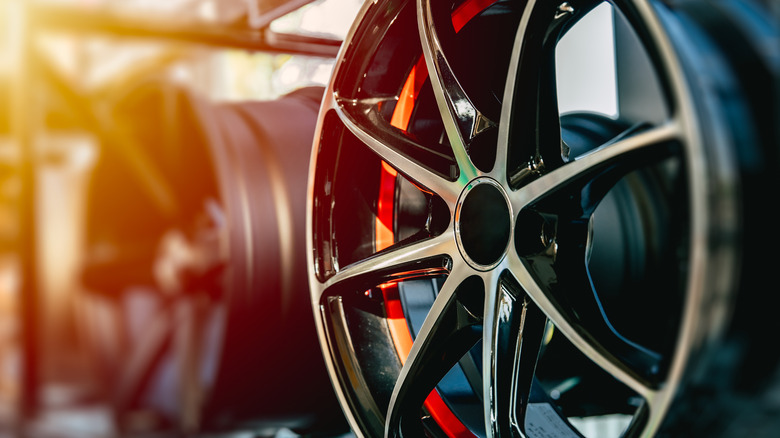
The rims on your car don't touch the ground, and they aren't an integral part of the internal mechanisms that make the vehicle "go." As such, they aren't susceptible to the same level of degradation that plenty of surrounding parts that exist near them in the infrastructure of a car experience. Your brakes, tires, and the axles that drive power from the engine to the wheels all experience mechanical wear and tear, but the wheels themselves, or the rims that sit on the outermost part of this collection of spinning parts are largely immune to this issue. These components can become scratched, warped, or otherwise damaged from the buildup of brake dust paired with a lax cleaning schedule, however.
As a result, this largely aesthetic piece of the vehicle may have seen better days on your ride, and a replacement might be on your radar. Depending on the car you drive, you might be looking at a specialty part to replace your current setup, which can run up to around $500 per rim if you're in a uniquely specialized or luxurious vehicle. Pulling this old part off a scrapyard vehicle can save you some serious coin as you look to upgrade your vehicle.
Used alternators and the tool you need to test them
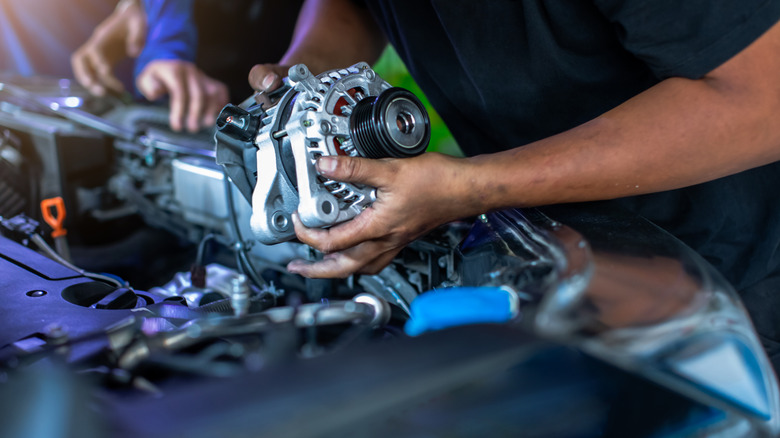
The alternator in your car is one of the more durable parts that can go beyond 200,000 miles if you take care of it. The typical alternator will last up to 150,000 miles, though, and so it's fairly easy to find alternators with plenty more life left in them in scrapped cars. The typical replacement will run you around $200, but they can easily rise up to around $500 or beyond if you need a specific type or a particularly powerful model to regulate your car's battery.
Picking an alternator from a junkyard car can save you a heap of money, and if you're prepared to install the part yourself, you're likely to avoid spending another couple hundred dollars, easily (with the average total cost ranging from about $750 to $850). Bring a multimeter along for the journey though. Before buying the part, you'll want to test power flow and proper functionality to make sure it's suitable.
For those who don't know, the multimeter is a key support tool when working on any car's electronics. As such, it's a tool you should probably consider investing for routine diagnostics. It's a worthy addition to your garage even if you're not currently in the market for a pick-and-pull alternator.
The ever-durable water pump is a reliable junkyard find
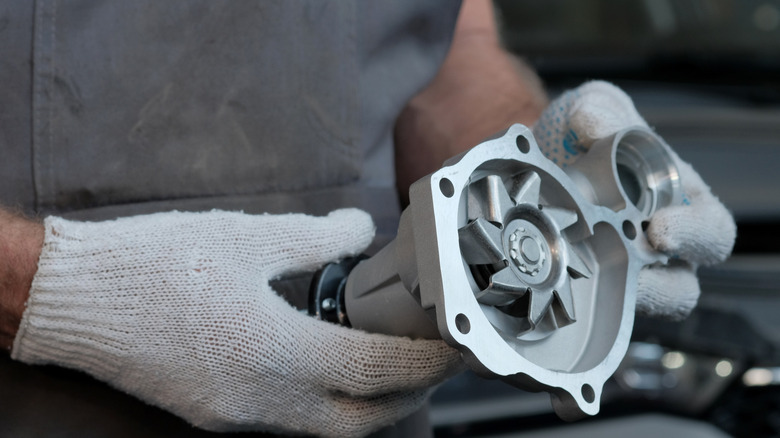
The water pump is a mighty piece of equipment. It drives coolant through your engine and is typically rated to last about 100,000 miles. However this is a part that can often go significantly longer without issue. It's realistically one that should be replaced at the 200,000-mile mark at the latest.
The cost of a new water pump varies by model, but a new part alone will typically run you somewhere between roughly $400 and $750, on average. Yet, pulling one from a vehicle resting in a junkyard offers plenty of performance life at a notable price reduction, with UAPI reporting a cost of just $20. Because the part is so durable, picking an old one doesn't come with too much worry over how long the component has left in the tank.
It's also worth noting that water pumps are installed in the same general area as the timing belt, and so the two parts are frequently replaced in tandem. This will save you on the labor costs if you're planning to bring the vehicle into a mechanic to work on the update, and it can drastically cut down on the time commitment you have to make if you're a home mechanic looking to do it yourself. However, because this is so often a pair of part replacements, finding a used part to go along with the new timing belt (roughly $300 to $450 for the parts and as much as $1,500 for the whole job) can reduce the total expense significantly. It's also worth noting that the timing belt is a part you absolutely don't want to buy from a junkyard!
Trim components, seats, and other interior pieces can be the finishing touch on a project car
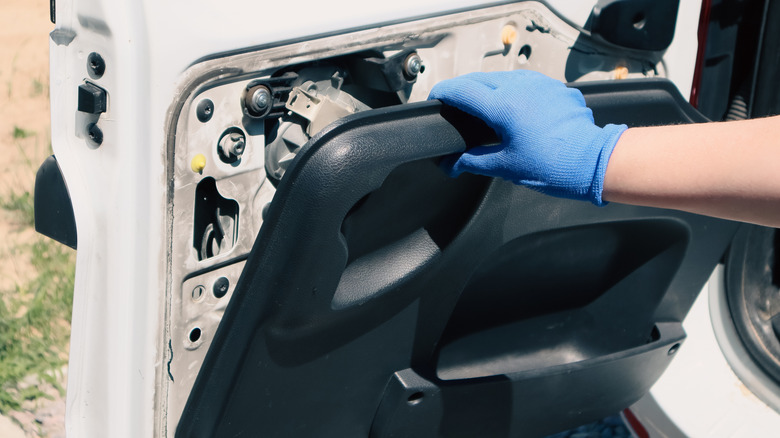
Whether you're trying to return a project car to its former glory or seeking a replacement to a broken or faded piece of stylistic flair in your everyday vehicle, the junkyard can be a great resource. Interior components can survive completely intact through crashes, the process of ageing, and other issues ultimately scrap cars. In some cases, finding a car at rest that matches your own ride might be the only way to source the part you need for a restoration project.
Trim components are an obvious highlight here, and bringing along a set of plastic or nylon prying tools will allow you to remove parts you find with as little risk of damage as possible. If you're in the market for a secondhand seat, don't forget a portable 12V jump starter. This will allow you to test the motorized adjuster on seats using electric power to move. When looking at soft components like seats or floor mats, you'll want to check the car for dampness. Standing water or an enclosed damp interior can introduce mold issues that you may end up transplanting into your own car. On hard trim elements, door panels, and other parts, scratches, sun fading, and cracks are your go-to signs to pass on the part.
Carefully remove head and taillight assemblies for an updated look
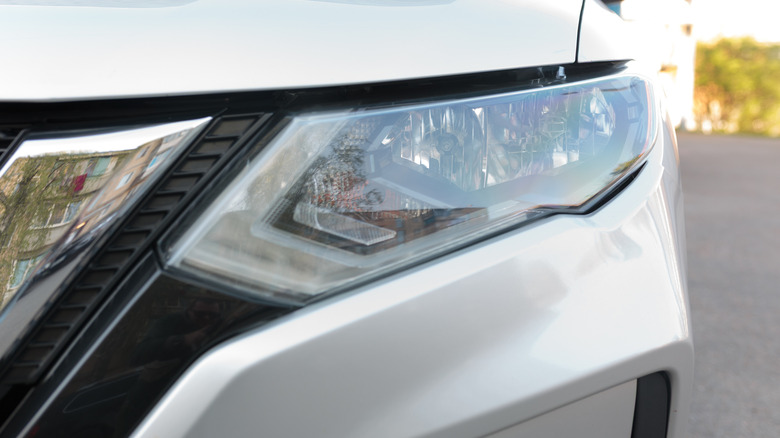
A new headlight is a simple part to replace, but the entire assembly that the bulb fits into is another story. These complex set of pieces that fit together can easily run you around $300 apiece. Comparatively, UAPI lists headlight mount panels for $30, and headlight composites for $25 (alongside $4 bulbs). The same can be said for taillights ($25 from UAPI), with every vehicle requiring its own unique shape and structure to fit in seamlessly to the contours of the body.
The main thing to keep in mind when searching for this component is the frustrating reality that the positioning of the part means that they'll often be beat up from crash damage. Patience and a keen eye will help you pick out a viable replacement. It's also important to remember your multi-bit screwdriver to handle the range of fasteners that are frequently used to connect this part.
Secondhand windshield wiper arms and blades are heavily discounted
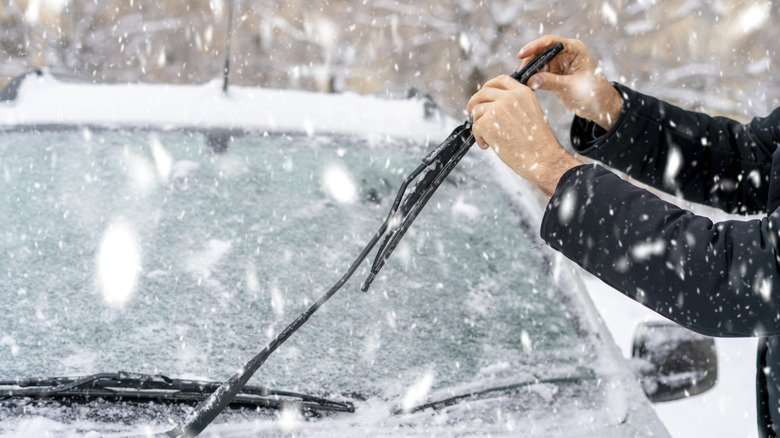
A replacement wiper arm can cost you nearly $50 for a new part, with exact pricing depending on whether you need a front or rear arm, and your vehicle's make. Blades are essentially a consumable good, and eventually they'll need to be replaced as a natural byproduct of the movement and physical contact they make with the glass. Both the wiper arms and blades are also easy to break in inclement weather like ice or snow. Wiper blades are more affordable, typically running between $10 and $20. However, an arm sourced from a junkyard will be notably cheaper: UAPI lists a $6 price for one, while Pick-n-Pull USA offers wiper blades for $1.99.
None of these prices are likely to break your auto repair budget, but you also don't strictly need to pay full price for either part. Moreover, these parts aren't structural and they don't contribute to the mechanical processes of the vehicle's driving function. With that in mind though, as you're searching for a replacement remember that wiper blades release from a vehicle via upward pressure rather than wiggling the part back and forth. This can save you a lot of headache and time if you're personally pulling the part from a scrapped car.
Pull an engine block if you're looking for a bold challenge
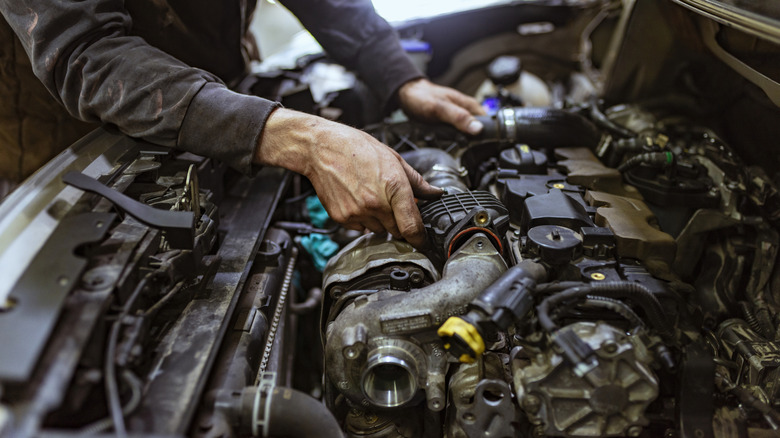
The engine is a difficult vehicle component to quantify. In a very real sense, the engine makes the car. This is the piece of the puzzle that gives your vehicle its propulsion, but there are so many smaller components that fit within the "engine" as a completed unit. The constructed engine is a complex system and pulling one from a junkyard find is not for the faint of heart. Rebuilding an engine will typically cost less than investing in a new one. For instance, Pick-n-Pull USA lists long block diesel engines for $439.99 and short block engines at $299.99. There's plenty of work between pulling the engine at a junkyard and installing it in your car, but these are rock bottom starting prices. Alternatively, buying and installing a new engine can cost anywhere between roughly $2,000 and $10,000. Experienced mechanics and those with a knack for detail can make this DIY approach work, but others will likely struggle to rebuild an engine without facing an uphill battle or lingering performance and reliability issues after completing the job.
However, if you're considering pulling an engine, you're likely already someone with a good deal of experience working on project cars. This isn't a project that novice restorers are typically going to dive right into, and so a baseline of confidence to approach the task at all is a key step in the right direction when considering targeting this part as a potential junkyard pull.
Repurpose old batteries for new projects
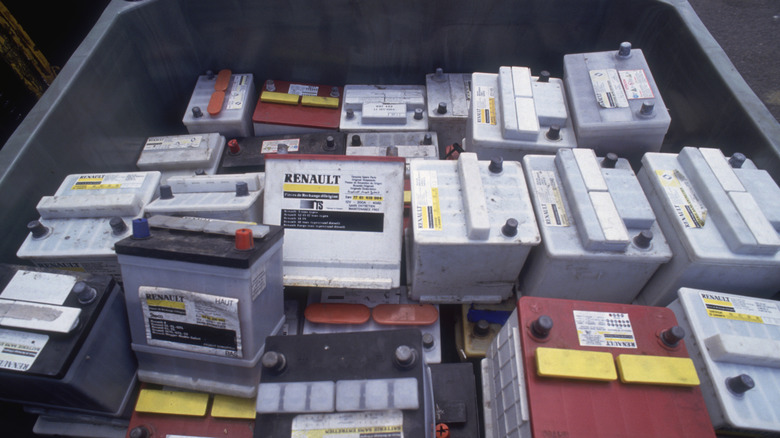
Old batteries often have a bit of life left in them, even if they're long past their best days. With a bit of specialized gear in your garage, it's possible to revive a seemingly spent battery to give it a second life under the hood. A new battery will typically cost between $90 and $200, but the battery you require will vary depending on the specific needs of your car. In contrast, UAPI lists batteries for $25. Finding a junkyard part can be a great way to reduce the price on this critical component, although it probably won't serve you as long as a brand new unit would. Therefore, this should probably be classed as a stopgap approach.
You'll want to inspect an old battery for physical signs of trauma and damage. Bulging and corrosion can be signs that a battery needs to be replaced in your current vehicle. A battery in a junkyard with these red flag features is no less potentially dangerous.
You should also test any junkyard battery with a multimeter before buying, and if you return a reading of less than 10V then the battery is probably too far gone to be worth your resuscitation efforts. A unit that's still workable can be cleaned up and brought back to life with a trickle charger, though, allowing for a cheaper alternative to power your primary mode of transportation or a project vehicle. However, it's also worth noting that car batteries can power far more than just cars. They can also be resold or stripped for the bare materials, making this a potential avenue for resellers to explore. Beware, though, as this is a task which requires proper knowledge and experience to avoid serious health hazards.
Avoid airbags as their functionality can't be verified
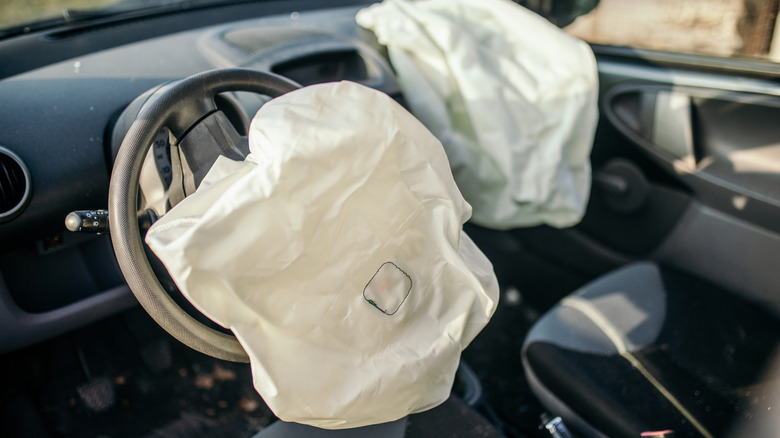
A new airbag isn't cheap. You'll often be looking at a bill of at least $1,500 for even just one new airbag, and yet a crash tends to force most or all of them to deploy, frequently catapulting the cost of replacing this part of the vehicle's safety system into the five figures. This almost certainly contributes to the rate at which cars are declared totaled after a collision. Even so, the risk of installing a used airbag is too great. You can't be entirely sure that the tool will work correctly if or when you need it.
Unless you're looking for one to conduct some kind of science experiment outside of your driving needs, airbags are a component that naturally can't be relied on as a secondhand find. Much like motorcycle helmets, children's car seats, and other safety equipment, without a verifiable chain of custody to ensure proper operation and the absence of damage, it's strongly ill-advised to assume the risk of using a preloved unit.
Avoid used brake pads to ensure proper safety
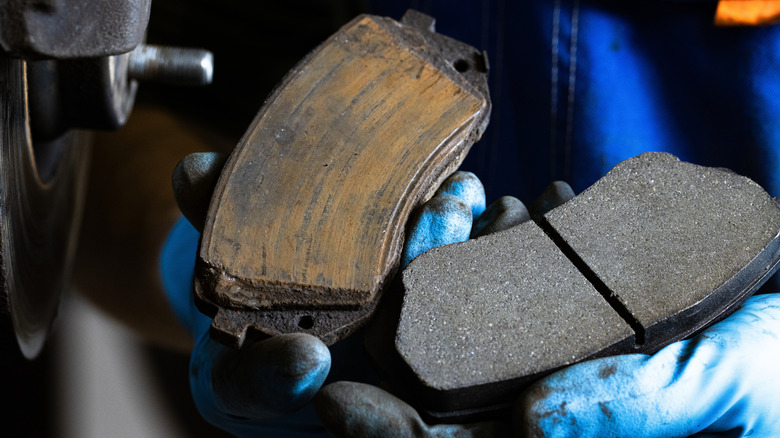
Your brake pads wear down over time, and are typically rated for around 30,000 to 70,000 miles, and bad driving habits like heavy braking and fast driving can reduce their life even further. A new set of brake pads will run you roughly $150 to $350 per axle, and so it's not exactly a cheap fix if you need to tackle both the front and rear at the same time.
However, the expense shouldn't give you any ideas about picking a part from the junkyard instead. Brake pads are a consumable part that performs a mechanical role in slowing (and stopping) your car. As a result, it's a piece that should always be purchased new to ensure you're getting the full service life from the component. Installing used pads from a junkyard will introduce some unacceptable unknowns about braking performance and the functional timeline before another replacement is warranted.
Avoid sourcing old tires from the scrap heap
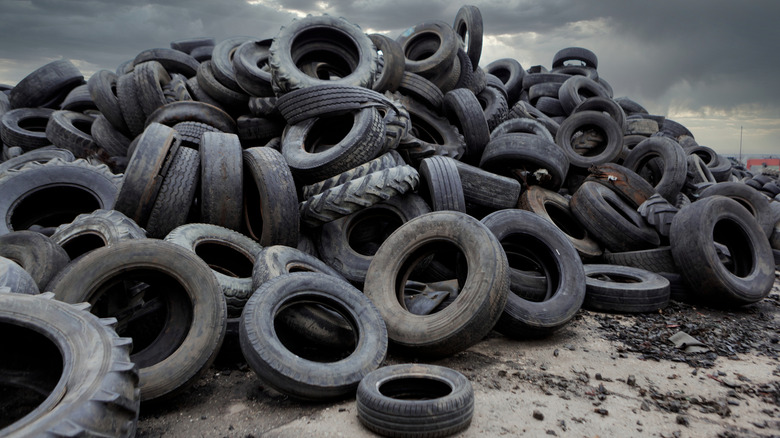
While old tires can repurposed for new and unexpected uses, junkyard picks for your ride is not something we'd advise. Tires wear down with time, and you'll generally need to replace them after about five or six years of use, with your typical driving conditions and personal habits playing major roles in this timeline. Sticking a penny or quarter into the tread and inspecting where the head lies will give you a good idea of your tire's viability.
But the tread isn't the only thing to consider. This part of the component interacts directly with the road, but the sidewall and other areas are also made of rubber and will degrade with time. With age, cracks and weaknesses start to form, leading to an increased chance of tread separation, regardless of the depth still left in the tire.
On top of the potential for a loss of control due to a blowout like this, older tires will naturally have less grip on the road than a brand new installation. The result is longer braking distances, less control, and a greater penchant for even worse performance in challenging weather conditions. As such, while you should replace your old tires when the time is right, the junkyard isn't the place we'd suggest you find a new set.