

7 Car Parts You Should Replace At 200,000 Miles
Countless drivers seek to hit large milestones of distance with their workhorse vehicles. Crossing the six-figure threshold is a big one, but so too is the 200,000-mile mark. This is where the durable vehicles that may just keep on outlasting the curve really set themselves apart. Similarly, once you've reached this marker, your car is likely old enough and seen enough time on the road that selling it or trading it in may no longer be particularly viable. For every 10,000 to 15,000 miles beyond the average for a vehicle's model year you drive the car, it loses as much as 10% off the typical resale value. A typical driver will hit 200,000 miles after around 14.5 years (averaging between 13,500 and 14,200 annually). That's a far cry from the roughly 8-year ownership window that the average American keeps their longest car for, indicating that a vehicle with this much distance is either significantly elderly or used heavily.
Maintaining a vehicle that's still going strong at this threshold is a point of pride, however. Drivers who reach this turnover of the dial will often be fairly well attuned to the needs of their ride, performing routine servicing and maintenance on their venerable piece of machinery to keep it in good working order. There are lots of parts that won't last as long as you think, and plenty of others rated for around 50,000 miles, meaning you're likely to make swaps roughly four times by the time you hit 200K. This special list of durable components are rated for at least 100,000 miles and often much more. But even the most bulletproof parts need to be inspected eventually, and the 200,000 threshold is a great time to check them out.
Timing belt
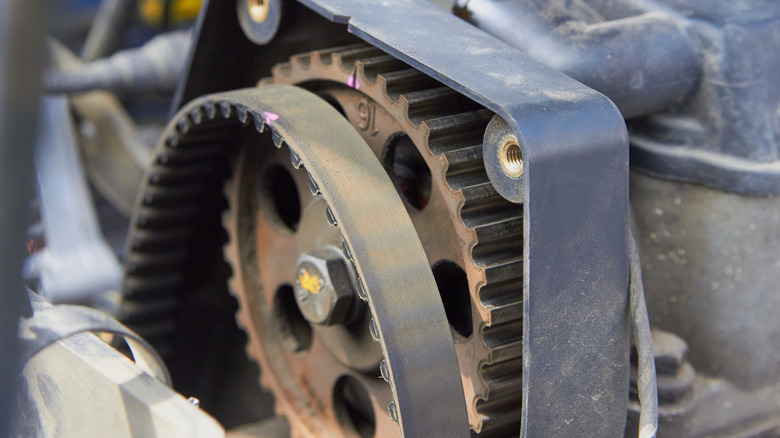
The timing belt syncs up the moving parts within your engine's overarching build. Specifically, it allows the camshaft and crankshaft to operate in concert, turning pistons and valves that each move independently in a specific order with exacting precision. Without this component doing its job, your engine would not be able to effectively generate the power needed to move your vehicle, nor would it have the ability to transfer that power from the engine in order to turn the wheels.
The timing belt should be replaced at roughly 100,000 miles, but every manufacturer will offer their own specific recommendation. These often also include a duration component, somewhere in the neighborhood of five or six years. The timing belt can continue performing its duties well past those thresholds, but it's absolutely essential that anyone looking to continue driving their car for the long term realizes that this is a soft part rather than a metal component. It's going to fail; the question is just a matter of when.
Speaking from personal experience, if you allow your timing belt to fail rather than replacing it before it snaps, it can create randomized damage under the hood that can make the repair significantly more expensive. If the sensitive components come out of sync, you may be looking at a more catastrophic engine failure that needs to be addressed instead of a simple part swap. This can annihilate any hope you may have had for logging even more miles in an older, trustworthy auto by skyrocketing the cost and making it potentially not worth the hassle.
Clutch mechanism
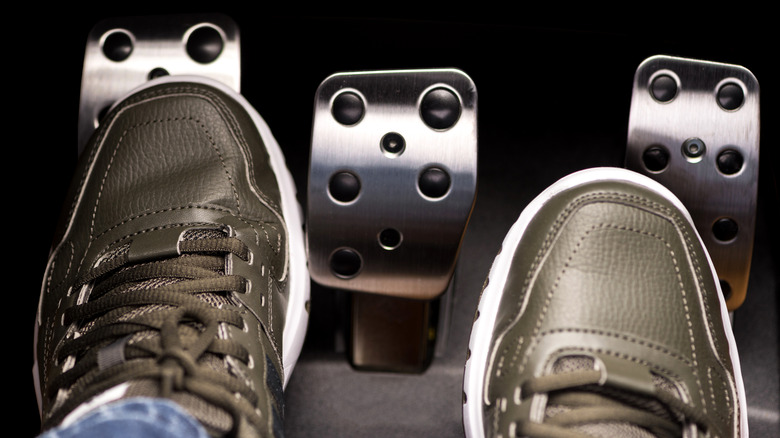
In a car featuring a standard transmission, a third pedal can be found in the driver's footwell. That pedal operates the clutch mechanism and allows you to manually shift from one gear to the next, disengaging the transmission and temporarily placing the vehicle into the equivalent of neutral, even when the gear selector remains in a numbered position. From here, moving it up or down to the next gear can be accomplished without damaging the vehicle. Naturally, your clutch pedal will take a non-negligible amount of abuse. It's a durable feature of the vehicle, and all three pedals will continue performing their roles pretty well for the long haul, but eventually your clutch pedal will start to fail. The pedal should be able to roll on for significantly longer than 100,000 miles in most circumstances, but if you're someone who exhibits bad driving habits, especially ones like riding the clutch, you may ultimately need to replace the mechanism sooner than that.
A clutch can log well over 100,000 miles if you treat it well, but the amount of use it gets can also dictate things. City drivers will naturally stomp on their clutch more often than highway commuters, resulting in a faster wear pattern. However, you'll want to watch out for the telltale signs that something is going awry and get on a repair right away. The clutch pedal may lose its tension and feel springy if it's starting to fail. You might also encounter a sensation in which the pedal feels like its getting sucked back down toward the floor. Both are signs that the clutch needs some attention, either because the connection is weakened (via the cable or return spring) or because there's an issue in the hydraulic pressure, again speaking from personal experience.
Water pump
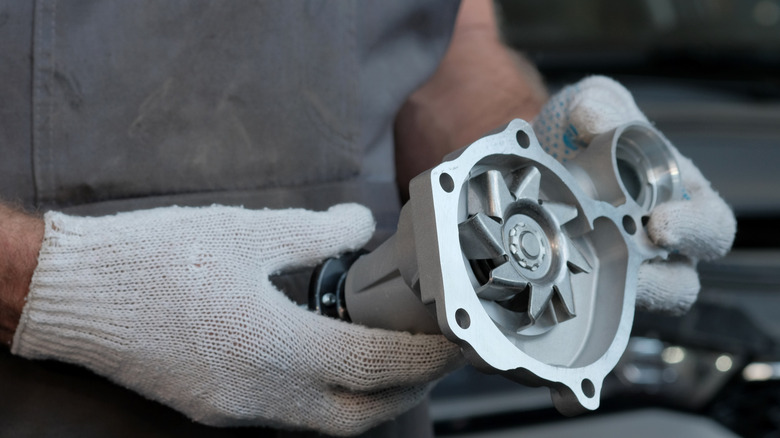
The water pump under your hood is often rated for around 100,000 miles at its high end (60,000 on the lower end). The component is significantly durable and will frequently continue performing perfectly well for a lot longer, especially for drivers who take good care of their car and don't miss routine maintenance tasks. The pump is responsible for pushing coolant through the engine, keeping your car on the road over lengthy driving sessions and huge volumes of total mileage for the long haul.
Even if you haven't had any issues with the part in the past, hitting that 200K mark brings about some preventative maintenance requirements to help the vehicle hit its next big milestone. It's worth noting that replacing the water pump is often a job that gets added onto a timing belt refit. The water pump is typically found behind this element, meaning tackling both replacements at once allows you to cut down on the labor requirements of either individual job. If you're already getting your timing belt replaced because you're due for a new one (or yours has lasted this one without issue and is well overdue), considering a water pump replacement is something of a no-brainer. It is worth noting that strange noises from the engine bay, an overheating engine, or coolant leaks are all signs that it's time to replace your water pump, regardless of the mileage you've logged.
Fuel pump
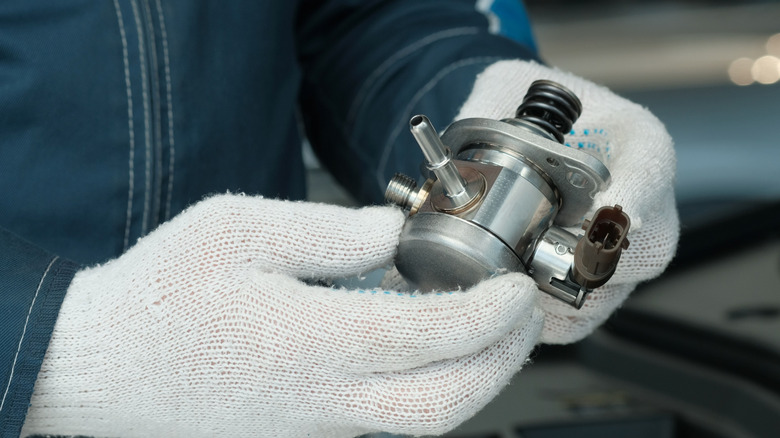
Your car's fuel pump is likely found within the fuel tank itself if you drive even a relatively modern vehicle. This makes accessing the part fairly difficult, but thankfully it's not something that will need to be replaced with any serious urgency. The pump is typically rated for around 200,000 miles on the high end, and at least 100,000 miles by virtually all standards. This means that the casual commuter isn't likely to ever need this part replacement done in their car. For the special few who want to continue driving a car they've become attached to over the years, this ultimately may be a swap that needs to happen, however.
You'll be able to tell if your fuel pump is starting to fail by listening for a lack of audible feedback during the ignition phase when turning on your car. As you start to turn the key, the fuel pump sucks in a bit of gasoline; failing to produce this noise is often the first indication that it's starting to degrade. As noted, this is a fairly demanding job, and so you won't often engage in a fuel pump replacement unless you actually need it. However, in a car that's already logged 200,000 miles and aiming for significantly more, this may be a worthwhile endeavor to avoid any complications that a failing fuel pump down the line may cause to other elements of the vehicle.
Suspension and strut elements
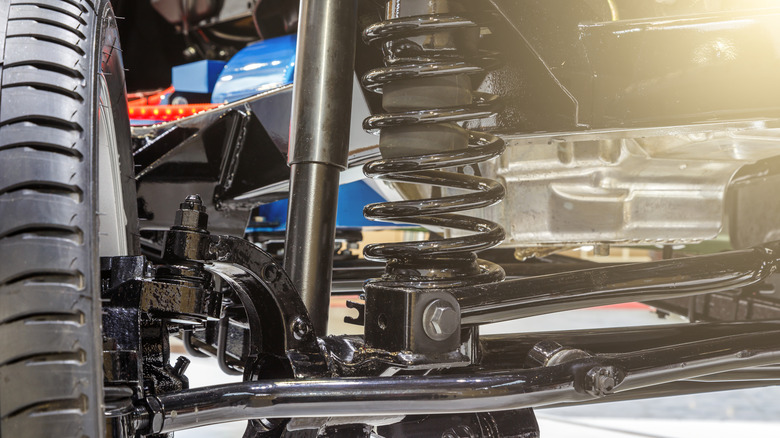
Your suspension is built on a series of interconnected parts, and because of this the whole assembly takes the punishment of the road exceedingly well and can often continue performing perfectly well long after the standard 100,000-mile rating that the components tend to carry. However, when one piece fails it can lead to a cascading effect that impacts all the other elements of the car's suspension in unexpected and potentially catastrophic ways. Of course, the harder you push your car the more likely you are to run into breakdown issues with one or more components in this corner of the vehicle's overall makeup. It's a good idea to replace the entire column at the same time if you're handling one broken part within this system, since the whole thing needs to be taken apart to replace any particular element in the chain. This means that replacing one piece or a series of them will require essentially the same volume of labor.
Similarly, if you do run into a failure in one component here, it's often a good idea to evaluate the suspension elements on your other wheels, too. Wear patterns will always be unique, but each corner of the car is subjected to essentially the same bouncing impact when you hit potholes, go over speed bumps, or slam on the brakes to avoid a collision. Personal experience informs this once again: If one part has failed, the rest may not be all that far behind. If you have managed to go 200,000 miles before breaking a spring or some other component in the suspension, a refit may be just the change needed to allow your car to enjoy another 200,000 on the road.
Alternator
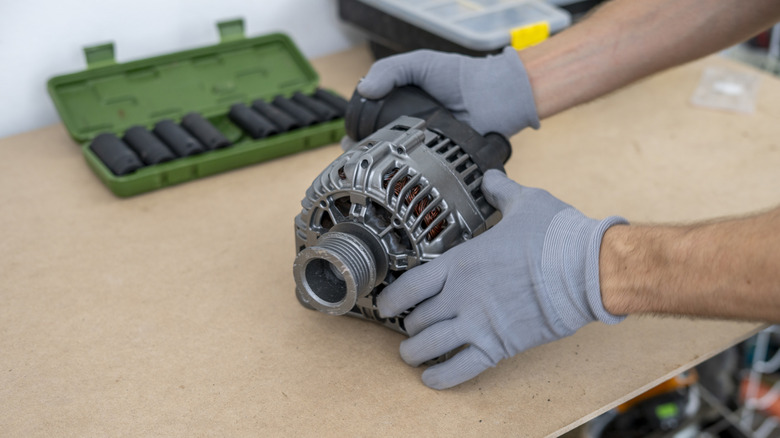
The alternator is responsible for managing your battery's charge. It's the piece of equipment that returns power to the unit as you drive, and it's a crucial element in the startup phase when you turn the key. Alternators eventually give out, and they sometimes do this when you least expect it — again speaking from personal experience; having an alternator die while on the highway is not going to be anyone's idea of fun.
This is a durable component, and they're often rated for somewhere between 100,000 and 150,000 miles, but without any major complications that can frequently outlast these thresholds. It's hard to put a pin in when your alternator will give up the ghost, and some drivers have gotten unlucky and had to replace this part far earlier than the 100,000-mile floor they typically offer.
A few important signs that your alternator is going bad involve flickering lights or the presence of the battery warning light on your dashboard. If you have a multimeter, you can follow a few basic diagnostic steps to evaluate the battery's health. With the engine off, your battery should read roughly 12.6 volts, and when the engine is running it will show a reading between 14 and 14.5 volts. This indicates that the alternator is working properly to charge the battery. Readings outside this scope can suggest either the battery or alternator is starting to falter.
Transmission fluid in an automatic
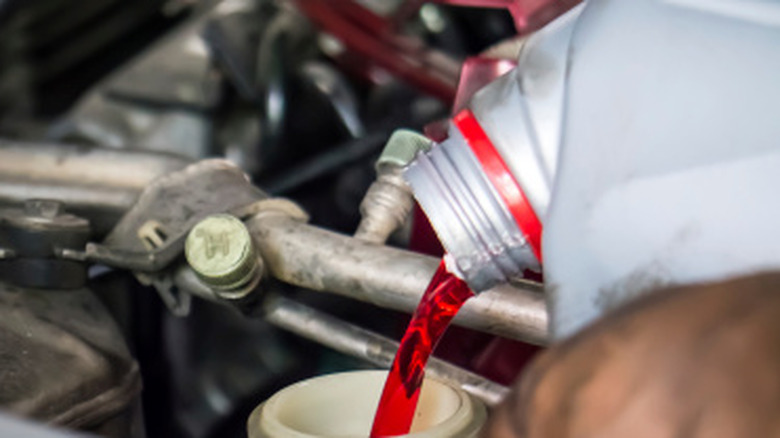
Automatics don't tend to feature too many transmission problems. Often, if your transmission is on the fritz in an automatic it means that you should probably just move on from the car instead of paying the hefty cost of a complex system replacement. Kelley Blue Book reports a top end cost of around $7,100 to replace a transmission, making this a straight cost-benefit analysis. However, making this replacement can give you significantly more time with the car if you're planning to keep it for many more years.
Failed transmissions aren't exactly commonplace, but what is a typical repair at around the 200,000-mile mark is a transmission fluid replacement. Some outlets suggest starting to keep an eye on this element of your ride at around the 100,000-mile threshold, but plenty of cars sport the term "lifetime" in certain fluids that help run the vehicle. These tend to include differential oil and transmission fluid, but are really just marketing terms that cover the typical lifetime of a car rather than the actual ownership timeline you might choose to keep.
Anyone driving their vehicle for hundreds of thousands of miles will want to at least inspect the health of these fluids to ensure they're not causing more costly damage by just assuming that a "sealed" or "lifetime" fluid will actually perform well forever. This can cost as low as $80, with a high end price of around $475 if you need a full flush and filter replacement service, too (according to JD Power). That's a small price to pay for extended peace of mind that will keep your car churning long into the future after an already lengthy adventure on the road.
Methodology

Some of these parts I have personal experience with and others are components that are fairly well-known to be durable elements under the hood, with general longevity figures backed up by expert automotive sources from Kelley Blue Book and others. Some components are often brushed aside as parts of the whole that don't really need much attention or are likely to continue performing well into the future. However, experiencing a failure in one of these areas can often lead to problems elsewhere in the driving experience or leave you stuck on the side of the road when you least expect it, which more than justifies a 200k-mile replacement or maintenance check.