

9 Cheaper Android Phones That Outshine The Google Pixel 11 Pro In Value
We may receive a commission on purchases made from links.
If you ever noticed that the suffix "pro" adds a strange gravitas to a product, you're not alone. Slap the word on the front of a box, bump the price up a couple hundred dollars, and a certain kind of buyer will reach for their wallet without thinking much about what extras they're actually getting. The Google Pixel 11 Pro was just released in August 2026, and it's an amazing phone with a fluid design and AI-enabled features.
However, for something that sells for $1,099 new, much of what the phone offers is available elsewhere, and for less money. That's the dirty little secret of the modern Android phone market, in a nutshell. The kind of performance gap we used to see between flagship phones and phones that were just pretty good has narrowed a lot.
The best choice for value hunters is often to go with a one-year old flagship phone that is on discount, and still available new. However, you can even save more money by getting a refurbished unit from a trusted brand. All of the phones on this list match or beat the Pixel 11 Pro on performance, and significantly undercut it on price. For reference, the Pixel 11 Pro gets a single core of 2,688, and a multi-core score 6,871 on GeekBench.
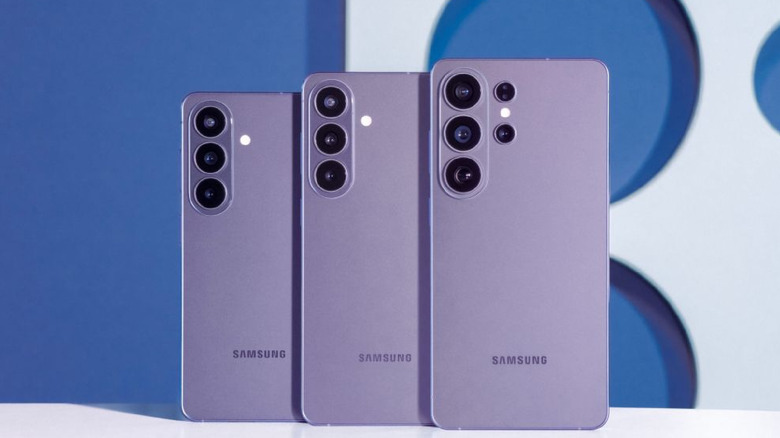
Samsung S26
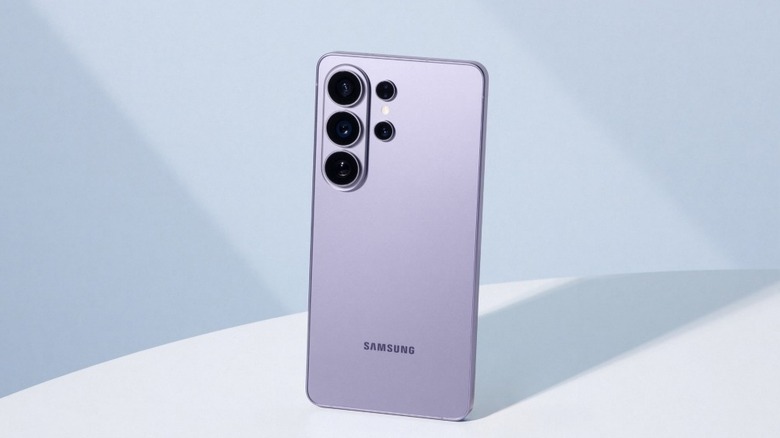
The $899 Samsung S26 is one of three Samsung flagship phone offerings with some truly hard-to-beat features. The phone released in March 2026, meaning that it is barely half a year old and will last buyers at least a few years into the future if cared for. In the U.S., the S26 is powered by the Qualcomm Snapdragon 8 Elite Gen 5 chip. That chip helps it get better performance than the Pixel 11 Pro, with GeekBench scores of 3,625 and 10,705 in single and multi-core testing, respectively. The screen on the S26 is the same size as the Pixel 11 Pro, coming in at 6.3 inches, though the resolution is slightly lower.
Both phones have 50 mp main cameras that support 4K. The battery on the Samsung is 4,300 mAh, while the Pixel 11 Pro has a 4,850 mAh unit. Google offers 30-watt wall charging and 25-watt wireless, while Samsung comes in at 25 and 15 watts, respectively. So, while you sacrifice some Pixel camera AI specialization, you're still getting a proper 2026 flagship with 95% of the same features as the Pixel 11 Pro for about $200–$300 less. Samsung even makes AI editing features of its own, and the S26 is also AI-enabled as a whole, so you're not actually missing out on too much.
OnePlus 15
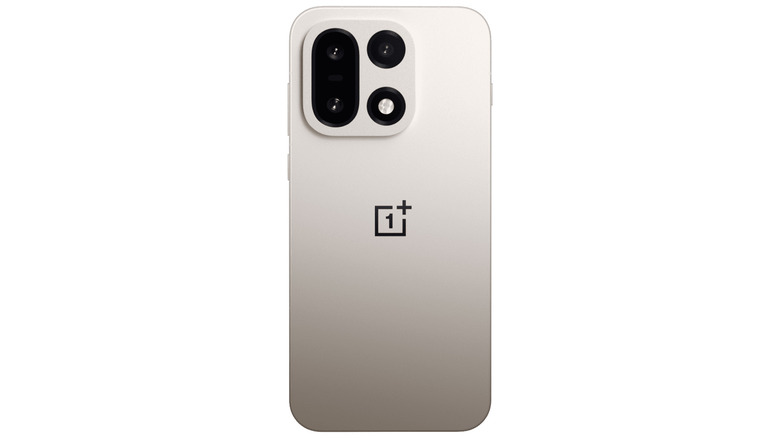
We reviewed the OnePlus 15 recently, and it is another solid option, currently retailing for $1,045 for a brand-new unit, or for $849 at Best Buy as a used (refurbished) option. Similar to the Samsung model we just looked at, the OnePlus 15 is a flagship phone available at a similar price to the Pixel 11 Pro, but it's got a leg up in some regards. The screen is larger than the Pixel 11 Pro, coming in at 6.78 inches, and is a higher overall resolution too. While the Samsung S26 from above was only available with 12 gigabytes of RAM, the OnePlus matches the Pixel 11 Pro's configurations, as it too, is available either with 12 or 16 GB of RAM.
The OnePlus 15 matches the Pixel 11 Pro's camera too, as the main camera is a 50 mp 4K unit, but it obliterates the Google on battery life, as it ships with a massive 7300 mAh battery. That battery can also support 120 watts of wall-powered charging, and up to 50 watts of wireless charging. Just like the Samsung, it comes with a Snapdragon Elite Gen 5 processor that is quite powerful, netting the phone 3,628 points in single-core, and 9,954 points in multi-core performance on Geekbench. Furthermore, the Pixel 11 Pro and the OnePlus 15 both start at a minimum memory configuration of 256 GB, while the base option on the Samsung S26 remains a 128 GB offering.
Samsung Galaxy S26 FE
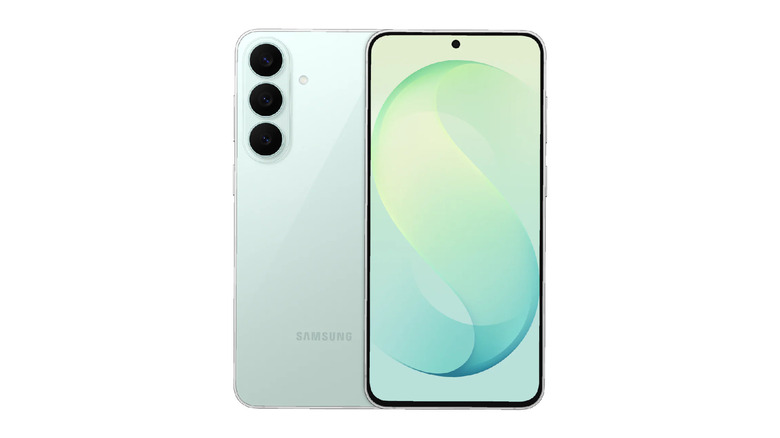
For those who don't know, "FE" on Samsung devices is short for "Fan Edition" – it's basically a more affordable version of the device that the FE version is based on. Thus, the $599 Samsung Galaxy S26 FE is simply a cheaper S26 phone, with lesser features. It is one of the newest phones on our list as of late 2026, having been announced in late August 2026. The screen is larger than the regular S26, coming in at 6.7 inches, though it is a 60-120 Hz unit, as opposed to a 1-120 Hz unit on the regular S26.
The camera is still a 50 mp, 4K unit, and the battery is slightly larger, at 4,900 mAh, capable of supporting 45 watts of wall charging and 15 watts of wireless charging. Also note that while the displays are similar on the two phones, they are not the same, with the S26 FE getting 1,900 nits of peak brightness, while the S26 regular gets 2,600 nits. The S26 FE also gets a less powerful Samsung Exynos 2500 chip and 8 gigabytes of RAM, which give it lower GeekBench scores of 2,255 and 7,450 for single and multi-core, respectively. We ranked the Galaxy S26 FE above the regular S26 purely because of the price. Compared to the Pixel 11 Pro, you get almost all the same features a little over half the price, so the "value" argument here is extremely strong.
Google Pixel 11
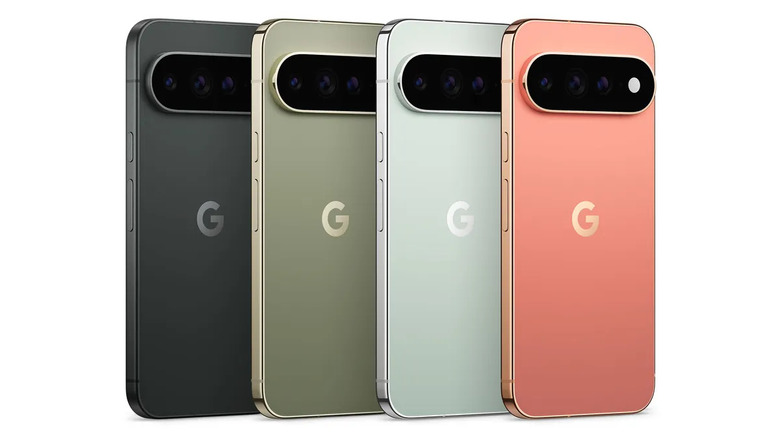
If you don't want to be the kind of consumer we described at the start of this article, you might want to look at the Google Pixel 11. It has the same design language, the same chip, and largely the same capabilities as the Pixel 11 Pro. However, the price comes in at $799 for a new model, which is a significant savings over the pro. For that money, you get a 6.3-inch screen, 48 mp 4K main camera, and a 4,985 mAh battery pack that can charge at 30 watts when wired and 25 watts wirelessly.
The screen is a big difference between the two models, with the non-Pro getting a standard 60-120 Hz OLED panel, while the 11 Pro gets an LTPO OLED with a 1-120 Hz panel. The non-pro also gets a lower peak brightness of 3,000 nits to the Pro's 3,600 nits, though both are plenty usable outdoors. The standard Pixel 11 gets 12 GB of RAM (no 16 GB option), and at least 256 GB of internal memory. That Tensor G6 chip in the phone also roughly matches the performance of the pricier Pixel 11 Pro model, coming in with a score of 2,776 points in single core and 7,558 points for multi-core performance in GeekBench testing.
OnePlus 13
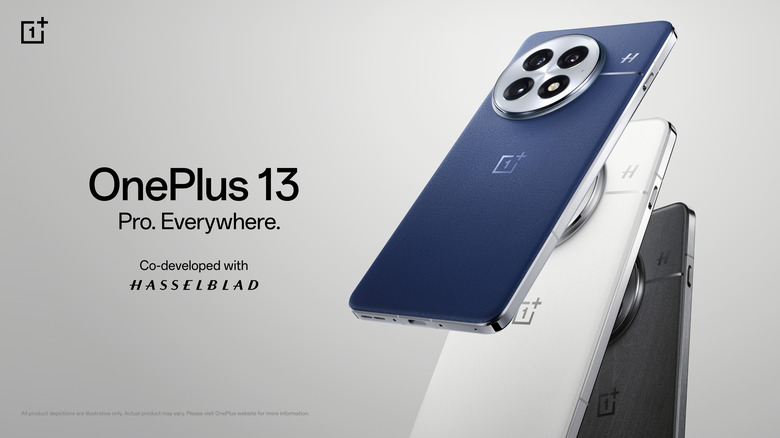
The predecessor to the OnePlus 15 we covered above is the OnePlus 13, and we feel it's still a viable alternative for buyers today, even if it is hard to find new. Fun fact: there was no OnePlus 14, because the number four is considered unlucky in China. Anyway, the OnePlus 13 had some pretty insane specs for when it was new in 2024. It came with a 6.82 inch display, a 6,000 mAh battery that could charge at 100 watts (wired) and 50 watts (wireless), and a 50 mp 4K main camera, with the triple-camera setup developed in conjunction with Hasselblad, one of the best and oldest camera companies in the world. For those who don't know, it was the company that made the Apollo space mission cameras.
The chip in the OnePlus 13 was the Snapdragon 8 Elite. Qualcomm dropped the "Gen" naming for its chips this generation, and brought it back for the following generation, but this chip succeeded the Gen 3 chips. The chip, along with a minimum of 12 GB and a maximum 24 GB of RAM available in the OnePlus 13 gave the phone a score of 3,059 single-core points and 9,346 multi-core points in GeekBench V6 testing. In terms of price, the OnePlus 13 is currently listed at $899 for the 12 GB/256 GB version, and for $999 for the 16 GB/512 GB variant.
Samsung S25+ or the S25
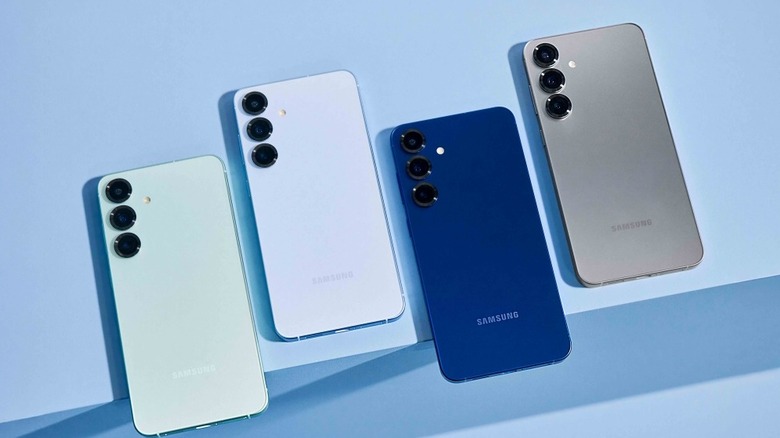
Much like how the OnePlus 13 is still a very strong competitor, previous-generation Samsung flagships, in the form of the Galaxy S25 and S25+, are still worth a look. The Samsung Galaxy S26 and S25 have only minor differences, most of which a regular user won't notice during daily use. However, the S25-generation phones can now be found online at attractive discounts, making them a viable option in lieu of the Pixel 11 Pro. For example, an S25 can be had new for about $695 at the moment, while a Galaxy S25+ retails for about $719 in late 2026. Those who opt for refurbished units can save even more, though you'll have to shop around for the exact configuration you want.
The Galaxy S25 comes with the first-generation Snapdragon 8 Elite processor, 12 GB of RAM, and at least 128 GB of memory, along with a 6.2 inch screen and 4,000 mAh battery. The larger S25+ shares most of those specifications, but with a larger 6.7-inch screen. The S25+ also gets a bigger 4,900 mAh battery, as well as higher display resolution, with 513 pixels per inch (ppi), compared to the regular S25's 416 ppi. Both phones also perform in the same ballpark, with the S25 scoring 3,087 and 9,691 on Geekbench in single and multi-core testing, respectively, and the S25+ scoring 2,979 and 9,309.
Fairphone Gen 6+
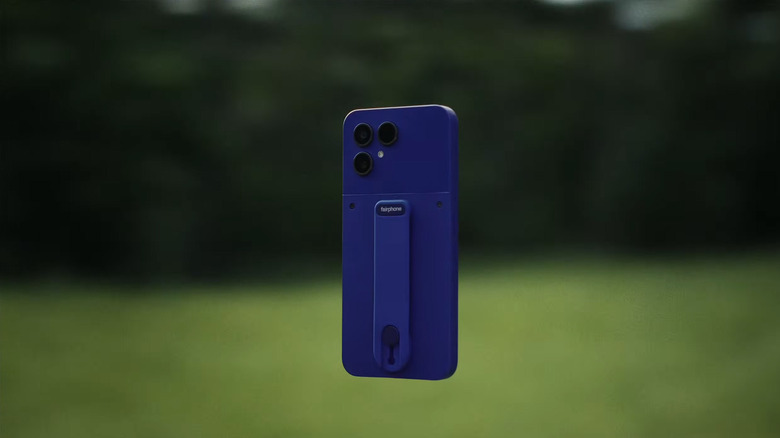
The Fairphone Gen 6+ is one of two phones on this list that does not manage to beat out the Google Pixel 11 Pro in benchmark performance, coming in at 1,271 points in single-core, and 3,644 points in multi-core performance on the GeekBench V6 test. This is courtesy of a Snapdragon 7s Gen 4 chip and 12 GB of RAM. However, we still think it arguably offers a better value proposition than anything on this list.
There are very few phones today that make repairability a priority, and the Fairphone 6+ is one of them. So many components on this phone are easily swappable, including the display and battery, that it (albeit the non-"plus" variant) earned a 10 out 10 repairability rating from iFixit.
The display on the phone comes in at 6.31 inches, and the phone features a 2K 50 mp main camera. The battery is a 4,415 mAh unit that only has 30 watt wired charging, with no wireless option. In terms of on-paper specs, the Fairphone 6 isn't that impressive to some of the flagships we've listed so far, and that's because it wasn't meant to be a flagship-killer. It is for a different kind of buyer, one that values environmental sustainability, a fair price, and not having to shell out hundreds of dollars every time a component breaks.
Nothing Phone 3
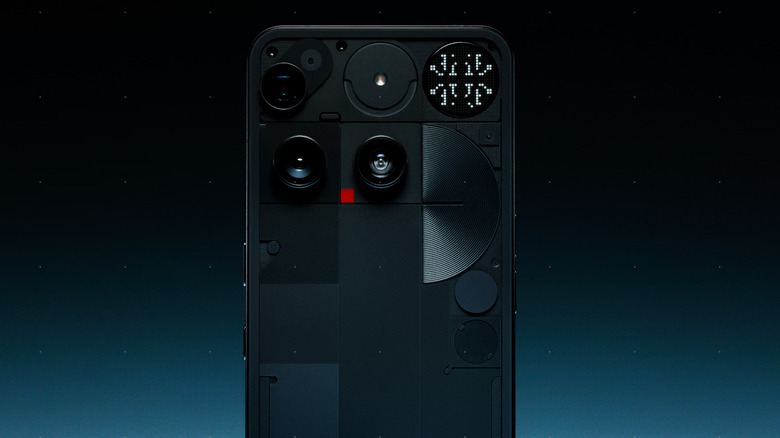
The other phone that doesn't outright beat the Google Pixel 11 Pro in benchmark performance is this one — the Nothing Phone 3. With its Snapdragon 8S Gen 4 processor and 12 GB of RAM, the Nothing Phone 3 gets a score of 2,140 points in single core, and 6,617 points in multi-core performance on the Geekbench V6 test. While not an outright win, the phone comes really close to the Pixel 11 Pro's performance — in daily use, the difference will likely be negligible.
The Nothing Phone 3's screen is a 6.67-inch unit, its 50 mp main camera is capable of taking 2K pictures and video, and its battery has a 5,150 mAh capacity. The phone can support 65 watts of wall-powered wired charging and 15 watts of wireless charging. It comes with 256 GB internal storage at minimum. The design of the Nothing Phone 3 definitely needs to be talked about, since it is by far, the most unique design of any phone on our list. You get the new glyph-style funky lighting system on the back (replacing the older full-LED system) that Nothing has become known for, and you can even customize some aspects of the lighting to individual app activities. However, the Phone 3 is available only in black or white, which some buyers might find off-putting. At a new MSRP of $699 for the entire package, though, we're not complaining.
Samsung S25 Ultra
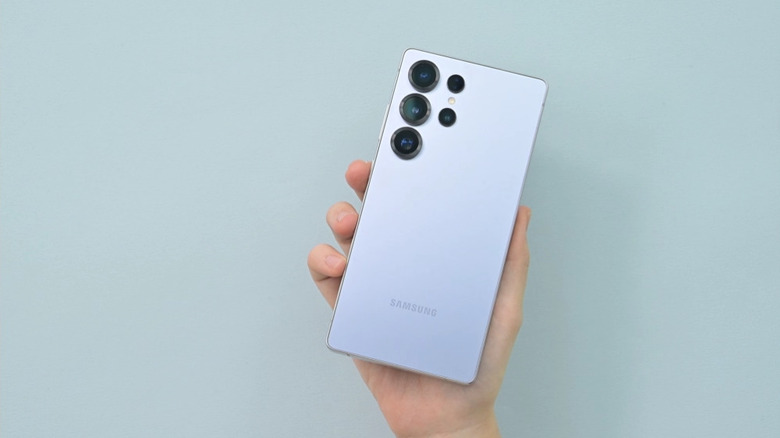
Last up, we have the Samsung S25 Ultra, which makes a pretty compelling value argument, as long as you're comfortable with your budget getting pretty little close to the Pixel 11 Pro's price. Best Buy lists a new S25 Ultra for $1,099.99, while the S26 Ultra has an MSRP for $1,399.99 (though, at time writing, Best Buy is listing it on sale for $1,049.99). However, refurbished S25 Ultras can sell for as little as $700, which is pretty impressive, especially given the phone also blows the Pixel 11 Pro out of the water in terms of features and performance.
For one, the 12 GB RAM at minimum, alongside the flagship Snapdragon 8 Elite (technically a Gen 4, though it's not officially named that, as we covered above) processor combine to give the Galaxy S25 Ultra stellar scores of 2,475 points in single-core, and 8,892 points in multi-core performance in GeekBench testing. The display and battery are both massive, coming in at 6.9 inches, and 5,000 mAh.
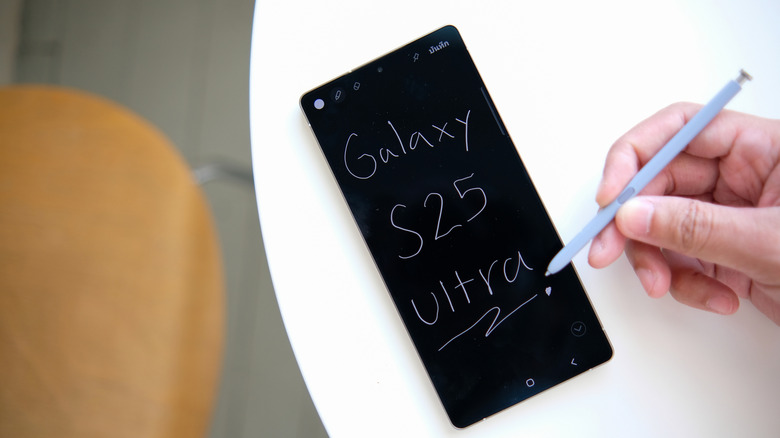
The battery can be charged via 45-watt cable charging, but it also supports 15-watt wireless topping up. That display is a LTPO AMOLED 120 Hz panel, with full HDR10+ support and 2,600 nits of peak brightness, for really vibrant colors, deep blacks, and decent outdoor usability. The S25 can also serve as a wireless charging pad for other Samsung accessories, like the Galaxy Buds and Galaxy Watch. Another key feature that no other phone on this list has is the Galaxy S-pen, which has been housed inside the phone since the S22.
Methodology
First, the Amazon reviews of any phone on this list that we are recommending had to be 4 stars or higher across at least 100 reviews. The one outlier to that is the Pixel 11, which at the time of publication had 51 reviews on Amazon and 49 on Best Buy. This is understandable, as it's only about two months old at time of writing.
Then, we also wanted every phone to either match or beat the Pixel 11 Pro (or in other words, better than the Tensor G6) in either multi-core or single-core testing on Geekbench V6 (but preferably both). This is to ensure that readers aren't potentially losing on performance by avoiding the Pixel 11 Pro. Every phone meets this criteria except the Nothing 3 and Fairphone 6+, but in those cases, it's very close, and other aspects merited inclusion. We also focused on phones with the same size screen or larger. Though the Samsung Galaxy S25 had a 6.2-inch display compared to the Pixel 11 Pro's 6.3-inch display, its other positive aspects prompted us to give it a pass.
Finally, the prices all had to be less than the Pixel 11 Pro, not counting any special sales or coupons. The phones also had to be available, preferably new, on Best Buy, Amazon, Wal-Mart, or Costco.