

5 Ship Classes The US Navy No Longer Uses
When the United States Navy (USN) was formed under the Naval Act of 1794, the branch had only six frigates authorized by Congress, some of which didn't launch until the 19th century. It took some time, but over the decades, the USN commissioned more vessels, including several from different classes. By the late 19th century, as technology evolved, the USN began sailing steam-powered ships of various kinds in the fleet, including the first ironclad warships that fought in the American Civil War.
New technology enabled the creation of different ship classes, and today's USN operates several spread across the fleet. Most people know about massive warships like aircraft carriers, destroyers, nuclear submarines, and others, but there are more. As of this writing, the USN operates seven types of modern warships, but it has also retired many other classes. This shift has much to do with evolving technology and the ever-changing landscape of naval warfare.
Some ship classes that were abandoned long ago were revived when their unique capabilities became needed due to specific conflicts, while others have been replaced by more advanced options. For various reasons, these five modern ship classes were once used by the USN across the world's oceans and rivers, but they no longer maintain them as operational vessels. Despite this, many navies around the globe still sail these ship classes the USN stopped using, so some remain in service in other nations' navies.
Corvettes
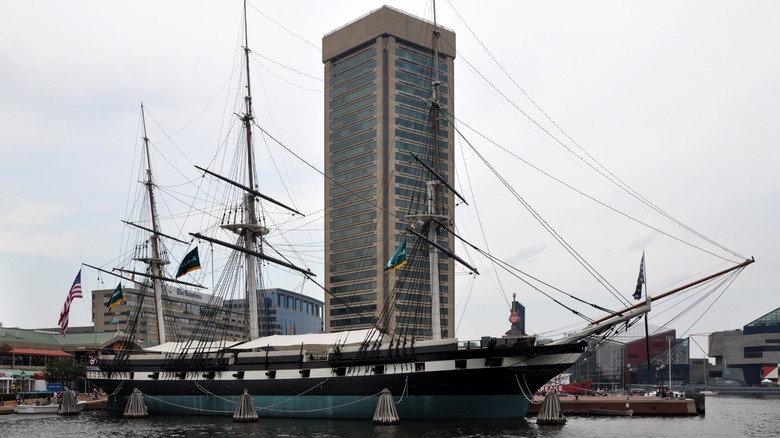
A corvette is one of the smallest warships a navy uses and was first introduced during the Age of Sail. Corvettes were small vessels that typically patrolled coastal regions and didn't stray too far from shore, as they were only lightly armed. In this sense, they served as support vessels rather than front-line warships capable of taking on substantial enemy forces. The USN utilized sloops-of-war instead of corvettes, though they operated in much the same capacity. It wasn't until the USS Constellation's rebuilding that a true corvette entered the fleet.
The USS Constellation (pictured) launched in 1797 as a frigate, but was rebuilt in 1854 from the old vessel's scrapped timber as a corvette, making the Constellation the last exclusively sail-powered warship commissioned in the USN. For decades, the Constellation was decommissioned and recommissioned for various reasons before finally serving as a USN Atlantic Fleet relief flagship during World War II. Afterward, the Constellation ended its 100-year service and was converted into a museum ship.
Not only does the modern U.S. Navy not use any corvette ships, but the service has also never introduced any modern corvettes into the fleet. This is largely because the U.S. Navy's primary concern is forward-deployed aircraft carrier strength, placing less emphasis on local coastal operations. Additionally, most corvette functions are conducted by modern littoral combat ships like the USS Freedom (LCS-1), so there's no current need to throw any corvettes into the mix, though they are in operation by other navies around the globe.
Torpedo Boats
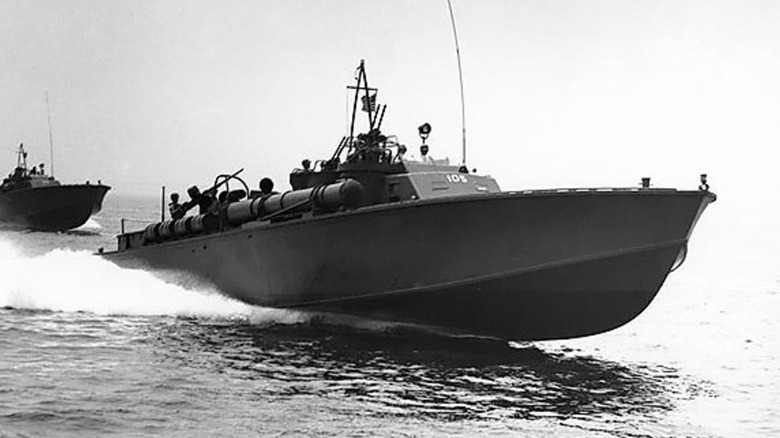
Most people likely think of submarine warfare when the topic of torpedoes arises, but that particular type of weapon system isn't limited to that class of warship. Another class of naval vessel that carried torpedoes was aptly called torpedo boats, which were fast ships capable of deploying torpedoes against enemy vessels. Initially, they were steam-powered, but over time, they evolved into more robust, speedy torpedo-carrying ships that became vital in taking on much larger vessels during WWII.
Then Lt. j.g. John F. Kennedy famously commanded PT-109, a motorized torpedo boat that succumbed to a Japanese destroyer in 1943. The designation PT stood for "Patrol, Torpedo," and like the torpedo boats that preceded them, they carried torpedoes into battle. They often did this by swarming in large numbers and attacking capital ships from different vectors, which was a successful tactic in several engagements. The Elco PT Boats of WWII were fast, inexpensive, and easy to build, so the USN operated many of them.
The PT-617 ended service in 1946, marking the end of the USN's use of torpedo boats in the fleet. It and another PT vessel are housed at the Fleet Museum in Battleship Cove at Fall River, Massachusetts. While some navies around the world still operate similar vessels, including Iran's large fleet of fast-attack boats, the USN no longer requires torpedo boats. Anti-ship and anti-submarine weapons, torpedo-carrying aircraft, drones, and other means picked up where torpedo boats left off, as technological advances made keeping a torpedo-boat fleet expensive and unnecessary.
Monitors
A monitor is a class of warship that began with the USS Monitor, an ironclad vessel commissioned in 1861 for the Union Navy. While the Monitor is the most famous example, the class produced numerous ships in its image, and Monitor-class warships served in shallow coastal waters as well as on rivers like the Mississippi, which saw heavy combat during the Civil War. The class found its way into other navies around the world, including the British Royal Navy.
Monitor-class warships continued operating throughout numerous military engagements up to World War I, where they primarily sailed for the British Royal Navy. Most USN Monitor-class ships were phased out after WWI, though the class remained in operation during WWII, when the Royal Navy continued sailing them primarily in the Mediterranean Sea. After the war, the USN revived the Monitor-class during the Vietnam War, where they proved vital in riverine operations as part of the USN's brown-water navy.
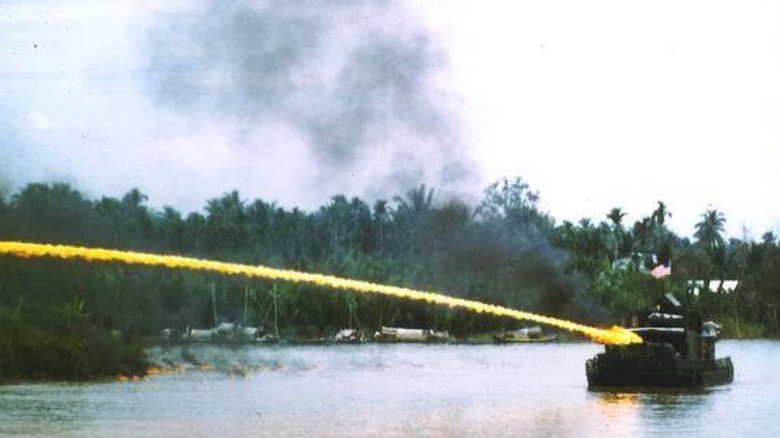
The monitors of the Vietnam War were vastly different from the older vessels that gave the class its name. Built to combat unseen enemies in the tree line, many were armed with weapons capable of firing jets of burning napalm (pictured). They also featured light armor, a 20 mm cannon, a 40 mm cannon with a .50 caliber machine gun or 105 mm howitzer, and more. After the conflict ended, the USN retired the monitor and hasn't revived it since.
Frigates
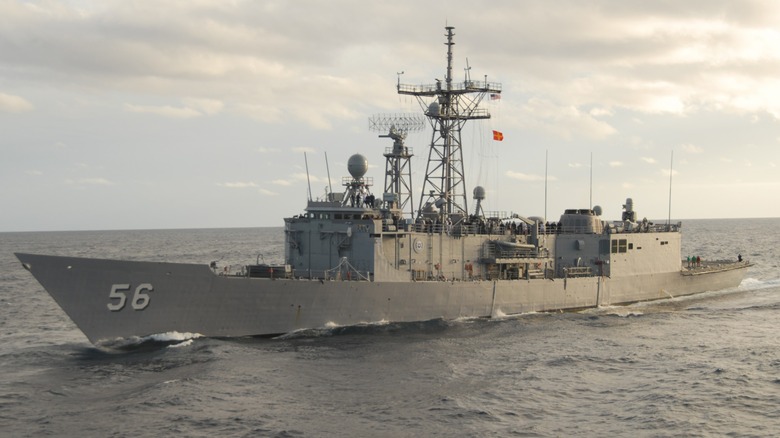
One of the oldest classes of ships the USN no longer operates is the frigate, sometimes mistaken for a destroyer. The class arose in the 16th century, though it often described different rigged vessels capable of patrolling, scouting, escorting, and engaging in combat. The class became more defined in the 18th century and evolved over time, losing sails to steam power before modern frigates used more advanced propulsion.
Modern frigates are far more advanced than their sailing predecessors, and the Royal Navy used the class primarily during WWII. The USN didn't operate frigates again until the 1950s, when it began classifying ships as guided-missile frigates. These were used primarily as anti-aircraft vessels that protected other ships in an Aircraft Carrier Group. The USN continued operating these ships into the 1970s, but a 1975 reclassification changed the class to guided-missile cruisers and destroyers, abandoning the term "frigate," which had been used off and on for centuries.
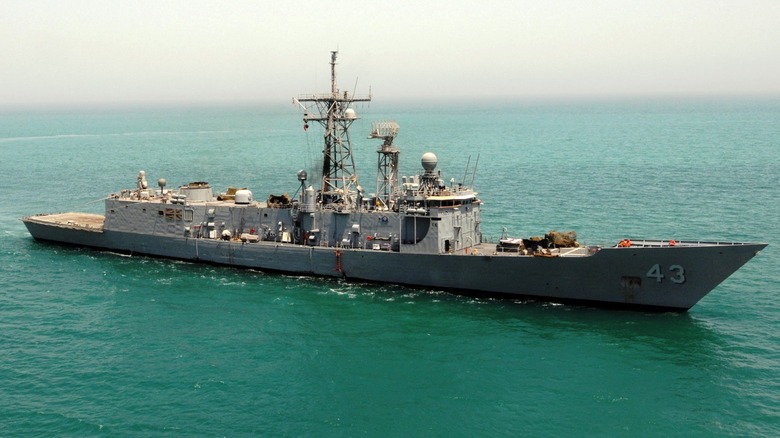
The last frigate so named and operated by the USN was the USS Simpson (FFG-56), a guided-missile frigate that was the last USN vessel to sink an enemy ship, and it retired in 2015. Since that retirement, the USN hasn't commissioned any frigates, but there are plans to reintroduce guided-missile frigates into the fleet. That said, the USN does technically still utilize one frigate, and it's the oldest ship in the fleet. The USS Constitution, better known as "Old Ironsides." While it remains in the inventory, it's not a modern warship and operates primarily as a museum ship.
Battleships
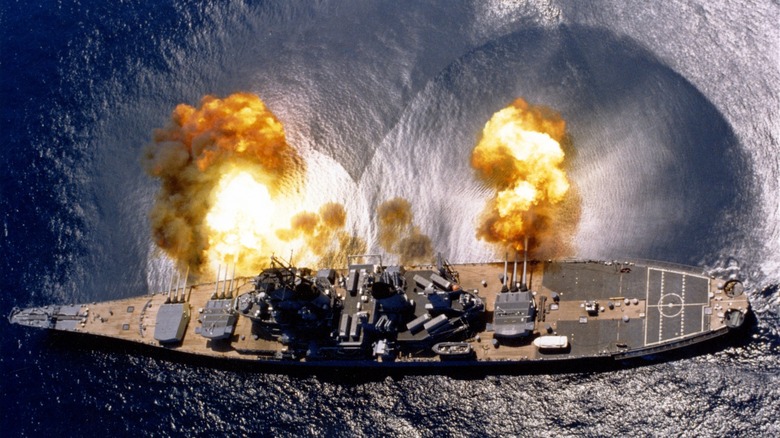
If you asked a random person on the street to name a ship class that the USN no longer uses, odds are they'd answer "battleship." These storied vessels are probably best known for their service during WWII, but the class extends further back in time. The USN has operated several classes of battleships, going back to the term's earliest days in the late 19th century. Battleships, as most people know them, are considered dreadnoughts or super-dreadnoughts, depending on their class, but they all share commonalities, including massive guns, heavy armor, and high tonnage.
During WWII, the most famous class of battleships arose: the Iowa-class battleships. The USN initially planned for six of these, but completed only four, as WWII ended before the remaining two were completed. Every one of these battleships continues to serve as a floating museum ship, where visitors can marvel at their 16-inch guns and other arms. The USN continued operating its Iowa-class battleships after the war, off and on, with some modernization efforts.
The last USN battleship to serve in a combat capacity was the USS Missouri (BB-63), which earned fame in WWII as the site of the Japanese surrender, ending the conflict. Its service didn't end there, as the Missouri received significant upgrades and fought in Operation Desert Storm, delivering Tomahawk cruise missiles on targets. The Missouri was the last battleship to serve in the USN, and while President Donald Trump hopes to revive the class, there are reasons it might not come to be, including that the USN doesn't need battleships to carry out its missions.