

10 Awesome Mini Gadgets Built For Retro Gamers
We may receive a commission on purchases made from links.
You'd be a fool to write off the market for "retro" devices as mere nostalgia. You can find countless retro-inspired gadgets on Amazon and other storefronts, offering plenty of options for those who want to embrace older aesthetics. But retro gamers are already using original devices from decades ago; the gadgets they need aren't retro-inspired but retro-compatible. Luckily, there are more than a few products out there that offer gamers this compatibility without taking up much space.
This article isn't going to make any hard recommendations on a specific product from a certain brand (with one exception). Many of the items here have countless variations, which can lead to inconsistent experiences in quality assurance and functionality. Even so, if you manage to find one of each item on this list in complete working order, your retro gaming experience will be massively improved. And since none of them are the size of a retro console, you can take them with you to your next group gaming session without any issues.
Adapters for retro controllers
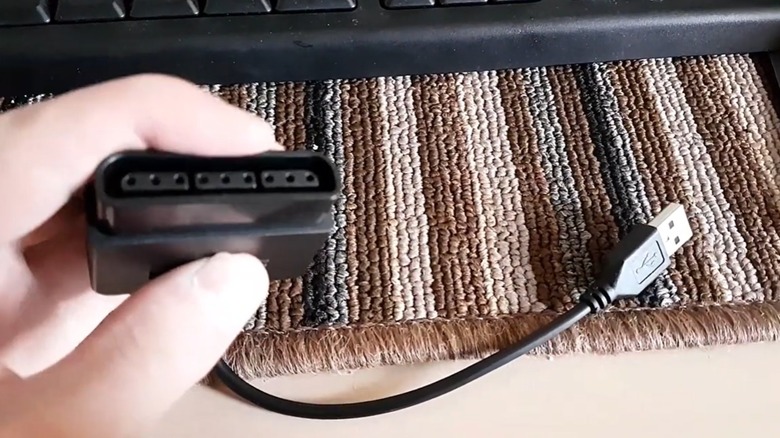
Some of the best gaming controllers of all time come from the earliest consoles, including the original PlayStation and the Super Nintendo Entertainment System. These use proprietary connections to plug into their systems, so you can't do much with them on a modern device like a PC. That's where adapters come into play. These provide a physical connector that leads to a USB cable, allowing you to plug your old controller into a computer and use it just like any other modern peripheral.
You can find these sorts of adapters for older PlayStation and Nintendo controllers. Some adapters even let those controllers work with other retro devices, so you can use the same inputs across entirely different games. The caveat is that just about all of these adapters are wired-only, offering no wireless functionality. Unless you're using a controller that was already designed to be wireless, you'll have to stay close to whatever modern system you're plugging into.
Adapters for retro consoles
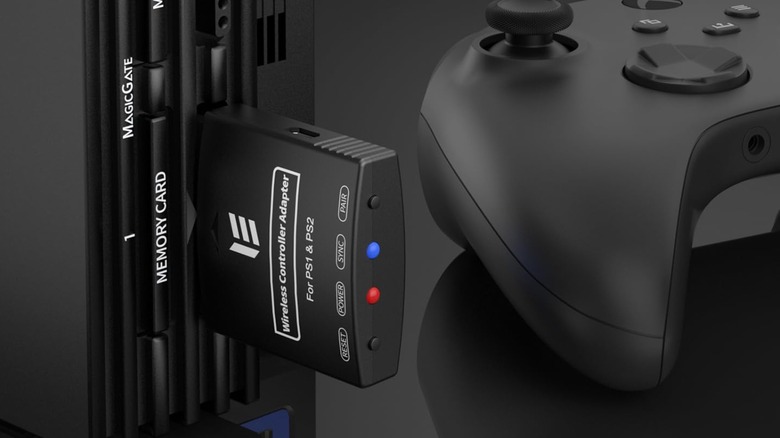
This wireless issue goes in the entirely opposite direction when looking at modern controllers. Very few of them were designed with wired functionality in mind, which is a problem when older consoles weren't designed for that connection method. Luckily, adapters come to the rescue again, with a different design to accommodate Bluetooth. Simply plug one into the player ports and you can pair up your modern controller with it, offering the same functionality you'd get from a controller that's native to the retro console.
We've previously highlighted 8BitDo's Retro Receiver for playing PS1 and PS2 games with modern controllers, but there are other options for other consoles. They all work the same way, since nearly every new controller uses Bluetooth for wireless connectivity. Some of the receivers even have extra features, allowing you to remap buttons and make use of turbo inputs. With multiple at once, you could feasibly use a single controller for every console you own, no matter how old it is.
HDMI converters
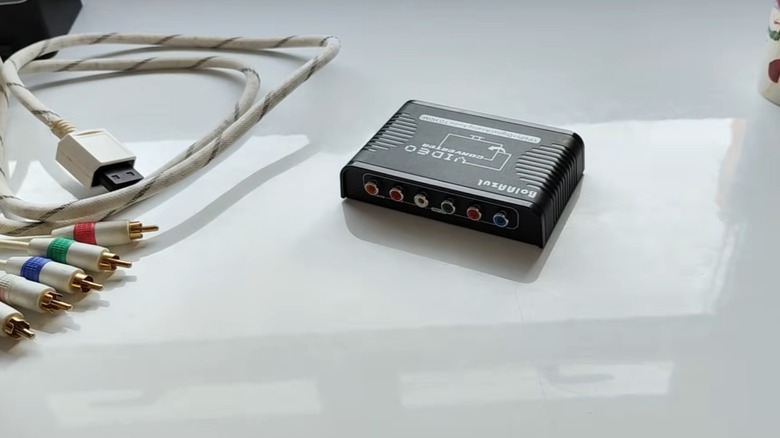
Many older consoles don't rely on HDMI or DisplayPort connections like modern systems do. Instead, they use composite (RCA) or component cables to send visuals and audio to TVs. Unfortunately, you'll only really find those ports on cheaper television sets, with many 4K options not offering them at all. That's where HDMI converters — yet another type of adapter — come into play. Using it is as simple as plugging your cables into the box and running the HDMI cable out the other side, providing a smooth connection to your high-resolution display.
A device like this is used primarily for connectivity. A high-resolution display won't make a low-resolution image look better on its own, and you'll be hard-pressed to find upscaling solutions that can make those visuals match your TV's full potential. You can bypass the adapter entirely if you're willing to take apart your console and do some hardware modifications. But for more casual retro enthusiasts, these little boxes are the easiest (and cheapest) way to make a modern TV compatible with your favorite games from the past.
Miniature controllers
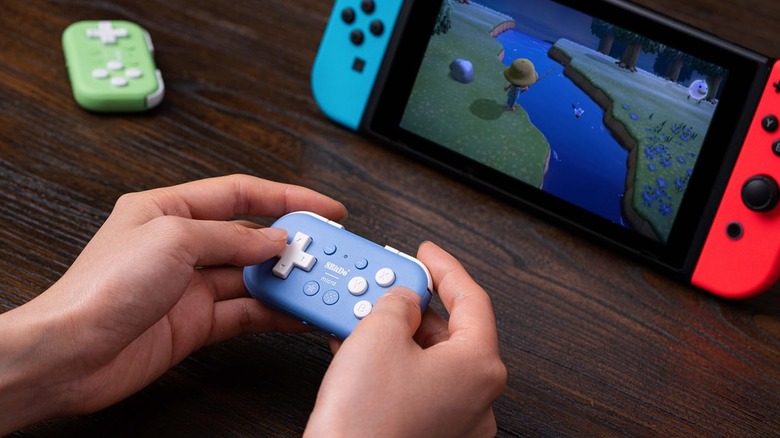
Old game consoles like the Nintendo Entertainment System had small controllers with only a few buttons. A few third-party companies have sought to mimic those styles, lacking analog sticks and sticking to minimalistic form factors — like the 8BitDo Micro Controller. They aren't the most ergonomic options, but they're a lightweight way to experience the control schemes of the early days of gaming. They usually include a few extra buttons, which can help them maximize functionality for games that need it.
Modern systems have been offering more ways to play classic hits, too. These miniature controllers are often designed for today's consoles, so they can bring a bit of extra authenticity to your retro gaming sessions. In other words, they're an excellent option if you don't want to bother with adapters (or you just don't have original controllers in the first place). Just don't expect to play many 3D blockbuster hits with them without running into progression issues and losing a lot of freedom of movement.
Plug-and-play consoles
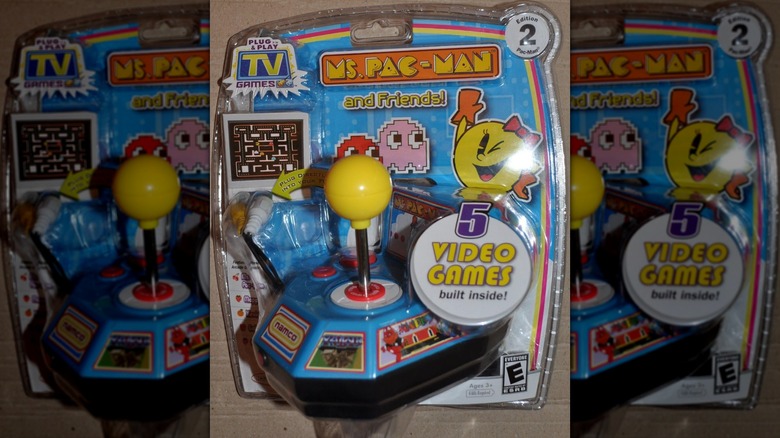
Plug-and-play "consoles" are really just basic pieces of hardware with games pre-loaded onto them. They don't offer much in the way of customization or even a massive library beyond what's already there. Often, their legality is questionable, as they contain an assortment of titles that almost certainly weren't licensed by the original publishers. Despite all this, plug-and-play devices are an easy way to play hundreds of retro titles if you don't have any alternatives.
Plug-and-play hardware usually consists of a controller that plugs directly into your television set, hence the name. The controllers themselves are often retro-inspired, with some looking like they might belong in an old arcade. You've likely seen a few examples for yourself if you're familiar with JAKKS Pacific, which made plenty of these devices with (officially licensed) retro arcade games. You might struggle to find its plug-and-play consoles on store shelves today, but alternatives will always exist — even if they legally shouldn't.
High-capacity memory cards
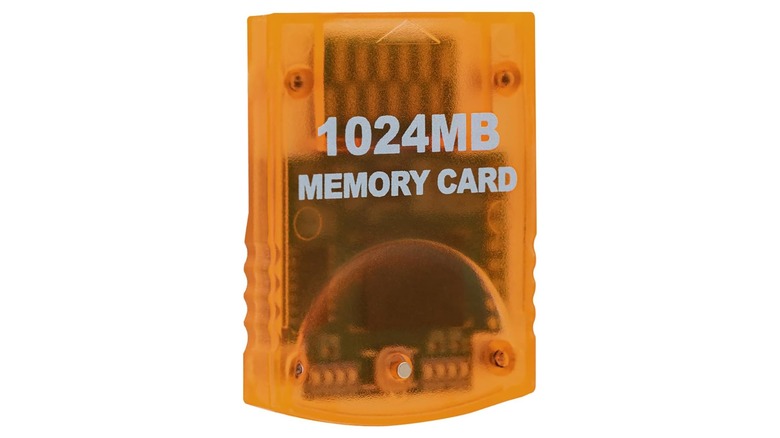
Before systems had dedicated storage, they relied on proprietary memory cards to store game save files. While you might struggle to find official, brand-new cards from major companies today, you can get your hands on many third-party options. These can also come with much higher capacities than the originals, though you should be wary of untrustworthy storage devices that lie about their actual capacity. Otherwise, you might never need another memory card for your retro console of choice after getting a high-capacity third-party alternative.
That isn't where the story ends, though. There are a few memory cards out there that are compatible with microSD cards, allowing you to choose the storage size you want. These might not always be the most reliable options, but there's really no true limit to how far you can go with them. That's especially true if you manage to get your hands on the highest-capacity microSD card you can buy — if you can stomach the absurd cost driven by recent memory shortages.
Handheld Android consoles
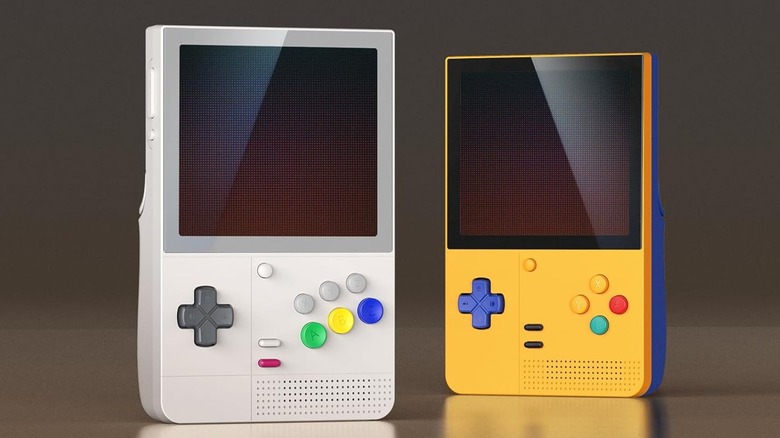
Handhelds have made a comeback recently with computer-like devices such as the Steam Deck and ROG Ally. But retro enthusiasts will want to take a look at dedicated Android devices instead. Many of these were designed with the form factor and style of retro handhelds in mind, with some resembling Game Boys and others resembling PlayStation Portables. The big idea is to play emulated games on them, but if you're concerned about legitimacy, you can still play modern Android titles on a device that looks like it came from the '80s.
A great example of this is the AYN Thor, which is designed to resemble an old Nintendo DS — complete with a dual-screen setup. I actually own one myself, and I can confirm that if you go with controller-supported titles on Google Play, the built-in buttons and sticks work pretty well. Many of these devices (including the Thor) also have touch capability, like any basic Android phone, so you have a bit of extra freedom in how you interact with the system itself. Even if you aren't playing retro games on them, the classic vibes and seamless functionality of these devices can make you feel like you've traveled through time.
Cartridge readers
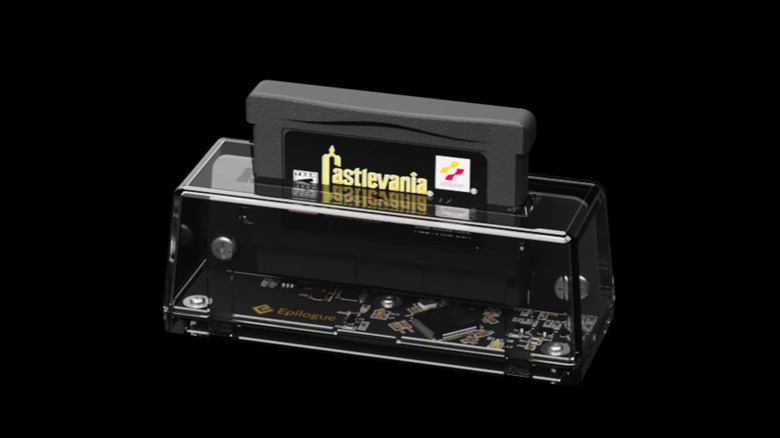
The question of whether video game emulators are legal is tricky for many people to answer. Even so, there isn't much point in owning an old game cartridge if you don't have the original console to use it with. That's partially why some enthusiasts have made specialized devices to connect these cartridges to your PC, allowing you to read, authenticate, and even modify the games on them. Even if you still have retro handhelds that work just fine, a cartridge reader can help you preserve your save files and protect your favorite titles from physical damage.
Not every cartridge is made equally, and as such, there are different types of readers for different systems. Sadly, you probably won't find an equivalent for retro memory cards, so trying to get save files or make per-game changes on disc-based systems will be trickier. That doesn't change the fact that retro enthusiasts will probably get a lot of use out of readers like these, regardless of whether they use them for gameplay or something else entirely.
Recreated retro controllers
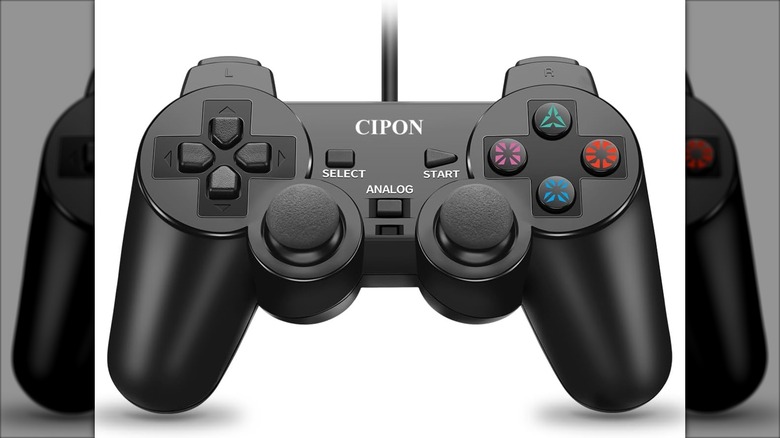
The major game companies today aren't making controllers compatible with their older systems. There are ways to bypass this issue — such as the aforementioned adapters — but some companies offer cheaper, simpler solutions. They simply recreate the original controllers with their own branding, complete with a compatible connector for your retro console of choice. The quality and feel might not be perfect, especially without the original company behind it, but you'll still get the same form factor and overall functionality.
These types of similar-looking controllers have existed for ages, and it's unlikely that they'll ever vanish for good. Even modern consoles are still getting them, and the oldest consoles out there are continuing to receive new examples. The originals might all end up vanishing over time from simple wear and tear, but you'll never be completely unable to interact with your favorite retro systems. Just be prepared to buy a few replacements, as it can be pretty tough to distinguish the best from the worst third-party controllers out there.
Light guns
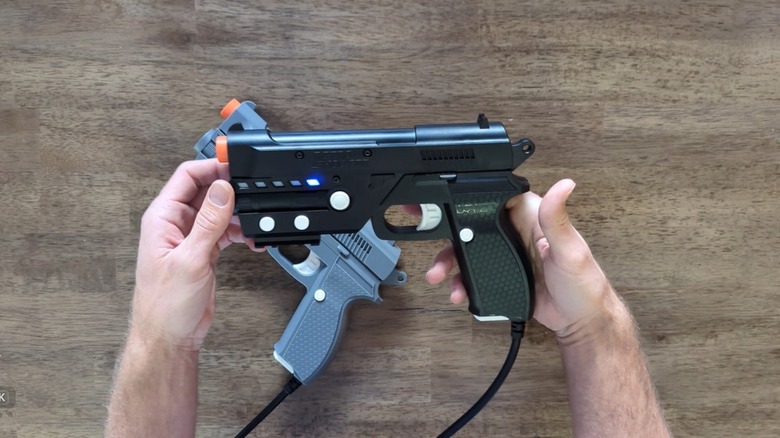
If you've ever wondered how the "Duck Hunt" gun actually worked, here's your answer. Light guns might seem simple on the surface, but these mini gadgets are fairly hard to find — though there are a few examples out there. And many of the games compatible with light guns are quite ancient. Some have found success using these devices in more modern titles, but for the most part, they are retro controllers meant for very specific games.
The lack of games compatible with light guns is probably why there are so few different types out there. The ones that exist are quite costly, as well, with each priced at around $100 or more. But if you're willing to get used peripherals, the NES Zapper could make for a good investment. Many examples are available for less than $20, and with an adapter you can even use it with newer systems.