

5 Sports Car Redesigns That Totally Missed The Mark
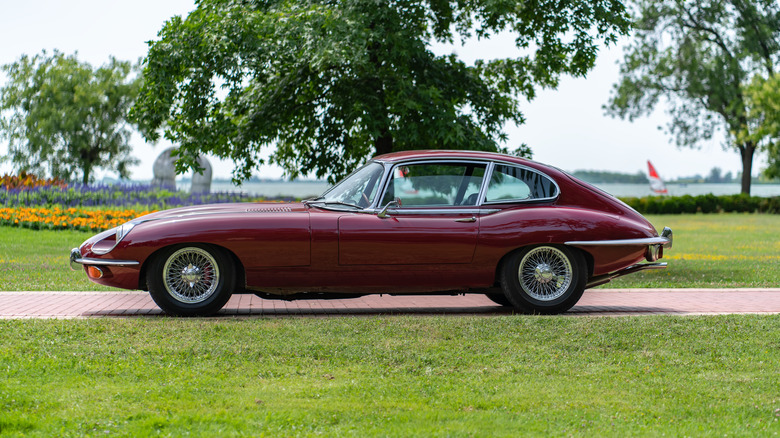
If there's one thing car guys can never agree on, it's how a car looks. One person can see something absolutely stunning; the next sees the same shape and shrugs it off as mediocre, or nothing special at all. To some, the Jaguar E-Type — one of the coolest Jaguar designs of all time — is the most beautiful car ever. To others, it's about as remarkable as a school bus.
Which brings us to that old line — beauty is in the eye of the beholder. Design isn't objective. It's mostly subjective, and it always will be. That said, subjectivity only stretches so far. Among the countless redesigns the industry has churned out over the years, a handful get picked apart again and again, while others are quietly praised and left alone.
The difference is usually obvious the moment you see a car redesign that just doesn't look good. Yes, we can argue about many cars, but for some redesigns, car nerds the world over can actually come to a consensus. Part of the problem is the sheer number of rules designers had to work around when designing some of these cars.
Pedestrian-safety standards, crash regulations, fuel-economy pressures, aerodynamic and efficiency targets — each one chips away at the freedom a designer used to enjoy. This is why giving a beloved sports car a fresh face has never been easy, and when it goes wrong, it can go very wrong. Here are five sports cars redesigned that totally missed the mark.
BMW E60 M5
When talking about what a BMW is supposed to be with a die-hard old-school BMW enthusiast, chances are they're going to mention the BMW E39 M5 or the BMW E46 M3 as the golden standard of BMW M design. These include angel eyes, proportioned grilles, straight and boxy body lines, and an understated yet commanding presence on the road.
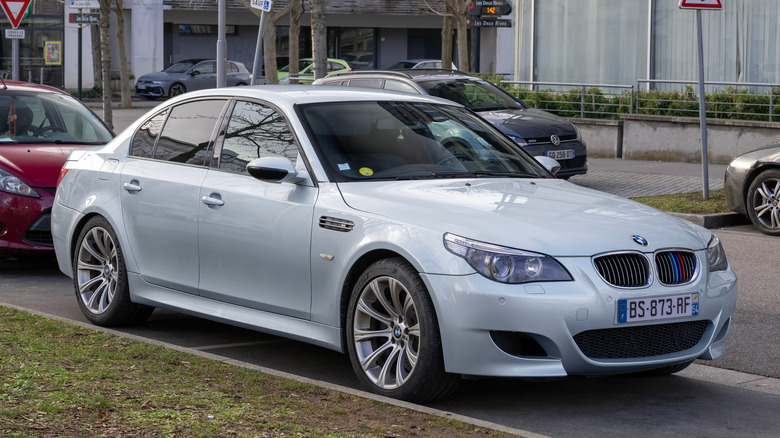
The BMW E60 M5 that came after the E39 M5 missed that mark in the eyes of so many people. This was right around the time most car enthusiasts were glued to the screens watching Top Gear. When Jeremy Clarkson started his review of the E60, he said: "The new 5 Series is an ugly car, fat at the back and with headlights like Edna Everage's spectacles."
Criticisms against the E60 were not just limited to Jezza — they were fairly widespread and intense. People never gelled with how the E60 was more rounded and not as cohesive as the E39. Inside, the E39 was high-quality, minimal, and driver-oriented, while the E60 was a bit more like every other executive sedan, plus a load of technology that isn't necessarily what an M5 buyer wants.
Moreover, the E60 BMW M5 is also one of the most unreliable BMWs out there, primarily thanks to its frankly ludicrous naturally aspirated V10 engine. Not everyone believes the E60 BMW looks bad, and frankly, when you stand it next to the new G90, it actually does not look that bad at all (we called the G90 the ugliest BMW). Still, in so many people's eyes, it never got close to matching the E39.
Porsche 996 911
For the purposes of this article, we're largely focused on the enthusiast, the person who sees cars as more than just point A to point B machines, but rather as an expression of passion, engineering, performance, and joy. The Porsche 911 is arguably at the center of all of that — a car designed for driving enthusiasts, built on a legacy spanning decades.
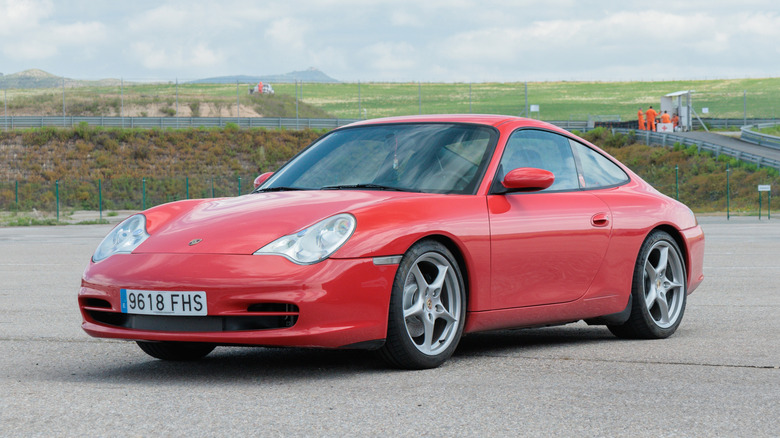
This is also largely why the 911 never really changed all that much; it didn't really have to. This took a turn for the worse when Porsche closed out production of the 993 911 and replaced it with the 996 911. The moment it came out, it ruffled a ton of feathers. For one, it was not air-cooled like every other 911 before it. It was also bigger and longer, and most importantly, it didn't look the way people wanted it to.
The headlights were criticized the most, and even got their own nickname — "fried egg" headlights. This was worsened by the fact that many parts were shared with the Porsche Boxster, which was a lower model in the line. Purists believed this broke from the heritage of the 911, mechanically and visually. It comes as no surprise that we ranked the 996 as the worst 911 model ever.
On the other hand, we do need to stress that the 996 is indeed a 911, and that by itself makes it more exciting than the vast majority of cars on the road. Moreover, the 996 could also have its moment in the sun, because some people are seeing it in a different light these days.
Toyota Supra A90
Let's get one thing straight: we got a new Supra, and that alone is enough for many people. However, we still need to look at cars with the critical eye of an enthusiast to decide whether a successor has truly lived up to the reputation of its predecessor. In the case of the A90 Supra, that argument is difficult to make.
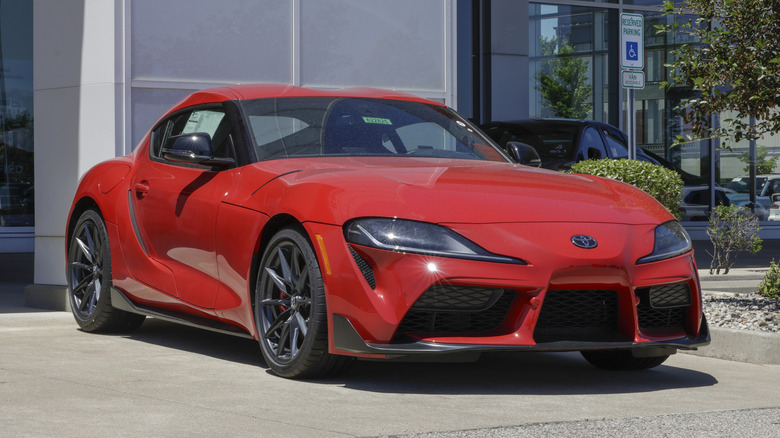
When JayEmm on Cars called the Mk5 Supra one of the biggest examples of a 2021 car that failed to meet expectations, he focused specifically on its shape, arguing that "the proportions are just wrong." His reasoning largely came down to the BMW underneath. Because the Supra shares its chassis with the Z4, he argued that it was effectively locked into being broadly Z4-shaped.
The A90 Supra is too narrow, too tall, and with a bonnet that sits too high. It is a car clearly inspired by the gorgeous FT-1 concept, he noted, but one that the shared platform never allowed the design to fully live up to. His conclusion was even blunter: in his mind, this simply isn't a Supra. There are plenty of other elements of the Supra that have also been criticized.
In fact, MotorTrend identified as many as 15 things it disliked about the car. 2026 is also the final model year of the Toyota Supra, and it remains uncertain whether the nameplate will return. Top Gear also reviewed the latest Supra and gave it a relatively underwhelming 7 out of 10. That might be a pretty good score for other cars, but we're talking about a Supra. A major part of the criticism was that the car never fully managed to escape its BMW roots, something earlier Supras never had to contend with in the same way.
Ferrari 512M
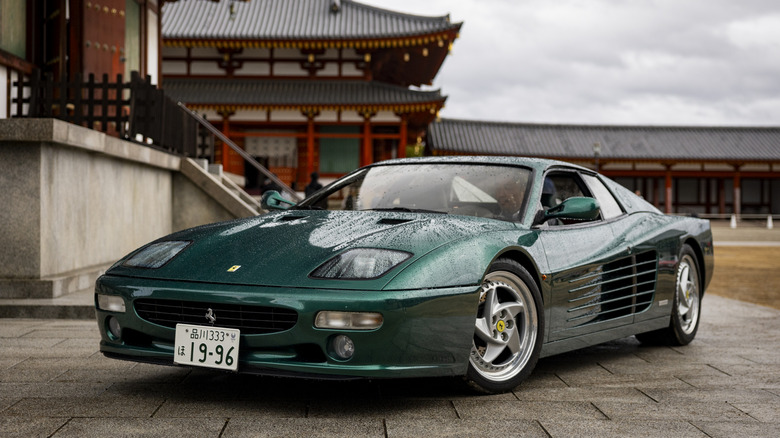
The Ferrari 512M was first introduced back in 1994, and it replaced the original Testarossa, which was not an easy thing to do. The original Testarossa is regarded by many as one of the best-looking Ferrari's ever. Its main visual features include those iconic pop up headlights, wide rear end, cool wheels, "Cheese Grater" side strakes, and many more.
However, when the 1994 512M came out, it ditched those visual features and made the Testarossa, well, worse in every way. Top Gear called it one of the ugliest Ferrari's ever, and believed the Testarossa simply went on too long to fit into the era. Perhaps the cruelest twist is that some of those changes weren't even Ferrari's call.
The signature pop-up headlights were deleted in favor of fixed units, a switch driven in part by new safety regulations rather than pure design will. In their place sat exposed lamps under glass covers, borrowing the look of the then-new F355, while the rear swapped the Testarossa's full-width slatted grille for four round taillights.
Where the original felt like a poster car from another planet, the 512M looked like a facelift modernizing a shape many already thought was perfect. Ferrari built just 501 of them before production ended in 1996, making it the rarest Testarossa of all. Moreover, the 512M also used the F113 – one of the best Ferrari engines ever – and in the 512M, it was in its most potent guise.
Ford Mustang II
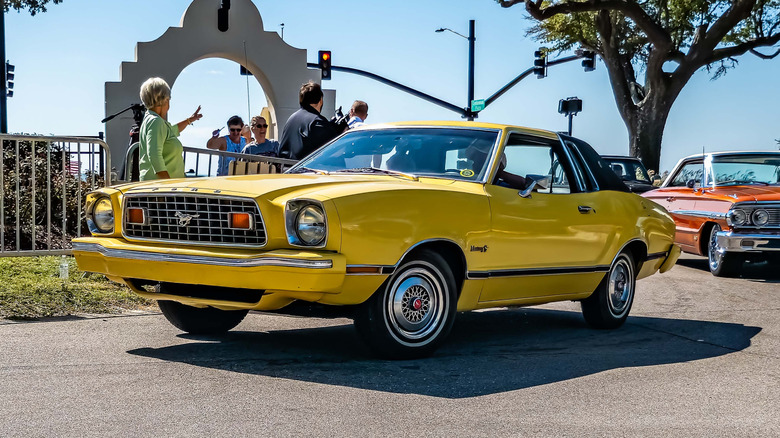
If there's one redesign that still makes enthusiasts shake in their boots, it's the Mustang II. Road & Track ranked it one of 10 cars that turned ugly after a redesign, and among Mustang loyalists it remains the worst Ford Mustang of them all. The backstory explains how that came to be. The Mustang II arrived for the 1974 model year, right as the 1973 oil crisis gutted demand for thirsty V8 muscle.
Lee Iacocca wanted the car shrunk, and Ford's team ended up building it on the platform of the subcompact Pinto — the detail behind the "reskinned Pinto" label it has never managed to shake completely. There was no V8 offered at launch at all; the base Lima four-cylinder made just 88 horsepower, the lowest figure ever fitted to a Mustang. When the 302 V8 finally returned for 1975, tightening emissions rules strangled it down to roughly 140 horsepower.
That's the cruel irony tying it to every other car we listed. The Mustang II wasn't sunk by questionable taste so much as by forces its designers couldn't touch. The 1970s were a tough time to be a car company in the U.S. An oil embargo and a fresh wave of emissions and safety rules reshaped what a Mustang was even allowed to be.
And miraculously, it somehow worked. Sales tripled in its first year to around 386,000 cars, the model moved over a million units through 1978, and Motor Trend named it Car of the Year for 1974. Ugly, yep — but it kept the Mustang alive when the nameplate might otherwise have died, and that is indeed beautiful.