

9 V8 Sedans Old-School Drivers Will Feel Right At Home In
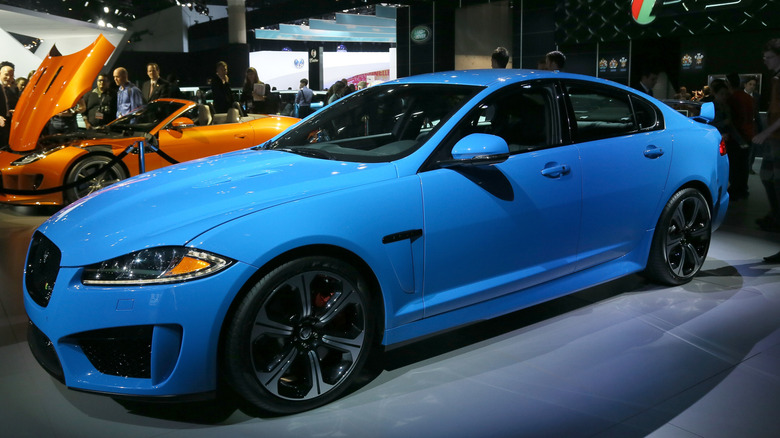
The old-school driver seeks the purest connection between mind and machine. They relish every rumble of feedback in the steering wheel. They prefer the exhaust note to the radio. They can tell the rear-passenger tire is a little low by the way the car squats. They flip off every traction control and auto-braking device they can find and think ADAS (Advanced Driver Assistance Systems) is a true four-letter word. We don't blame them; modern technology brings plenty of convenience and safety, but it can feel a little soulless.
Henry Ford used to defend his braking systems with the saying "the safety of steel from pedal to wheel." And that's the way cars used to be — mechanical contraptions. Today, the digital revolution is well-entrenched in the auto industry. Screens fill cockpits. Calming voices alert drivers about impending accidents while depressing the brakes for them. Steering wheels twitch vehicles into the center of the lane when inattentive drivers don't. Heck, some cars don't even require a driver. Talk about inhuman.
Progress is progress, but we submit that insulating yourself from the driving experience is numbing. Fortunately, some cars still offer that old-school feel with perhaps the most classic engine: the mighty V8. So if you're one of those old-school drivers (or aspire to be one), check out these 21st-century V8 sedans that'll have you channeling your inner Earnhardt in no time.
BMW M3 E90
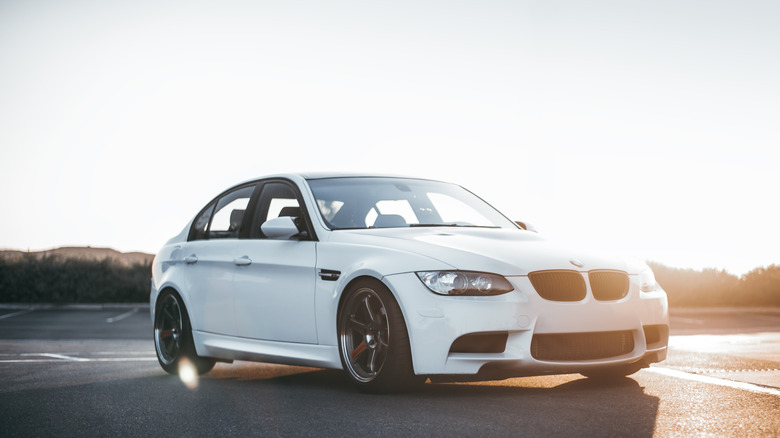
Ad man Martin Puris coined the phrase "The Ultimate Driving Machine" for BMW in 1974, and the marque has spent the last five decades living up to it. Few cars are as revered as those from Beemer's vaunted M-division, and our sweet spot old-school driving selection is the M3 E90.
We'll start with the heart. The M3 E90 sports a naturally aspirated 4.0-liter 414-horsepower V8 engine mated to a six-speed manual or seven-speed DCT transmission. Interestingly, the V8 marked a change for BMW, which had used inline-sixes in the M3 prior to the E90.
With improved power came improved responsiveness. The E90 incorporated hydraulic steering, a fluid-based system that transmits every bump, dip, and curve directly to the driver's hands, essentially removing a layer of insulation between driver and road. Auto audiophiles appreciate the S65 V8 engine's eight individual throttle bodies that begin to sing as they open up, resulting in a sonorous high-rev crescendo that puts angelic choirs to shame. Beyond divine road-feel and oodles of power, the M3 E90 is also driver-centric inside, where a charmingly anachronistic gauge cluster delivers information in the age of the touchscreen.
Cadillac CTS-V

Only two front-engine, rear-wheel-drive, V8-powered performance cars are available from American manufacturers in 2026. One is the Mustang (and its supercar GTD variant), and the other is not the Corvette. The C8 Corvette has shifted away from manual transmissions (not to mention front-engine configurations) in its perennial pursuit of supercar stardom, leaving Ford bearing a dwindling torch alongside an unlikely ally: Cadillac.
The brand-new CT5-V Blackwing may be a little slick for fans of visceral driving experiences. However, its predecessor, the CTS-V, dates back to 2004, when insulating systems were not quite so comprehensive. During its three-generation 2004 to 2019 production run, the vanilla CTS came with a range of smaller engines, but the V performance variant invariably turned up with a meaty V8. The first-generation CTS-V, produced from 2004 to 2007, remains a highly respectable modern performance sedan, offering 400 horsepower and 395 lb-ft of torque out of a naturally aspirated 5.7-liter V8 LS6, essentially making it a lux four-door Corvette. The second generation debuted in 2009, slapping a supercharger onto a 6.2-liter V8 to make 556 horsepower. Both offered optional Tremec six-speed manual shifters, enough to pique any old-school driver's interest. The third gen upped power yet again, wringing 640 horsepower out of the supercharged V8, but lost one pedal, opting for GM's eight-speed 8L90 automatic as the exclusive gearbox.
Cadillac's aggressive foray into 21st-century luxury performance has altered its legacy and left the first quarter of the 21st century littered with superior V8 sedans. Once known for massive land yachts, its CTS-V is rapidly becoming a classic, the unlikely standard-bearer of America's waning rear-wheel-drive V8 performance vehicles.
Lexus IS 500 F Sport Performance
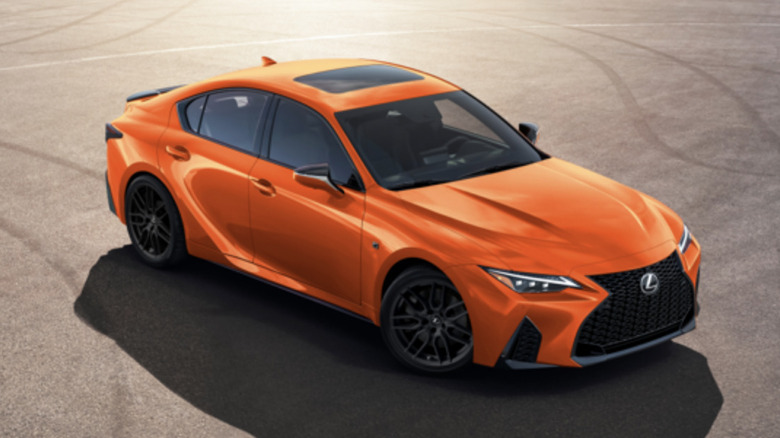
People scoffed when Toyota announced its upcoming luxury arm in 1989. Decades later, Lexus has produced some of the most engaging performance sedans of the 21st century, including the IS 500 F Sport Performance.
Lexus' IS sedan debuted in 2001. Initially powered by the 3.0-liter SJZ-GE of Mk IV Supra fame, the IS line set Lexus on the path from luxury to performance-luxury by the 2008 debut of the F performance trim, which included a 416-horsepower, naturally aspirated 5.0-liter V8. In the days of the supercharger, turbocharger, and electric vehicle, it's refreshing to see an old-school, naturally aspirated 5.0-liter V8 under the hood.
Years later, Lexus is at a turning point. It is phasing out the F-line as we know it. Lexus' Takashi Watanabe said, "As we move into the future, we're going to be doing SDVs, software-defined vehicles." (via Motor1). Watanabe means that the future of Lexus may look something like the smartphone, with software updates dictating your vehicle's performance and feel more than hardware or mechanical equipment. Somehow, the concept of software-defined vehicles doesn't scream old-school driving experience to us.
While we're eager to see what Lexus has in store, its pivot means that the IS F sedans of the last 15 years will become increasingly "old-school" as the industry moves away from natural aspiration. The ultra-sophisticated luxury sports car of yesteryear may settle into a legacy as one of the last classic V8 sedans to grace highways and byways.
Dodge Charger
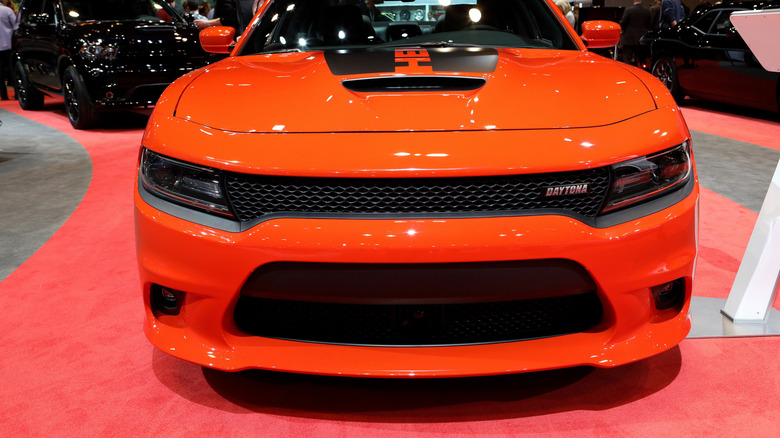
The Charger wasn't always a sedan. It began life as a soon-to-be legendary pony car in 1970 and ended as a wonky Malaise Era sport coupe that looked like a third-generation Mustang, but packed a miserable (but interesting) turbo 2.2-liter four-cylinder. Dodge pulled the old Lazarus trick on the Charger nameplate, reintroducing it in 2006 as a muscular sedan. Its close sibling, the Challenger, would get the two-door glory. That means fans of old-school, brute-force muscle scored a powerful V8 that could pick the kids up from school.
The Charger's revival started promisingly enough. It always offered more prosaic, smaller-displacement options, but Dodge committed to a V8 in the form of a 5.7-liter engine generating 340 horsepower and 390 lb-ft of torque. When it got its only facelift in 2011, that number rose to 395 in the R/T trim. Over the following years, Dodge went nuts with its V8 sedan, and horsepower rose prodigiously to the point that the following decade brought supercharged 6.2-liter V8 Hemi Hellcats making 650 horsepower or even more.
It doesn't get much more old-school than absurd tire-shredding, straight-line power, and Dodge had a lock on that formula before pulling the Charger and reintroducing it as an EV, then a turbo straight-six. The V8 was gone, perhaps never to return. Fans of the old-school have plenty of used Chargers to choose from, though unfortunately none came with three-pedal manual transmissions — that was reserved for the two-door Challenger.
Mercedes-Benz E63 AMG
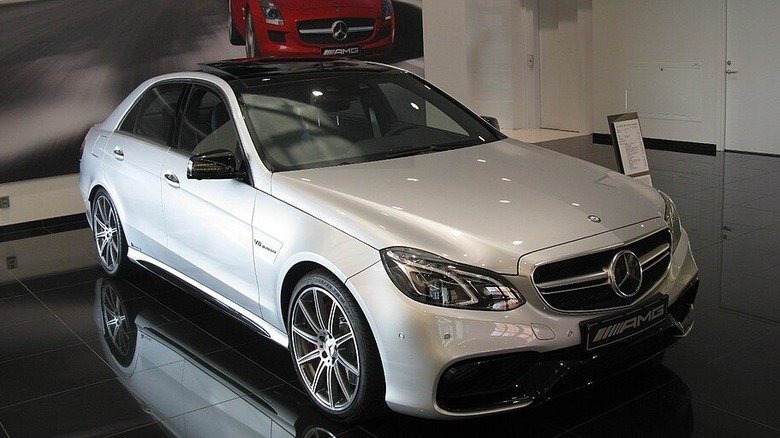
Mercedes' AMG performance arm is practically synonymous with sleek styling and powerful engines, but unlike, say, the resurrected Dodge Charger, the E-Class's raison d'etre wasn't tied so closely to traditional V8s. Mercedes offers several powerplants in its elite midsize sedan, but you'll find a visceral, old-school driving experience best in the pre-facelift W212 E63 AMG.
While virtually any AMG Benz is bound to blow your socks off with power, we like the pre-facelift W212 AMG E63 as an old-school V8 sedan for the discerning driver. The preceding 5.5-liter E55 Kompressor was supercharged, while the post-facelift 2012 E63 used a twin-turbo setup, leaving us with a limited selection if we want to avoid forced induction. What's more old-school than good ol' fashioned atmospheric pressure?
The E63's 507-horsepower M156 V8 is one of the greatest engines AMG ever built, and it represents a sweet spot for certain V8 aficionados. Combined with tactile hydraulic steering and tire-smoking rear-wheel drive, you've got a bona fide classic in the making.
One fun thing about this supercar sedan is its current price. If you're a fan of old-school used car pricing as well, you may be pleased to hear that these aging beauties have depreciated significantly. Treat yourself to an executive-level thrill ride for an average low price of around $25,000. Considering an original MSRP nearing $90,000, this might be a sleeper hit on the used market — just keep in mind the supercar tax at the shop if something goes wrong.
Chrysler 300 SRT8
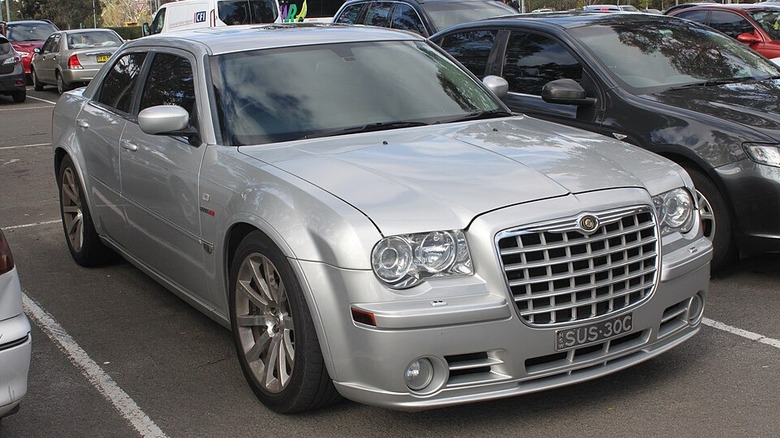
A criminally overlooked muscle sedan of the aughts, the Chrysler 300 sounds like a prosaic people hauler, but it was actually the genesis of the Hellcat and Redeye mania a decade later. You see, Dodge's SRT division has been making iconic performance variants of Dodge nameplates for a while. And when it got its hands on the Chrysler 300, something beautiful happened.
The Chrysler 300 SRT is the oft-forgotten forebear of the Mopar mayhem of the new millennium, and the Hemi no one wanted. The stately sedan debuted in 2005, sporting a 425-horsepower 6.1-liter V8 that would later end up under the hood of the Charger and Challenger SRT8. Yes, before the world went all to Hellcats, SRT was the name of the game.
For a comfortable old-school cruiser with rear-wheel-drive architecture and plenty of power, the Chrysler 300 kept the comfortable, old-school V8 cruiser alive in a way that would make preceding generations proud. Chrysler axed the line in 2023 after a final production run of 2,000 300C models – and yes, it offered an optional Hemi.
Volvo S80 V8
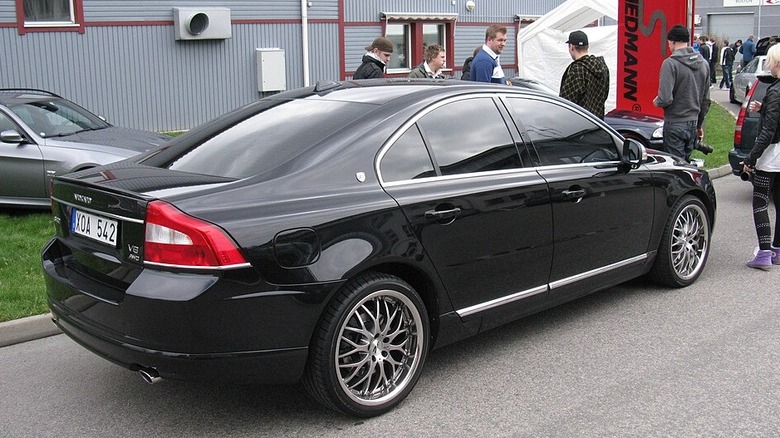
Don't rule out Scandinavia when it comes to V8 power. Legendary for durability and distinctive design, Volvo's S80 was a luxury Swedish sedan that has aged spectacularly. The 4.4-liter V8 in the top trim offers complex variable valve timing and counter-rotating balancing shafts. It may not be something to tear down over a weekend, but 311 horsepower and 324 lb-ft of torque urged the sleeper sedan to a brisk 6.0-second 60 mph time — plenty fast for that on-ramp near your work.
The S80 offered an array of engine choices and trims during its 1998 to 2016 production run, centered on Volvo's steady, centered ethos. Top Gear's contemporary review praised the V8's engaging engine sound during a ride in the '06 AWD SE Lux S80. The U.K. publication also referred to its role as an undercover police car, and honestly, brilliant! No one suspects the man in the Volvo. At least not to catch up with and overtake any of the other vehicles on this list.
That's precisely the charm of the S80. The staid Scandinavian sedan's subtle secret is that it's the ultimate sleeper. It may not be as gritty or analog as some of the performance-oriented sedans on this list, but no one would suspect anything of it until they hear the roar of a V8 where many Volvos produce a diesel cough, at best.
Ford Crown Victoria
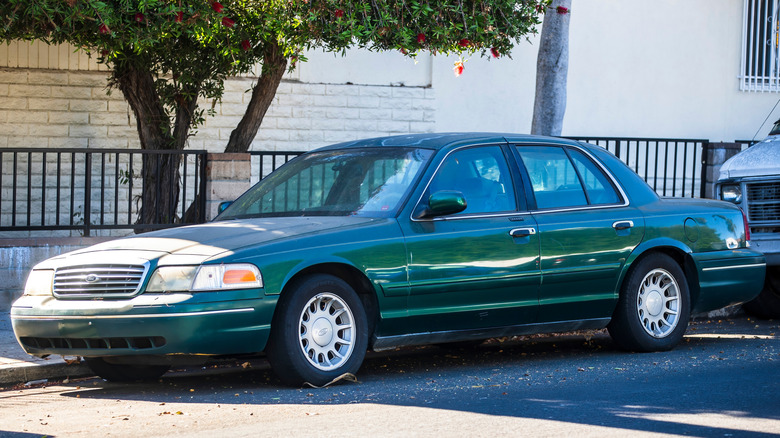
Some police cars are best left undercover where unsuspecting criminals won't spot them. The Ford Crown Victoria LX Sport was never that kind of police car. It's an American driving rite of passage to spot a white Crown Vic in the rearview — bonus points for an auction special with bumper bars — and pull aside, preparing for a ticket, only to hear that muscular V8 thrum as it flies by, shadows of police decals visible in the faded paint.
From 1992 until 2011, Ford's Crown Victoria was a legendary first responder and family hauler. Wide, long, and unapologetic, in its highest trim it had a tidy 4.6-liter V8 that made 239 horsepower and 281 lb-ft of torque, reliably conquering traffic and traffic violators alike. Today, these 21st-century darlings are practically a dime a dozen – with a used market pinned at $10,000 on average (via Classic.com). That's about as cheap as it gets in the days of the narrowing post-pandemic MSRP gap.
The spacious sedan is dated but comfortable and plenty capable. It's a classic at this point, whether the used market prices it that way or not. A nationwide search on Autotrader shows Crown Vics priced between $3,600 and $13,000. If you don't mind high mileage or law enforcement patina, the Crown Vic may be the old-school V8 sedan of your dreams.
Jaguar XFR
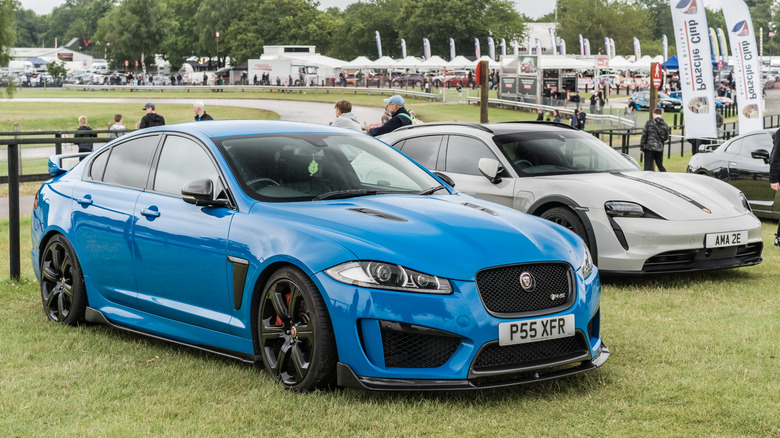
Jaguar's long-unfolding rebrand hasn't fully played out yet. Often lost in the buzz about its new chapter is that before the big 2024 teaser, Jag put out a pair of thrilling V8s. The F-Type and XFR are aging and may mark the final chapter of an era for Jaguar, much like the C8 Corvette's switch to mid-engine made the C7 Corvette the last of its era.
Top Gear praised the 2009 XFR for its sweet-spot 2.7-liter diesel engine, which in the U.K. is like putting a 7.3-liter Ford Powerstroke in your CTS. Jeremy and the gang notwithstanding, we're interested in the available supercharged 500-horsepower 5.0-liter V8.
The used market for the XFR shows powerful V8 sedans at reasonable prices. Classic.com shows a 2013 60k-mile model available for $24,500. Beware the gremlins, though; pre-2012 models have known timing chain and tensioner issues, and cooling systems require close attention. But if you're looking for an executive V8 sedan that's a tad exotic, the XFR market is hardly boiling at the moment.