

4 Big Ways Car Camping Has Changed Since The '70s
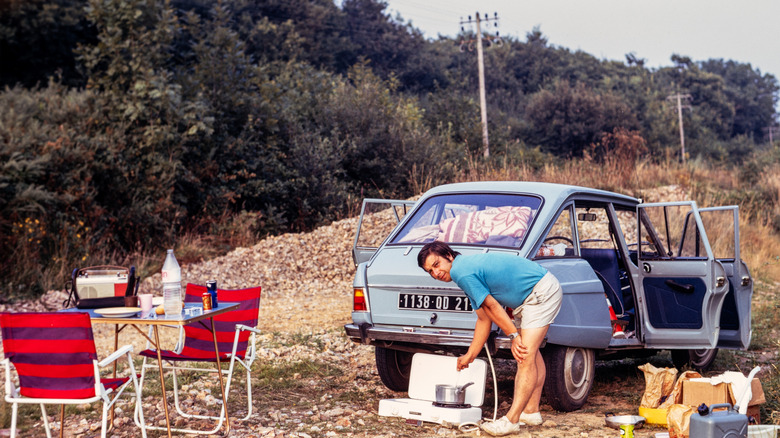
Camping is more popular than ever, largely among millennials. But the way people are car camping now has changed drastically from the past. This is due to a change in automotive offerings and modern technology, making camping more convenient and comfortable than ever before. Today, car campers have higher-quality features, from interiors with mattresses, air conditioning, ambient lighting, and Wi-Fi, while the exterior has suspension, tires, and protective cladding for taking your car off-road.
We took a look back at what camping was like the 1970s, back when things were a lot simpler and lacking technology. There weren't as many modern day conveniences, which has made other modes of transportation quite different back then as well. In the 1970s, you probably used a paper map and simple tent attachment, but it was likely a lot easier to find a good camping spot to disconnect and relax. Neither is better than the other — things are just a lot different now, starting with the cars themselves.
The cars themselves
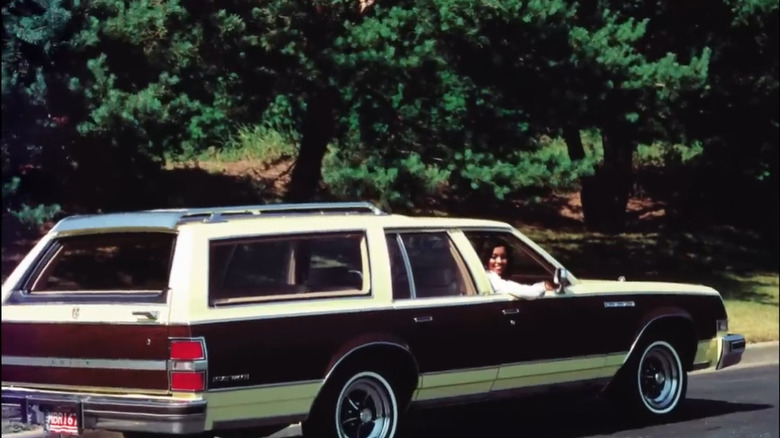
The 1970s was full of a vehicle that has largely disappeared from the modern-day market: station wagons. Wagons provided plenty of interior space for camping since you could fold down the third row of seating to make room for a comfortable sleeping arrangement. For example, the 1977 Buick Estate Wagon was 231.8 inches long with a 127-inch wheelbase. These large vehicles had gas-hungry V8 engines, like the 1970 Ford Country Squire, which only got up to 12 miles per gallon.
By 2026, stationwagons have largely disappeared, replaced by the ever-growing presence of SUVs. Most car campers use SUVs like the Toyota RAV4 and Jeep Grand Cherokee, which have a lot of cargo room and sit higher than your average car for better clearance — there are even trims that offer more functionality for camping. "Love sleeping in there with the panoramic roof. Such a great camping vehicle," said one RAV4 owner on Reddit. There are also plenty of EV options, a stark contrast to the V8s used in the 1970s and more aligned with the modern era's focus on environmental friendliness.
Navigation
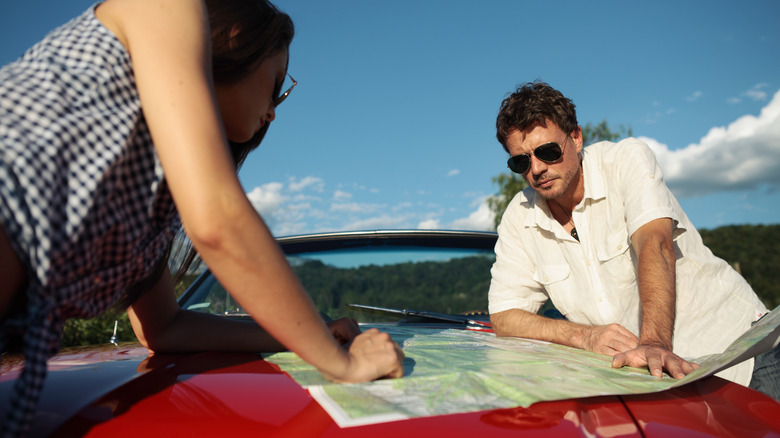
A big part of camping is finding the campsite. Back in the 1970s, this was done with — jump scare — paper road maps. Maps made specifically for automobiles have been around since the early 1900s, and by the 1970s, you'd find tons of maps stuffed inside a camper's glove compartment. You'd need to be good at reading maps, although engineers were working on more advanced concepts behind the scenes starting in the late 1950s.
While you can still use a paper map in 2026, campers have largely turned to their cars' infotainment center to help with navigation. The Department of Defense actually launched the Global Positioning System back in 1973, but it wasn't used in vehicles at this point. GPS relies on satellites to pinpoint where you are, following you as you drive to point out the next step. Instead of looking down at a paper map, campers now have an AI voice assistant telling them what road to take next.
Camping gear
In the 1970s, it was becoming quite popular for automakers to offer camping solutions for their vehicles — and this usually was in the form of a tent. General Motors started selling a tent that could be used with the Pontiac Phoenix, Chevy Nova, and other models after noticing the car camping trend pick up. These tents could be simply strapped onto the car. Easy.
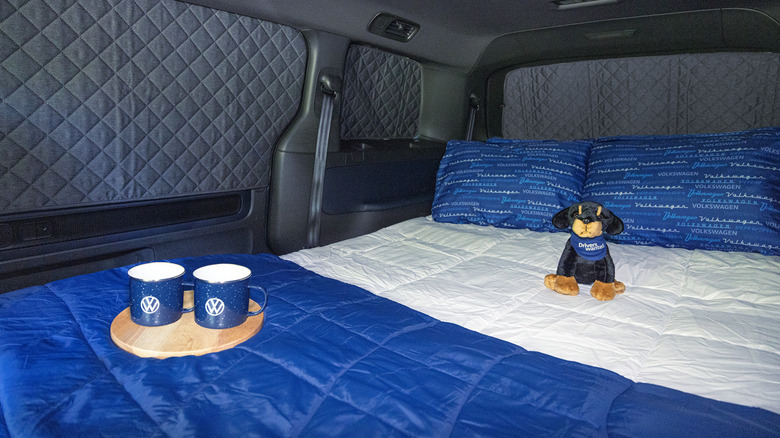
Nowadays, automakers have implemented a lot more camping features right into their vehicles. The Rivian R1S even has a Camp Mode that upgrades suspension, lighting, and climate for more comfortable sleeping. Rivian also sells a three-person tent attachment. The Subaru Outback may no longer be a station wagon, but the Wilderness trim has plenty of off-roading upgrades like protective plastic cladding, all-terrain tires, and more ground clearance. The upcoming 2027 Volkswagen ID. Buzz is answering critics with the Tourer Trim, which includes a built-in mattress, blackout screens, and an exterior table.
Campsite convenience
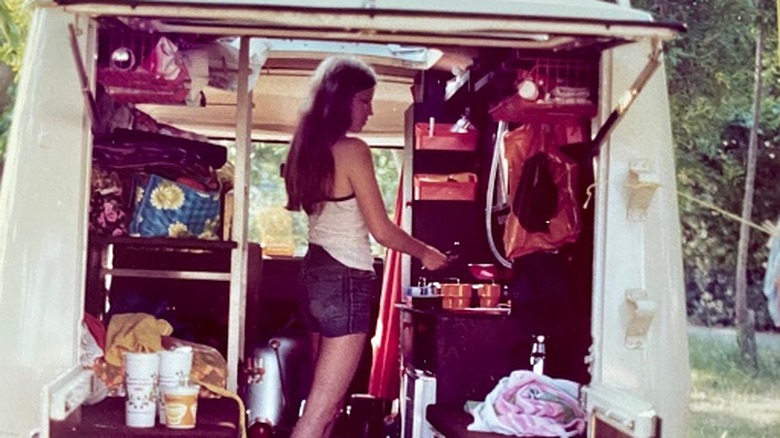
Camping has exploded in popularity in the 2020s, which has definitely meant more vehicle features and off-roading capabilities. However, it has in turn made it more difficult to find places to car camp. According to National Park Services, there are way more national park visitors now than in the 1970s. In 1974, they recorded 168,686,500 total visitors. In 2024, that number jumped to 331,863,358.
With so many more visitors, it can become more difficult to find a spot to park your car. Reservation rules have also become stricter — and more expensive. This also means you'll need to plan ahead a bit more. That hippie mindset of just going with the flow and showing up could mean you miss out on a place to camp that night. One camper on Reddit noted: "Feels like every decent spot fills up faster every season now. I don't remember it being this competitive even a few years ago."
Technology
In the 1970s, you likely expected to be completely disconnected from everyday life once you made it to a campground. The first cellular phone was invented in 1973, but they weren't widely available for the public until the late 1980s — and they weren't popular until the 1990s. You would probably listen to music through the car's radio or cassette player. Your car didn't need a bunch of extra charging options, keeping things pretty simple.
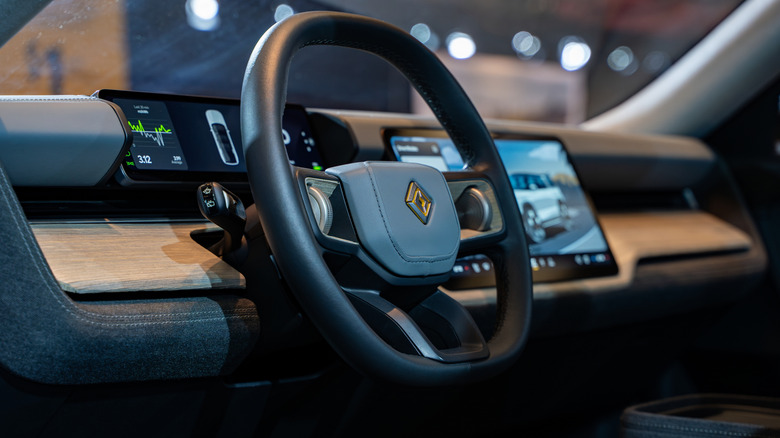
But in 2026, you're likely bringing a laptop, phone, handheld console, and plenty of other electronics that require charging and Wi-Fi. Modern cars have plenty of accommodations for this, including outlets and wireless charging options and mobile hotspots. However, car campers also have many accessories to choose from, whether they want to turn their car into a mobile office or charge entertainment devices like a Nintendo Switch 2 or Kindle. There are also tons of car camping gear options that may also make packing a bit more complex, including power stations, fans, and even espresso machines.