

5 Of The Biggest Ways Flying Has Changed Since The 1970s
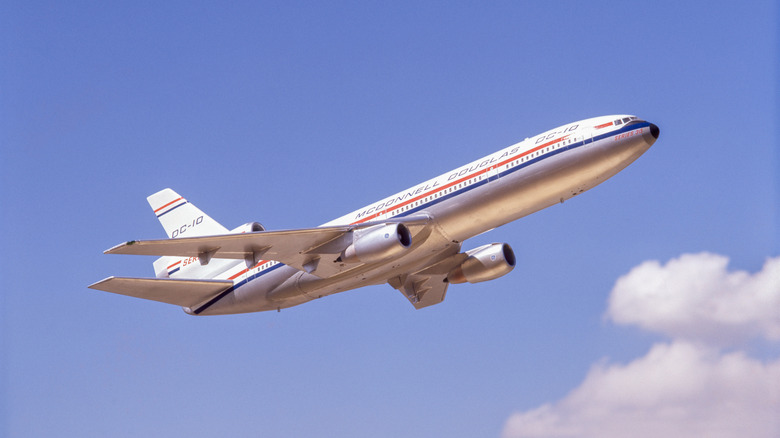
Imagine cruising at 30,000 feet, stretched out in a comfortable seat with plenty of legroom while a flight attendant in an eye-catching uniform serves you a glass of wine or a gourmet meal. This didn't just happen in first class (though the food was certainly better) — this was the time, popularly known as the Golden Age of travel. The years following World War II saw the dawn of the jet age, when air travel was something new and special.
Today, most of us are accustomed to tight economy seats and a small bag of pretzels. Unless you have the means to upgrade to Business or First Class, air travel is considered by many as a necessary evil. It's often the best way to get where you need to go, and it's opened up the world in ways that those living in the past could scarcely imagine. But it can be uncomfortable, expensive, and stressful. By contrast, the 1970s — the era of disco and muscle cars — were also the pinnacle of airline travel.
Smoking

Today, it's hard for any of us to imagine stepping on board an airplane and trying to find our seat amongst a haze of smoke. It would incite panic. In the 1970s, however, most passengers wouldn't have given it a second thought. Smoking was not only allowed virtually everywhere; it was almost expected. From hospitals to restaurants to public transit, including planes, the general public could light up wherever they wanted, though there were at least a few rules smokers had to follow when flying.
In 1973, the Civil Aeronautics Board issued a rule requiring all domestic flights to offer both smoking and non-smoking sections onboard aircraft. If you're a Gen Xer or older, you can probably still hear that ubiquitous greeting, "Smoking or non-smoking?" The rules were amended several times in the ensuing years, but smoking was allowed on at least some flights, some of the time until President George H.W. Bush signed a law in 1990 to ban smoking on all flights six hours or less. It wasn't until 2000 that smoking on all flights was banned completely!
Ironically, also in 1973, a passenger on board a Varig flight from São Paulo to Rio de Janeiro, Brazil threw away a cigarette in a bin inside a lavatory instead of using an ashtray. The cigarette started a fire that quickly spread, resulting in an emergency landing with 123 fatalities. So, banning smoking also made flights safer, though, interestingly enough, airplanes still have to have ashtrays on board.
Security
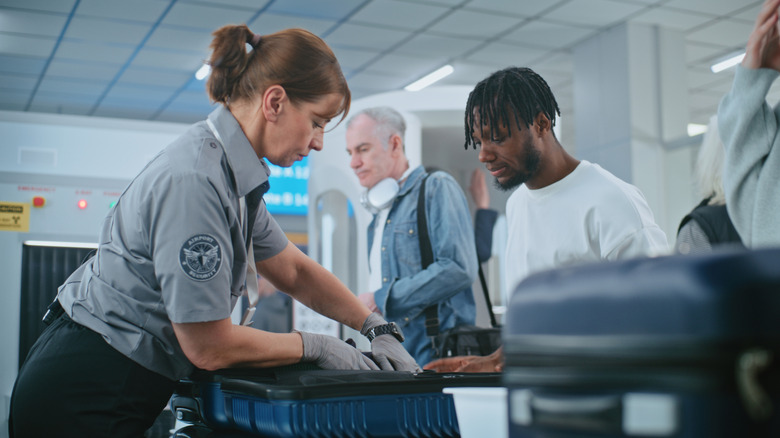
Even a first-time flyer knows to expect strict security standards on both domestic and international flights. There are restrictions on what we can pack and how much of it. Passengers must pass through metal detectors, advanced imaging technology, be patted down, or some combination of the three. Both carry-on and checked luggage is carefully screened. Of course, above all you have to carry an acceptable form of ID, including REAL ID or a passport, or pay a fine.
In the 1960s, the airline industry experienced a wave of hijackings. In response, the FAA ordered that cockpit doors be locked and more security officers were added, including Sky Marshals that could patrol flights when requested by the airline. In the 1970s, bomb-sniffing dogs were stationed at major airports, but passengers weren't required to go through metal detectors until 1973, and each airline screened its own passengers. Until the terrorist attacks on September 11, 2001, anyone was allowed past airport security, ticket or not. The event also led to the creation of the Transportation Security Administration (TSA). While the lines and security measures may be frustrating for some travelers, air travel is undoubtedly more secure now than it was 50 years ago.
Pricing
Before the airline industry was deregulated in 1978, air travel pricing was bundled, and everything — bag fees, a meal, and other perks — was included. When airlines were regulated, the federal government set prices for all carriers, so they were forced to compete in other ways. Carriers set themselves apart with food service, free alcoholic drinks or cigarettes, passenger lounges, and more.
Deregulation was intended to drive down the cost of flying, and it worked. When you factor in inflation, travelers today are paying about half of what travelers paid in 1978 to fly. Deregulation not only made air travel more affordable, it resulted in a drastic increase in both the number of flights and destinations and eventually gave rise to budget airlines.
Prices are down, but airlines are no longer competing for our business with enticing perks. Instead, passengers are often given the bare minimum and forced to pay for any extras, such as checked bags, meals and Wi-Fi. Some airlines are even charging you extra if you want to reserve a specific seat ahead of time, which can be a real headache for those traveling with small children or couples and groups that simply want to sit together. While we may long for the days of better service, few of us are willing to pay extra for it.
Smaller seats
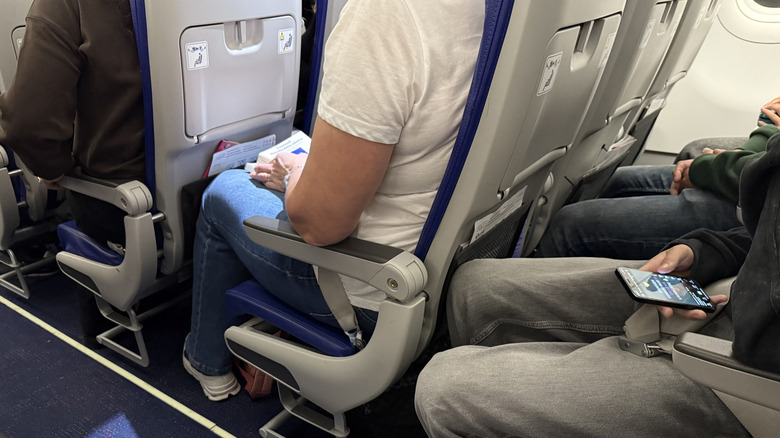
If you've been flying for decades and feel more and more cramped, you aren't crazy. Airlines have been steadily shrinking your bubble for years. Prior to deregulation, airlines weren't as concerned with filling planes with as many people as possible, because ticket prices were set by the government. Instead, the experience was a luxury — people were paying top dollar to fly, and the experience had to justify the cost. Today, those in economy class may feel like they're packed like sardines, and that's partly because we've lost several inches of both seat width and leg room since the 1970s.
On longer flights 50 years ago, passengers could expect seats that were about 18 inches wide. Today, those seats are an inch smaller, which gives us less space at our shoulders and means we're often knocking elbows with our neighbors. In addition to seat width, we've also lost space between rows of seats, called seat pitch. In the 1970s, seat pitch was typically around 34 inches. Today, the average is 31 inches, meaning we've lost three inches of legroom. Airlines pack in as many people as possible to maximize revenue.
To mitigate these effects, some airlines are using thinner, more streamlined seats to create an illusion of more space. In reality, passengers still feel cramped and reduced padding simply adds to their discomfort, especially on longer flights.
Safety
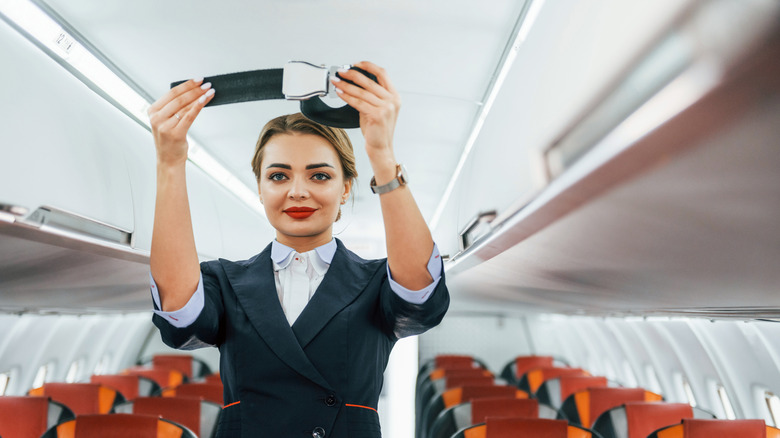
If turbulence makes your heart pound or you get shaky during takeoff and landing, you're not alone. Millions of Americans suffer from the same afflictions, and those fears are compounded when we learn about air accidents like the Air Canada Express jet that collided with a fire truck on the ground at LaGuardia airport in New York in March of 2026. If you suffer from similar fears, you may be happy to learn that air travel is significantly safer now than it was in the 1970s.
The Golden Age of travel may have been defined by gourmet meals and other luxuries, but, on the flip side, about one in every 165,000 flights ended with a fatal accident. Those numbers would be even more frightening today considering that the FAA handles an average of 44,300 flights every day in the U.S. Put another way, between 1966 and 1977, commercial air travel saw one death per 350,000 passengers.
Modern air travel is much safer, partly due to new technology and regulatory oversight, partly due to lessons that were hard won. The National Transportation Safety Board has investigated air accidents since the 1960s, because finding out why a plane crashed can help prevent future accidents. Today, the average is one fatality per 13.7 million passengers, and that number has been steadily improving over the last 50+ years.