

5 Turbocharged Motorcycles That Defined The '80s
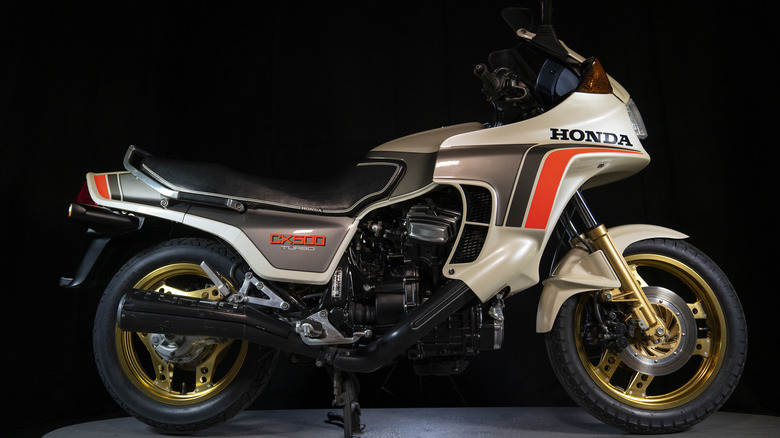
When it comes to performance, the marriage of engine and turbochargers would seem to be a match made in heaven. Point to any high-performance engine, and there's a very good chance that at least one turbocharger is helping to produce all that performance. As an example, we can look at Formula One engines; these cars represent the very pinnacle motorsport and they all use turbocharged 1.6 liter V6 engines.
Today, everything from family runarounds and pick-up trucks to SUVs and semi-trucks can all be found with turbocharged engines. Yet one form of transport that doesn't feature heavily on the list is motorcycles. While manufacturers did dabble with the format, there are good reasons why the mix of turbochargers and motorcycle engines remained unpopular. In terms of motorcycles, the weight and complexity of turbos negated many of the benefits. And — of course — turbo-lag, which is not something that even veteran riders would like to experience, especially halfway round a corner on a slick road surface.
However, this didn't stop manufacturers from trying, and the 1980s were when the bulk of this action happened. But the motorcycle that started the craze is a child of the 1970s. The 1978 Kawasaki Z1-R was already a unique motorcycle when the Kawasaki Z1R-TC was released in the same year. This was the first turbocharged motorcycle. Others soon followed, and for a brief while it looked like the 1980s might be when turbos conquered the two-wheel world. It wasn't to be, but let's look at the motorcycles with turbochargers that defined the 1980s.
Honda CX500 Turbo
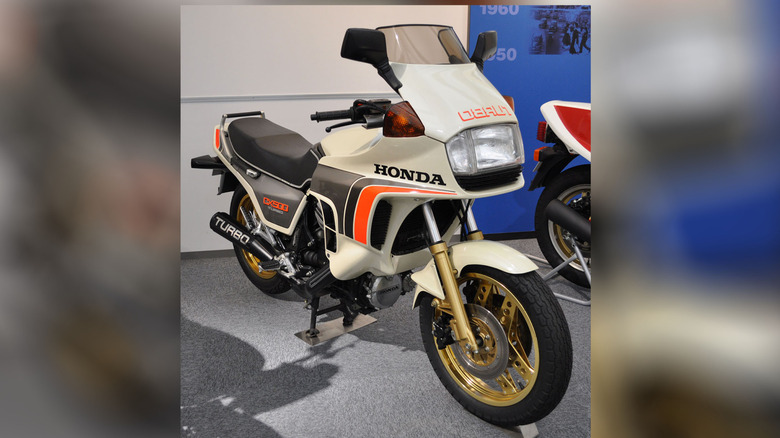
While the Z1R-TC was a motorcycle that was way ahead of its time, and one of the fastest motorcycles of the 1970s, Honda's CX500 Turbo is widely regarded as the first true production turbocharged motorcycle. The difference comes down to engineering; the Z1R-TC used an aftermarket turbo kit and was never officially recognized by Kawasaki. The Honda offering was a full production model that rolled from the production line with the turbo installed, essentially becoming the first mass-produced model.
The CX range of motorcycles was launched in 1978, the same year as the Z1R-TC appeared, but we had to wait until 1982 for the turbocharged version. The normally-aspirated CX500 was powered by a 497cc liquid-cooled V-twin engine, producing about 50 horsepower at 9,000 rpm. It's the liquid-cooling of the engine that made it a prime candidate to host a turbocharger. With the turbo onboard, the engine's power output rose to about 80 horsepower.
However, often what's promised on paper can fail to deliver in reality. Unfortunately, for the CX500, this was largely the case. It was a bloated and complex motorcycle that was plagued with turbo lag. This lag — followed by a sudden rush of boost — was something that was guaranteed to grab a rider's attention. As far as production goes, the motorcycle stayed in was available until 1983 and only about 5,300 were built. However, the die was set, and Honda wasn't finished with the concept. Along with Suzuki, Yamaha, and Kawasaki, what followed was a brief, interesting, and spectacular race to produce turbocharged motorcycles.
Yamaha XJ650 Seca Turbo
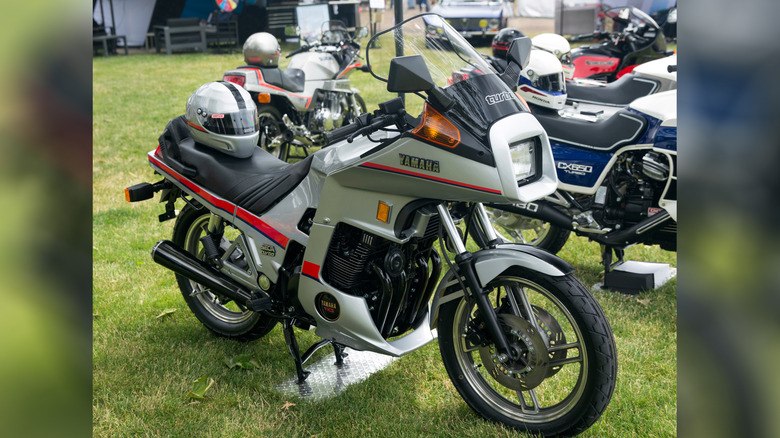
Introduced in the same year as the Honda CX500 Turbo, Yamaha's XJ650 Seca Turbo was the next turbocharged offering to emerge from Japan. Unlike Honda's fully-integrated, fuel-injection design, the Seca Turbo took a different approach. Rather than relying on fuel injection like the Honda, the design used four pressurized Mikuni carburetors, a point that Yamaha marketed as being the world's first carburetor/turbocharger system. The turbo was built by Mitsubishi and could spin at over 200,000 rpm. At the time, Yamaha claimed that it was the world's smallest turbocharger. The diminutive size of the turbo could help to explain why this was the only Japanese turbo-charged bike of the era that didn't have to redesign the chassis. Apart from some plumbing routing and a few brackets, this was largely the same bike as the normally aspirated XJ650.
As with the Honda, turbo-lag gave the motorcycle something of a Jekyll and Hyde personality. Below about 5,000 rpm, the motorcycle is polite and well-behaved. However, hit that mark and Dr. Jekyll disappears in a sudden boost of acceleration as another 30 horsepower or so hits the tarmac. It was another bike that couldn't be described as being lightweight, but at 565 pounds it was lighter than the CX500 Turbo. However, despite being simpler and lighter than the Honda, the Yamaha wasn't immune to the common problems associated with turbo motorcycles. In simple terms, the turbos weren't bringing anything to the party — they weren't outperforming normally aspirated bikes that were cheaper, simpler, and lighter. However, courtesy of a James Bond movie appearance, the XJ650 is one of the most famous movie motorcycles of all time.
Suzuki XN85
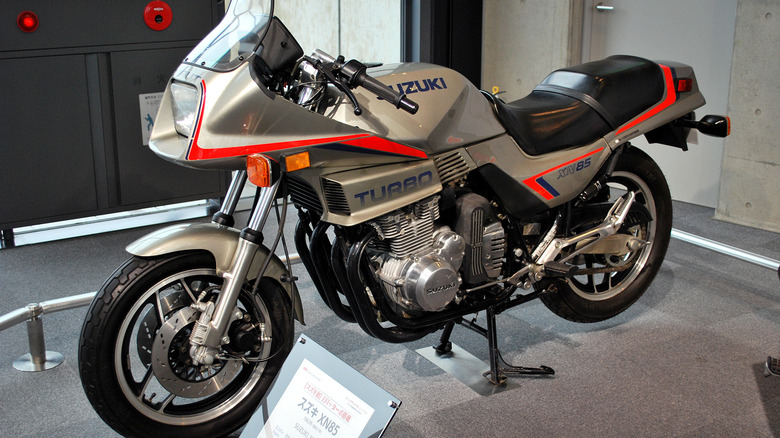
Despite there being a common thread of typical problems associated with motorcycles and turbos, you have to admire the manufacturers' persistence. Suzuki was another Japanese company that decided to have a bite at the turbo cherry when it introduced the XN85 in 1983. First, let's address the turbo-lag issue. While the problem still existed with the Suzuki, it wasn't quite as "digital" as the Yamaha and Honda bikes, with the power boost delivered in a smoother fashion. It was also the lightest of the motorcycles covered so far, coming in at about 550 pounds.
Putting the turbo aside for the moment, there is one big (or small) feature that made the XN85 stand out from the crowd — its 16-inch front wheel. The Suzuki was the first production motorcycle to use such a configuration. The small size of the wheel, paired with Full Floater rear suspension, gave the bike performance that a 1983 Cycle World review called "sharp and light," and "just short of magic on a twisty road."
Powering the motorcycle is Suzuki's 650cc engine, although it displaced 673cc when configured to take the turbocharger. Combined, the engine and turbocharger gave the bike a respectable 85 horsepower (hence the 85 in the motorcycle's name). Despite its excellent handling, and less noticeable turbo-lag, the motorcycle wasn't a commercial success. When production stopped in 1985 only 1,153 bikes had been built. It might not be among the most powerful Suzuki motorcycles, but it is a unique offering from the Japanese manufacturer.
Honda CX650 Turbo
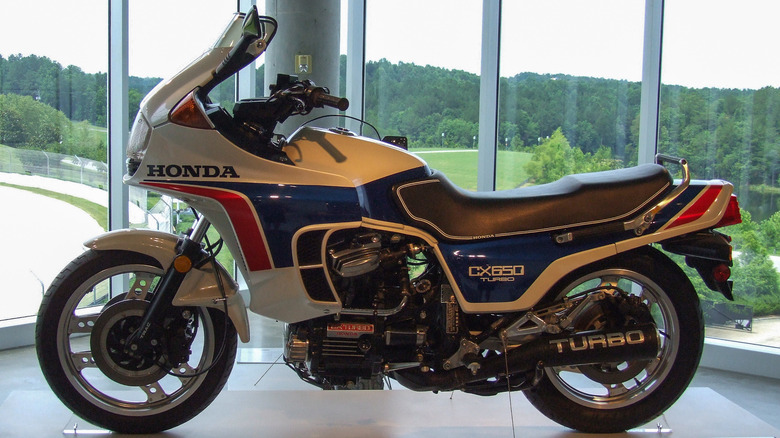
If we're being kind to Honda, we can say its CX500 suffered from "version one" syndrome. The company's next offering — the CX650 — was designed to address many of the problems its predecessor had suffered from. And, to be fair, it was a better motorcycle. This wasn't just an exercise in slapping a larger engine on and hoping everything would turn out for the best, as Honda had also reworked the entire turbo package. The CX650 Turbo had higher compression, a larger turbocharger, and simplified electronics. With this configuration, the standard CX V-twin power was effectively doubled to around 100 horsepower.
The amendments also helped to smooth out the turbo-lag problems associated with the older Honda. With the larger turbocharger and simplified electronics, the CX650 delivered its power in a far smoother manner. Honda also worked on improving the chassis with upgraded suspension components, anti-dive forks, and Honda's Pro-Link rear end, which all helped the bike to tame the extra performance. The result was a two-wheeler that had certainly applied the lessons learned from its predecessor, but it still wasn't free from the problems of turbos and motorcycles.
While it was smoother, faster, and more refined, it still carried the weight and complexity baggage of the older model. In the end, this was another short-lived bike that was in production for a year, and only just shy of 1,800 of them ever hit the highway. Despite this, the turbocharged offerings from the Japanese manufacturer remain some of the coolest-looking motorcycles Honda ever made.
Kawasaki GPz 750 Turbo
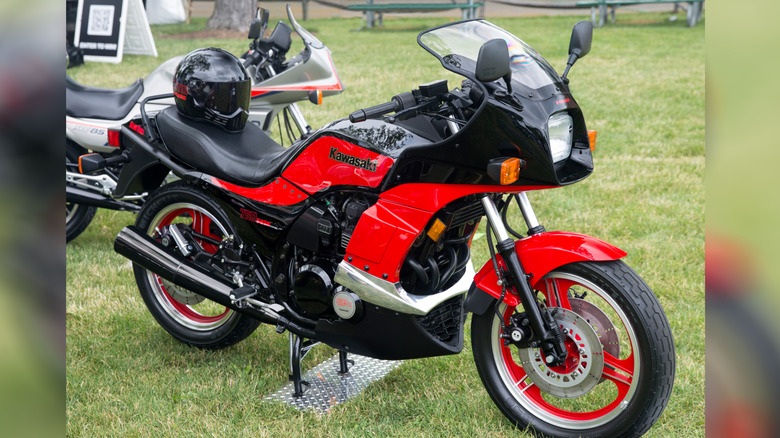
The Kawasaki GPz 750 Turbo was introduced to the motorcycling world in 1983, and out of the box this was a bike that seemed to deliver what turbos are often associated with — outright speed. Cycle World tests conducted that same year recorded a top speed of 150 mph. Cycle World also noted that a 1994 test of the Kawasaki GSXR 750 was slower over a quarter-mile, and only a few mph faster in the top speed stakes.
This wasn't a subtle bike, but that wasn't its point. This was a bike that finally delivered the kind of performance that riders expected when they saw the word "Turbo" on a motorcycle badge. Being late to the turbo party, the Kawasaki engineering team had the chance to learn from the issues experienced by other manufacturers. For instance, to reduce turbo-lag, the engineers simply situated the turbo at the front end of the engine. This placement reduced the length of the head pipes; in turn, this reduced the boost lag times. Along with the other engineering changes, it seemed like the GPZ Turbo was the practical, yet high-performing turbo motorcycle the world was waiting for.
Except nobody was watching anymore, and instead of being the bike that made turbos and motorcycles a reality, it instead became the swansong of a 1980s fad. In total, an unimpressive 3,500 represented the entirety of US sales for the motorcycle. As a footnote, the Kawasaki GPZ line remains among the most eye-catching Kawasaki motorcycles in history.