

14 Of The Oldest Appliance Brands You Can Still Buy Today
Some of the world's oldest appliance brands were around before TV and radio went mainstream. These brands are a testament to resilience — they've survived two World Wars, economic depressions, and over a century of competition and evolving industry trends.
Unlike today's appliances, which wear out within a few years, these legacy brands built products that withstood the ravages of time and functioned well for decades. Surprisingly, many of these brands didn't start out as appliance manufacturers. Long before becoming household names, some of them made telegraph systems, farm machinery, and electrical equipment.
These visionary companies steadily adapted their engineering expertise and were prepared to meet the growing demand for household appliances that followed the electrification of homes. Newer appliance giants now dominate the market, but these legacy brands laid the foundation for the modern appliance industry. In this article, we'll look at 14 of the oldest appliance brands still active in the market and how they have grown over the past century.
Electrolux — Est. 1919
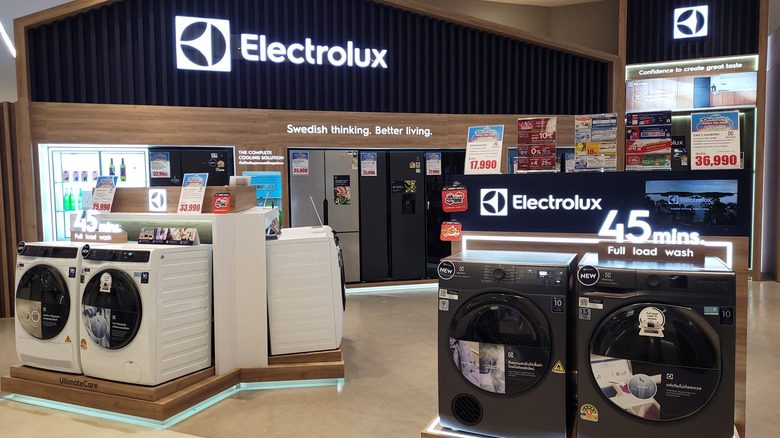
A kerosene lamp maker, Lux AB, and a vacuum-motor workshop, Elektromekaniska AB, merged in 1919 to form Electrolux. The arrangement allowed Electrolux to scale production and sales of affordable, lightweight, powerful vacuum cleaners in Europe — a much-needed alternative to heavier, more expensive American models.
Early vacuum cleaners were popularized by door-to-door salesmen, who demonstrated them in homes. They also collected customer feedback to refine future models.
In 1925, Electrolux launched its first refrigerator after purchasing and licensing a design from two Swedish engineering students who created it for an exam. After World War II, the company diversified into washing machines, dishwashers, and other kitchen and laundry solutions.
From the 1970s onward, Electrolux went on an acquisition spree, buying over 200 companies, including several on this list: AEG (home appliance division), Westinghouse, and Frigidaire. Over a century after its vacuum-cleaner origins, Electrolux ranks among the world's largest appliance makers and sells products in around 120 countries.
KitchenAid — Est. 1919
Before entering the home kitchen, Hobart Manufacturing Company produced huge commercial mixers for bakeries and warships. In 1919, engineer Herbert Johnson at Hobart Manufacturing invented the first major electric stand mixers for homes, and the company launched them under the new KitchenAid brand. The name KitchenAid came about when the wife of one of the company's directors tested the product and said, "...it's the best kitchen aid I've ever had."
The mixer was sold through a door-to-door sales force made up largely of women who'd demonstrate the product, and by the late 1920s, the electric mixer had snowballed in popularity. The mixer received an upgrade in the 1930s when world-renowned designer Egmont Arens gave the product its iconic tilt-head form, which won major design awards and is still in use today.
The company launched its first dishwasher in 1949, which used a pressurized water-spraying system for superior cleaning, and later expanded into major appliances such as refrigerators, ovens, microwaves, electric ranges, cooktops, and grills. In 1986, Whirlpool purchased KitchenAid, and it's currently available in over 75 countries. It's also among the appliance brands that are still made in the US.
Frigidaire — Est. 1918
Frigidaire left a lasting impression on the appliance industry — its name made "fridge" the shorthand for refrigerator. The company's origins stretch back to 1916, when engineer Alfred Mellowes and investor Nathaniel B. Wales founded Guardian Frigerator Company to sell the first self-contained electric refrigerator. The innovation was a breakthrough because early refrigerators lacked built-in compressors, making them impractical.
The business struggled with limited capital, but it caught the attention of General Motors (GM) founder William C. Durant, who bought it in 1918. He renamed it and scaled it with his existing manufacturing infrastructure. The following year, Durant sold Frigidaire to GM, and over the next decade the company grew in popularity while lowering the cost of refrigerators. It then diversified into air conditioners, freezers, washing machines, and electric ranges.
But in the late 1970s, Frigidaire saw severe losses, and GM sold it to White Consolidated Industries. Electrolux later acquired White Consolidated Industries, and Frigidaire with it. As of 2026, Frigidaire is among Electrolux's major global brands, selling affordable home and kitchen appliances in the US.
Whirlpool — Est. 1911
Whirlpool's story began in 1911 with the Upton Machine Company, founded by Louis Upton and his uncle, Emory Upton. Louis had received a patent for a manual clothes washer, as compensation for a failed investment, and Emory developed an electric motor for it, resulting in the company's electric wringer washers.
The company's first client was Commonwealth Edison's Federal Electric Company, but the deal was short-lived with Federal Electric switching to its own washer production in 1914. Upton Machine struggled for two years building toys, automobile accessories, and camping gear, but rebounded fast after striking a deal with Sears, Roebuck & Co. It eventually merged with the Nineteen Hundred Washer Company to meet the growing demand for washing machines, and later launched the Whirlpool brand of automatic washing machines. Soon after, the company was renamed Whirlpool Corporation.
With increasing competition in the 1950s, it merged with a few companies and expanded its appliance offerings to refrigerators, air conditioners, and vacuum cleaners. Whirlpool currently owns major appliance brands like Maytag, KitchenAid, and Amana, and is the largest US-owned appliance manufacturer. It's also among the largest appliance companies globally, and sells its kitchen and laundry appliances in over 170 countries.
Hoover — Est. 1908
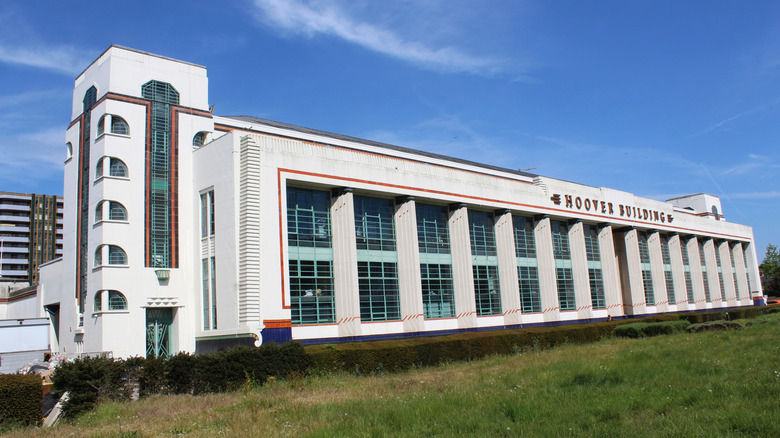
The Hoover vacuum brand was so popular at one point that "hoovering" became synonymous with vacuuming in the UK. William Hoover, a leather goods manufacturer, founded the company in 1908, but James Spangler's invention started it all.
Vacuum cleaners were already in the market before Hoover entered the business, although most were large and unwieldy. Spangler, a janitor, invented the first portable electric vacuum cleaner to reduce dust and manage his asthma. Hoover saw potential in Spangler's invention, purchased the patents, and invested in the business, later renaming it the Hoover Company.
In 1908, Hoover launched the Model O, which became the first commercially successful portable vacuum. It was easy to maneuver and weighed less than half as much as competing models. By the 1930s, the company expanded into Europe and launched the world's first handheld vacuum cleaner before exploring other appliance categories.
From 1985 on, Hoover in North America changed hands repeatedly and was finally sold by Whirlpool to Techtronic Industries, joining TTI's roster of appliance brands. Today, the North American business focuses on floor care products, while the Haier-owned European operation includes floor care products and other domestic appliances.
GE/GE Appliances — 1892/1907
General Electric's roots trace back to Thomas Edison, who founded several companies around his electric lighting system. In 1889, they were merged with the patent-holding Edison Electric Light Company to form the Edison General Electric Company.
The company soon locked horns with its biggest competitor, Thomson-Houston Electric Company. Both held important patents that created developmental conflicts between them. Their forced merger in 1892 formed General Electric (GE), which dominated the electrical industry, but it took another 15 years to expand into appliances.
The appliance division started with a range of cooking and heating appliances and launched the first hermetically sealed domestic refrigerator (a smaller, quieter form). Then came the first Monitor Top refrigerator, which was more reliable and easier to use than many competing refrigerators. After the 1920s, it expanded rapidly, launching dishwashers, air conditioners, automatic washing machines, ovens, and other home appliances.
The company grew into a sprawling conglomerate, diversifying into aviation, healthcare, and finance, building things you wouldn't realize were made by General Electric. But the appliance division slowed as the company shifted its focus, so in 2016, it sold GE Appliances to China's Haier. Currently, GE Appliances' products are sold in the US, Canada, Australia, and parts of Latin America and Asia.
Hotpoint — 1905
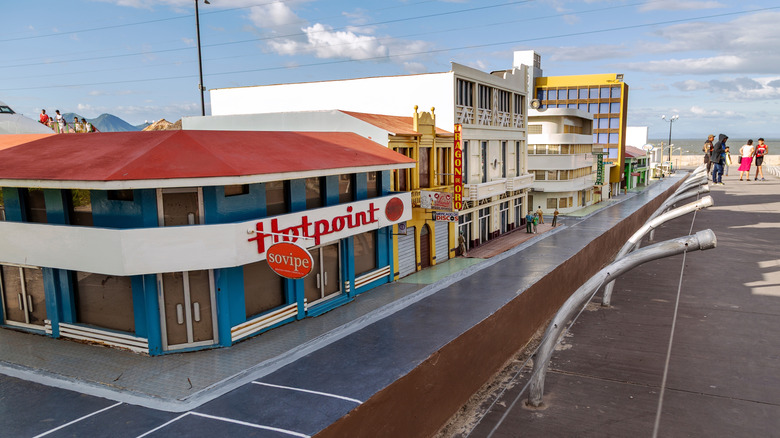
After moving to California in 1895, Earl Richardson began inventing household appliances while managing a local powerhouse. His appliances made household chores easier, and with feedback from his wife, he built a lightweight electric iron with heat concentrated at the tip. The design was more convenient than existing models, making it easy to iron around buttons and pleats.
It became popular among the local women, and Richardson founded Pacific Electric Heating Company in 1904 to manufacture and sell his inventions. A year later, the company had built and sold the most electric irons in the USA, and by 1914, it had been renamed Hotpoint Electric Heating Company.
Hotpoint merged with General Electric's heating division in 1918 to form the Edison Electric Appliance Company, before being fully acquired by General Electric in 1927.
Hotpoint belonged to General Electric until 2016, when it sold its brand rights for the Americas to Haier. In Europe, Beko Europe, a joint venture between Whirlpool and Arçelik, owns the Hotpoint brand. Currently, Hotpoint has budget-friendly products across appliance categories, including refrigerators, electric ranges, dishwashers, and PTACs.
Miele — Est. 1899
Miele is one of the few brands in this list that was never sold, merged, or folded into another company. Founded in Germany in 1899, the establishment has been owned by the same two families since its beginning, when Carl Miele and Reinhard Zinkann made cream separators for dairy farms.
In 1900, the company built a butter churn that simplified butter-making for farmers and their wives, and three years later, it launched a wooden-tub washing machine. The machine's flyweight design made it easier for the agitator to keep moving than a hand lever would. Electric, coal- and gas-powered washing machines followed, and some models offered a 10-year guarantee upon request, as early as 1916.
In the 1920s, Miele began producing vacuum cleaners, and in 1931, the first torpedo-shaped vacuum cleaner was introduced, a design that persists to this day. The company was also the first to introduce an electric dishwasher in Europe, but the launch was poorly timed because the stock market crashed that year, and the Second World War followed years later. It took a few decades, but by the end of the 1970s, the dishwasher had become a common home appliance.
As of 2026, the company continues to manufacture and sell highly reliable washing machines, vacuum cleaners, and kitchen appliances. Interestingly, it still uses its original motto from 1899 — Immer Besser (Always Better).
Maytag — Est. 1893
Like many of the other pioneers on this list, Maytag's origins weren't in home appliances. The enterprise started in 1893 by building farm equipment, but because sales were seasonal, it began producing washing machines in 1907 to offset the slumps. The company's first washing machine was called the Pastime — a wooden-tub washer that became very popular.
Maytag launched its first electric washer in 1911 and introduced a gas-engine washing machine in 1914 for rural homes without electricity. The real leap forward came later with the Gyrafoam washer, which changed how people washed their garments. Instead of dragging clothes through water, the device moved water through the clothes to clean them, a principle still used today. The Gyrafoam washer's success made Maytag the top washing machine company in the USA, and it closed its farm equipment line to focus primarily on washers.
Despite its success, Maytag faced challenges in the early 2000s due to high production costs, costly acquisitions, and major quality issues in one of its product lines. In 2006, Whirlpool acquired the company, which continues to manufacture and sell Maytag-branded products in North America.
Bosch — Est. 1886
Robert Bosch founded the Workshop for Precision Mechanics and Electrical Engineering in 1886, and it was renamed Robert Bosch GmbH a few decades later. He initially focused on installing electric doorbells, telephone systems, and other electrical engineering work. But the breakthrough came with the magneto ignition device, which made reliable ignition possible for early gas engines. Then in 1902, Bosch's chief engineer, Gottlob Honold, presented the high-voltage magneto with a spark plug, making the enterprise a key supplier in the fast-growing automobile industry.
Bosch faced a series of challenges because of the First World War and the Great Depression, which pushed it to innovate and diversify, resulting in affordable electric home appliances for average consumers. 47 years after its founding, Bosch introduced its first home appliance — a round electric refrigerator with a 60-liter capacity. It soon switched to a more preferred square shape with greater capacities and added handy features, like interior lighting. The following decades saw more additions to the company's appliance line-up, including washing machines, dishwashers, vacuum cleaners, and ovens.
Bosch merged its appliance business with Siemens in 1967, then bought out Siemens' stake in 2015, becoming its sole owner. As of 2026, Bosch continues to sell home appliances through its BSH subsidiary in nearly 50 countries and ranks among the most reliable home appliance brands.
Westinghouse — Est. 1886
Much before Westinghouse Electric Corporation entered the home appliance business, it had already fought one of the most monumental tech battles in history. George Westinghouse founded the company in 1886 to commercialize alternating current (AC) power systems. Promoting AC power pitted him against Thomas Edison, who backed direct current (DC), igniting a rivalry called the War of the Currents.
Westinghouse hired Nikola Tesla and purchased the rights to his AC patents. The competition with Edison lasted a few years, and Westinghouse emerged as the winner when it lit up the Chicago World's Fair using AC power in 1893. Three years later, it built a hydroelectric plant on the Niagara Falls to send power to Buffalo, cementing its victory.
In 1914, the company forayed into the home appliance market by purchasing Copeman Electric Stove Company and went on to build electric stoves, flat irons, waffle irons, fans, coffee pots, and refrigerators. It even developed the market's first frost-free refrigerator for automatic defrosting.
But by 1975, its appliance division lagged significantly and was sold to White Consolidated Industries. Over a decade later, Electrolux acquired White Consolidated Industries and, with it, the Westinghouse appliance brand. As of 2026, Electrolux still manufactures and markets a range of products under the Westinghouse brand in many parts of the world.
AEG — Est. 1883
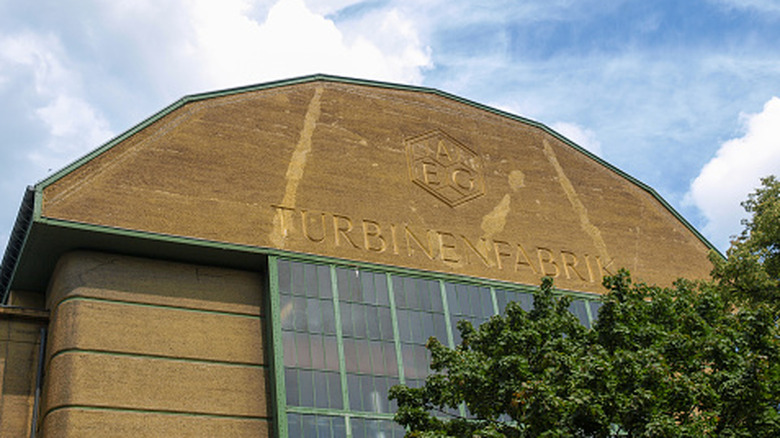
Emil Rathenau founded the Deutsche Edison-Gesellschaft in 1883, which was renamed Allgemeine Elektricitäts-Gesellschaft (AEG) a few years later. The company started out with bulbs and power infrastructure after Rathenau acquired the German patent rights to manufacture Thomas Edison's light bulb. It laid electrical cables beneath Berlin's streets to power the city, built Germany's first public power stations, and established a complete electric streetcar system.
AEG entered the home appliances market in 1892, producing fans, kettles, stoves, electric irons, and vacuum cleaners. A major development was Rathenau's hiring of the ace architect and visionary designer Peter Behrens, who bridged industrial function and artistic form. Behrens was the world's first industrial designer, credited with designing the company's first-of-its-kind corporate identity and various home appliance lines. He also designed the landmark monument, AEG Turbine Factory, laying the foundation for modern architecture and the iconic Bauhaus movement.
The company diversified further into refrigerators, washing machines, and ovens, but went bankrupt by 1982 due to stiff global competition and poor management. Daimler-Benz acquired AEG and restructured it, later selling off the brand's home appliance division to Electrolux. The brand remains active, selling premium appliances in dozens of countries.
Singer — Est. 1851
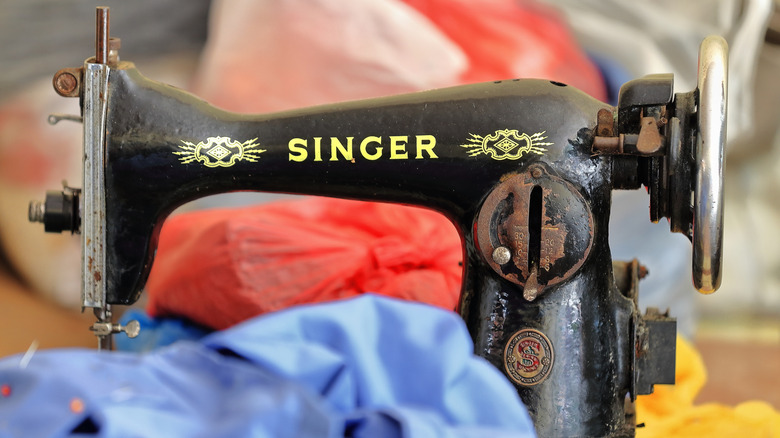
Singer Corp. started its historic run in 1851, when Isaac Merritt Singer obtained the patent for the first domestic sewing machine. He founded the company with lawyer Edward Clark, who had pioneered installment buying, making it possible for ordinary consumers to finance the purchase of sewing machines.
By 1860, the company had become the world's largest manufacturer of sewing machines — three years before it was formally incorporated. At the time of incorporation, it had already secured 22 patents on sewing machine improvements.
It launched the first electric sewing machine in 1889, and by the next year, it dominated global markets, holding a 90% share. The company introduced several innovative sewing machines after that, including a portable, electric-motor-powered model in 1921, a super-light model that sold for 30-plus years, and the first zigzag and electronic sewing machine models.
Singer diversified into aerospace and defense electronics, and later sold its sewing division (Singer Sewing Machine Company) to Semi-Tech Microelectronics. But as markets shifted and debt increased, SSMC filed for bankruptcy in 1999. It was rescued through a private equity restructuring and integrated into SVP Worldwide.
As of 2026, the brand continues to manufacture home sewing, quilting, and embroidery machines, including models with internet connectivity.
Siemens — Est. 1847
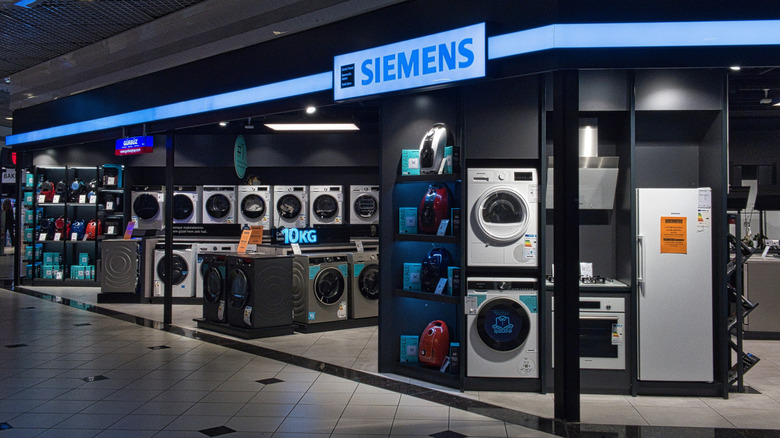
Werner von Siemens founded Siemens in 1847 with Johann Georg Halske to manufacture the former's invention — the pointer telegraph. The oldest electronics company played a major role in connecting the world through its telegraph lines, laying thousands of kilometers of telegraph networks across continents. To put it into perspective, this network dramatically sped up communication: messages moved from London to Calcutta in 28 minutes, down from 30 days.
It took Siemens almost 60 years to wade into the home appliance market. In 1906, it launched its first vacuum cleaner, called a dedusting pump and weighing 330lbs, ideal for commercial spaces and wealthy homes. 29 years later, the company started selling lightweight handheld vacuum cleaners. It also launched electric washing machines that washed and spin-dried clothes, stoves with auto temperature regulation, and baking tubes that cooked with electricity, replacing coal and wood.
By 1967, global competition had grown fierce, prompting Siemens and Bosch to form a joint venture and merge their appliance operations. In 2015, Siemens sold its 50% stake in the joint venture to the Bosch Group to exit the consumer goods business and focus on other industrial areas. As part of the deal, BSH (the appliance company now fully owned by Bosch) was allowed to continue selling appliances under the Siemens brand.