

9 Cars That Kept Americans Moving During The Great Depression
It would be hard to blame a young American in the Roaring Twenties for believing they had been dropped at the doorstep of a prosperous future. Art Deco lettering on newfangled skyscrapers, new age jazz music wafting over radio waves, and thousands of feet dancing the Charleston, bootleggers running liquor in proto-NASCAR stock cars, bob haircuts, constitutional amendments, assembly lines, and more colored the country — it seemed we were on the edge of a new era, and we were, but not a desirable one.
The Great Depression remains the single most consequential and severe economic recession in history, and while it was a global event, America arguably felt it the most. The Roaring Twenties introduced the public to the stock market, and the era's optimism made it an enticing venture. Millions of everyday people invested large portions of their income in the stock market, often borrowing to do so, convinced that their eventual returns would pay off the loans.
The bubble burst on October 29th, 1929, Black Tuesday. Everyone sold, and many were left not just in debt from poor investments but also from loans they took out to make those investments in the first place. Trust in the banks collapsed, and everyone wanted their imaginary money withdrawn for cash; global trade slowed, nobody bought anything, and nobody sold anything. America flew too close to the sun and went from anticipating a golden renaissance to being dropped into the pits of destitution. But Americans still drove.
Ford Model 18
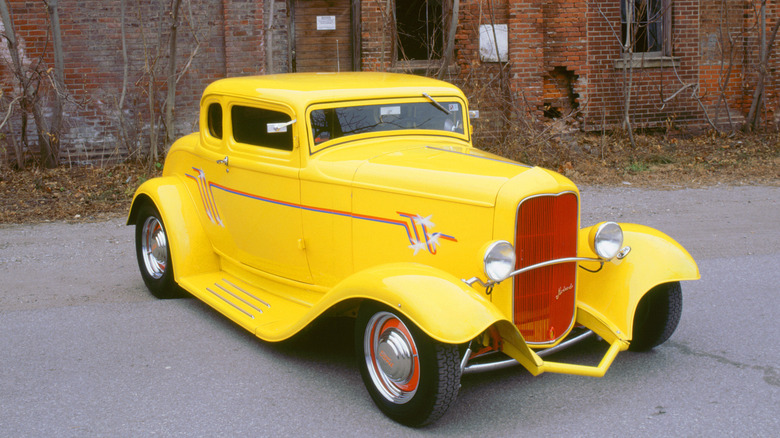
After Henry Ford introduced the Model T, he had no plans to replace it. You would think that creating the world's first consumer car would be enough, but the hunger of the American market would soon prove that wrong. By 1926, other carmakers were storming the Ford palace, grasping for the crown, and Henry's son, Edsel Ford, told his father that Ford had to make something new, or risk being known only as the first to do it, not the best. Ford agreed, and the company set off to make the Model A.
The Model T was a car in its most basic form, with customers often heavily modifying their Model Ts to resemble farm equipment rather than a mode of transportation. The Model A was designed specifically for the latter task, and when it came out in 1927, it bumped Ford ahead of the competition, but only slightly. To seal the deal, they needed something big, which would become the flathead V8 introduced in the 1932 Model 18.
The Model 18, fondly called the "Deuce Coupe," was a smashing hit. It was cheap, strong, and powerful, making it popular not only with regular consumers but also with early petrolheads. With 65 horsepower, the car was practically a rocket for the time, and it pioneered every aspect of Hot Rodding culture, even the name, which came from the roofless variants being referred to as "Hot-Roadsters," which language eventually morphed into Hot Rod.
Packard Light Eight
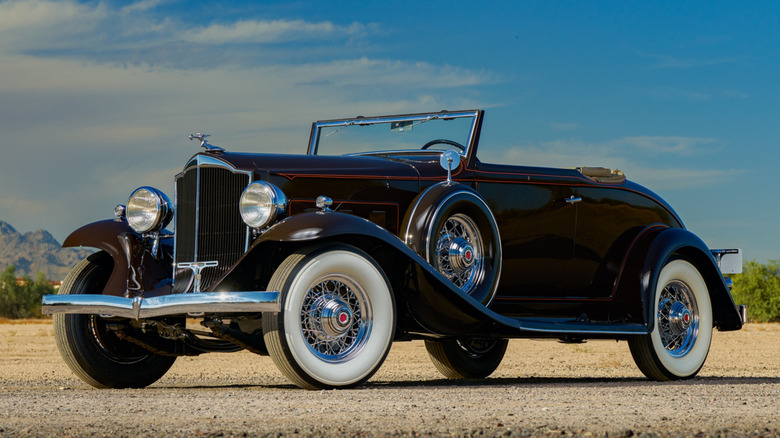
Although Packard has been gone for a while, they were once one of America's original car brands. Founded by the Packard brothers in 1899, the Ohio natives relocated to Detroit to build the foundation for what would become a brand synonymous with American luxury. Their early reputation was built on making cars for the ultra-wealthy, but by a stroke of dumb luck, Packard was in the middle of developing an entry-level car for the masses when the stock market crashed in 1929. Despite this, they weren't fully immune to the brutal effects of the crash. In 1929, they made a whopping $25 million in profit, and just three years later, they were at a loss of nearly $7 million.
Luckily, the plebeian car, or as plebeian as a Packard could be, was ready for release in 1932. The Packard Light Eight, or the Series 900, debuted in January as a more accessible, simplified version of the Packard Eight sedan. Its straight-eight engine produced 110 horsepower, and despite being a car for the masses, it still featured premium interior materials and tech like dome lamps. Altogether, the car cost between $1,750 and $1,940, giving the Light Eight real bang for your buck. It worked a little too well, though. Packard had hoped to poach customers from other brands like Chrysler and Buick, but the Light Eight was such a good deal that Packard's own customers began to prefer it to the brand's more premium models.
Chrysler Airflow
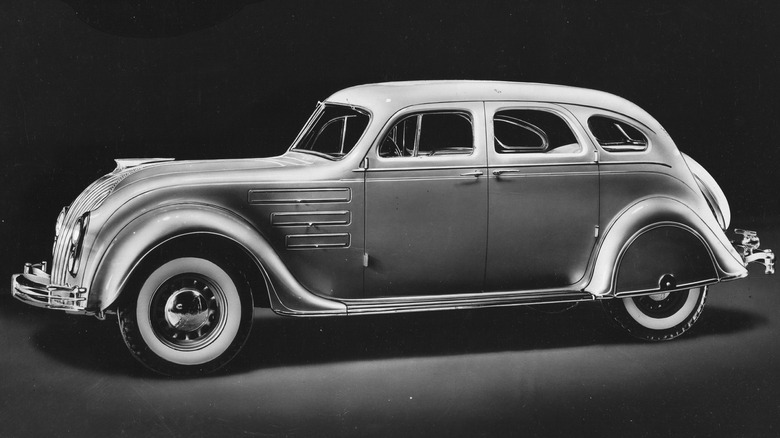
Despite the spiritual muffling of the Depression that beset people across the country, there were still people willing to dream. One such dreamer was a man named Carl Breer. Breer was an engineer at Chrysler with an ever-present fascination with airplanes. He was struck by their beauty and abilities, and he wanted to understand how such contraptions interacted with air. His fascination led him to build the automotive industry's first wind tunnel, a tiny box 2 feet wide and 3 feet tall, in which he could study the effects of airflow on small wooden car models. His enthusiasm was shared by Walter P. Chrysler, and together, their interest led to the birth of the Chrysler Airflow.
The Airflow was a car of firsts, and truly ahead of its time. That wind tunnel gave Breer a rudimentary understanding of automotive aerodynamics, which informed the final shape of the Airflow, which was streamlined and smooth. They had to abandon the traditional ladder frame in favor of what would become the world's first unibody car structure, with benefits including better cabin insulation, more secure engine mounting, and more.
Unfortunately, the Airflow flopped upon its release in 1934. After four years of attempting to save it, Chrysler killed the nameplate altogether — its extensive development made it too expensive, and buyers were simply not ready for a car so far removed from what they were used to. The Airflow hit the right place at the wrong time, and it remains one of the most influential automobiles in history.
Plymouth Six
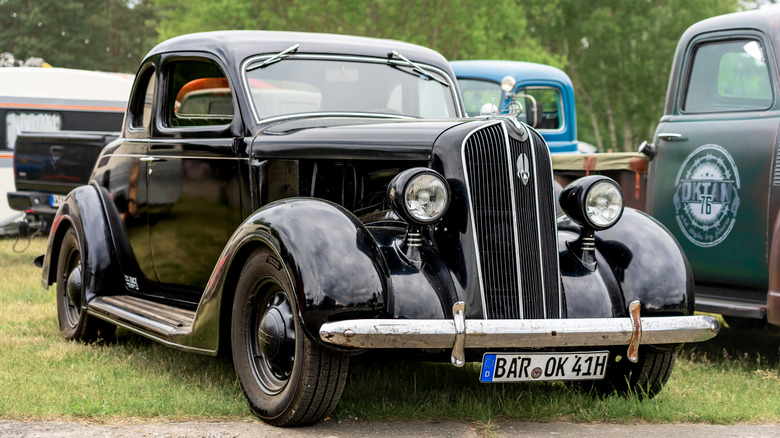
The early days of the American car industry were fast and rough. New innovations seemed to break news every week, and every brand needed to stay on top of things to have any chance of securing a future dynasty. In 1932, Plymouth found itself in one of these make-or-break situations. Their competition was releasing new engines that were larger and more powerful than anything in the Plymouth lineup. Chevrolet made a six-cylinder in 1929, and when Ford introduced the flathead V8 in 1932, Plymouth knew they had to catch up.
They quickly launched the Plymouth Six, whose six-cylinder engine was based on one from the now-defunct DeSoto brand, which Chrysler also owned at the time. This adoption allowed for quick turnaround, and development was matched by huge marketing pushes and investment announcements. They wanted the Six to be a star, and while it didn't fail entirely, it fell short, literally. The 112-inch wheelbase was seen as too short for a six-cylinder car, emasculating the project in consumers' eyes.
Its design wasn't anything special either, and in 1933, Plymouth introduced the Six De Luxe to spice up the model. The De Luxe got new tires, a quieter gearbox, and a 70-horsepower straight-six. It was presented as a luxury car for the everyday consumer, featuring broadcloth upholstery, fine leathers, and walnut wood trim. The De Luxe saved the Six's reputation and allowed Plymouth to hold on to its spot in the Depression-era industry.
Chevrolet Series AE Independence
The unpredictability and turmoil of the Great Depression cannot be overstated. Between 1929 and 1933, the American economy and workforce were absolutely decimated. During this window of the initial downturn, U.S. GDP fell by 30%, and the unemployment rate climbed to a record high of over 20%. To do anything other than hunker down and attempt to wait out the recession could be argued as insanity, but, in classic American spirit, Chevrolet took a risk.
While the world crumbled around them, Chevrolet doubled down on their entire operation. They invested heaps of money in production, in facilities and model development, and set their sights on higher production numbers. Part of this gamble to get ahead while the competition was down included a new model, which was really just a redesign, that Chevy patriotically christened "Independence."
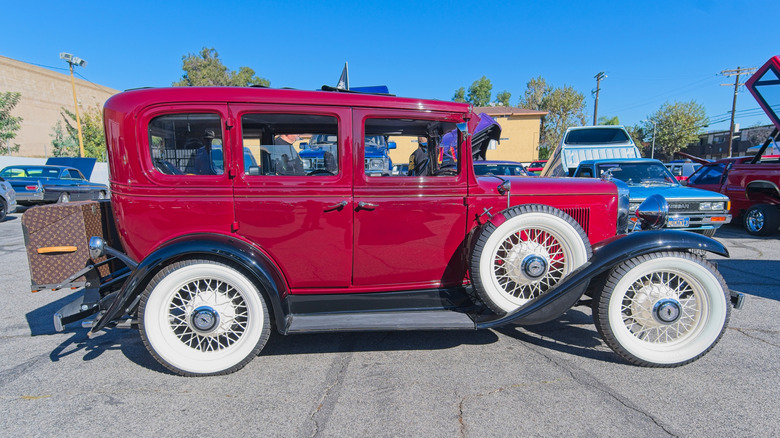
The Independence was introduced in 1931 with a whole new look that seemed to stand in contrast to the country's economic struggles. It was tall and stately, with a big grille and glimmering chrome details everywhere. It had new latticework wire wheels fitted with Goodyear diamond-tread tires, and it retained Chevrolet's 50-horsepower six-cylinder engine. Best of all, though, Chevrolet dropped their prices, and their gamble paid off. Their strategy led them to overtake Ford in production volume, and the Independence models helped Chevrolet become the best-selling car brand in the country for the first time.
Plymouth PB
Even beyond the economic and political dangers the Great Depression posed, the early American automotive industry was a fast-moving landscape of competition and risk. Homegrown manufacturers would pop up here and there, only to evaporate as competition stiffened, or be absorbed by a bigger fish. One of the biggest successes was the Chrysler brand under Walter P. Chrysler's leadership. It was to acquire, or be acquired, and Chrysler set out to be the one doing the acquiring. The brand's early days were filled with headstrong acquisition and formation campaigns, and very quickly, Chrysler ended up with the keys to DeSoto, Dodge, and Plymouth.
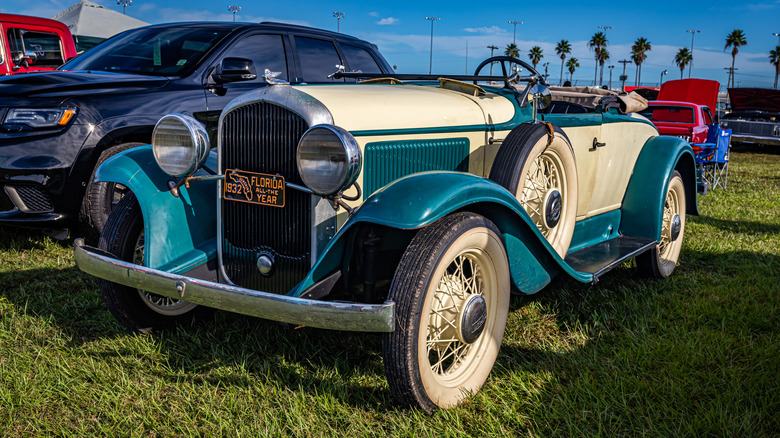
Each brand had its own role within the Chrysler empire, and Plymouth's was to bring Chrysler cars to the masses. Their competition was stiff, coming from the likes of Ford and Chevrolet, but Plymouth quickly reached the number-three spot in national sales, thanks to models like the PB. The PB was powered by a four-cylinder engine, but its competitive edge came from its good looks and exclusive technologies and options.
The PB had a clean look, with free-standing headlights and a single-piece front fender. Plymouth even offered an option called the "Collegiate Special" to students, who could have their PB painted in their school colors. Technologies like its four-wheel hydraulic brakes and smooth "Floating Power" engine mounts made the PB even more enticing to Depression-era buyers.
Cadillac Series 452
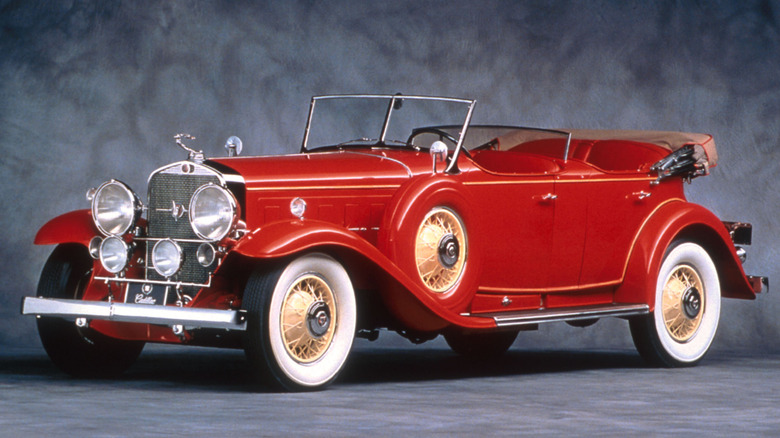
Cadillac has earned a reputation as one of America's finest luxury automotive brands, and while we often think of its finned land yachts of the 1950s as the foundation of this reputation, the brand was already pushing the boundaries of the industry during the Great Depression. As is copacetic with American ethos, bigger was better in the early days of the car industry, and if you wanted to produce a luxury car, its engine had better have as many cylinders as possible. When Cadillac set its sights on building a new, top-of-the-line engine, it reached this conclusion and began developing the world's first V16 and the Series 452 car around it.
When it was introduced in 1930, the 452 blew its biggest rival, Packard, out of the water. Suddenly, their measly V12 seemed infantile next to the glorious 165-horsepower Cadillac V16. The engine was the centerpiece, but the Series 452 was full of firsts as well. Cadillac wanted these cars to be as bespoke as possible to highlight their exclusivity, and founded the Art and Color Selection department — a sort of proto-Manufaktur, Mulliner, Tailor-Made division that allowed for the personalization of every inch of the 452. The car was not cheap, however, and the market for expensive things was not exactly booming. The 452 production ran for seven years and never turned a profit. But despite poor sales, the car and its V16 engine established the foundation of Cadillac's place in the food chain.
Duesenberg Model J
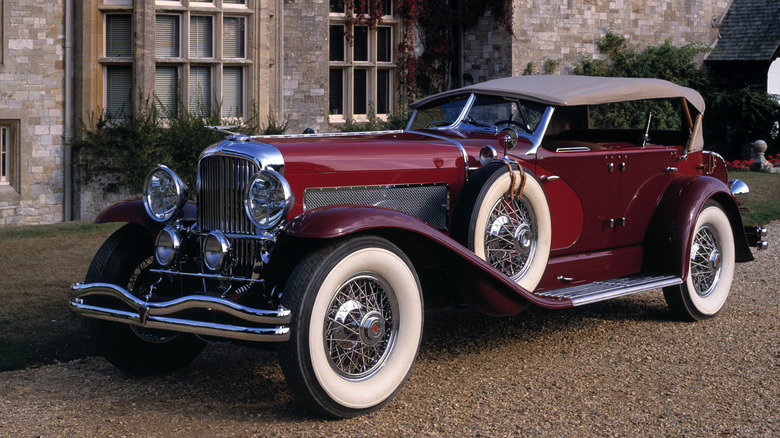
If Duesenberg was still around, it would be one of the only rivals to challenge Cadillac's place as the premier destination for American luxury cars. Founded by the Duesenberg brothers, Fred and Augie, the brand became famous for their outlandishly impressive and expensive creations. Perhaps the best example of their work and character was the Duesenberg Model J. The Model J was revealed in 1928 with a seven-liter, straight-eight-cylinder engine producing 250 horsepower, just eight months before the stock market crash.
When it came out, the Model J was sold, like many luxury cars of the day, as a chassis and engine, with the expectation that you would find a coachbuilder to build your dream car around it. This was no cheap venture, as the bones of the Model J cost around $8,500, with the grand total reaching into the mid-teens territory after you paid for a body. These prices were colossal for the time and were exacerbated by the Depression-era economy; in the end, Duesenberg only made about 500 Model Js.
Still, they didn't let the world's problems soil their fun too much. In 1932, they released the Model SJ, the S denoting the newly added supercharger, which bumped power up to 320 horsepower — a bonkers figure for the day. Duesenberg never even put its name on any of its cars. They believed that should someone come across one in the wild, the quality and beauty would be so magnificent that it could only be a Duesenberg.
Hoover Wagon
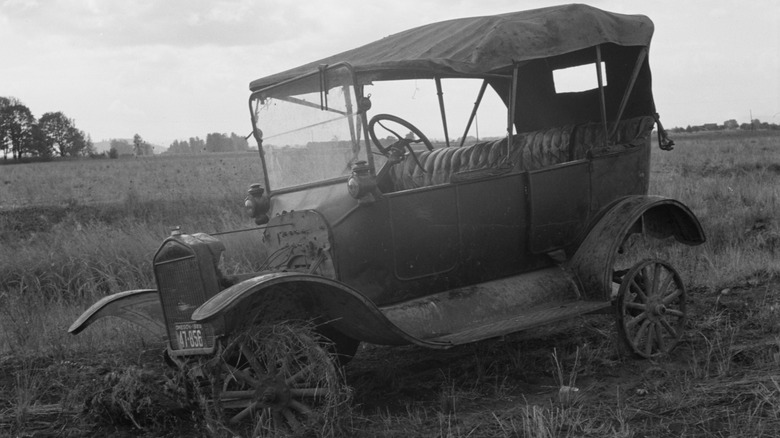
So far, we have covered cars that cater to almost every level of consumer. From the bare-bones Model A that evolved into the world's first hot rod to the V16-powered Cadillac that reveled in excess during a time of frugality, the variety of automobiles available during the Great Depression may skew our understanding of the era. The truth was that while a small percentage of lucky Americans could afford the luxury of an automobile, the vast majority could not. For many of the 4.6 million Americans who bought a car the year before the Depression hit, the cost of ownership made their cars obsolete once the recession kicked in.
However, this stroke of bad luck opened the door for Americans to demonstrate their ingenuity. The city and the automobile were clearly the future, but much of the country's infrastructure had not yet caught up. A massive portion of the land was still best traversed by humanity's closest companion, the horse. Car owners who couldn't afford their operation quickly realized this fact, and set to taking their newfangled machines into the past.
People stripped out engines, gearboxes, windshields, and anything unnecessary to convert their automobiles into horse-drawn wagons. Many destitute Americans blamed President Hoover for the financial mess the country found itself in, and jokingly referred to their literal horse-powered cars as Hoover Wagons, tying his name to these contraptions that so well represented the nation's sudden poverty.