

It's Goodbye To Toyota's GR Supra, But Should You Care?
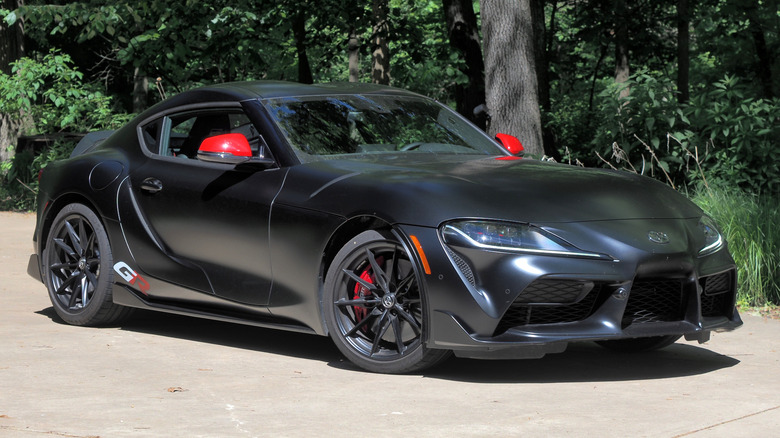
Seven years after its debut, the Toyota GR Supra is still controversial. Such is the risk you take, resurrecting a beloved badge for a new era of sports cars. Toyota's decision to partner with BMW made perfect sense, economically speaking, but even today — with this fifth-generation Supra about to bow out for good — loyalists still haven't forgiven the Japanese automaker for diluting the heritage.
Just what those loyalists would think of this — the 2026 GR Supra MkV Final Edition — is a good question, then. The flagship trim for the Supra's last model year is priced from a hefty $70,545 (including $1,195 destination); Toyota had already dropped the cheaper, lesser-powered 2.0-liter inline-four back in MY25, in favor of a 3.0-liter inline-six across the board.
It's arguably the most persuasive spec for the U.S. market, piping that engine's power through the six-speed manual gearbox Toyota initially insisted would never happen. That said, it falls short of the Supra A90 Final Edition — only 300 examples of which were shared between Japan and Europe — which nudged output up to 429 horsepower.
Subtlety isn't on the options sheet
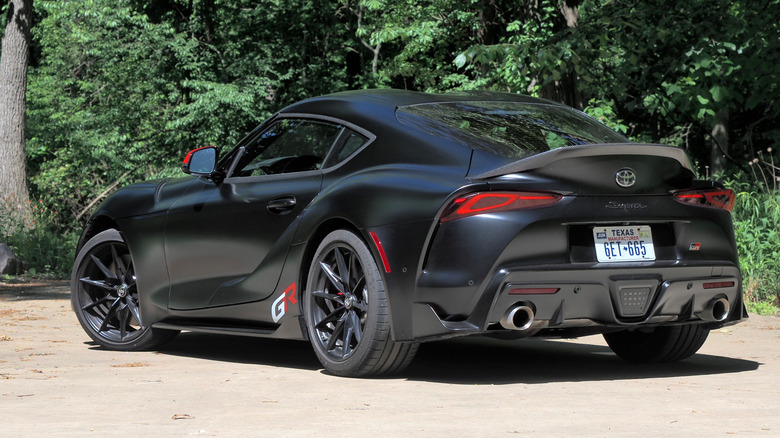
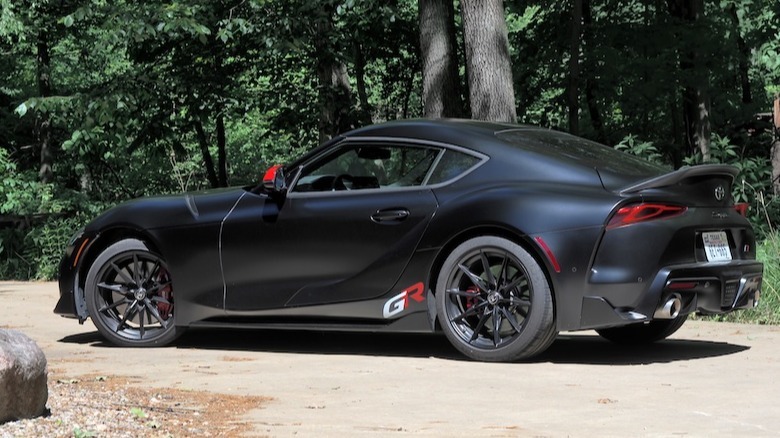
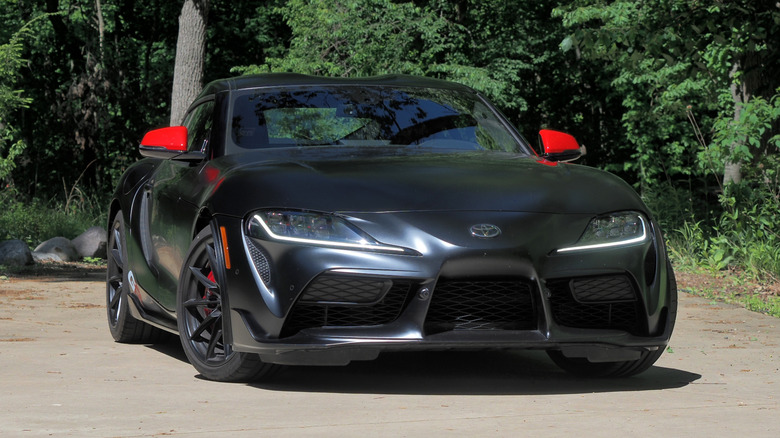
The GR Supra's styling was definitely divisive, back when Toyota previewed it with the Racing Concept of early 2018. The intervening years have given both camps time to bed in, the automaker generally taking a light hand to tweaks, nips, and tucks. It still looks very loud, very swoopy, and decidedly priapic.
 Chris Davies/SlashGear
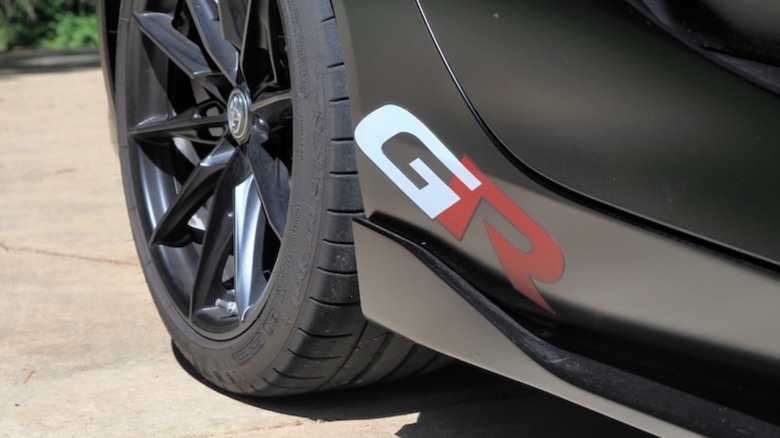
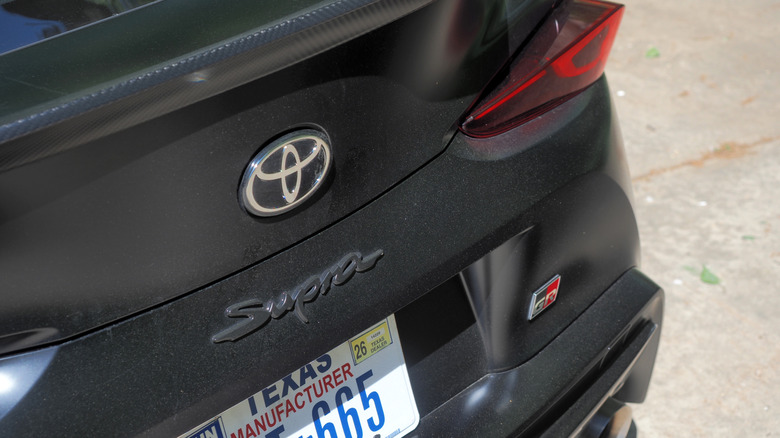
With its "Undercover" matte gray paint, matching 19-inch matte black wheels, and $2,160 GT4 Style Pack adding red mirror caps and big "GR" logos on the sides, this particular example was hardly surreptitious. Where its BMW Z4 cousin feels mature, the Supra has strong boy-racer vibes, even when stock. It's not the car to choose if you want to drive under the radar.
A shrinking segment
Love or hate the aesthetic, you have to agree that we're losing something valuable with the Supra's demise. With Porsche's forced retirement of the 718, your options for midrange rear-wheel drive sports cars — more potent than, say, a Miata or GR86; more attainable than a 911 — are narrowing, fast. That's a real shame, given the combination of a 382 horsepower 3.0-liter turbo inline-six and a six-speed manual transmission remains a thing of glory.
The BMW-sourced engine isn't the most potent out there, but there's a rightness to it which maximizes engagement on public roads. Would more power help on the track? Most likely, but there's a balance here you have to appreciate. The 368 lb-ft of torque is enough that, in daily driving, you can usually skip a downshift if you're feeling lazy; when the roads are more conducive, however, there are appreciable gains to dancing your feet between all three pedals to keep the Supra in the perfect spot of the power band.
 Chris Davies/SlashGear
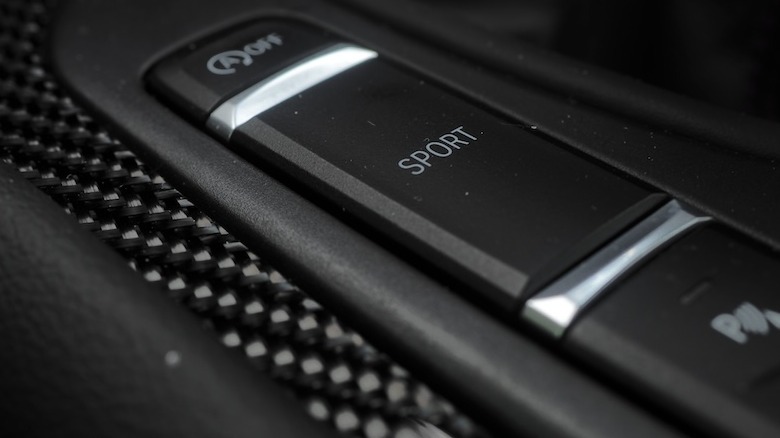
Happily, while BMW may have supplied the drivetrain, it didn't pass over the complicated drive mode system found in recent cars with the blue and white roundel. In fact, the Supra has a single "Sport" button in the center console, a stab of which tweaks things like throttle mapping and the adaptive variable sport suspension.
Genuinely fun (especially with the stick shift)
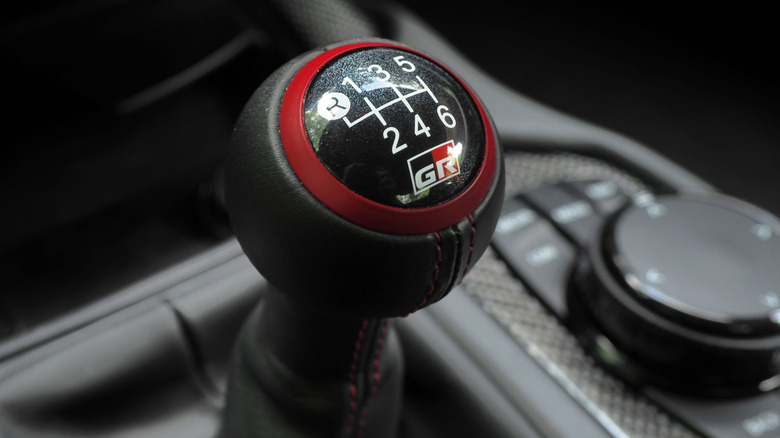
Doing so provides a very quick reminder as to why the manual Supra was such a big deal. The eight-speed automatic transmission Toyota first launched with was — despite the enthusiast vitriol — really not bad at all. But there's no argument that for driver involvement, the six-speed stick excels, even if it's not necessarily as quick in a straight line.
Nicely weighted pedals, a decent action from the shifter itself, and a good soundtrack as you chase the 6,500 rpm redline encourage engagement. Toyota says 0-60 mph arrives in as little as 3.9 seconds, but personally I found the most fun always occurred in the corners. Downshifting, catching peak torque in its broad 1,800-5,000 rpm band, and feeling the rear wheels with their standard active sport differential pivot you neatly around.
 Chris Davies/SlashGear
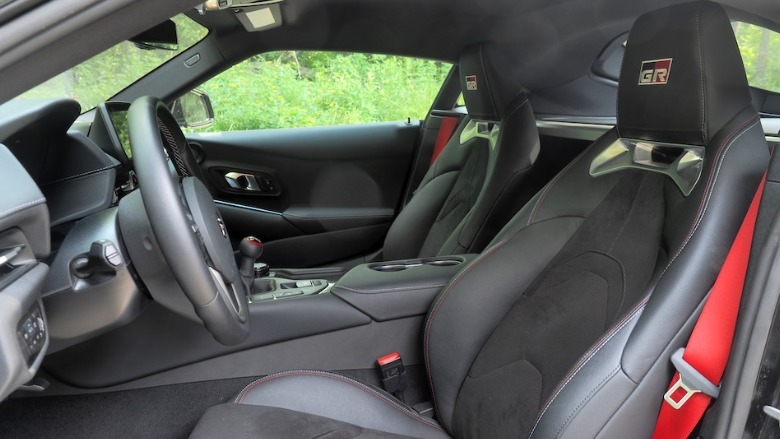
It's not the lightest sports car — at 3,400 pounds it's several hundred pounds heftier than the most sylphlike 716 Cayman — but it likes to be muscled around. Toyota puts the button for deactivating traction control teasingly near the Sport mode button, too, though the system is restrained in its contributions even when active.
So what mid-tier enthusiast coupes are actually left?
BMW's Z4 has also been discontinued, though the Bavarians still have arguably the most obvious alternative to the GR Supra. The 2027 BMW M240i starts at $53,600 (before destination) and musters 386 horsepower from its 3.0-liter TwinPower Turbo inline-six. A six-speed manual is a no-cost option, and it's rear-wheel drive like the Toyota.
Then there's the Nissan Z, another example of retro rebooted. Its value proposition — purely from a horsepower per dollar perspective — remains strong even if it no longer begins under $40k (it now kicks off at $44,480 before destination, with a Nismo version in the high-60s) for a 400 horsepower 3.0-liter twin-turbo V6. The Supra still feels more modern, though, and more nimble.
 Chris Davies/SlashGear
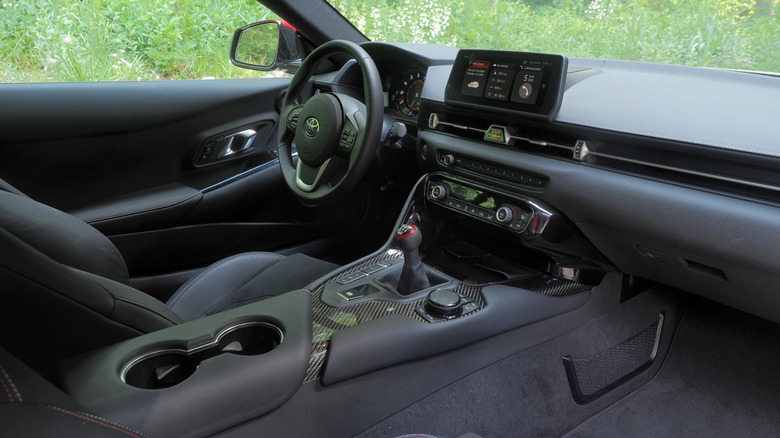
For all Toyota (and BMW) got right, the GR Supra has never been flawless. Its cabin is snug, the BMW-donated infotainment system feels dated, and at 5'8" I found visibility wasn't great, particularly with that ducktail rear spoiler. It's also possible that I'm simply too boring for the GR Supra; too self-conscious for its bawdy styling.
Love it or hate it, we're all losing out
While it might not be the coupe for me, though, I'm still sad to see it bow out. There's a widening gulf in the midrange of the enthusiast market, and though we're seeing feistier versions of sedans and even performance EVs increasingly occupy that space, it's just not the same.
Perhaps Supra fans feel similarly. Sales of the coupe were up more than 70% in the U.S. in the first half of 2026, compared to the same period last year, in what could be a reflection of the opportunity for a new purchase dwindling.
Were it my money, I'd probably skip this MkV Final Edition trim and go for the cheaper 3.0 (from $58,300 before destination) or 3.0 Premium (from $61,450 before destination) trims. I'd sacrifice the tweaked suspension, upgraded dampers, and chassis under-bracing, but I'm sure I could live without them. Even without the add-ons, I think the fifth-generation Supra is fun enough to have earned the nameplate. Here's hoping Toyota takes another risk like this again.