

11 Of The Most Reliable Electric Vehicles On The Market In 2026
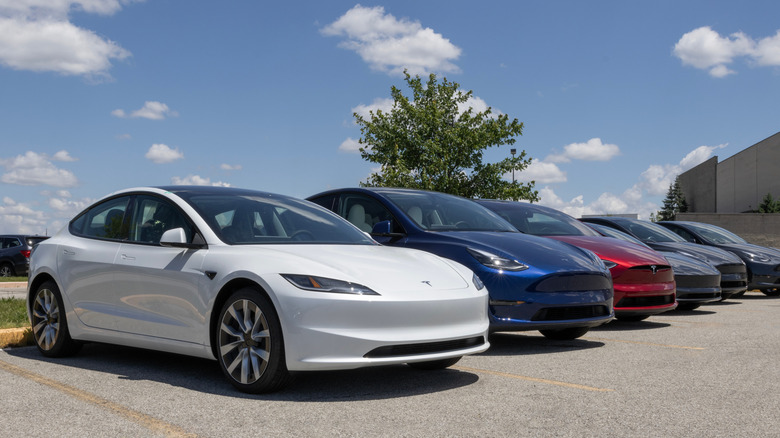
For the longest time, reliability used to be the stick skeptics used to beat electric vehicles. The argument was that the things were rolling laptops, full of software and accompanying bugs that would inevitably freeze, along with batteries that would degrade into uselessness. Buy one, and you were an expensive beta tester just waiting for a problem to crop up outside of warranty.
However, we've found that this argument has aged rather like milk. As of 2026, electric vehicles are far more reliable than they were in 2016 — and this is to be expected, as with any nascent technology, the tech improves with time. A big plus in the EV corner is that these vehicles have a fraction of the moving parts that an ICE vehicle has, so mechanical problems are also far fewer. No timing chains, no about-to-go-bad exhaust systems, no fuel injectors that get clogged. Fewer parts, fewer problems — in one example, the vehicle used to be on Consumer Reports' "least reliable" lists and is now on the other end of the spectrum — that's how quickly the industry has matured.
Now, we're not claiming that EVs don't have their problems — far from it. Many do still have frequent glitches and bugs that prevent a smooth user experience. The charging network and speeds, though improved vastly, are still not where they need to be. However, from the lens of a relatively new technology, the notion that electric vehicles are automatically unreliable is out of date.
Ford F-150 Lightning
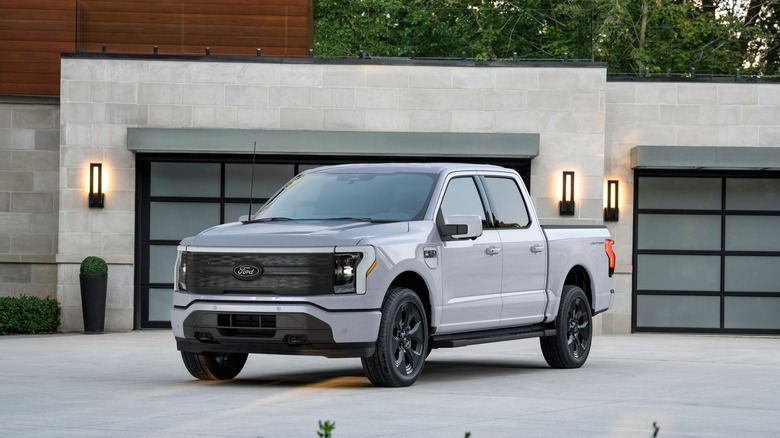
Just two years ago (at the time of writing), in 2024, the Ford F-150 Lightning electric truck earned itself a very undesirable spot on the Consumer Reports list of the most unreliable vehicles for that year. In 2024, the e-pickup got a miserably low Consumer Reports score of 28 points out of a total available 100 in the reliability metric.
In the 2025 overall Consumer Reports reliability survey, Ford vehicles got an overall score of 48, and the 2025 Ford F-150 Lightning got a reliability score of 45. That means that the blue oval EV pickup is about as reliable as the average Ford vehicle — which is a far cry from where it was two years ago. Readers should note that the 2026 Consumer Reports list of unreliable vehicles is out, and that the new F-150 Lightning is no longer on the list, which is a testament to the fact that stubborn-as-a-pack-mule Ford can still listen to customer and industry feedback when it wants to.
The reason we keep returning to the 2025 model is that Ford initially slowed production, and then eventually discontinued the F-150 Lightning after 2025. However, if you act fast, you might still be able to score a new F-150 Lightning from a dealer that still has one on the lot, or get one with low miles on the used market. In 2025, the F-150 Lightning had a maximum range of around 350 usable miles, and an MSRP of $65,190 (including destination).
Ford Mustang Mach-E
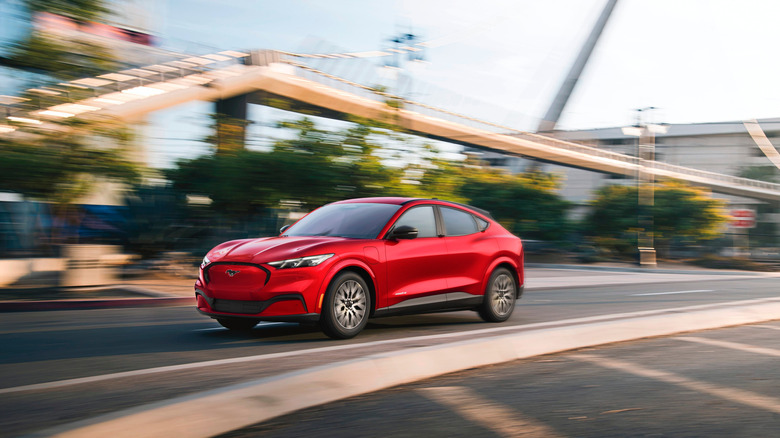
Though it carries the vaunted, historic Mustang nameplate, this thing is actually a crossover-ish SUV. Rightfully, this thing has got the purists sharpening pitchforks, but we can't fault Ford for actually having the guts to experiment in this market. Initially revealed to the public at the end of 2019, the Mach-E SUV went on sale two short years later, as a 2021 model. A very trusted U.S. brand, J.D. Power recently released its EV ownership experience report for 2026. Historically, the Mustang Mach-E has done rather well in this comprehensive study, ranking in the top three (but never first) in 2022, 2023, and 2024. After a massive fall in rankings in 2025 (but still top ten), the Mach-E finally earned the coveted top spot for 2026.
Furthermore, the Mach-E also has insane levels of customer satisfaction, with nine out of 10 owners saying they would endorse it. For 2026, the Mustang Mach-E gets a reliability score of 74 out of a total available 100 points from the Auto Reliability Index, and 2021 models got a J.D. Power reliability score of 65, also out of a total available 100 points. The 2026 model comes with a 72 kWh battery and one motor as standard, which gives the vehicle about 264 horsepower and a range of about 250 miles. Pricing for the 2026 Mach-E begins at $37,795, on top of which a freight charge of $2,045 will be tacked on.
Volvo EX30
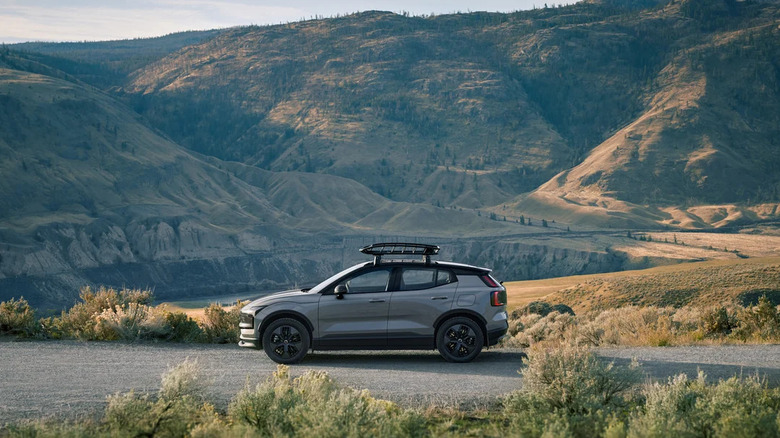
The EX30 is Volvo's spiritual successor to the XC40 Recharge, which itself was the all-electric version of the brand's popular small SUV, the XC40. Introduced in 2023, the EX30 had some teething problems, but it appears these have been sorted out. For 2026, the EX30 gets a respectable score of 71 out of 100 in its J.D. Power review, and an above-average 63 out of 100 in the reliability metric. The crossover SUV also got 86 out of 100 points under the driving experience metric, and 67 out of 100 in the resale value metric. For 2026, a new Volvo EX30 would sell for about $40,345 as base MSRP — including a $1,395 destination fee.
It is quite pricey for a compact-sized SUV, though proponents of the Swedish brand would argue that the excellent interiors and Volvo's legendary safety reputation are worth the price. 2026 EX30s come with a 200 kWh battery pack as standard, along with one e-motor, which gives the car a range of about 261 miles. We should warn you that there is, however, a massive recall that affects a huge number of modern EX30s, so make sure that if you're buying one of these, the fix has been done. Specifically, the recall was about a fire hazard from the battery igniting in about 40,000 vehicles or so.
Porsche Taycan
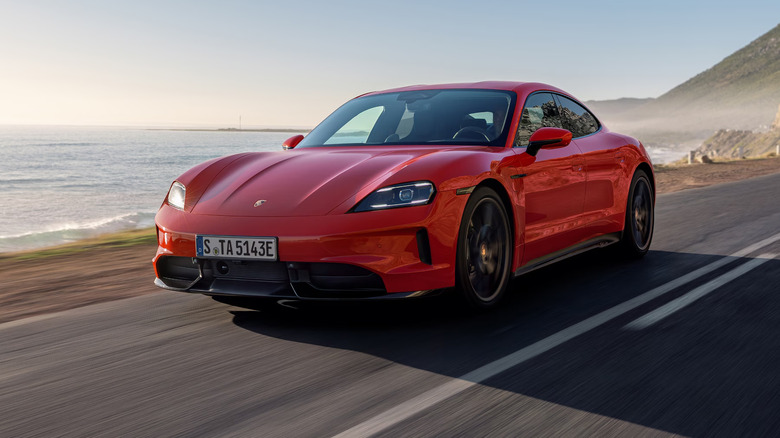
The Porsche Taycan is an all-electric, four-door car from Porsche that was very clearly intended to target buyers who wanted a Panamera, but electric. Now, no one should buy a Porsche vehicle expecting average or slightly above-average maintenance costs. It is a luxury vehicle with expensive parts and specialist labor, so the upkeep on this vehicle (and this entire class of vehicles) is meant for people for whom cost efficiency is not a top priority. And, famously, German vehicles tend to require exacting servicing standards to remain reliable — so when the Taycan gets out of warranty and its service contract, things can get extremely expensive extremely quickly.
However, while the car is being looked after by the dealer, and all preventative maintenance tasks are done on or before time, the Taycan is surprisingly reliable. For its part, J.D. Power gives the 2026 Taycan a driving experience score of 86, a resale score of 76, and a reliability score of 75. Overall, the 2026 Taycan gets a J.D. Power score of 81, with all figures out of a maximum 100 available points.
Consumer Reports also says that the 2026 Taycan is a "serious challenger" when pitted against the ever-popular Tesla Model S. Readers who are familiar with the Taycan will be sad to learn that the wagon body style on the Taycan, called the Taycan Cross Turismo, is being phased out, but only for America, since the model will continue to be sold overseas.
Hyundai IONIQ 6
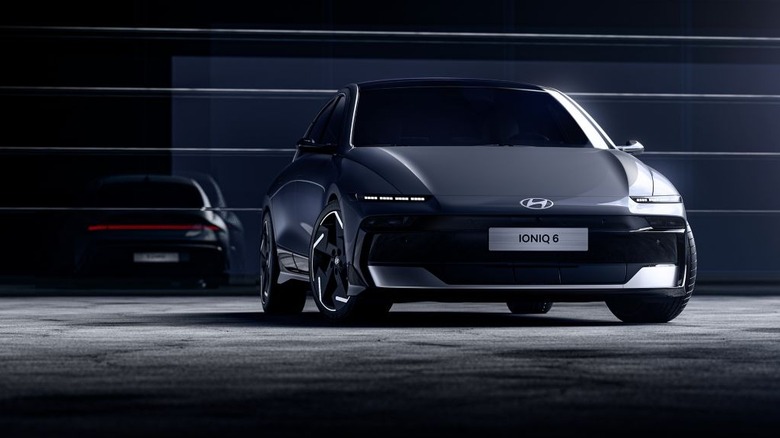
The Hyundai Ioniq 6 — which also has a sporty "N" model available — is a four-door sedan from the Korean automaker that first went on sale in 2022. The 2025 model got a J.D. Power reliability score of 72 out of 100, and 79 out of 100 under the driving experience header. The resale score for the 2025 Ioniq 6 stood at 70 out of 100, which gave the vehicle an overall score of 73 out of 100 total available points for 2025. We do not have reliability scores for the 2026 Ioniq 6 — since the standard model has been axed for the 2026 model year, though the Ioniq N continues to be sold.
However, you might still be able to get a 2025 model as new or near-new from Hyundai dealers if you're willing to shop around. Used models could be going for a steal, especially if you decide to trade in your current vehicle in some cases. For those who don't know about the Ioniq 6, it is an all-electric model with a 53 kWh battery system in 2026 that feeds one electric motor, making about 149 hp of power.
These are standard figures for the 2026 model, which give the vehicle a range of 240 miles — though real-world usage, as with all EVs, will rarely hit that optimal-condition number. Still, for $37,850 as base MSRP ($1,745 as additional charges), it's not too shabby a deal for a decently reliable and extremely good-looking daily driver vehicle.
BMW iX
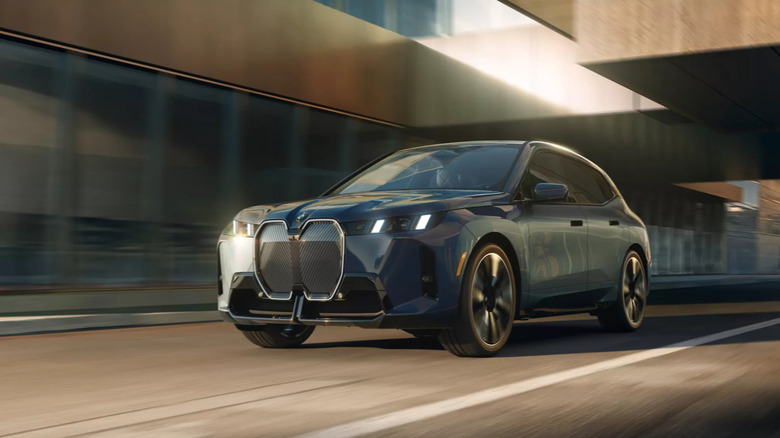
It's easy to get tangled up when reading about a BMW model; for the unaware, the BMW iX is a midsize luxury SUV intended as the electric version of the BMW X5. In 2026, the iX comes with dual e-motors powered by a 100 kWh battery system, and has space to seat five passengers in two rows. If you're wondering, the car has about 87 MPGe (miles per gallon equivalent), which isn't particularly striking, but then again, it's a luxury SUV, and efficiency is rarely a concern for buyers. What might indeed be a concern is the range, which for standard iX models is a claimed 279 miles in total.
Remember that manufacturer-claimed EV ranges are under optimal conditions, which are hard to replicate in real-world use. Even for a luxury SUV, that range might be the limiting factor for buyers. J.D. Power gives the 2026 BMW iX a score of 77 out of 100 overall, and 78 out of 100 specifically for reliability, which is really good. For those looking to score a BMW iX, you should act fast, since BMW has said it will not sell the iX in the U.S. following the 2026 model year. Once again, buyers in other markets will continue to have access to the iX even beyond 2026, since the discontinuation is only here in America. The MSRP for a 2026 iX is $75,150, with $1,175 as destination.
Kia EV9
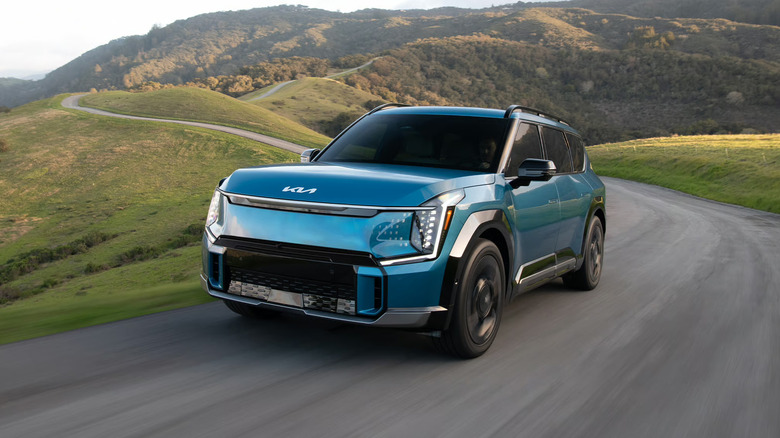
The Kia EV9 is the only vehicle on this list that can seat more than five people, with room for up to seven passengers across three rows of seating. With the optional captain's chairs, total seating capacity drops to six. Power for the current 2026 model year comes from a 76.1 kWh battery that feeds a single e-motor, giving the EV9 an EPA-estimated range of 305 miles in certain high-end configurations.
The entry-level trim — which is called the "Light RWD" — drops the range to a barely usable 230 miles. J.D. Power gives the 2026 Kia EV9 an overall score of 72 out of 100, which breaks down into 67 out of 100 for reliability, 82 out of 100 for driving experience, and 77 out of 100 for resale. Another neat feature of the Kia EV9 is the fact that it is compatible with any Tesla Supercharger in the U.S., which greatly improves the charging outlook on road trips with the family, for example.
What's not great about the EV9 is the price, since it starts at a base MSRP of $54,900 for 2026, which is not inclusive of a pricey $1,645 destination fee that is tacked on top of the MSRP. If you're open to looking at used models, the 2024 EV9 (which also got a J.D. Power reliability score of 70 on 100) is selling for about $30,000 on the used market as of August 2026.
BMW i4
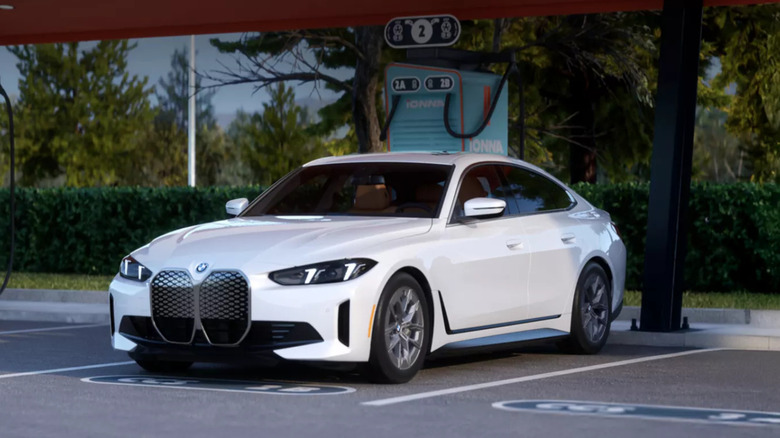
The BMW i4 is an all-electric, medium-sized executive sedan with sporty fastback styling and borrows heavily from the styling of its corporate cousin, the BMW M4. For 2026, the model has an 83.9-kWh battery and powers dual e-motors, giving the car a total range of 333 miles. However, this car is not what we'd call accessible to the average buyer, since it is somewhat hard to find at a dealer and is also prohibitively expensive to buy. 2026 models come with a starting sticker price of $57,900, plus a freight fee of $1,175. Slightly older models, like the ones from 2024, are selling for much cheaper — $40,000 at the time of writing — but you'd lose two years of warranty when buying those.
However, for those who want to scoop one up, you can console yourself knowing that you're in one of the best-looking, best-performing cars on sale. If you're wondering, J.D. Power has not rated the 2026, 2025, or 2024 models of the BMW i4, though 2023 models got 74 on 100 in reliability, and 78 on 100 overall. Furthermore, Consumer Reports says that the 2026 BMW iX will have about-average reliability, which is a pretty good outlook (even though it's based on predictive data), considering that it's an EV.
Lexus RZ
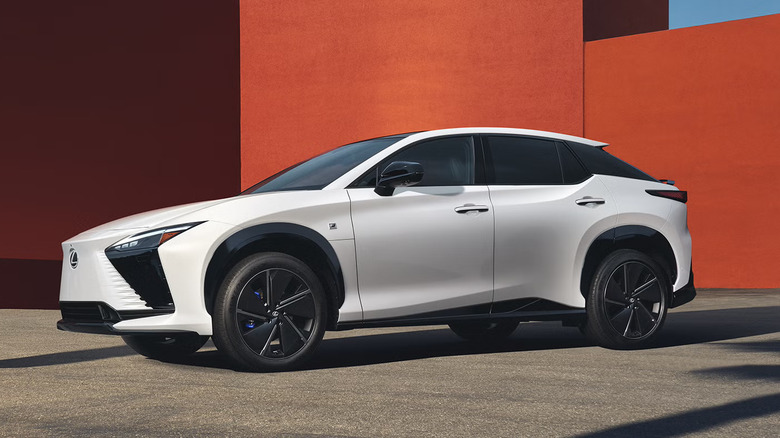
Surprisingly, this list has not been dominated by Japanese vehicles (which usually top every single reliability listicle out there), since Japan has tended to lean toward hybrids rather than pure EVs. This then makes the Lexus RZ the only Japanese EV to make our list, yet it smashes all metrics by which it is measured. Consumer Reports says that the 2026 Lexus RZ will be "more reliable" than your average new vehicle, which is pretty high praise from the company. The interior of the Lexus RZ is something that we absolutely have to mention, since it looks like the inside of a futuristic spaceship.
Many of the interior controls are still via buttons, making the Lexus RZ one of the rare new car models that still use buttons and knobs aplenty. This use of buttons is (arguably) even rarer on a current-generation EV, since the manufacturers want to present the car as "futuristic" — so screens are the norm. The 2026 Lexus RZ comes with a 75 kWh battery pack and has one e-motor on the base model, with a claimed range of about 301 miles.
At the time of writing, the 2026 RZ only had one outstanding recall from the NHTSA, related to a potential ECU failure. It's also worth mentioning that J.D. Power has never rated the Lexus RZ since its release in 2023, which is why we can't give you any scores for the same.
Tesla Model 3
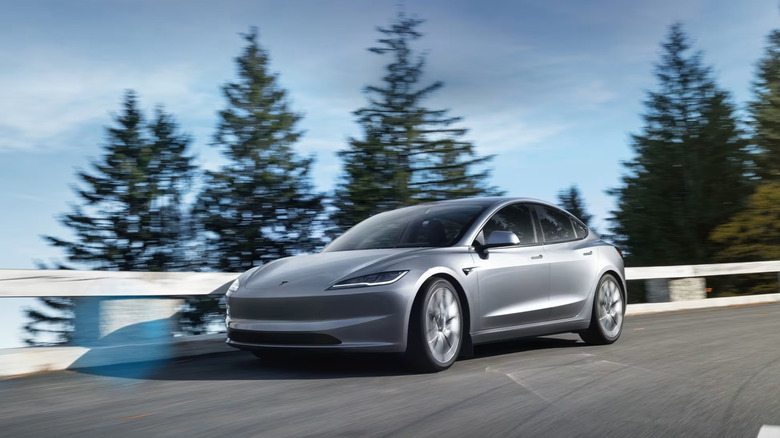
One of the first electric vehicles — arguably the first, in fact — that really became popular was the Tesla Model 3. It is one of the oldest nameplates on our list, having been on sale since 2017 — which, for those counting, is almost a decade. Unsurprisingly, many kinks in the design and software have been worked out by now, which means that the Model 3 for 2026 is one of the most reliable electric vehicles on the market.
The Model 3 nabbed the top spot in the J.D. Power EV ownership study that we quoted at the beginning of this article for 2026, which is quite impressive. Tesla also has one of the best charging infrastructure networks in the U.S. for EVs, which is a big plus in the Model 3's favor. J.D. Power gives the Tesla Model 3 a resale value of 77 on 100, a driving experience value of 92 on 100, and a reliability value of 92 on 100.
When combined, these figures give the Model 3 an overall score of 82 on 100 from J.D. Power. Pricing for the 2026 Model 3 begins with a base window sticker of $36,990, and a destination charge of $1,390 added to the MSRP. This generation comes with a 69.5 kWh battery and a single electric motor, giving the five-seater a range of about 321 miles.
Tesla Model Y
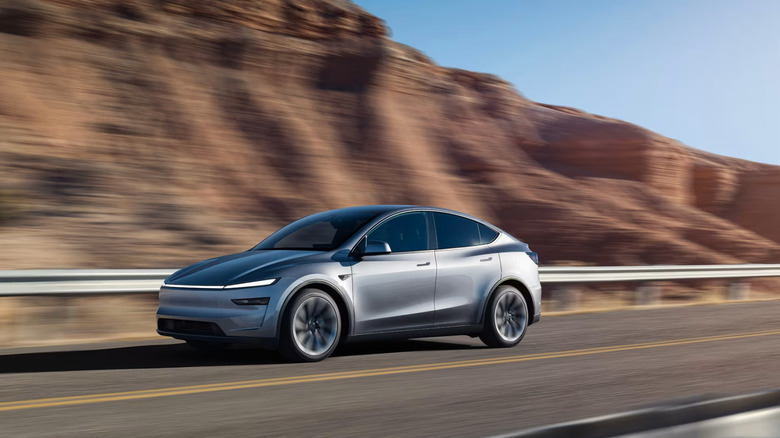
The Tesla Model Y is the company's crossover SUV, and if you think it looks similar to the Model 3 that we just looked at, that's because it is. The Model Y is actually based on the Tesla Model 3, and the two variants share many parts. For 2026, the Model Y comes with a similarly sized 60 kWh battery pack and one e-motor, making about 295 hp. All things put together, the Model Y is supposed to get a total driving range of about 321 miles, which is the same as that of the Model 3 from above.
The price is, naturally, higher for the Model Y, with the 2026 model selling for $61,990 as base MSRP, plus $1,390 for destination charge. J.D. Power gave the 2026 Model Y an overall score of 81, a driving experience score of 87, a resale score of 80, and a reliability score of 78 — all values out of 100. Consumer Reports says that the Tesla Model Y would be "much more reliable" compared to the average new vehicle on sale.
It's worth mentioning that many of the Consumer Reports scores that we list are based on predictive modeling of past units — which we feel is fine, since there usually aren't many mechanical differences between intra-generational models that we've listed. Furthermore, many models that we've listed are first-gen ones that will only get more reliable with time.