

5 Toyota Engines You Should Steer Clear Of
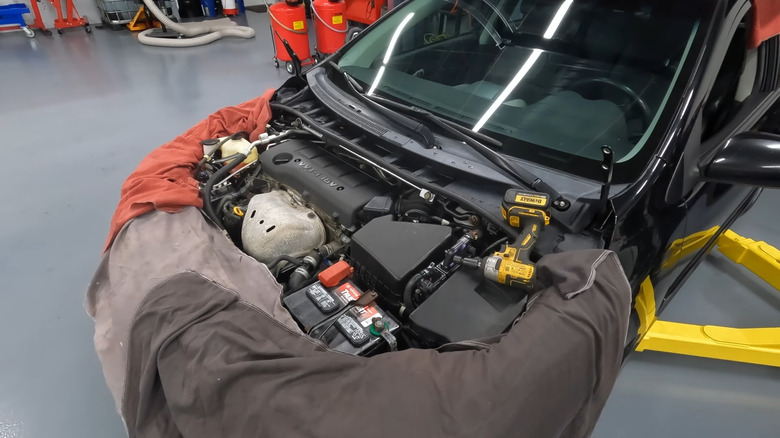
If you want emotion, something that will make your skin tingle and rise, you buy a Ferrari. If you want to shoot down a straight blacktop with your heart racing to match the roar of a V8, you buy a Dodge. If you want to dismantle racetracks with the cold metallic competence of a neurosurgeon, you buy a Porsche. And, if you want a car that you would trust with everything that will doggedly stay by your side, you buy a Toyota. This brand is said to have an almost comical ability to stay alive, and while that ability is granted by the holistic characteristics of its cars, much of it comes down to impeccable engine quality.
Most manufacturers have earned their reputation, but there are always exceptions. The new Ferrari Luce is about as exciting as a computer mouse that promises fewer hand cramps, the Dodge Dart looks like a Camry wearing a muscle suit, and the heavy electric Porsche SUVs are about as precise as a club compared to their 911 contemporaries. Nobody can do it perfectly every time, and the same is true for Toyota. Its iron-clad, near invincible aura is well-deserved, but these five Toyota engines are better left to the junkyards.
Toyota 2AZ-FE
Toyota is no young buck to the automotive world, and part of the philosophy the brand developed in time can be found in a practice called Kaizen. This refers to dedication to meticulous and continuous improvement, and it is best exemplified by the brand's long engine lifespans, where changes are made here and there to improve the product rather than developing an entirely new engine. This evolutionary life cycle usually ends with something great, but sometimes the early ancestors are anything but.
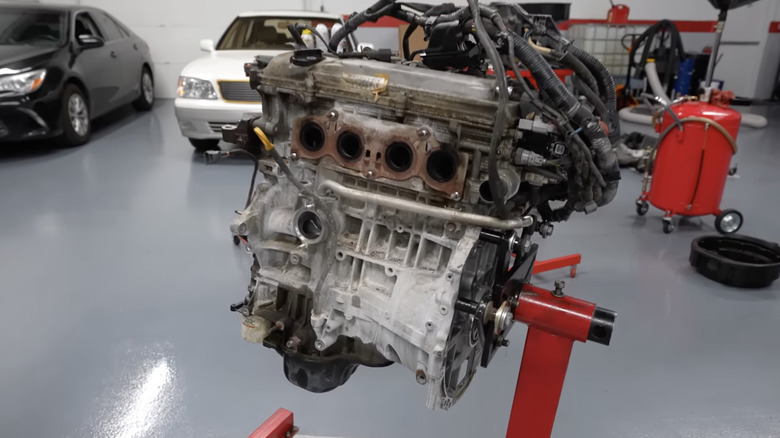
One example is the 2AZ-FE. This inline-four cylinder was born in 2000, and would go on to power a huge array of Toyota products, including some models from its now-defunct Scion brand. The 2AZ was a 160 hp workhorse meant to be a staple powerplant for anything smaller than a Sequoia under the Toyota umbrella. It went to markets all over the globe, but the examples in the American market suffered a design issue. The piston rings were poorly fitted, which led to poor sealing of the combustion chambers. The cylinder bolt heads were poorly sealed as well, with both problems leading to ravenous oil consumption, coolant leaks, and overheating. On top of this, the aluminum cylinder block was impossible to rebuild, meaning any damage required a full replacement. Toyota fixed these issues in 2007, but early 2AZ's are certainly engines to avoid.
Toyota 1ZZ-FE
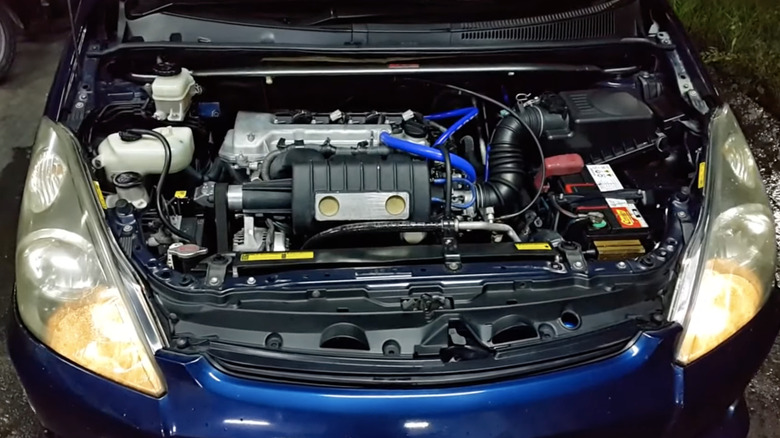
At the same time the brand was dealing with the issues of the 2AZ, another engine was causing headaches at board meetings and engineering workshops. Introduced in 1998, the 1ZZ-FE was another inline-four cylinder, although this one was more suited for Toyota's smallest vehicles. The 1ZZ weighed just 225 lbs and produced 120 to 140 hp, making it a peppy little engine for the MR2 and the Celica. Its sporty character was recognized by Lotus as well, who eventually co-opted it to power the Elise. Similar to the 2AZ, the 1ZZ featured a die-cast aluminum cylinder block, which helped it achieve its low weight. Examples after 2000 also featured Toyota's Variable Valve Timing with intelligence system, which further jacked up its sporty abilities.
However, there were issues with oil consumption. Clearly a weak point for the brand at this era, the piston rings were poorly fitted and designed, and could lead to leakage, and while the cylinder block was repairable, the cast-iron cylinder liners were not, and any damage required a full replacement. The poor fit of the piston rings allowed oil to leak into the cylinder chambers, causing rapid oil depletion, and increasing the risk of damage inside the cylinders. The engine's relatively long stroke also caused vibrations so intense that they often damaged the engine mounts. Buying a Lotus, you may come prepared for these engine faults, but buying a Toyota, they are simply out of character.
V35A-FTS
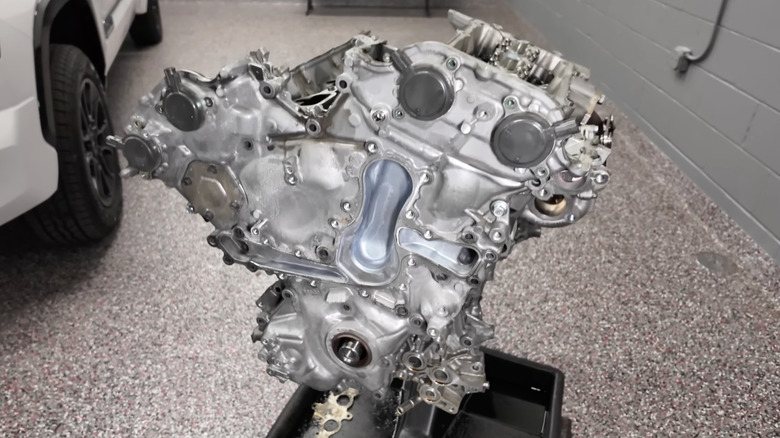
One of the most recent examples of a Toyota lemon, the V35A-FTS came out in 2017, and before we dig into it too hard, let us give credit where credit is due. The V35A was new territory for Toyota, being its first engine to feature both the V-shape cylinder layout and a turbocharger (or two, in this case). Unfortunately for Toyota, its unfamiliarity with this architecture is easy to see, as the V35A hosted issues so irreparable that many were recalled.
Powering some of the largest models in the Toyota family like the Sequoia and the Lexus LX600, the V35A was a sophisticated powerplant that could squeeze out up to 416 horsepower in its strongest versions. It used two intake and two exhaust valves per cylinder, and was built on an aluminum open-deck engine block which helped cool the monstrous heat of this workhorse. The issues, though, arose from its genesis. Very quickly, it became apparent that the crankshaft wore down rapidly due to poor oil circulation. According to Toyota, these clots might have been caused by metallic particles and debris that collected during manufacturing and never escaped. What could have been a new star for the brand ended up suffering a miserable debut after many V35A-powered models were recalled.
Toyota 7M-GTE
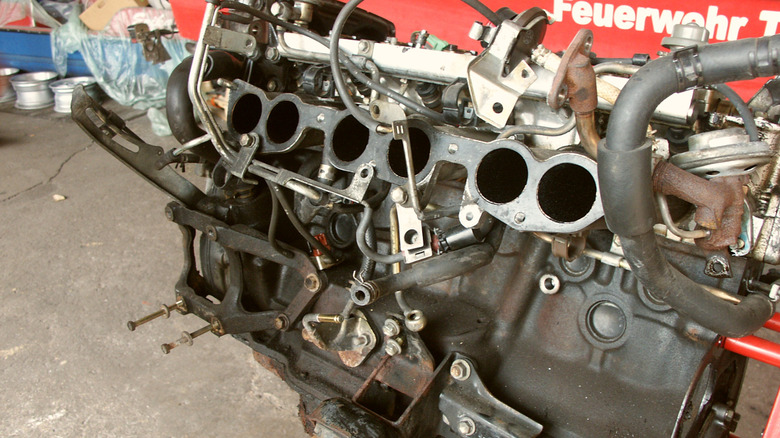
Perhaps one of the most well-known and loved nameplates to ever come from Toyota's hands is the Supra. The Toyota 2JZ and the 1JZ have become some of the most sought-after engines in the brand's entire catalogue, but their predecessor is known for something less flattering. Rewind to the late 1980s and early 1990s, and the third generation of the Supra was taking to the streets with the Toyota 7M-GTE. Like its famous offspring, the 7M was an inline-six engine fitted with a turbocharger. With the turbocharger running 5 psi, the use of an electronically-controlled fuel injection system, a cast-iron block, and three liters of displacement, the 7M put out a solid 232 hp.
Toyota can't be fully blamed for the poor quality the 7M suffered from, but the engine suffered all the same. In the final stages of the engine's development before it hit the roads, new regulations were placed on the materials that could be used in the production of automotive parts in Japan. Among these materials was asbestos, which, unfortunately for Toyota, had been a key component in the 7M's head gaskets. This forced the company to hastily redesign the parts affected, and the lack of development time showed in the final product. Head gasket failure was common, and their degradation often caused engine coolant and oil to mix, which further exacerbated damage to the internals. The Supra is a legendary car, but one can enjoy the lineage without the 7M.
Toyota 3VZ-FE
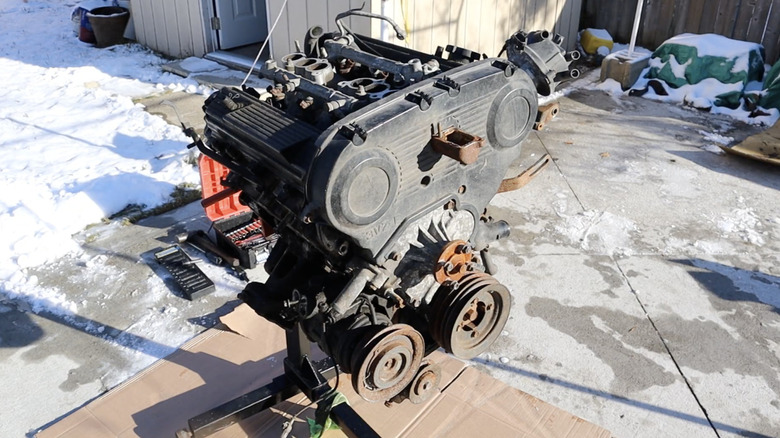
Many of Toyota's most successful engines come in the form of V8s, and the little sibling layout of the V6 is seen as belonging to a lower tier of reliability. Where some Toyota creations have been observed to cross the million-mile mark, the 3VZ-FE is generally considered as having reached the end of the line by 180,000 miles. Originally built for the 1987 4Runner, the 3VZ was a 3-liter V6 that was produced from 1987 to 1997. Made with a cast-iron block and aluminum cylinder heads, the engine seems like a fine choice for a hardy offroader, at least on paper.
In practice, however, the 3VZ suffered. The head gaskets were poorly designed. Combined with a similarly flawed cooling fan, this led to frequent overheating issues. And whether it was an issue with materials or construction, the connecting rod bearings and cylinder heads wore down quickly, too. These faulty components would often wear to the point of cracking, which caused engine knock and loss of power. Toyota offroaders are among the best in the world for their dependability, but the 3VZ is not one of them.