

8 Of The Most Reliable Four-Cylinder Engines Ever Made
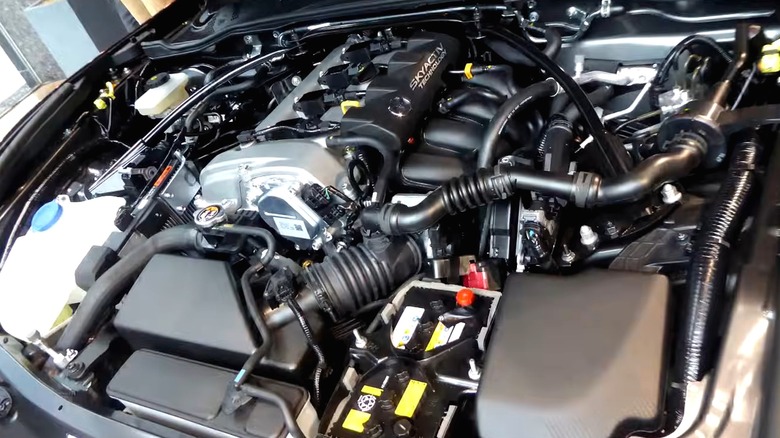
Reliability often gets thrown around as a vague term in the automotive world, even though it shouldn't be because a select group of four-cylinder engines earned that reputation through decades of hard proof and not just "word of mouth" alone. These are the four-cylinders that mechanics recommend without a second thought, the ones still running strong at six-figure mileage, and the ones that keep going even when their owners ignore them. However, what ties these engines together is consistency: fewer weak points, forgiving build tolerances, and manufacturers who clearly prioritized longevity over chasing performance.
What makes this list so interesting is how differently each engine got here. Some earned their stripes through sheer mechanical simplicity, tough enough to shrug off years of neglect. Others leaned on smart engineering that includes a solid valvetrain geometry paired with aluminum blocks and cast-iron liners that balances weight against durability. A few were simply products of their era, proving an that engine didn't need to be complicated to be dependable, especially with strong aftermarket support behind it. On the modern end, several newer engines have shown that turbocharging, direct injection, and stricter emissions rules don't have to come at the expense of reliability.
With that in mind, here's a look at some of the most reliable four-cylinder engines ever built and what it actually takes to keep one running long after most engines would have given up.
Toyota 22R/22RE
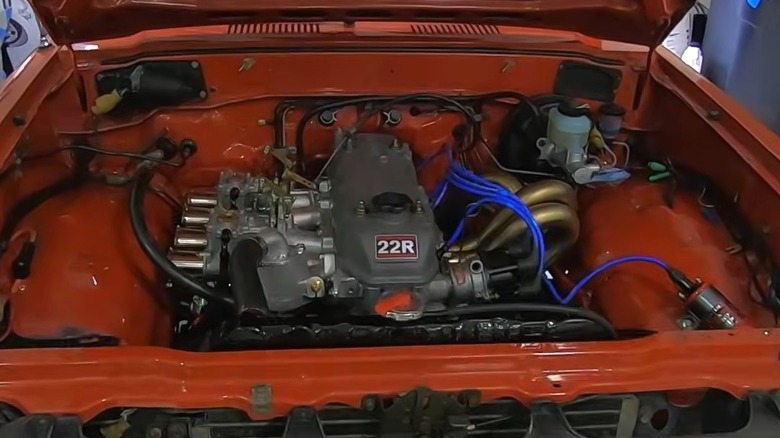
Long before Toyota's reliability reputation became common knowledge, the R-series four-cylinders were already earning it one truck at a time, and the 22R and 22RE sit at the center of that story. Both are 2.4-liter four-cylinder fuel-injected engines, though the 22R came out first, debuting in 1981 to replace the 20R carbureted setup that was known for rarely breaking down during its six-year run.
From there, both engines found their way into the Hilux, the 4Runner from 1984 to 1995, and a rotating cast of other pickups throughout a production run that lasted until 1995. On paper, the 22RE's 116 horsepower doesn't look like much, because it was basically designed for distance, not power, and owners who have stayed on top of their maintenance routinely see their 22RE roll past 370,000 miles, putting it among the very few reliable gasoline engines in history.
For anyone craving more than the 22RE's 140 lb-ft in their truck, its turbocharged sibling, the 22R-TE, bumps things up to a solid 173 lb-ft and pushes power up to 135 horsepower. Apart from that, a strong parts network keeps both engines thoroughly supported on the rebuild side as well, which is a big part of why they remain so popular among restorers who want the older engine with modern fueling.
Mazda BP
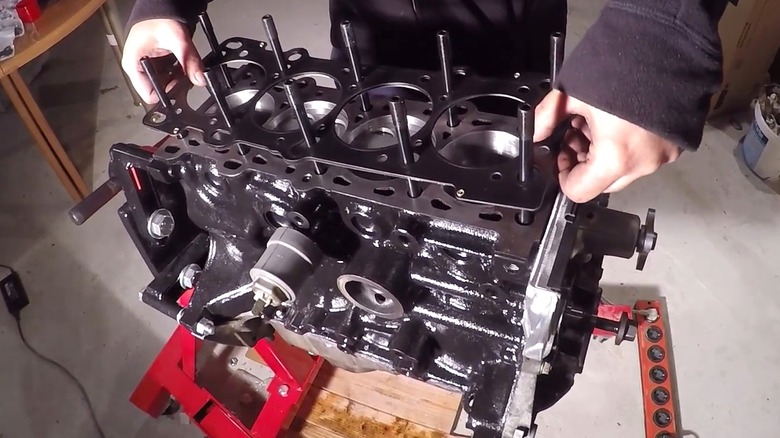
The BP is one of the most reliable Mazda engines ever made, and part of a broader engine lineage that ran from the late 1980s all the way through the mid-2000s, powering a long list of models like the MX-5 NA and NB, the Familia BH and BG, the 323 BG, the Protege BG and BH, the Lantis CB, and many others. Under the hood, its cast-iron block architecture displaces 1,839cc and sits an alloy cylinder head with 16 valves, dual overhead cams, variable induction through Mazda's VICS system, hydraulic lifters, and a port fuel injection system that takes care of fueling duties throughout the rev range. Its power comes in at a maximum of 140 horsepower with a torque topping at 118 lb-ft of torque and combined fuel economy that lands at 27.7 mpg without the help of any turbocharger in the equation.
What earns the BP its place on any reliability list is how it holds together over the long haul. With consistent maintenance, these engines routinely push past 200,000 miles without major drama, and one of their most practical traits is that a snapped drive belt doesn't automatically translate to disaster for the rest of the engine. Besides, the belt itself is rated to around 62,000 miles, and treating that seriously is the most important thing an owner can do. Oil use does tend to creep up as the miles stack on, so staying on top of levels regularly between service intervals is part of running one of these long-term.
Mazda Skyactiv-G 2.0 / 2.5
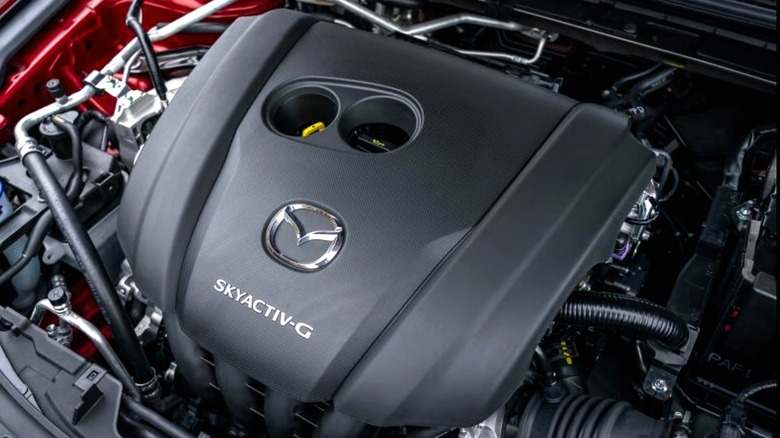
When Mazda first launched the 2.0-liter Skyactiv-G in 2012, the target was a naturally all-gasoline engine that could produce real fuel savings, but what owners have come to appreciate, though, is how Mazda managed this without sacrificing driving experience in the process. Three design decisions in particular set the foundation for this engine: a compression ratio pushed closer to what you'd find in a diesel, an exhaust manifold purpose-built to clear leftover heat efficiently, and an intake timing strategy that allows surplus air to escape before compression kicks in. Together, these tweaks let Mazda squeeze out efficiency gains without needing a turbocharger to compensate for it.
Early 2.0-liter versions came with an aluminum block, four openings per cylinder, and dual variable valve timing on both the exhaust and inlet sides, though direct injection wasn't included at first; that changed as the platform matured. Since then, it has spread into the Mazda 3, CX-3, and even the recent 2025 MX-5, where it produces 181 horsepower through a six-speed manual gearbox while returning 29 mpg combined. The 2.5-liter, on the other hand, entered the picture in the 2014 Mazda 6 trim at 184 horsepower; in the latest Mazda CX-30's GT trim, however, that's about 186 horsepower on premium fuel, and when paired with Mazda's optional dynamic turbo setup, that can push output to roughly 250 horsepower. To round it all out, the 2.5-liter is also standard across models like the Mazda 3, CX-5, and CX-50, making it one of the most reliable engines Mazda has ever produced.
BMW B48
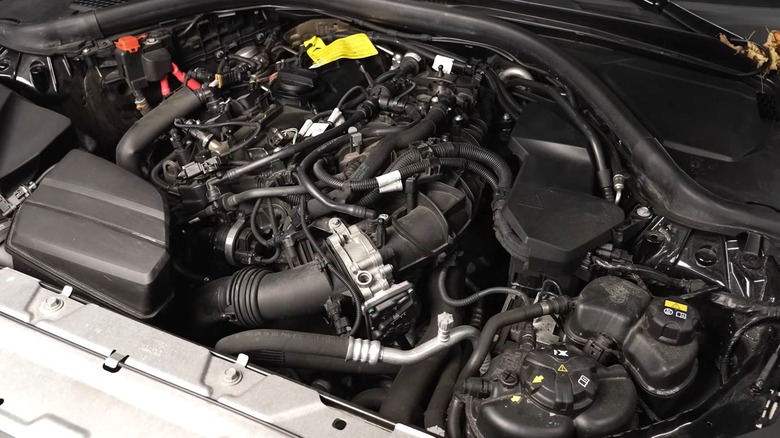
When BMW retired the previous generation (N26 and N20), the B48 stepped in as the successor in 2014, and it has found its way under the hoods of an impressive lineup: from the F60 Countryman and F56 Mini John Cooper Works to the M135i xDrive, X1 M35i xDrive, the one series through four series, and even Toyota's Supra 2.0. Built on BMW's B-series platform, the turbocharged four-cylinder is wrapped around a block that houses a crankshaft machined from forged steel, a double-scroll turbocharger, direct injection, and BMW's variable valve lift and variable camshaft phasing across the board. This engineering recipe is exactly what let the BMW 320i hit as much as 37 mpg combined, all while leaving enough headroom for tuners to extract an extra 150 horsepower thanks to easy access to spare parts like intakes, intercoolers, higher-capacity turbos, and ECU remapping.
That said, the engine isn't without its quirks, and keeping one running reliably over the long haul comes down to a few non-negotiables, like sticking to high-grade fuel, using top-quality lubricant, and staying on top of filter swaps. That matters because fueling happens in the inlet tracts through direct injection, which means carbon tends to accumulate in there over time, and if that's left past a 60,000-mile maximum clearing cycle, it could snowball into a much bigger problem down the road. When it comes to the turbo, overheating is one of the fastest ways to shorten its life, so make sure you keep a close eye on its cooling setup.
Ford Duratec 2.0/2.5
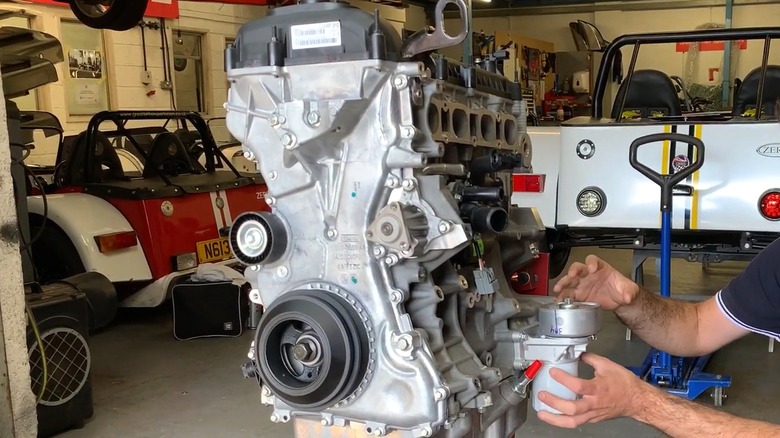
The 2.0 and 2.5 both carry the Duratec name, and while they share a lineage, they arrived through different development paths and serve different purposes within Ford's lineup. The Duratec 2.0, for instance, is a four-cylinder built entirely from aluminum at atmospheric pressure alone instead of being turbocharged at the Ford engine facility in Dearborn, and then not long after came a variant with direct fuel injection and a steel-sided cylinder head, which is like a step up from the original 2.0. At 160 horsepower and 146 lb-ft of torque (with direct fuel injection), it is one of those tiny engines with unexpectedly impressive horsepower, especially when it's paired with a double-clutch six-speed automatic gearbox in the Ford Focus trims (with Special Fuel Efficiency), where it returns as much as 40 mpg. Meanwhile, on other Focus trims cruising the highway without the SFE package, you can expect nothing less than 28 mpg at a redline of 7,000 rpm through a five-speed manual gearbox.
The 2.5-liter engine (Mazda L), on the other hand, belongs to both the MZR and Ford's Duratec engine lineages after taking over from the aging Mazda F engine in 2008, before it even landed on American soil. The engine was assembled with an aluminum block and cylinder head, uses a double overhead cam layout driven by a timing chain, and runs naturally aspirated in most application, powering models like the Ford Transit Connect, Ford Escape, Lincoln MKZ, Ford Fusion, and Mercury Milan through their front wheels.
Ford 2.3L Lima
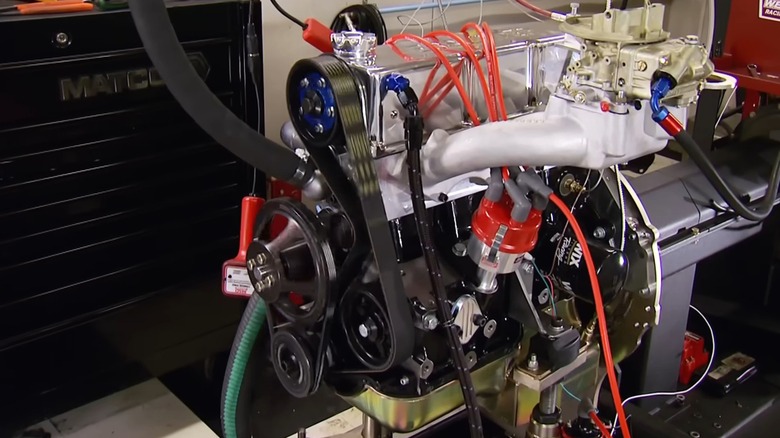
Ford engineered the 2.3-liter Lima for Americans in particular, then rolled it out in 1974 as a step-up alternative to the existing 2.0-liter offered in the Pinto. That version made 82 horsepower out of a cast-iron short block with a single cam mounted overhead, an oval-port cylinder head, a layout with two valves to each cylinder, and either mechanical camshaft or hydraulic tappet configurations depending on the build. Depending on the application, it came with either fuel injection or an aspirated form, and from there the engine found its way into other vehicles across Ford's lineup like the T-Bird, Mercury XR4Ti, Capris, and Ranger before production wrapped up in 1997.
Across its lifespan, the cylinder head was updated twice — first a D-port unit that arrived in 1981, followed by a dual-plug head in 1988. After that, turbocharging arrived in 1979 with pistons forged for the Lima to support the added boost pressure, and by 1985 the SVO Mustang was extracting as much as 200 horsepower from it –- a trajectory that eventually pushed the engine as far as 600 horsepower in builds like the Mustang Probe.
For anyone looking to extract more today, the cylinder head is usually the first limiting factor. Beyond that, the right combination of upgraded parts — Crane cams, pistons, carburetors, and headers — can push output past 400 horsepower because even a bolt-on turbo package alone can get an unmodified 2.3-liter engine past the 200-horsepower mark without touching the internals.
Jeep 2.5L (AMC I4)
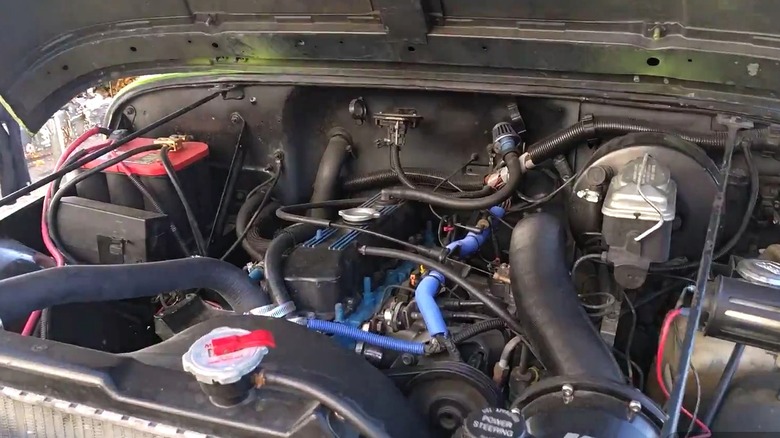
The 2.5-liter four-cylinder has shown up across several Jeep platforms, especially as the base engine in the XJ, and as an option in the YJ Wrangler and in the TJ Wrangler's debut model year. Early versions of the engine were good for a baseline 105 horsepower, but as years went by, the throttle-body fuel injection setup bumped that figure in 1987 to 117 horsepower before a switch to injectors positioned at each intake port pushed it further to 120 horsepower. By the time the Jeep's TJ Wrangler inherited the engine in '97, that figure had climbed even higher to 140 horsepower.
As for transmissions, choices varied depending on which Jeep drivers sat in, because YJ buyers were limited to a three-speed TF999 automatic gearbox, whereas Jeeps that ran between 1987 and 1990 had access to a four-speed or a five-speed manual gearbox before the TJ eventually brought a three-speed automatic into the picture. If you are a 1995 YJ owner, put it all together and expect to see roughly 19 mpg whether cruising around town or on the highway.
What actually made the AMC I4 so reliable came down to straightforward engineering with few weak points and a design that responded well to regular servicing, unlike its inline-six sibling, because it was never the most powerful option in its class, but its consistency is exactly what a platform like the Wrangler needed from a base engine.
Honda K-Series
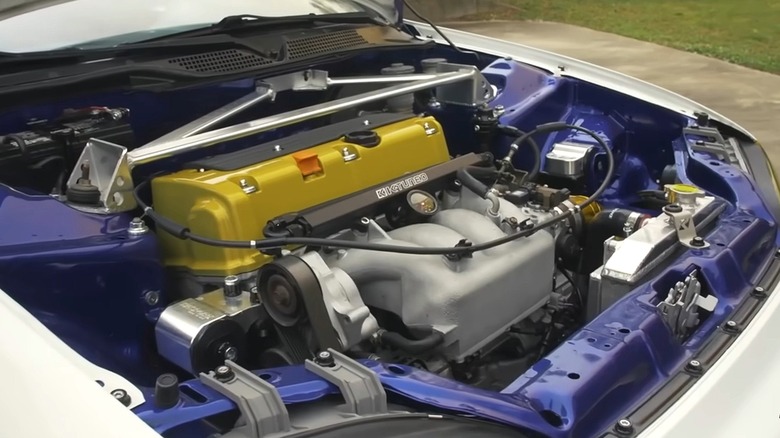
When Honda moved on from the B-series in the early 2000s, the 2.0-liter four-cylinder from the K-series brought several notable tweaks like swapping in timing chains, alongside an aluminum short block fitted with cast-iron cylinders, double overhead cams, an ECU ignition timing system, and a VTEC configuration, all before the K-24 rolled out in 2002. Across those years, both engines have spawned into enough variants, finding homes in the Civic Si, Accord, CR-V, Crosstour, Acura TSX, and Acura RSX in the U.S.. Output varied by application among the naturally aspirated variants, but the figures were consistently solid — Take the 2006 Acura TSX, for instance, it made 205 horsepower while some variants even cimbed as high as 220 horsepower. That foundation eventually gave rise to the boosted K20C1 in 2015 under the hood of the Civic Type R, delivering 306 horsepower without any modifications.
Keeping one alive long-term requires the little things like routine oil swaps, while keeping an eye on the front crankshaft seal and cam lobes as the odometer climbs. Do that and you're sure to cross 200,000 miles easily. But where the K-Series genuinely separates itself from every engine on this list is in its modification potential. The K24 can handle 500 horsepower of turbo boost without ever needing to crack open the bottom end, and with more serious add-ons, the architecture has been pushed past 2,000 horsepower, backed by a deep aftermarket covering headers, larger intake valves, exhaust, ECM, and roller rocker setups, which keeps the 'K-Swap' culture well fed.
Methodology
The whole process started with a very broad survey of four-cylinder engines that had already built a strong reputation for longevity across reputable automotive sources like MotorTrend, Car and Driver, Hot Rod, DrivingLine, SlashGear, and Jalopnik. The names that kept appearing across multiple independent outlets formed the initial shortlist, and from there the real work began.
That shortlist was then cross-referenced against insights from trusted voices outside the editorial world — YouTube reviewers with genuine hands-on teardown experience, professional tuners who've built on these platforms for years, independent mechanics, and everyday owners who've put serious miles on these engines without the safety net of a factory service plan. Their perspective filled in what the spec sheets leave out: how these engines actually behave when maintenance gets delayed, what fails first when it does, and which ones have a track record of bouncing back from neglect better than others.
Enthusiast communities and owner forums were also factored in as well. What those conversations produced was something no press release could replicate — real-world ownership info from people who've run these engines past 200,000 miles, and in more than a few cases, well more than that. That ground-level experience was what confirmed which candidates genuinely deserved a spot on this list and which ones only looked convincing on paper.