

8 Air Conditioner Brands Owned By Carrier
If you've purchased or even considered an air conditioning unit, you've probably encountered a Carrier product. Generally considered one of the best major air conditioner brands, Carrier was founded by the man who pioneered the entire concept of air conditioning, Willis H. Carrier. More than 120 years after Carrier developed a way to control humidity in a printing plant, the company that bears his name has grown to become one of the biggest players in the American HVAC market, selling tens of billions of dollars' worth of product annually.
As you might expect with any billion-dollar company, Carrier has acquired a good handful of other air-conditioning companies along the way. These companies, including household names like Toshiba, Arcoaire, and Day & Night, are part of a network of brands focusing on multiple aspects of climate control. These include HVAC units, replacement parts for said units, control systems, building automation, and even cold chain solutions.
Despite its position near the top of the air conditioning and HVAC market, Carrier has not rested on its laurels. Not only is it still acquiring companies — its latest purchase, as of mid-2026, was in 2024 — but it's actively trialing new HVAC tech that can ease energy bills and reduce our dependence on overstrained energy grids. The future looks bright for Carrier, and we can only expect that it's a similar story for these air conditioner brands under its ownership.
Arcoaire
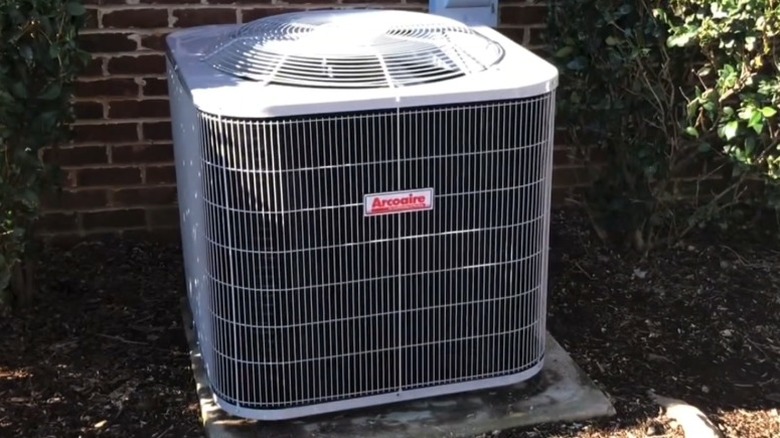
Arcoaire had its start as Arco Comfort Products, a subsidiary of the Atlantic Richfield Company. While its origins are unclear, a 1974 U.S. patent credited to the company suggests that it was actively designing and building AC units since at least that year. In 1984, SnyderGeneral acquired Arco Comfort Products from Atlantic Richfield and renamed it Arcoaire, the name it carries to this day.
However, while it got its current name relatively quickly, the brand's journey to being a Carrier company took a few more twists and turns. In 1991, Arcoaire, along with another SnyderGeneral subsidiary, Comfortmaker, was sold to Toronto, Canada-based Inter-City Products. Inter-City Products then became International Comfort Products (ICP) in 1997 and, presumably soon after, caught the attention of Carrier.
In 1999, Carrier announced it was acquiring ICP for $490 million (over $860 million in 2026). Carrier had the money to spend, of course; it sold nearly $7 billion worth of product globally in 1998, while ICP had to make do with a mere $733.5 million (which works out to $14 billion and $1.47 billion today, respectively). Carrier completed the acquisition in 2000, upon which ICP sub-brands such as Arcoaire, Heil, Comfortmaker, and Keeprite, among others, became Carrier companies. ICP did, however, continue to operate independently of Carrier, maintaining its dealer and service networks. Today, Arcoaire continues to operate as an ICP brand and offers a wide range of residential HVAC systems, including AC, heat pumps, furnaces, and even air purifiers.
Bryant
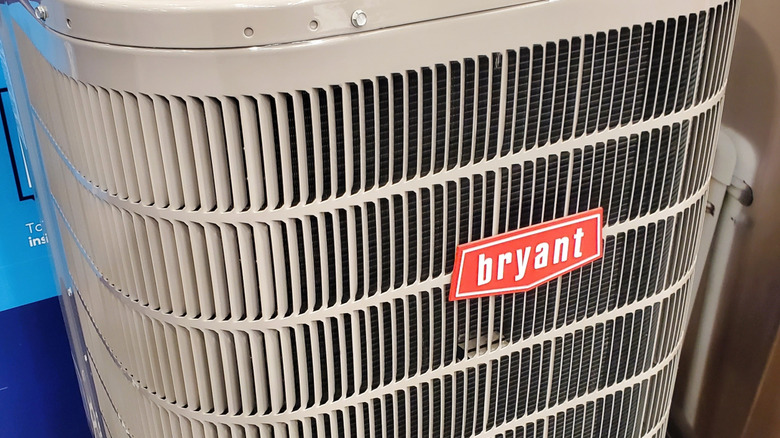
Bryant Heating and Cooling Solutions was founded just a handful of years after Willis Carrier's fateful invention. The company dates back to 1908 in Cleveland, Ohio, and initially sold gas boilers. Eventually it expanded into furnaces and 80% efficiency boilers, a spec that remains the minimum standard to this day.
Carrier acquired Bryant in 1955, when it merged with Affiliated Gas Equipment (AGE). By this point, Bryant was one of the two primary divisions of AGE alongside West Coast, and both became divisions of Carrier after the merger. Carrier merged Bryant with Day & Night and Payne, brands it also acquired in the 1955 merger, to form BDP Company in 1974, although that no longer seems to be a going concern as of 2026. Bryant and Payne currently operate as standalone subsidiaries of Carrier, offering a range of heating and cooling products — though neither ranks among the most reliable AC brands — while Day & Night is essentially subsidiary of a subsidiary (more on that later).
Bryant's journey to becoming part of the Carrier family was not a direct one, though. The company was first acquired by gas hardware company Dresser Manufacturing in July 1933, and was eventually joined by its future BDP Company allies under the Dresser umbrella. This was a relatively short-lived situation, however, as Dresser sold the three to AGE in January 1949 for $10.87 million (around $150 million in 2026), thereby setting up the current state of affairs.
CIAT
Carrier is probably about as American as air conditioner companies get, with headquarters in Indianapolis, Indiana, and development and manufacturing facilities in Indianapolis and Collierville, Tennessee. The majority of companies it owns are, perhaps predictably, also based in the U.S., but not all of them.
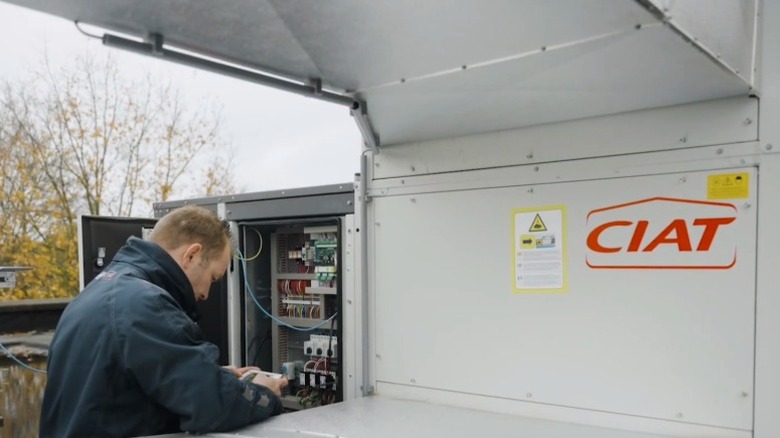
French company CIAT, which was founded as Compagnie Industrielle d'Applications Thermiques in 1934, was a mostly family-run manufacturer of air conditioners for the majority of its existence. When the company was put up for sale in 2014, it had factories in Spain, Italy, China, and its home country of France, and had posted an impressive turnover of 256 million euros (a little under $293 million) the year before. News reports of the time indicated that Carrier was just one of a handful of companies interested in the French firm, with competition coming from equally big names such as Bosch.
Carrier — or, rather, its parent company at the time, UTC — won out in 2015, announcing that it had purchased CIAT for an undisclosed sum. CIAT became part of UTC subsidiary UTC Building & Industrial Systems' European HVAC operations, adding its portfolio of HVAC units, heat pumps, and ventilators (among others) to that of UTC. CIAT eventually transitioned to full Carrier ownership when UTC spun Carrier off in 2020 prior to merging with Raytheon. Yep, the same Raytheon that builds the Tomahawk missile. Bet you didn't expect such a close link between HVAC units and long-range missiles.
Day & Night
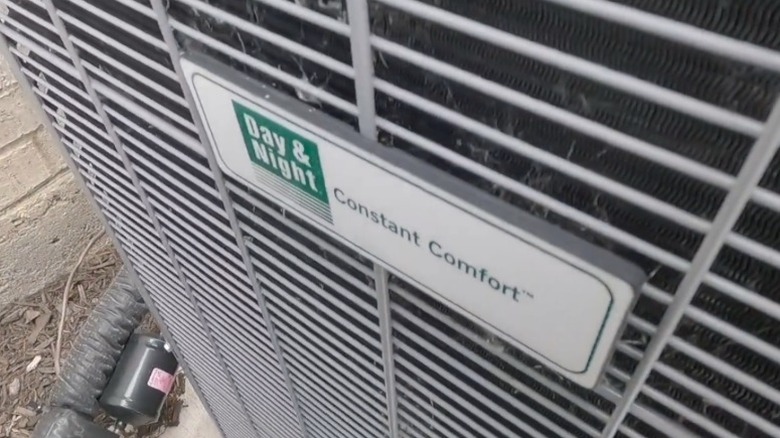
Day & Night has one of the longer stories of the many Carrier subsidiaries, although some of the details are a bit harder to pin down than others. The earliest we can trace its story is back to a water heater company going by the same name, established in Monrovia, California in 1909. By the mid-1940s, the company a Dresser Industries subsidiary, with a 1947 SEC survey listing it alongside Bryant, Payne, and Pacific Pumps (amongst others) as being 100% owned by Dresser.
Day & Night was sold to Affiliated Gas Equipment in 1949 alongside Bryant and Payne. The trio would come under Carrier's ownership in 1955 through a merger of the two, and eventually were themselves merged into BDP Company in 1974. BDP Company was involved in shipping Carrier products all across the United States out of facilities in California and Indianapolis.
From here, Day & Night's story gets a bit murky. Carrier seems to have stopped using the name sometime in the 1990s, although we haven't been able find a precise date. Either way, Day & Night eventually started operating as a subsidiary of Carrier-owned International Comfort Products (ICP) by 2009 at the latest. Day & Night is an ICP brand to this day, with a product catalog that's not dissimilar to other ICP brands like Arcoaire and Comfortmaker.
Toshiba
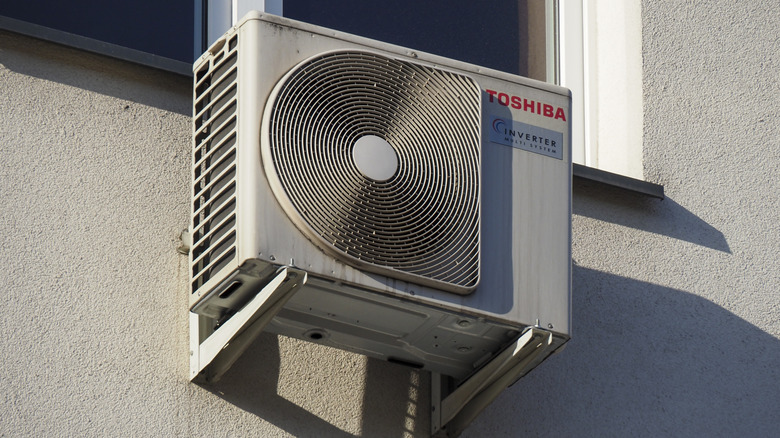
The Toshiba name has long been associated with all sorts of consumer electronics, but it's not quite what it once was. Instead of coming from the same manufacturer, today's Toshiba-branded products are, more often than not, merely branded with the Japanese corporation's name. Modern Toshiba TVs, for example, are built by Chinese corporation Hisense. Similarly, some of the home appliances sold under the Toshiba name are actually produced by Midea, another Chinese company.
At the same time, Toshiba is also one of the many Carrier subsidiaries, with a line in air conditioners, heat pumps, and other HVAC solutions. If it sounds confusing, that's because it is. While we don't have the space to get into the complexities of Toshiba's business decisions, we can note that the only Toshiba-Carrier products available in the U.S. seem to be commercial-grade variable refrigerant flow systems. Carrier-owned Toshiba still makes residential AC units, but these are more likely to be found in global markets.
Toshiba first linked up with Carrier in 1999, when the two formed the Tokyo-based Toshiba Carrier Corporation. TCC, as we'll refer to it, focused primarily on air conditioning units, with sidelines in related markets such as refrigeration equipment, air purifiers, and compressors. This state of affairs continued until 2022, when a freshly spun-off Carrier bought out Toshiba Corporation's share in TCC, giving it ownership of TCC's manufacturing and research efforts and allowing it to use the Toshiba brand.
Payne
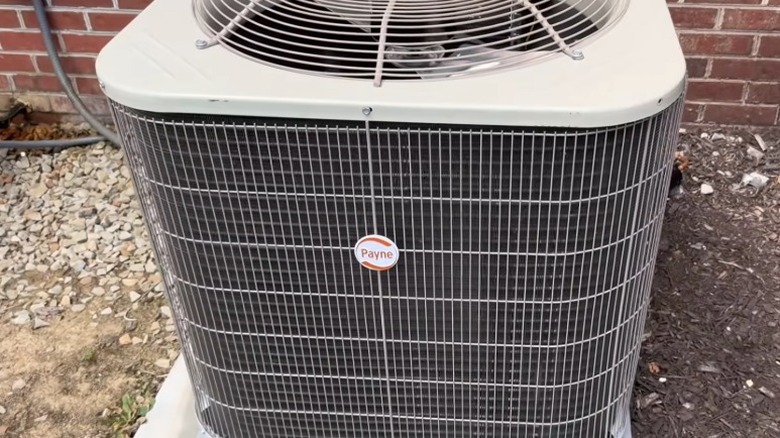
Of the three air conditioner companies that Carrier acquired when it merged with Affiliated Gas Equipment in 1955, Payne is by far the youngest. Of course, youthfulness is a relative concept here, and Payne has still been around for over a century as of 2026.
Payne was founded as Payne Heating & Cooling in Los Angeles, California, in 1914 by D.W. Payne and his son. The company didn't start out as an air conditioner manufacturer. Instead, it built gravity furnaces, before introducing a forced-air downflow furnace in 1933. Dresser acquired Payne in 1945, the same year it purchased Day & Night and hydraulic oil well company Kobe. Payne subsequently expanded into air conditioning in the 1950s.
The rest of the story will sound pretty familiar. Dresser sold the trio to Affiliated Gas Equipment in 1949 for the equivalent of $153 million in 2026 money. AGE in turn merged with Carrier to create an air conditioning behemoth worth $227 million, according to a 1954 New York Times report — that's nearly $3 billion in 2026 money. Payne has stuck to its original heating and cooling remit, with its products primarily consisting of gas furnaces, air-conditioning units, and heat pumps.
Heil
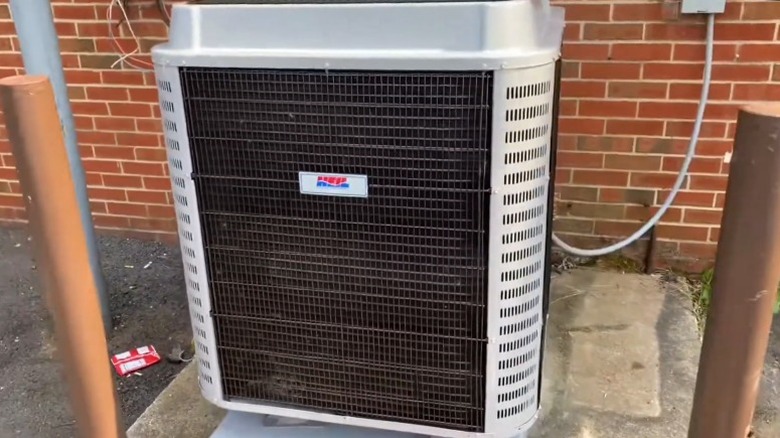
Heil is one of the handful of brands Carrier owns via International Comfort Products (ICP), which it acquired in 1999. Like many of Carrier's subsidiaries, though, Heil's journey to get where it is was far from straightforward.
Founded in 1929 in Milwaukee, the company seemingly spent most of its first decades supplying AC units to now-fallen — but still just about alive — retail giant Sears. In 1957, Heil and Sears joined forces to buy space heater manufacturer Quaker. The new company, christened Heil-Quaker, decamped to Tennesee, and was later acquired by Whirlpool in 1964. Over the following decade, it became a big enough player in the air conditioner market to be mentioned in the same breath as General Electric, York, and future owner Carrier in buying guides of the 1970s.
In 1986, Whirlpool sold off Heil-Quaker to Canadian firm Inter-City Gas for an undisclosed amount. It joined KeepRite, Unifin International, and Thompson Pipe to form Inter-City Gas' Energy Products Division, and in 1990, the four struck out together to form Inter-City Products. Inter-City Products eventually renamed itself to International Comfort Products in 1997, as we mentioned earlier, and the rest, as they say, is history. Heil's current product line mirrors that of its fellow ICP companies, such as Arcoaire, down to a tee, including the product names.
Viessmann
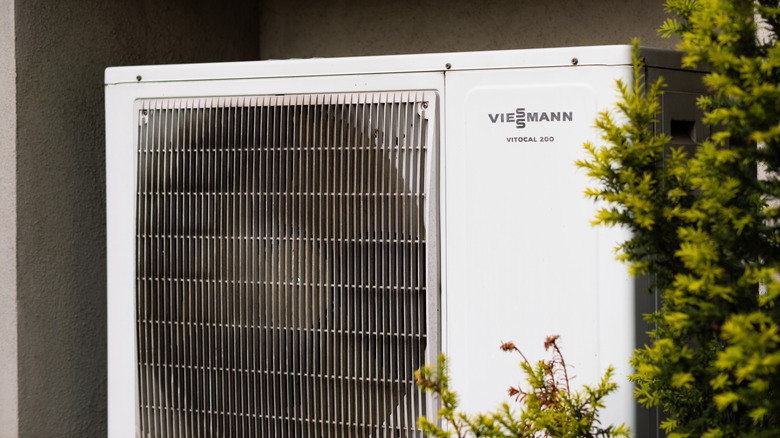
As of 2026, Viessmann is the newest company to join Carrier's ranks. Carrier purchased Viessmann Climate Solutions, then the largest division of German firm Viessmann Group, for a massive 12 billion euros (around $13.7 billion) in cash and stock.
The acquisition was pitched as a way for Carrier to diversify its operations, thanks to the 100-plus-year-old company's expertise in sustainable and eco-friendly tech like heat pumps, solar panels, and energy storage. It gave Carrier an instant foothold in future-ready cooling and power technologies in the European market.
That growth was impressive, too; according to a 2023 Reuters report, Viessmann's heat pump business had grown by 15% annually since 2020, making it an appealing (and financially sound) way for Carrier to get in on a growing market. Of course, while the heat pumps are likely what prompted Carrier to buy the company, Viessmann is no stranger to more conventional air conditioning, offering systems that can cool and heat rooms as well as draw power from solar panels, to keep energy bills down. But while AC is part of the Viessmann portfolio, we expect that it's going to make the news (and generate quite a chunk of good PR for its parent company) for its other, more climate-friendly endeavors.