

Not All Plug-In Hybrids Feel Luxurious: These 4 SUVs (And One Wagon) Do
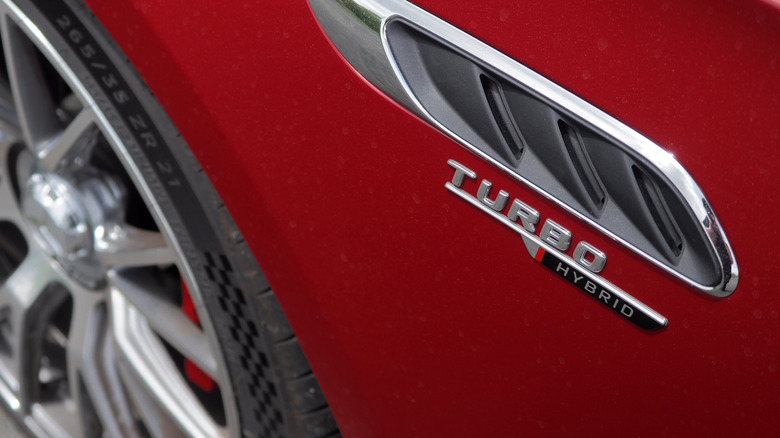
Once seen purely as a transitional technology, plug-in hybrids have earned a reprieve as the shift to full electrification has stumbled. It's not difficult to understand why: by combining a gas engine with at least one electric motor, drivers get the convenience of some electric-only range but the flexibility of filling up at regular gas stations on road-trips, and with a smaller (and thus much cheaper) battery than in a full EV.
They're not perfect, mind. PHEVs have a reputation for complexity which is well-earned: there's both an ICE and an EV drivetrain sharing space under all that sheet metal. A "decent" electric range from a PHEV is around 40 miles, versus full EVs that can do hundreds. And then there's the price, with PHEVs typically costing a premium over their gas-only counterparts.
While we typically think of hybrids as fuel-sipping green options for the super frugal and eco-conscious, PHEV drivetrains can be found in some of the biggest (and most expensive, and most lavish) SUVs around. Question is, does adding some electrification to already-expensive vehicles make sense? Join me for a rundown through some of the most appealing high-end PHEVs on the market today.
5. Mazda CX-90 PHEV
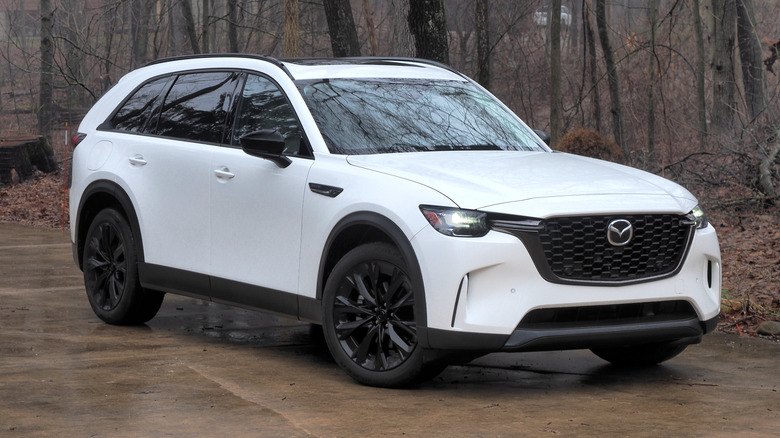
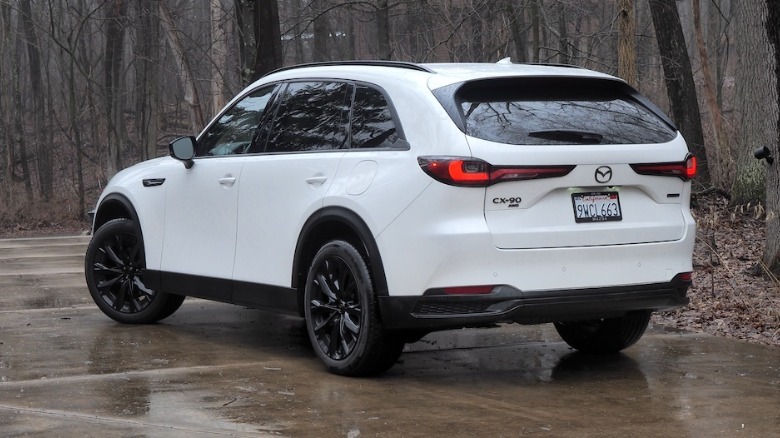
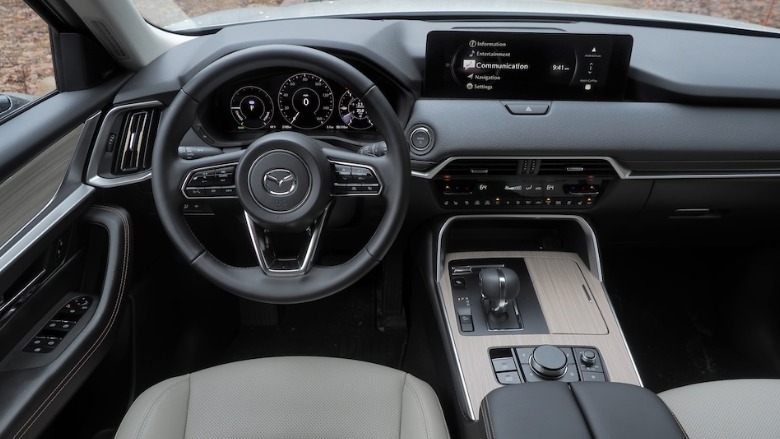
Mazda's three-row SUV is the biggest model in its line-up, and from $50,695 (before destination) the PHEV commands a $7,250 premium over the equivalent-spec base non-hybrid version. Either way it's spacious — though the third row is snug for full-sized adults — and looks great, with a generally premium-feeling cabin and decent tech only slightly undermined by some average-feeling plastics.
 Chris Davies/SlashGear
The CX-90 PHEV isn't short on power: with a system total of 323 hp (when supplied with premium gas) it has almost the same horsepower as Mazda's most-expensive gas-only 340 hp inline-6 turbo version (from $54,140 before destination). Both have 369 lb-ft of torque. I just wish the PHEV was as smooth and refined in its power delivery. Getting underway on electric power alone is fine — there's 27 miles of EV-only range, which is on the low side for PHEVs — but the blend of that and the four-cylinder gas engine is lumpier than in other hybrids.
 Chris Davies/SlashGear
Driven sedately, the CX-90 PHEV is fine. And push hard — tapping into Mazda's evident expertise with chassis and suspension design — and the big SUV can hustle surprisingly well. It's that middle ground when the eight-speed transmission seems to second-guess itself, either waiting too long to shift or doing so with hurried roughness, that leaves the two halves of the drivetrain occasionally feeling like they're fighting rather than collaborating.
4. Range Rover Sport PHEV
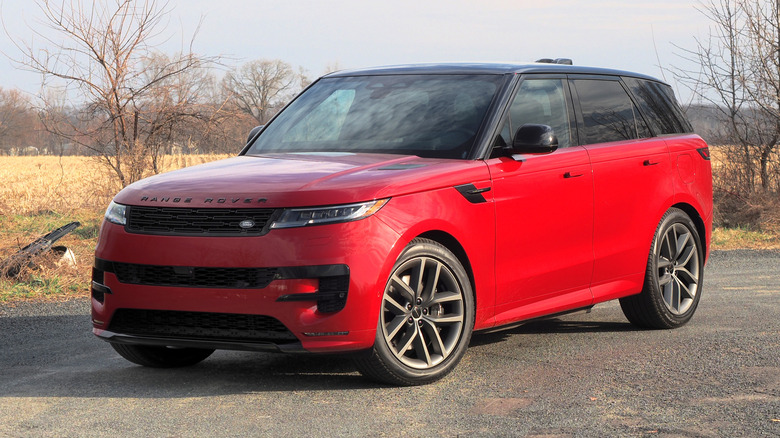
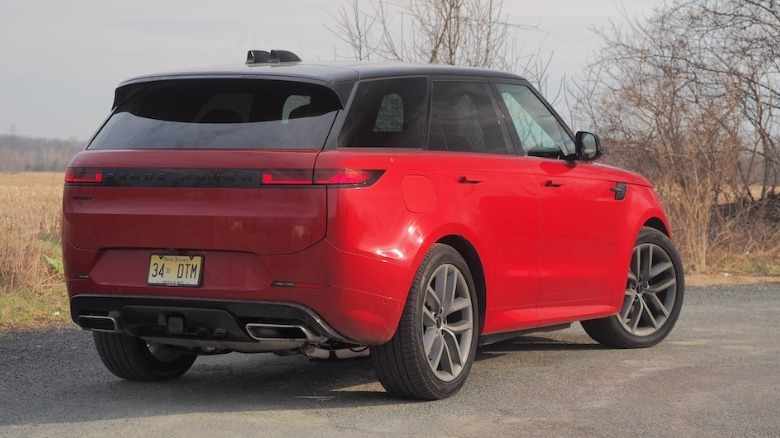
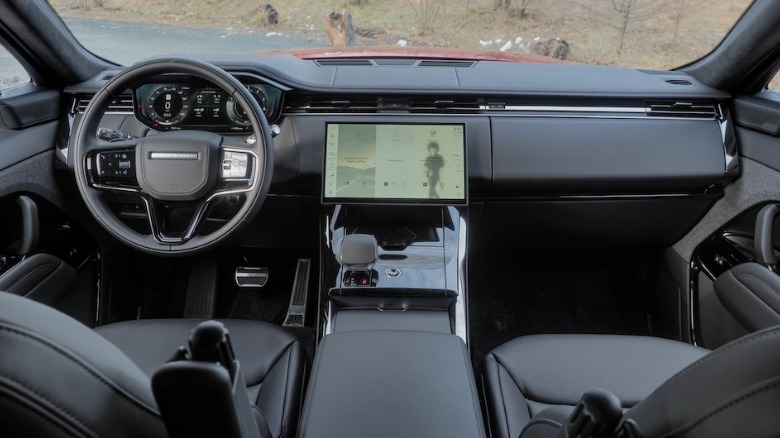
Priced from $90,800 (before destination) in PHEV form, the Range Rover Sport is one of the most expensive models on this list of plug-ins. It's also probably the marque with the most controversial reputation for reliability, and that's before you get to the complex drivetrain. Range Rover clearly hopes that the 542 hp and 590 lb-ft of total system power from the Sport PHEV's 3.0-liter inline-six and electric motor pairing will distract you from such humdrum concerns, and it's easy to be beguiled.
 Chris Davies/SlashGear
With air suspension as standard, along with all-wheel drive, all-wheel steering, and an electronic active differential, the PHEV doesn't shirk on Range Rover's promise of both refinement and enthusiasm from a single SUV. Only the 22-inch satin-finish alloys on this example would make me second-guess going off-road; the Sport still gets all the usual drive mode magic to handle mud, gravel, snow, and more.
 Chris Davies/SlashGear
51 miles of EV-only range is impressive (though the reasonably hefty 31.8 kWh battery and total curb weight of 5,860 pounds are the downsides). I found the gas/electric blend was most refined in Dynamic mode — Range Rover's version of 'Sport' — whereas less-enthused settings left me wishing for a little more urgency. Still, the near-27 mpg I saw is a considerable improvement over economy typically in the teens for the non-PHEV Range Rover Sport.
3. Lexus RX 450h+
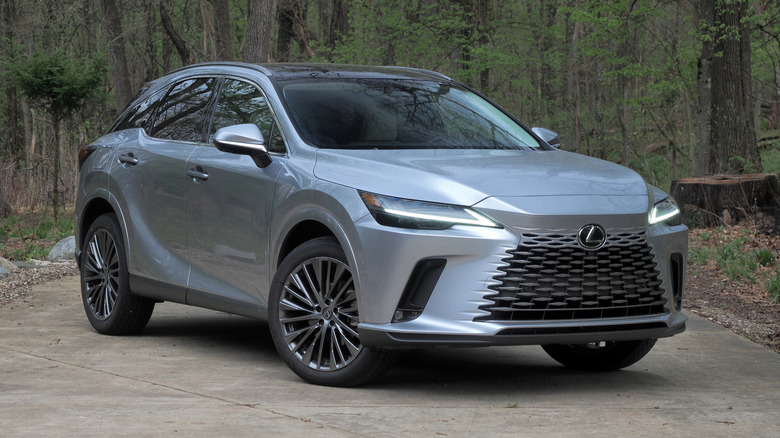
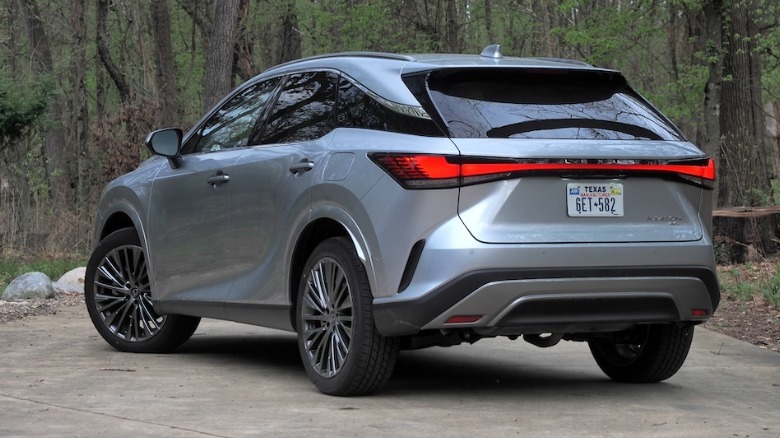
Lexus — like parent Toyota — has no shortage of electrification in its line-up. The 2026 RX can be had in gas-only, mild hybrid, and plug-in hybrid forms, though you'll spend at least $66,780 (before destination) for the PHEV. That's a $14k premium over an ICE RX, and almost $12k over the mild hybrid, though Lexus loads up both the luxury and gadgetry in the RX 450h+ to sweeten the deal.
 Chris Davies/SlashGear
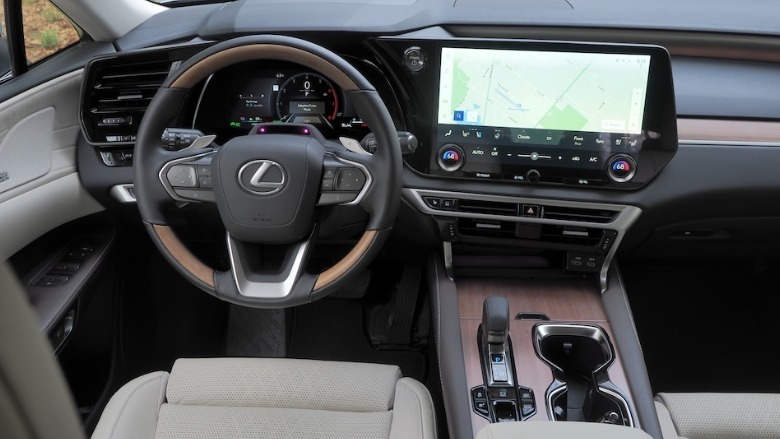
The result is a genuinely pleasant place for five, and a slick — if not super-sporty — driving experience. Lexus' SUV demonstrates nicely just how well a PHEV drivetrain can match up with a luxury car, not to mention make a humble four-cylinder gas engine feel far more premium when you throw some electric motors into the mix. The resulting 304 horsepower and 38 miles of EV-only range aren't segment-topping, but then again the RX PHEV doesn't attempt to be a jack-of-all-trades.
 Chris Davies/SlashGear
Instead, the RX 450h+ leaves sporting pretensions to the RX 500h, and focuses instead on wafting. Gas and electric power blend seamlessly, pickup from traffic signals and stop signs is more than ample, and with a luxury focus the absence of adaptive suspension doesn't feel too great an omission. The RX is dialed in for cosseting compliance. Lexus has been doing hybridization for a good long while, now, and the RX PHEV feels like the all-rounder of a broad RX range.
2. Volvo XC60 T8
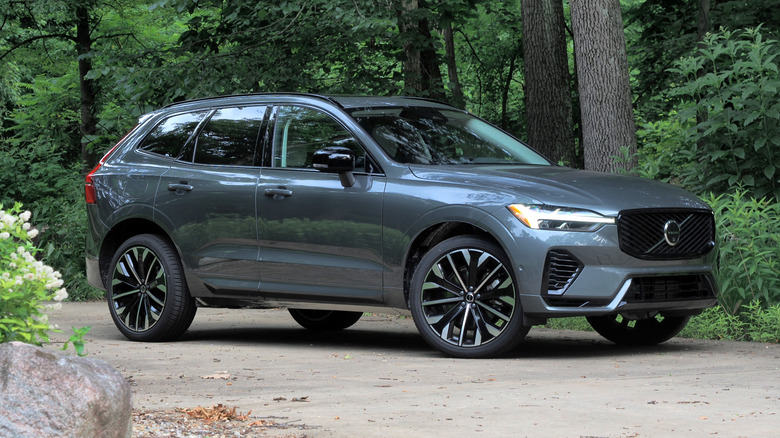
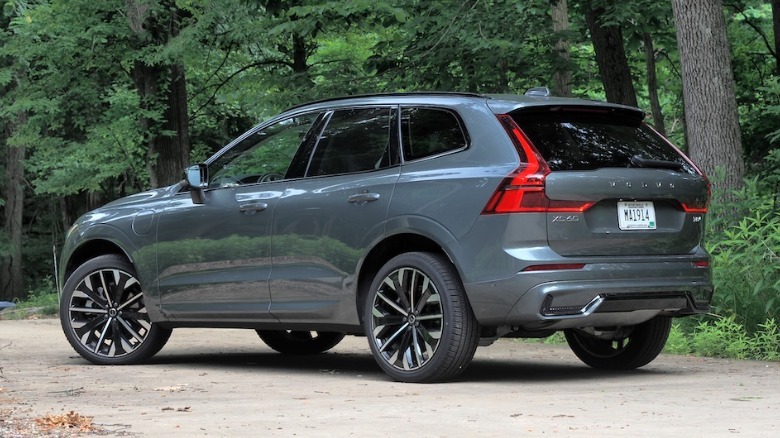
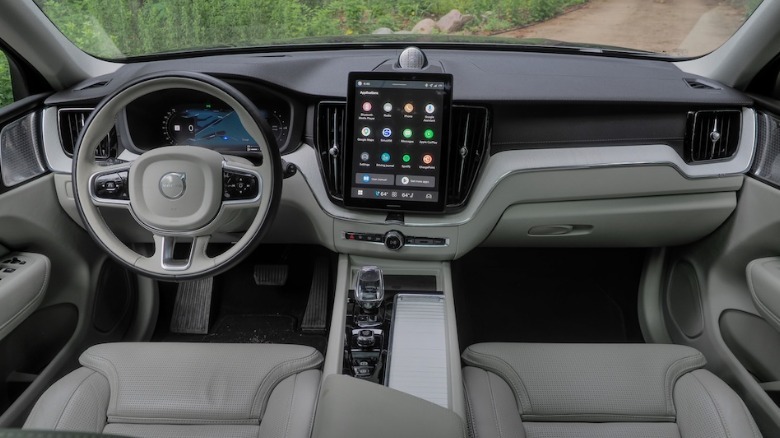
Volvo's XC60 is among the smallest SUVs on this list, but this is far from the automaker's first ride on the plug-in hybrid wagon, and that shows. The T8 drivetrain is based on a mere 2.0-liter turbo inline-four gas engine with an electric motor, but still delivers a hefty 455 horsepower and 523 lb-ft of torque combined. It's enough to propel the midsize crossover (priced from $62,545 before destination, versus the XC60 mild hybrid's $51,095 before destination) from 0-60 mph in just 4.5 seconds, Volvo claims.
 Chris Davies/SlashGear
If rivals have struggled with the blend of gas and electric power, Volvo has that all figured out. Smoothly modulated, the XC60 T8 is easy to drive as well as quick; the inline-four kicking in is hardly noticeable. 35 miles of EV-only range isn't the biggest number, but it's a reasonably accurate prediction (if you don't drive too aggressively).
 Chris Davies/SlashGear
That, really, is the XC60 Plug-in Hybrid's charm. Yes, you can drive it like a regular Volvo (including plenty of family space in both rows, and a decently-sized trunk) but the PHEV's performance bump combined with the optional active air suspension ($1,800) makes this a genuinely fun SUV, too.
1. Mercedes-AMG E 53 Hybrid Wagon
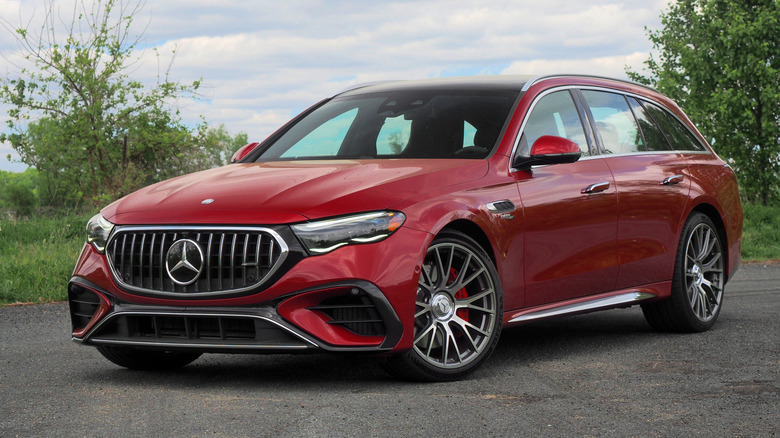
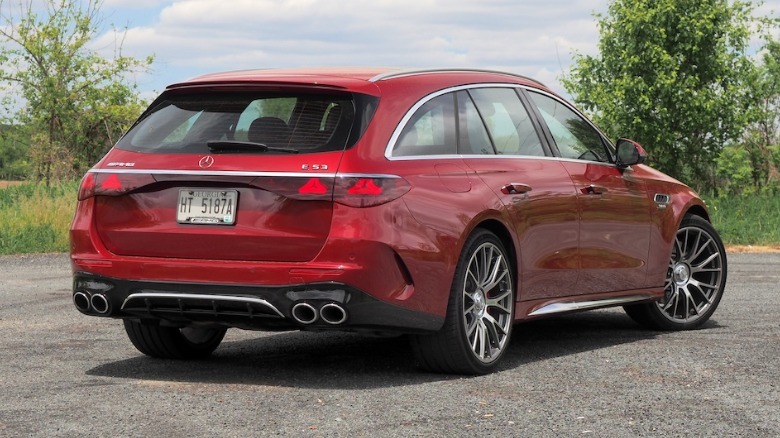
Look, I'm not going to re-litigate old "many SUV buyers would be better served with wagons" arguments (though the AMG E 53's 33.1 cu-ft of trunk space with all seats upright does beat the Range Rover Sport's 31.9 cu-ft) but only offer this glorious plug-in hybrid longroof as a wildcard option. At $93,350 (before destination) it's definitely on the expensive end of this quintet, though with 577 horsepower and 553 lb-ft of torque it's no slowpoke.
 Chris Davies/SlashGear
Indeed, the combination of an electric motor with a turbocharged 3.0-liter inline-six gas engine makes for 4.0 second 0-60 mph acceleration. It'll be sleeker — and rarer — than most SUVs on the road, not to mention quicker. Actually, hit the gas in the E 53's Sport+ mode and suddenly its sub-six-figure price seems an absolute bargain.
 Chris Davies/SlashGear
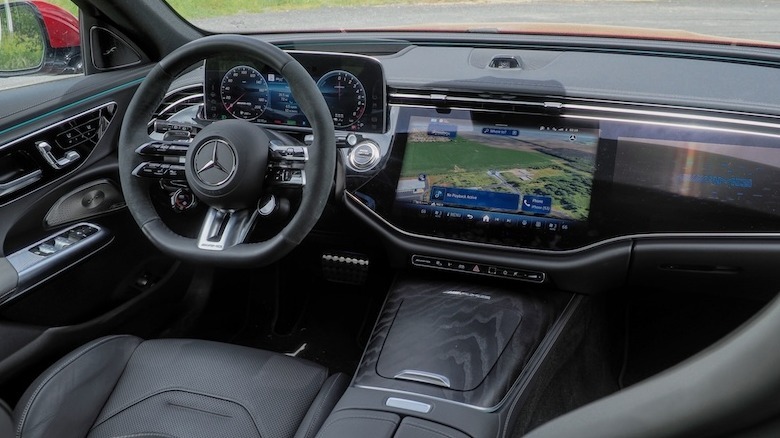
Mercedes' voracious appetite for dashboard displays and ambient lighting make the E-Class' cabin feel a little hectic, but the underlying luxury shines through. And with 41 miles of EV-only range and my own experience of 35+ mpg when you drive with a little restraint, you could well argue that this well-spiced AMG wagon is about the best example of why sporty PHEV luxury makes so much sense.