

5 Common Problems With The Toyota Highlander

The Toyota Highlander (known as the Kluger in Australia) is one of those pretty stereotypical vehicles that people automatically picture in their minds. When you say "midsize crossover," the image that comes to mind is often that of a Highlander, and that's not necessarily a bad thing.
These are, for the most part, functional and reliable crossovers from beginning to end, and make no apologies nor compromises in that regard. From Day One, these cars all shared many common underpinnings with cars like the Camry, being essentially just bigger variants of those midsize sedans. They've been in production since model year 2001, and come in a variety of configurations ranging from basic FWD grocery-getters to comfortable hybrids. They've become so ubiquitous in city streets that you can find hundreds of them painted in the yellow livery of a New York taxicab.
However, like any vehicle, ubiquity doesn't save the Highlander from its host of problems, some of which are particularly severe. In this article, we've scoured the Internet and compiled a list of the most common dealbreakers — problems which can make or break a vehicle for the non-mechanically inclined.
We've decided to spread the information out across Highlanders around five years or older; apart from the earliest models, almost none of them are classics as of 2026, so you don't have to worry about common concerns with daily driving a classic car here. Obviously, we can't identify too many issues with brand-new models since they haven't been around long enough yet. Likewise, we won't discuss anything to do with user error, i.e. lack of maintenance or poor driving habits. These are all fundamental defects with the cars themselves. That said, let's get into it.
Bursting oil lines
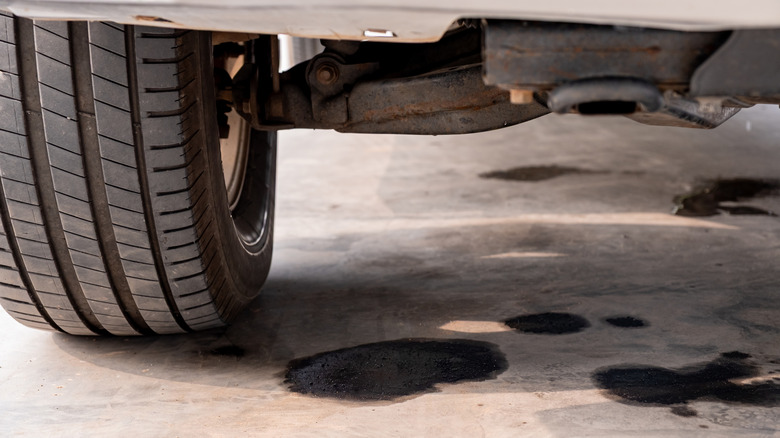
We're swinging for the fences right away with this one; a burst oil line is among the most severe problems an engine can have. Losing oil pressure means you don't have any oil reaching the top of the pistons or valvetrain, and that leads to metal-on-metal contact.
In the Highlander's case, owners have reported the oil cooler lines bursting and pouring oil out, leading to a sudden, sharp loss of oil pressure on 3.5-liter V6-fitted Highlanders. Toyota is aware of the problem, issuing a recall to approximately 533,500 so-equipped Toyota models, which includes extended warranty coverage for anything damaged by the oil leak. Of particular note, the recall only covers certain model years — 2008 to 2011 standard Highlanders, and 2011 hybrids. However, owners report these concerns ranging from 2005 all the way to 2013; but regardless of the year, never ignore a low-pressure oil warning light unless you hate your engine.
To illustrate exactly what this means for your engine, consider shaving your hair. You run out of shaving cream, but you're hurried and desperate, so you go in dry. You find the razor blade catching on seemingly every atomic particle on your body, and now you can kiss goodbye to your perfect skin for a few days. The same thing happens to a car experiencing oil starvation. Metal isn't perfectly smooth — it has microscopic pores and ridges that can rip and tear as two objects scrape against each other. This scratches the inside of your cylinder lining and generates tremendous heat; running an engine too long in this configuration is an excellent way to turn it into a boat anchor.
Fuel pump malfunctioning
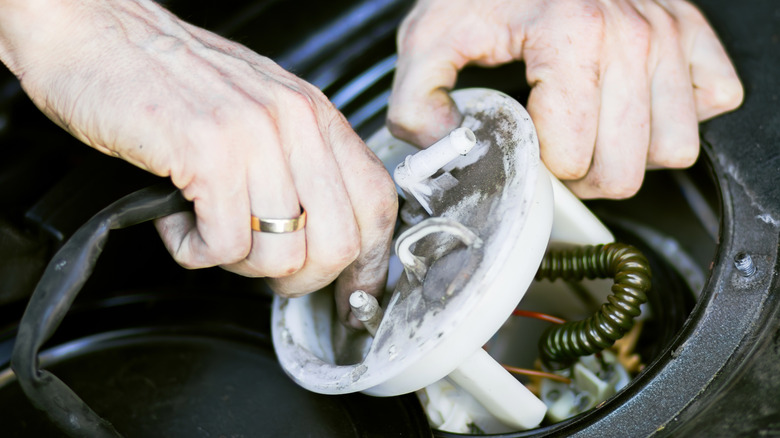
As its name implies, a fuel pump's sole responsibility is to move fuel from the gas tank through the fuel lines and eventually into the engine. Your car's fuel system is actually deceptively complicated; it's an airtight, pressurized vessel carrying volatile liquids through a relatively thin hose. It's that pressurization that's key to its operation — a fuel tank is lower than an engine, so you need some way to carry the fuel up. Without gravity assisting you, you're left with one option: a fuel pump.
When a fuel pump malfunctions, the fuel system can no longer maintain adequate pressure. There's generally going to be residual fuel still left in the lines, but you'll immediately notice your car start sputtering as if it's out of gas. Eventually, it'll simply fail to crank over from fuel starvation; assuming it isn't actually out of fuel, it's likely a faulty fuel pump.
The Highlander shares a lot of parts with other Toyota models, the fuel pump included — the faulty one in-question is found on 2017-2019 model years alongside the Lexus GS 350. This recall, first announced and amended throughout 2020, now encompasses a dozen Toyota and Lexus models to the tune of an eye-watering 1,830,752 total vehicles. A separate, but undoubtedly related recall states that the entire fuel pump assembly may fail, not just the pump itself — this recall affects just over 1.5 million vehicles, overlapping most models as its sibling. Sudden and catastrophic fuel pump failure can lead to anything up to and including an engine stall at highway speeds, so it's best to get this addressed right away as well.
Airbags failing to deploy
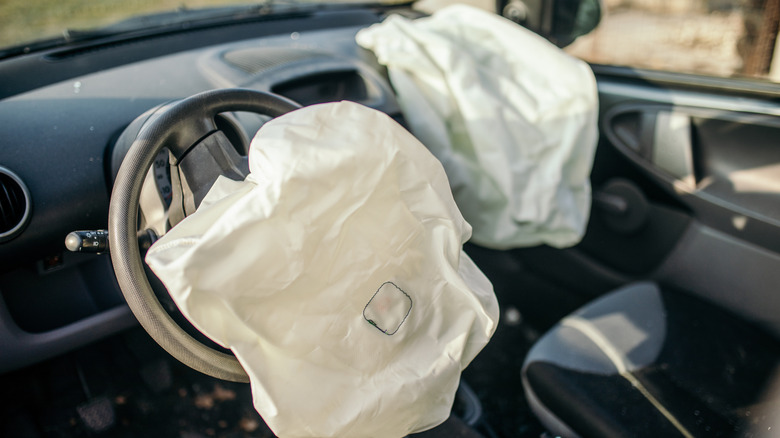
Almost nothing is more important in a crash than an airbag. As the phrase goes, "It's not the fall that gets you, it's the sudden stop at the bottom," the same is true of frontal impacts, which is why most modern cars tend to crumple and deform in an accident. That crumpling dissipates a lot of the energy that would otherwise go into the frame and your body, sacrificing the car, but saving your life. Airbags are the next logical step in that chain; anything your car doesn't absorb, your airbag will help.
If your airbag fails to deploy, you're effectively smashing your ribs and face into your steering column at highway speeds. There's a lot that can go wrong here; airbags use small explosives to inflate that quickly, for one. The signal from the impact might never reach the airbag, or it could be misinterpreted. Moreover, as in the case of the Takata airbag scandal, the airbags themselves could be defective.
The Highlander's specific problem is that the airbags simply don't deploy in an accident — neither the driver's nor passenger's airbag, depending on model year. The most egregious is actually the latter; a recall of almost a million vehicles, including the 2020 and 2021 Highlander, claimed a short circuit of the Occupant Classification System meant the passenger airbag would never arm. Moreover, in a separate recall for 2023 models, the cable that connected the driver's side airbag to the rest of the car could be faulty. This means no signal would reach the airbag in an accident, thus it wouldn't deploy.
Transmission failure
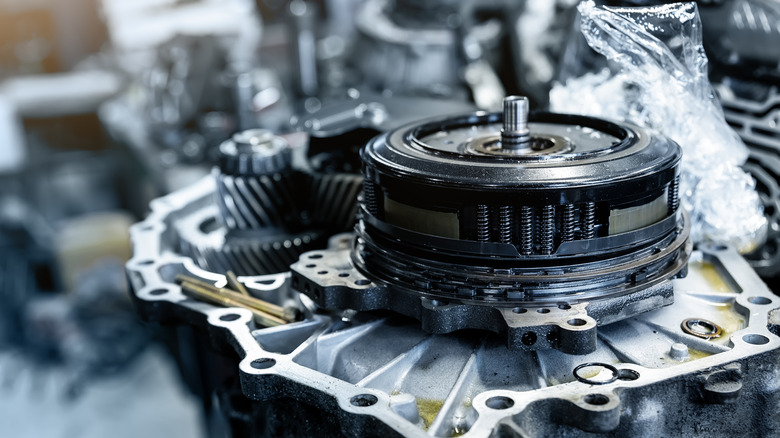
Like the oil line bursting, this is another issue that can immediately sideline your Highlander if left ignored; sadly, it's not one with any active recalls on it, so you may be in for a hefty repair bill, to the tune of $8,000 or thereabouts. Enter the dreaded Transmission Whine of Death. Unlike the soothing sound of a Hellcat supercharger belt whine, this is the sound of your own transmission eating itself alive. That noise is actually metal-on-metal contact within the gearbox, meaning your transmission is now on borrowed time.
The issue specifically affects all Highlander models with the Aisin eight-speed automatic transmission, and it's so prevalent that there's even an ongoing class-action lawsuit claiming Aisin ignored the glaring problems for years. The lawsuit, filed by plaintiff James LeBoutheller in 2025, alleges that the Aisin UA80 automatic transmission is fundamentally defective, experiencing symptoms such as gear slippage, erratic shifting, loss of power, and the infamous Whine of Death — naturally followed by catastrophic transmission failure. Toyota maintains that the transmissions are safe; nevertheless, transmission failure remains one of the most popular complaints of Highlanders in this age bracket.
Sadly there's no easy fix to this, unlike the aforementioned issues that all have recalls. This is something fundamentally wrong with the transmission; frankly, it's just not a well-designed gearbox. The gear ratios are poorly suited to its application as a family car, shifting almost erratically because of the discrepancy (or lack thereof) between certain gears. This inevitably puts strain on the transmission, likely why these things fail with such alarming regularity.
Failing oxygen sensors
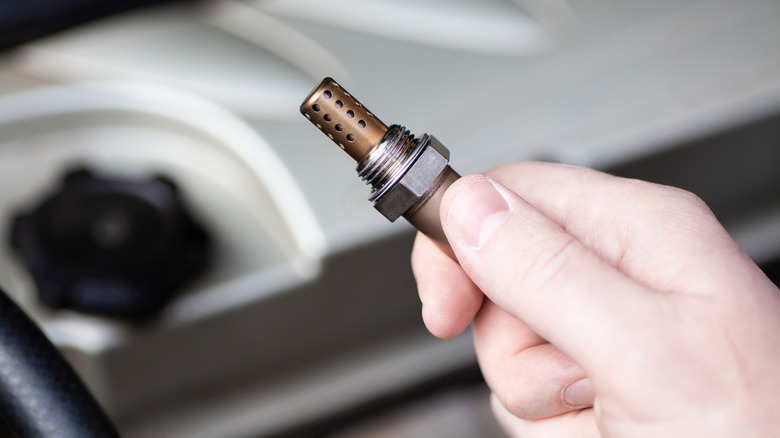
This problem is far less severe, but just as widespread. It won't actually brick your engine, it'll just make your Highlander run like garbage. Introducing the oxygen sensor, also called the O2 sensor — a device which measures the oxygen levels of your vehicle's exhaust. It plugs into the exhaust system directly, relaying these signals back to the engine. This informs the engine how rich or lean the fuel is running at a given time, allowing it to adjust how much fuel enters the combustion chamber to provide optimal efficiency or performance as-needed.
An engine can operate (albeit badly) without input from the oxygen sensor; this is called an open-loop configuration. Open-loop means the engine assumes it needs the most fuel at any given time, generally at a cold-start, for instance — so it injects that much fuel until the exhaust warms up. If the oxygen sensor reads correctly, it'll send a signal to the engine to enter closed-loop operation. The idle drops, the emissions drop, and you're now running normally. If it fails to do this, it'll simply never leave the open-loop configuration, meaning your engine will be running rich the whole time.
Like the transmission failure, there's no active recall on O2 sensors for Toyota Highlanders; however, a plethora of owners have noted premature failures. This will illuminate the check engine light, and means the engine can no longer detect the air/fuel ratio. Waiting on this problem could cause various issues, but thankfully, it's far less expensive a job than a transmission swap. You may even be able to just clean it if it's not defective.