

10 Of The Most Reliable Engines Built In The Past Decade
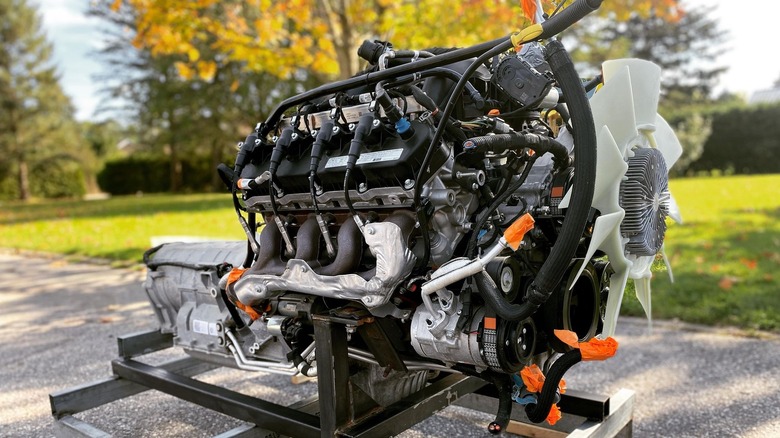
There is a bitter unfairness that reliable engines tend to face. Having a dependable engine is like plumbing – and as boring too – because you won't notice that you have it, but you'll certainly notice if it's gone. No teenager is going to put a poster of a Toyota inline-four car on their bedroom wall – that space is reserved for the screaming, temperamental performance vehicles only. We believe that those engines do have their place in the world of auto enthusiasts, but the truly great engine is the one that starts every morning for 15 years, surviving neglect and abuse with a happy daily burble. It isn't glamorous, but its a heroism that has gone under or even unappreciated in most cases to the point where reliable motors are becoming rarer than ever before.
As more and more technologies are introduced into engines laden with complicated systems, more failure points are introduced. Every new sensor is a potential failure point for any number of reasons, which is why the most reliable modern engines tend to be the simplest ones. Of course, there are certain components that can't be avoided, such as the oxygen sensor and the or mass air flow (MAF) sensor, but in general, keeping fancy electronics to a minimum seems to be the playbook for the most bulletproof engines. With that said, here are the most reliable engines that automakers have made in the past 10 years – which you'll see many examples of on the road.
Toyota A25A-FKS
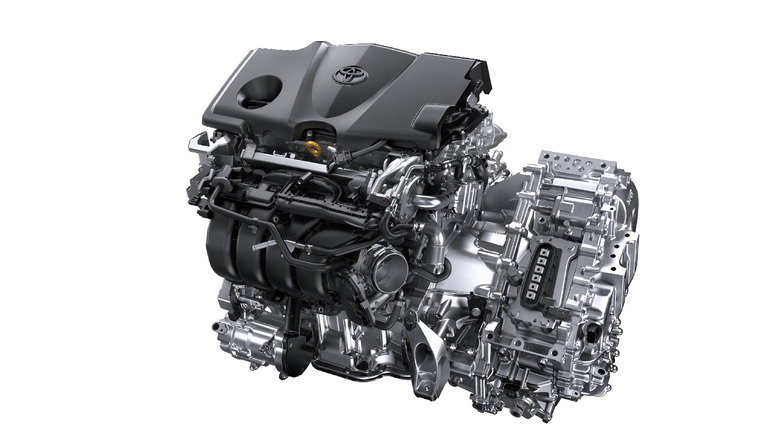
Given the company's penchant for making reliable cars and engines, we start with the Toyota A25A-FKS. It is a 2.5-liter in-line four engine introduced in 2016, meaning it would have come in the 2017 model line. The A25A-FKS with its more durable and upgraded internals replaced the 2AR-FE, which was the legendary motor that powered vehicles like the Camry and the best-selling car in the world, the Toyota RAV4. The new-for-2017 A25A could be found in the ever-popular Toyota Camry for that year.
Later on, the A25A-FKS would go on to be offered in the Avalon and Highlander in 2018 and 2020, respectively, with the Highlander getting the FXS hybrid variant, nearly-identical except for its Atkinson cycle stroke in lieu of the standard Otto cycle on the FKS. The A25A would also make its way into the RAV4 from 2019 onwards – which coincided with the facelifted new generation that was also introduced in that year.
Alongside the slew of Toyota models that ended up getting this plucky little four-banger engine, a couple models from the Lexus LS and NX lines also got the A25A-FKS (or the FXS for the hybrid model). It produced a respectable amount of power (varying by model slightly, of course) – in the 2019 RAV4 it made 176 hp at 5,700 rpm, along with 130 lb-ft of torque at 5,200 rpm. NHTSA recalls specific to the engine are low, coming in at zero engine-related ones (three total recalls) for the 2017 Camry, one out of two for the 2018 Avalon, and two out of seven total recalls for the 2019 RAV4 were engine-related.
Toyota M20A-FKS
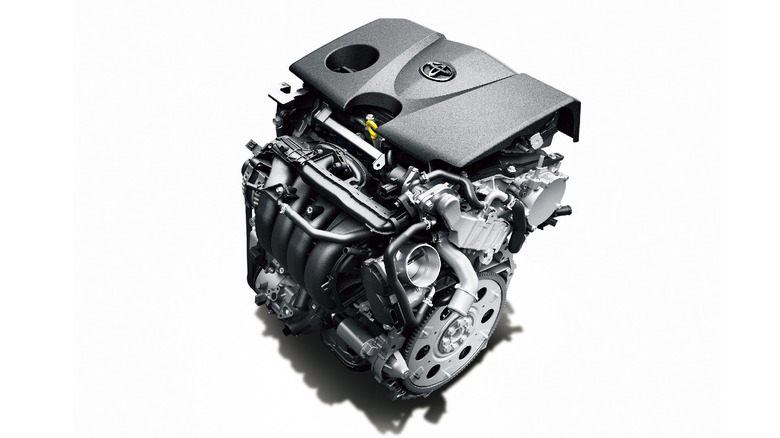
Introduced shortly after the A25A-FKS engine that we just looked at above, the Toyota M20A-FKS debuted in 2018. And for those of you wondering what the "FKS" suffix at the end of both of these engines means, it's simply denoting technologies such as dual overhead cams and fuel injection. You can think of the M20A-FKS as being the little sibling to the A25A-FKS, since both engines are remarkably similar on a number of fronts. For one, both are part of the same engine family (known as "Dynamic Force"), both are Otto cycle units, both are inline-four cylinder motors, both have an FXS hybrid variant, and both have the same thermal efficiency of 40%.
The main difference, then, would be the size, as the M20A has a bore of 87.5 mm and a stroke of 82.6 mm, giving it a displacement of 2.0 liters. The resulting power figures are also slightly diminished versus the A25A, with the smaller M20A engine making about 169 hp and 151 lb-ft of torque in the 2020 Toyota Corolla. It's worth noting that the base engine in the 2020 Corolla is a smaller 1.8-liter, four-cylinder unit, and the M20A is an option on higher trims of the car. Still, it's quite a reliable model, with the 2020 Corolla only getting five recalls till date (zero for the engine), and the Corolla Cross only having two recalls, again, with zero for the engine. Even overseas, models equipped with the M20A like the Toyota Innova and Toyota Harrier are proving to be quite reliable.
Toyota G16E-GTS
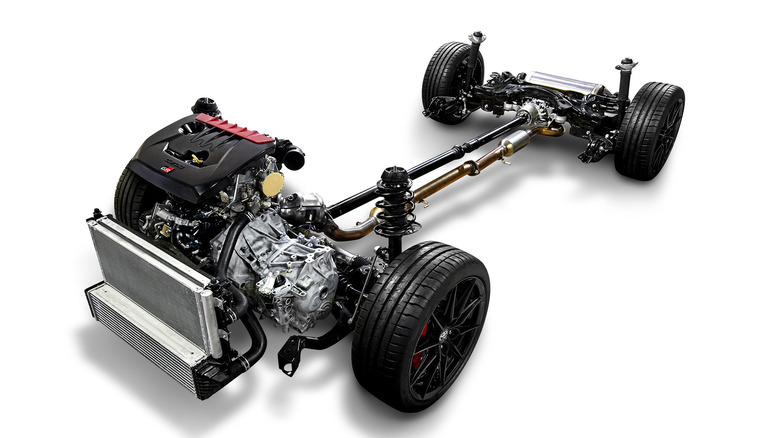
The last Toyota engine on our list is the G16E-GTS, which came with the GR Yaris. For those who don't know, GR –- which stands for Gazoo Racing -– is Toyota's skunkworks, dedicated solely to making beasts out of the automaker's regular cars. Among other vehicles, the division also makes the GR Supra and the insane GR Land Cruiser, so when Gazoo Racing puts out an engine, you know it'll be good. The engine itself is a three-cylinder motor that displaces 1.6 liters, which it achieves via a bore of 87.5 mm and a stroke of 89.7 mm, and comes with extremely upgraded and overbuilt components.
In the first-gen GR Toyota Yaris, this little three-banger engine manages to output the frankly astonishing sum of 276 hp at 6,500 rpm, alongside 288 lb-ft of torque that comes about at a moderate 4,600 rpm. What sets the G16E-GTS apart is that not only does it come with unbelievable performance, but that the complaints surrounding reliability for the engine are extremely low for a sports car.
The chief complaints seem to be the bushings wearing at about 30,000 miles, and somewhat early clutch wear when driven cold. Other issues reported include sporadic drops in turbo pressure for a few owners, but that's about it for the engine itself. Furthermore, many owners on enthusiast Toyota forums express high confidence in the stock engine internals holding up, even with performance tunes that increase power.
Honda L15B7
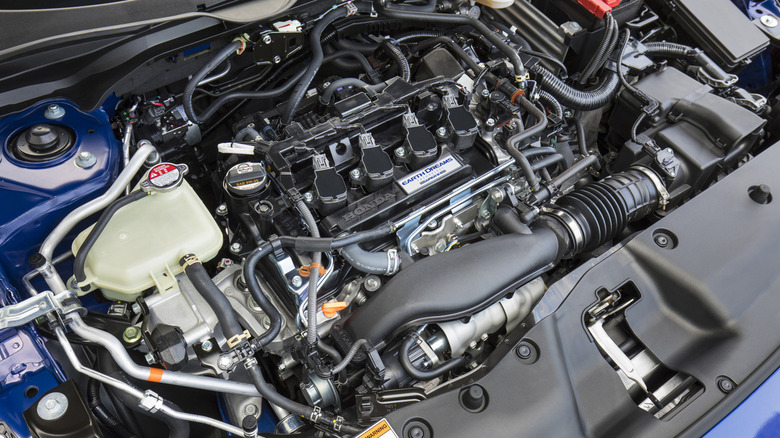
Many people criticize the Honda L15B7 engine –- found in 2016+ Civics –- for being unreliable, but we feel that a lot of the engine's problems come down to how people drive it. For example, yes, turbos can sometimes fail, and the fuel can sporadically leak into the oil –- a phenomenon known as oil dilution –- but that would primarily happen in cold climates, and was fixed after a couple early models. Then, carbon buildup is spoken about a lot online, but many direct injection engines will face the same problem, especially around the intake valves.
Even Automotive Faults says that the issues of turbo failure is "most common in vehicles with higher mileage or aggressive driving habits", so there's that. A minor Achilles heel for the L15B7 would be that there is no way for the fuel to hit the intake valves, meaning that there's no inherent way for the valves to clean themselves, but this is a minor issue. Deep dives into the engine architecture reveal that components such as the connecting rods, cooling systems, exhaust tech, camshafts, and the aforementioned injectors can easily support higher output than what comes from the factory. So it's obvious that Honda has overengineered this engine to more than the required standard, so it's going to be reliable. Further support is lent to that conclusion when we look at recall data for the 2017 Civic, which has only two engine-related recalls out of six total.
Honda L15CA
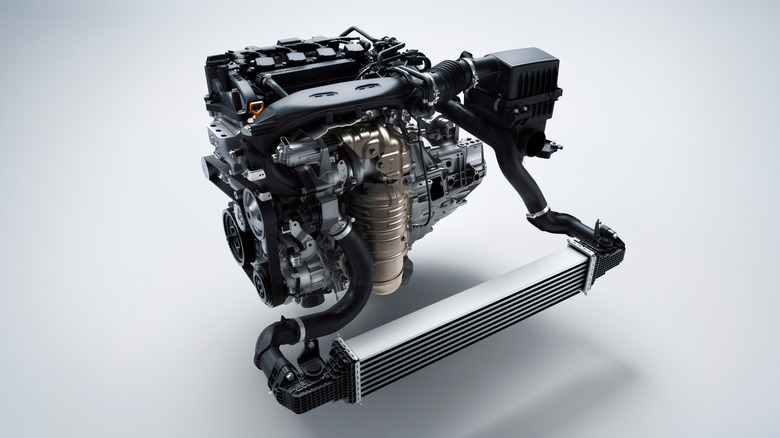
While the L15B7 engine that we just learned about above was intended for use in the 10th-generation Honda Civic that ran from 2016 onwards, the L15CA was introduced in 2022 for the generation following it.
There are a number of subtle differences between the two, with the most primary one being that the L15CA uses Honda's VTEC technology, whereas the L15B7 made do with the comparatively inferior VTC setup. While we won't get into technical details, VTEC is generally considered to be an extremely robust and reliable technology, used to both improve economy and performance, depending on rpms. Where the L15B7 made 180 hp and 192 lb-ft of torque, the newer VTEC L15CA engine makes 200 hp at 6,000 rpm, along with the same torque, which is a power improvement of roughly 11 percent over the previous generation.
The 2022 Civic currently has four recalls on it as per the NHTSA, of which just one pertains to the engine. It is also reported that the Civic is fairly solid across the engine, transmission, cooling system, and drivetrain at least for the 2022 model year, which is when the L15CA was introduced. Many owners also agree that the engine is pretty reliable when kept stock, but incorrectly tuning it can quickly prove disastrous, owing to the updated internals within the new generation. In terms of engine complaints, many owners also reported issues with the vehicle steering, but only minimal complaints concerned the engine itself.
Mazda Skyactiv-G 2.5T
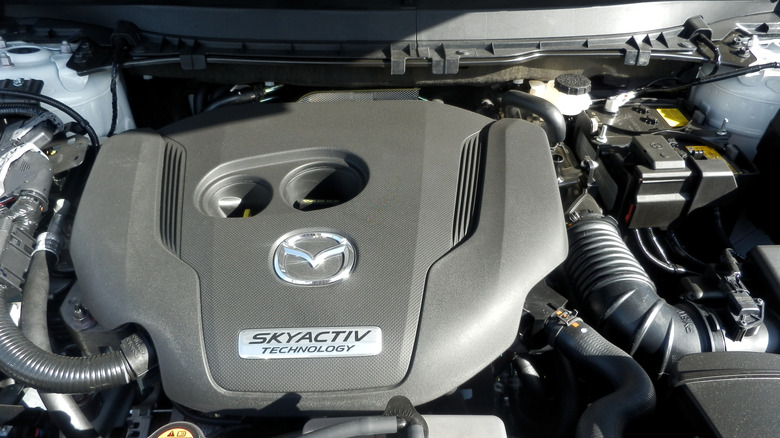
From America's third-most-reliable brand in 2025 (per J.D. Power), we have the Skyactiv-G 2.5T, which released in 2016, and then slowly made its way into other models. This is not an exhaustive list, but the engine has been offered in the Mazda 3 and Mazda 6 sedans, as well as the CX-30, CX-5, CX-50, and CX-9 SUVs. Of the models we just listed, the CX-9 SUV and Mazda 6 sedan have been retired, and are no longer available to buy new. In terms of power outputs, this would vary by model, of course, but in the Mazda 3 from 2021 –- which seems like a decent middle ground –- it made 250 hp along with 320 lb-ft of torque.
Across all the models that the 2.5T was made available in, users overwhelmingly consider it reliable, and even recalls were quite low. The CX-5 SUV, which got the 2.5T engine in 2018 only had one engine-related recall between 2018 and 2022, which was related to the fuel pump. The newer CX-5 SUV had no engine-related recalls between introduction in 2023 and mid-2026.
The Mazda CX-9 SUV, which has been running the Skyactiv-G 2.5T since 2016, only had a single engine-related recall (though there were others) until its discontinuation in 2023. We would be remiss not to mention an ongoing class-action lawsuit related to coolant leaks on this engine, though.
GM 6.6L L8T (2020)
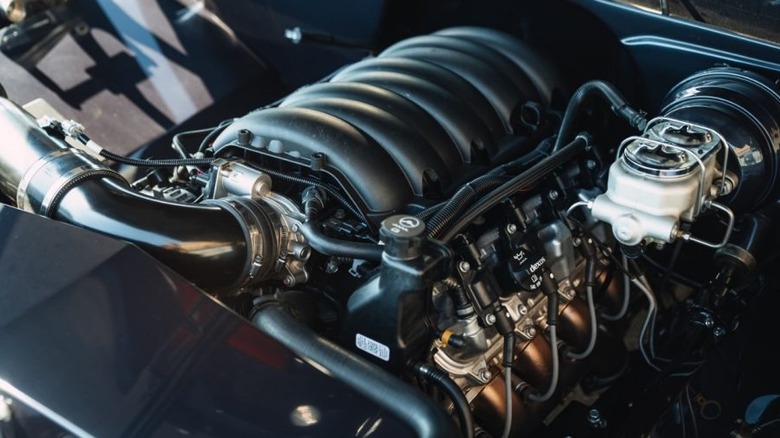
The first of three American-made engines on our list is the GM L8T motor, which is a 6.6-liter, eight-cylinder unit that achieves its displacement via a bore of 103.25 mm and a stroke of 98 mm. This engine exclusively comes in the biggest GM trucks intended to be workhorse vehicles, which maybe explains why it is so overengineered. Of the few (and sparse) issues that this engine has, the things to look out for are oil dilution and carbon buildup on the intake valves. As we mentioned before, many direct injection engines would be prone to carbon buildup, and the oil dilution issue can be mitigated to a great degree by changing the oil ahead of time, say every 4,000-5,000 miles.
Furthermore, the L8T is basically just a barebones engine devoid of all the fancy technology that tends to cause issues. For one, there is no cylinder deactivation on the L8T wherein certain cylinders wouldn't "fire" in order to preserve fuel and improve mileage. Additionally, basically every single component that matters (like the crankshaft, connecting rods, engine block, and more) is either forged or cast –- and the block is made of cast iron, which is becoming increasingly rare. The L8T is found in models like the Chevrolet Silverado HD and GMC Sierra HD, and these have a pleasantly low number of recalls. Case in point the 2021 Silverado 2500 had six recalls, of which just two were related to the engine, specifically for brake sensors and transmission valves.
Ford 7.3L Godzilla
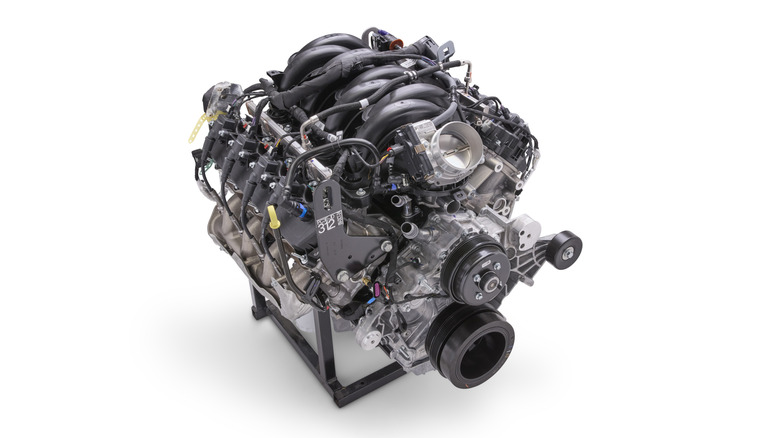
Ford's performance division specifically set out to make the 7.3-liter V8 – that got the nickname of Godzilla somewhere along the line – using tried and tested components from the past. As a result, the engine operates with very little fuss; For starters, this engine shuns the almost-industry-standard dual-overhead cams for a pushrod (also known as OHV) setup, which means fewer moving parts that can eventually break. However, by nature of it being a drop-in engine, we don't have recall data from the NHTSA, or from any other body; that's because the Godzilla is what is known as a "crate" engine, meaning you can buy it without a vehicle.
Now, it's also worth mentioning that Ford would really like you to use the 10R140 10-speed gearbox with its smaller Coyote V8 –- it says as much in clause 1.0 of this documentation –- but the Godzilla motor can and does work well with other transmissions too. Many owners on forums say that the engine has been solid, and the community of owners does quibble about the range they get with the Godzilla, but it's a 7.3-liter behemoth, which was never intended to compete with a Prius.
Furthermore, the engine was designed from the ground up with self-servicing and longevity in mind, which is why many of the internals are overbuilt -– even better news for reliability. The main issue that the 7.3-liter Godzilla engine suffers from is the lifters failing, usually brought about by extremely taxing applications and not adhering to service intervals.
Ford 5.0 Coyote Gen III
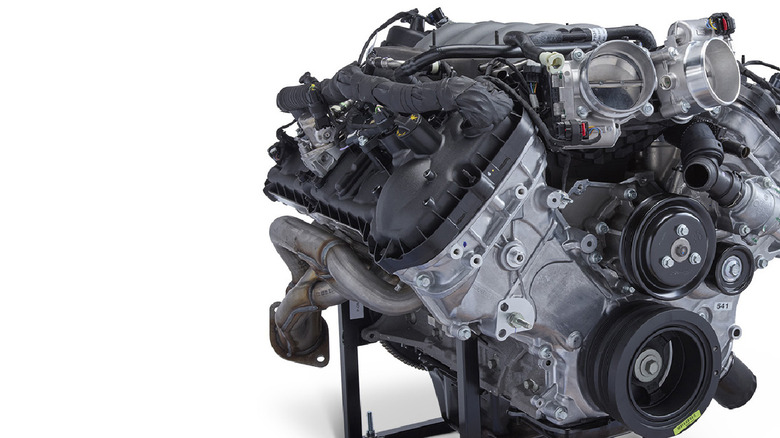
Before we get everyone writing to us contentiously about the myriad problems that plague the 5.0 Coyote Gen III, let us say this: It's reliable if you maintain it. Unlike the other engines on this list, the 5.0 Coyote is a performance engine that was used in the Ford Mustang GT, remaining in production from 2018 through 2023, marking a short run of just five years. Aside from the Mustang, it was also made available in certain trims as an optional extra on the Ford F-150. In the truck, the engine made about 395 hp and 400 lb-ft of torque, while Mustang GTs equipped with the third-gen Coyote V8 would make a massive 460 hp, along with 420 lb-ft of torque.
If we look at recall data for the 2018 Ford Mustang, there are eight NHTSA recalls for the vehicle, of which none are caused by problems with the engine. Specifically, the intake valves on the Gen III Coyote can be problematic. Once again, these are less a defect in the design, as these issues are usually caused by routine wear and tear on performance cars. Now, if you treat this engine like your regular powerplant instead of the race-inspired build that it is, you'll just be asking for trouble; the Coyote Gen III is a specialized motor that needs frequent upkeep. Once again, just like with many direct injection engines, carbon buildup is an issue, but it's one that can be mitigated with strict service intervals.
BMW B58
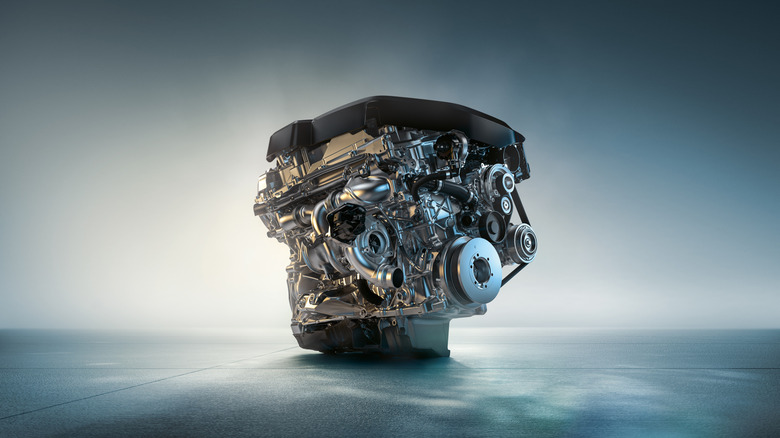
Now, BMWs don't exactly have the best reputation when it comes to reliability. Everyone has heard the jokes about oil leaks and maintenance bills when it comes to these cars. The B58 engine, though, changes a lot of that perception; it's considered highly reliable by the entire enthusiast community as a whole. Furthermore, the B58 is also regarded as one of the most tunable engines currently on the market, making it even more popular than its predecessors.
We suppose that the main benefit of the B58 engine is that it builds upon architecture similar to a lot of its predecessors, which means many of the kinks would have been ironed out. There's also the fact that the B58 engine is used in the Toyota GR Supra, and while Toyota doesn't directly involve itself in the manufacturing process of the engine, there's no doubt that its expertise has helped the B58's reliability come a long way. We don't have to repeat ourselves, but the B58 also suffers from carbon buildup, which is basically the norm across all performance direct-injection motors.
Aside from that, the high-pressure fuel pump can also fail, coolant systems can leak occasionally, and the turbocharger wastegate might loosen over time. That's honestly all the major issues -– none of which are stupendously expensive to fix. At any rate, the B58 is a marked improvement over the N55 which preceded it, so it's a step in the right direction.
Methodology
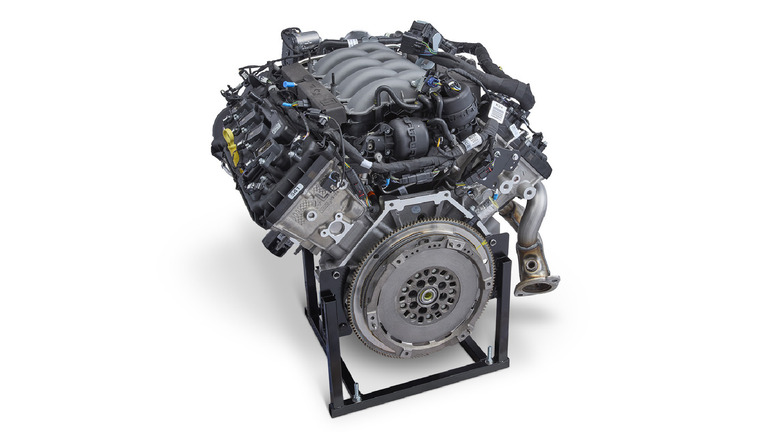
When an engine is new (e.g. Stellantis' latest 2.0 Hurricane) we don't really have the data for it. Major issues start to come out from about 2 or 3 years deep, and we're talking about the end models and not the engine. After all, you can't really know how reliable an engine is until several thousand owners skip services and nothing happens –- ideally. Resultantly, we deliberately excluded engines that debuted after 2020 to make sure that at least a few years would elapse.
Our first port of call was the NHTSA recall checker. We started with the oldest (but newer than 2016) model available with the engine in question, which had to have less than 6 engine-related recalls. In other words we gave the car a very tight recall window of 1 per year, roughly. Crucially, this also gives us enough time for 100,000+ mile examples to appear.
Some of the engines on our list (like the GM 6.6) had a couple NHTSA owner complaints and/or investigations, so we looked into those to ensure nothing engine-related was in there. We then pored over official manufacturer brochures for that year to ascertain which models the engine had been available in. Other sources consulted included websites like Car Complaints and any released OEM technical service bulletins (TSB), such as with the RAV4. Additionally, wherever the NHTSA published a self-study guide for a specific engine, we looked through those in search of helpful anecdotes and comments to provide as well-rounded a list of reliable engines as possible..