

5 Cheaper Alternatives To The Mazda CX-5
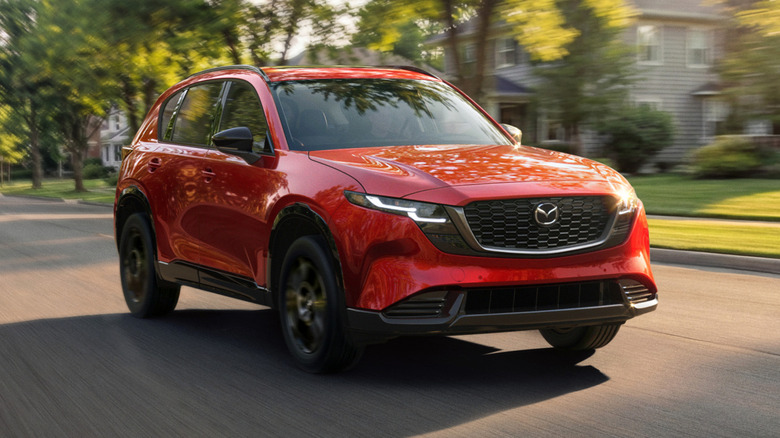
Buyers looking for a compact SUV have plenty of affordable options to choose from, including the Mazda CX-5. For the 2026 model year, the CX-5 starts from $31,485 (including a $1,495 destination fee) in base-spec form, undercutting rivals like the Honda CR-V and Toyota RAV4. Even with its affordable starting price, the base CX-5 is well equipped, with a 12.9-inch infotainment touchscreen and all-wheel drive as standard. All 2026 CX-5 trims also share the same 187 hp four-cylinder engine. Unlike many of its rivals, no hybrid option is available.
Mazda gave the CX-5 some upgrades for the 2026 model year, revising its styling both inside and out as well as adding a fresh batch of new tech. That has helped make the SUV a more competitive option in its segment, but it's still not the cheapest.
Buyers looking to spend as little money as possible on their new SUV can still save a little by looking elsewhere, with rival Japanese, Korean, and American manufacturers all selling similarly sized models for less. Confusingly, Mazda itself even offers a cheaper alternative to the CX-5, and it could cost less at the fuel pump to boot.
Kia Sportage
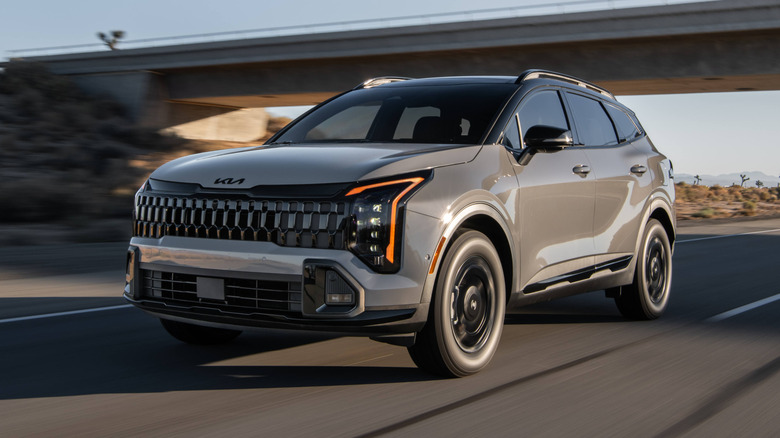
The Kia Sportage offers a lot of capability for a modest price, and that has turned it into a perennially popular model. In 2025 alone, the Korean carmaker sold more than 180,000 examples in the U.S. In its base gas-powered form, it's cheaper than the CX-5, with a starting price of $30,285 (including a $1,495 destination fee). The catch is that base versions of the Sportage are front-wheel drive, and adding all-wheel drive bumps the price up to $32,085. In contrast, the CX-5 offers all-wheel drive as standard.
Buyers who stick with front-wheel drive will also find that the 2026 Sportage is slightly more efficient than both its all-wheel drive sibling and the CX-5. While the all-wheel drive Mazda and all-wheel drive Kia achieve the same EPA-estimated 26 mpg combined, the front-wheel drive Kia should hit 28 mpg. Though, those figures all pale in comparison to the Kia Sportage Hybrid, which should achieve 42 mpg in front-wheel drive form.
Despite its superior efficiency, the Sportage Hybrid isn't much more expensive to buy than the CX-5. It starts from $31,985 for the 2026 model year, and that $500 difference will be very quickly offset in fuel savings. According to the EPA's estimates, a front-wheel drive Sportage Hybrid should cost $900 less in fuel every year than a CX-5, assuming an annual mileage of 15,000 miles.
Chevrolet Equinox
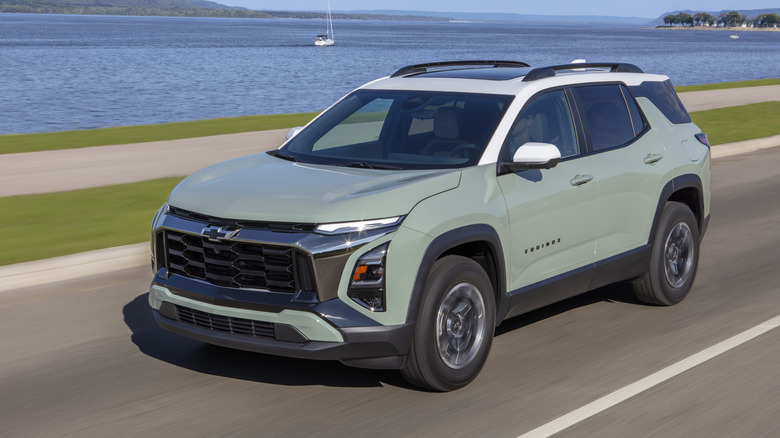
A base Chevy Equinox starts from $30,795 (including a $1,995 destination fee), and much like the Kia Sportage, it only offers front-wheel drive as standard. If all-wheel drive is a must-have option, you'll be looking at a starting price of $32,795. In efficiency terms, there isn't much difference between the Chevy and its gas-powered Japanese and Korean rivals. The all-wheel drive Equinox achieves 26 mpg combined, which is an equal figure to the Mazda CX-5 and all-wheel drive Sportage. Much like the Mazda, Chevrolet does not offer a hybrid version of the Equinox.
While the CX-5's entire trim range is catered towards buyers who prefer to keep their cars firmly on the asphalt, the Equinox offers the Activ trim for those who need to venture onto a wider range of surfaces. The Equinox Activ is certainly no hardcore off-roader, but when we tested it in 2025, it handled a course of unpaved roads without complaint. The beefier tires and added cladding also help toughen up its appearance compared to the rest of the Equinox range.
The downside is that the Equinox Activ isn't cheap. Without optional extras, it starts from $37,595. For a similar price, you could get the CX-5 2.5 S Premium trim, which features niceties like a 12-speaker Bose audio system and leather-trimmed seats. Our reviewer also found that the all-terrain tires of the Equinox Activ dented the car's fuel efficiency by several mpg, despite EPA figures claiming that there was no difference between trims.
Mitsubishi Eclipse Cross
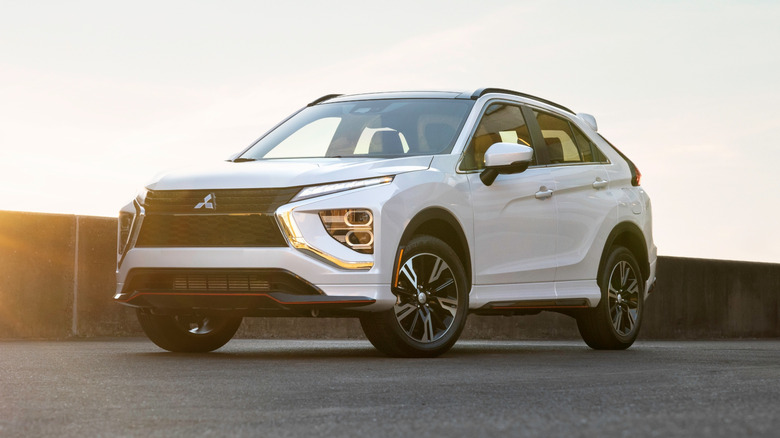
Both the Kia Sportage and Chevrolet Equinox have features that make them an appealing alternative to the Mazda CX-5, aside from simply being cheaper upfront. In comparison, the Mitsubishi Eclipse Cross doesn't really do anything to stand out from the crowd. It is, however, the cheapest car here.
For 2026, Mitsubishi will sell you an Eclipse Cross for as little as $29,750 (including a $1,795 destination fee). The base trim also gets Mitsubishi's S-AWC all-wheel drive system as standard. In its cheapest form, the Eclipse Cross hits an EPA-estimated 26 mpg combined, putting it exactly on par with its rivals, but in higher trims, it drops slightly to 25 mpg combined.
At the very top of the trim range is the Ralliart trim that loosely draws on the brand's rallying heritage, but the changes are only cosmetic. There's a rear wing, contrasting red skirts, and mudflaps, but Mitsubishi keeps the same 1.5-liter engine under the hood. With its 152 hp output, it makes the Eclipse Cross one of the slowest new cars in America from 0-60 mph. It's still not quite as slow as the Chevrolet Equinox, mind, but it's still comfortably bested by all of its hybrid rivals.
Nissan Rogue
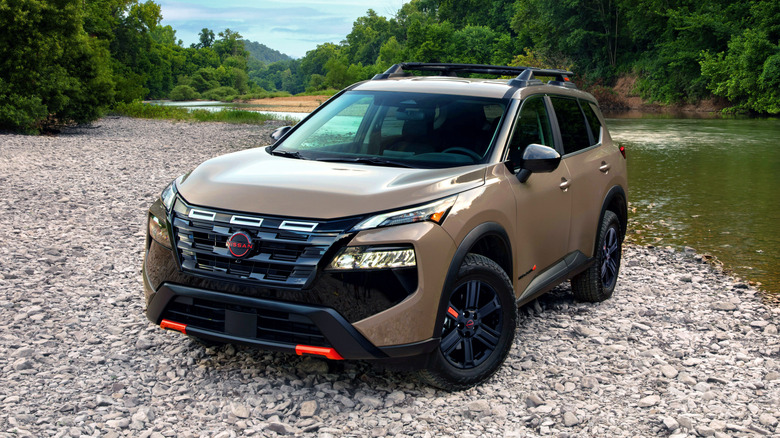
The range-topping Nissan Rogue Platinum isn't very exciting, although that's not necessarily a bad thing. That trim is very pricey, but its base-spec variant is a much more wallet-friendly commuter car. The 2026.5 model year Rogue starts from $31,035 (including a $1,545 destination fee). Like many of its competitors, the Rogue is front-wheel drive in its base form. Adding all-wheel drive brings its starting price to $32,435, making the Mazda CX-5 slightly cheaper upfront if sending power to all four wheels is essential.
The difference in upfront costs between the base Rogue and CX-5 is minimal, but in efficiency terms, the Rogue should consistently be the cheaper option. According to the EPA, the front-wheel drive Rogue is capable of hitting 32 mpg combined, while its all-wheel drive sibling achieves 31 mpg. As a reminder, the CX-5 manages only 26 mpg combined according to the agency.
The least efficient Rogue trim is the Rock Creek, which is rated for 29 mpg combined. It's a few thousand dollars more expensive than a base Rogue, but the Rock Creek trim adds extras like all-terrain tires and roof rails. Also included are plusher leatherette seats, while base trims receive cloth upholstery. As you'd expect for an all-terrain trim, all-wheel drive on the Rogue Rock Creek comes standard.
Mazda CX-50
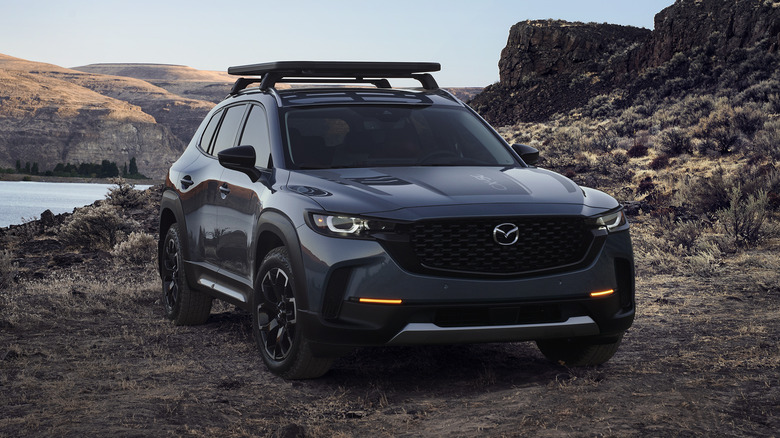
Alongside the CX-5's many rivals from outside Mazda's dealerships, there's one rival that can be found within them. The CX-50 shares plenty of components with the CX-5, including its base 187 hp engine, but it's built with a slightly different audience in mind. While the CX-5 is tailored for the road, the CX-50 will tackle the great outdoors as well. It features a higher ride height and a lower roofline, as well as plastic cladding that should prove more resistant to scratches from rocks and plants.
Upfront, the CX-50 is marginally cheaper than the CX-5, with a base price of $31,395 (including a $1,495 destination fee). Base models also offer identical fuel efficiency to the CX-5, while the 256 horsepower turbocharged engine that's available in higher trims achieves a single mpg less, hitting 25 mpg combined. Notably, that more powerful engine option is absent from the CX-5's trim lineup.
Also missing from the CX-5 lineup is a hybrid option, but the CX-50 delivers in that regard too. The CX-50 Hybrid is pricier upfront, with a starting price of $36,245, but it should pay for itself over time at the gas pump. Based on an annual mileage of 15,000 miles, the EPA estimates that the base CX-50 will cost $2,400 in fuel each year, while the CX-50 Hybrid will cost $1,650. That equates to a saving of $750 annually, which means it should take around 6.5 years to fully offset the additional upfront cost of purchasing the hybrid.