

Old Cars With High Resale Value You Might Have Sitting In Your Garage
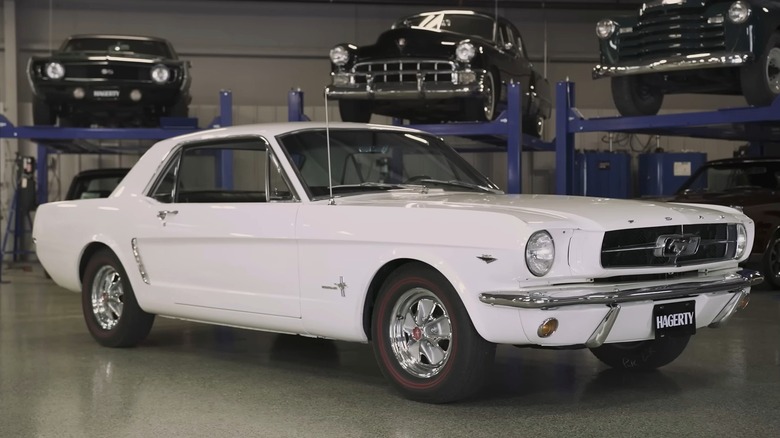
Most people don't think twice about that old car sitting in their garage, probably because it once belonged to a family member, or maybe it's something they drove years ago and never got the right time to sell off. Whatever the story is, there's a real chance that what you've been treating like an afterthought is actually worth a whole lot more than you'd expect.
In the classic car market of today, certain older vehicles have been quietly climbing in value, and not just the obvious ones that everybody already knows about. Some of these cars were completely ordinary when they first rolled off the lot — family sedans, diesel wagons, everyday drivers — but time has a funny way of turning the ordinary into the desirable, and buyers today are willing to open their wallets to prove it, which is exactly what this article is about.
We put together real auction results and trusted valuation data that shows what price these cars are pulling in today. So, whether you've got one tucked away, or you're just someone who loves watching the classic car market do its thing, there's something here worth paying attention to.
Porsche 911
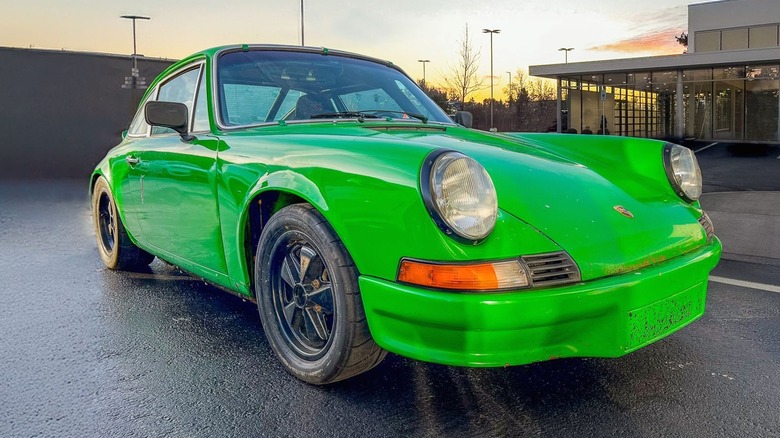
If you've got a Porsche 911 sitting in your garage and always assumed it wasn't worth much, the numbers in this slide will change your mind fast. Since its release in 1964, Porsche has built more than 1.2 million 911s in total at Zuffenhausen and evolved it through eight generations — milestones that include the short-to-long wheelbase transition, a switch to a water-cooled design, and a relentless pattern of reinventing the thing under the hood every time U.S. emissions regulations came knocking on the door. However, through all of it, the 911 never lost its identity — It stayed rear-engined, flat-six, and unmistakably itself, which is pretty much a hard pull-off for over a span of six decades.
That kind of staying power is exactly why first-generation models today remain some of the most sought-after and frankly, investable collectibles in the world. Even Hagerty pegs the resale value for 911 that was released in 1964 for anywhere around $500K as long as it's in good condition, and that's not even the ceiling. Whether it's a classic Carrera or a fan-favorite 964, older 911s keep pulling in serious money, and according to Classic stats, it's become almost routine to see 1988 to 1998 examples cross the million-dollar mark. A 1991 Carrera sold for $1,060,000 this month, one 1968 911 R hammered at $1,105,000 last year at RM Sotheby's in Monterey, and the highest sale this year for a 1993 911 Turbo S hit $2,480,000 through RM Sotheby's in Arizona.
Toyota Supra
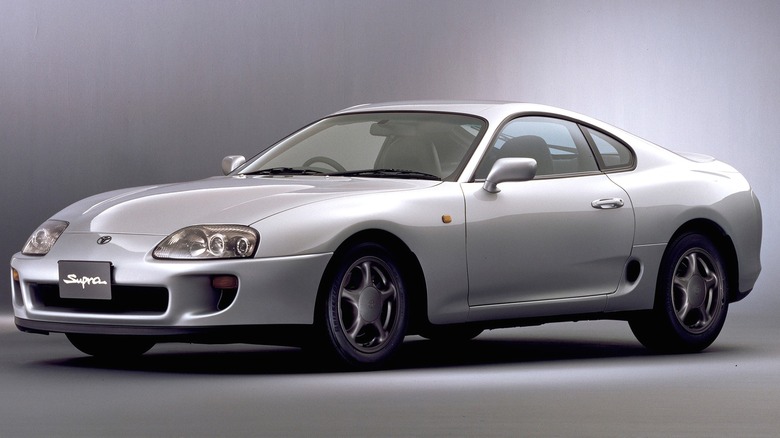
The Toyota Supra was born in 1979 under the Toyota Celica Supra name, and getting it there required Toyota to add 5.1 inches to the Celica's wheelbase just to make room for everything the Supra's engine needed under the hood. They also grafted a distinct front face that gave it an identity separate from the car it shared a platform with. By 1986, the Celica name was dropped entirely, and the Supra stood on its own terms. Over the next two decades, it sold 593,337 units across five generations, and even when Toyota made the call to stop selling it stateside after '98, the nameplate never really left the minds of the people who loved it.
Japan, on the other hand, carried on with sales until 2002. Toyota eventually brought the Supra back as a new generation in 2020, but by then, the prices of the models that had been sitting in storage units for almost four decades had already started to spike. Nobody anticipated that the fourth-gen Toyota Supras, particularly the turbocharged variants from the mid-to-late 1990s, would become one of the most aggressively collected Japanese cars on the market and command the kind of money they're pulling today.
At Mecum Kissimmee, in January 2026, a 1998 fourth-gen Supra Turbo changed hands for $242,000. Collecting Cars Auctions followed in April with a 1994 Turbo selling for $150,500, while a $126,726 1993 Turbo by Bring A Trailer was sold a few days before. The most recent sale at time of writing — a 1998 Turbo that crossed the block just this month — walked away with $72,098.
Honda/Acura NSX
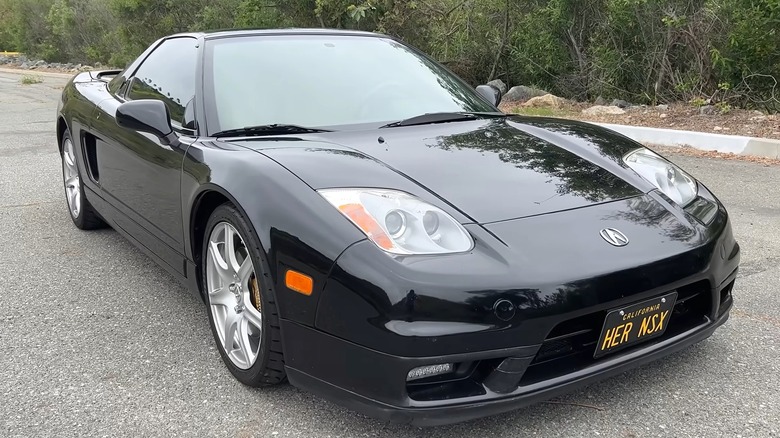
When the Honda NSX arrived in 1990, it was both Japan's first entry into the supercar world and the priciest car the country had ever put on sale, although Honda had a very deliberate reason for the pricing. The company needed to back up its F1 reputation, because nothing else in its lineup came close to reflecting that pedigree. So, with a price tag of $65,000, the 1991 model was their answer, and they made sure it showed up loaded. The interior was designed with the cockpit of an F-16 Falcon fighter jet in mind, and before it ever reached the public, Formula 1 legend Ayrton Senna had put it through its paces during testing.
Honda moved around 1,940 NSXs in its debut year alone, with roughly 9,000 first-gen models SOLD in America between 1991 and 2005. Some variants took that exclusivity to a whole different level, like the Alex Zanardi Edition of '99, that left the factory with only 49 examples. For years, though, the market largely slept on it. It wasn't until Acura rolled out its Advanced Sports Car Concept at the 2012 Detroit Auto Show that collectors started paying close attention, and once they did, prices took off fast.
By 2018, the cleanest examples had already crept close to $150K, and in 2025, a 1995 NSX-R sold for $450,679. In January 2026, another NSX-R 2005 model sold for $381,000. The real headline, though, came from Broad Arrow at Villa d'Este, where a 2003 NSX-R was sold for over $1 million.
Ford Mustang
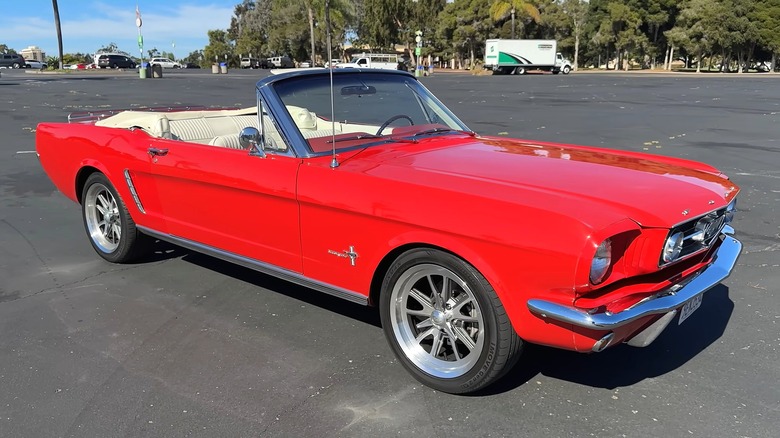
Despite being around for over seven generations, the Ford Mustang still pulls much heat in the market today. It all traces back to 1964, when Ford rolled different forms of the Mustang, including convertibles and notchback. It sold 22,000 units on day one, crossed the million mark by 1966, and by the time the first full year of production wrapped up, 680,989 units had already found a home. But what made the '65 model so special went beyond just the numbers — it came with engine options that included the two-barrel and four-barrel V8s and a six-cylinder. In August 1964, the 2+2 fastback came along, giving buyers even more to get excited about.
However, the Mustang got redesigned in 1967, and by 1969 Ford came back with the Mach 1, Boss 429, and Boss 302 — three cars that makes that model year one of the most unique in American history. Apart from that, between 1965 and 1973, the generation moved well over three million units, but this abundance doesn't mean a Mustang in good conditions can't fetch a good price today.
Recently, a clean 1965 Ford Mustang Fastback was sold for $770,000, a 1969 Ford Mustang Boss 429 reached $517,000, and a 1970 Ford Mustang Boss 429 went for $627,000 last year. At the top of it all sits a 1967 Shelby GT500 Snake that exists nowhere else on earth, which hammered at $2.2 million at Mecum's Kissimmee sale in 2019.
BMW E30
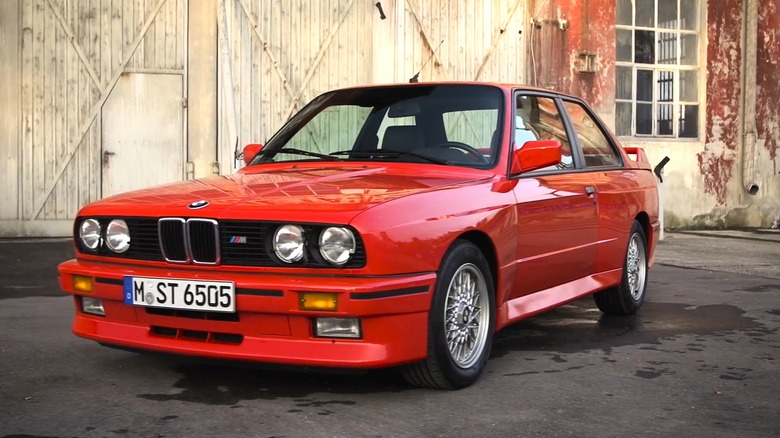
Born in 1982 as part of BMW's second-generation 3 Series, the BMW E30 is one of those '80s sports cars that has genuinely stood the test of time, but the story gets far more interesting when you zero in on the M3 variant specifically. As the years went by, BMW needed a street-legal version of the E30 to qualify for both Group A and Germany's own DTM series, and to make that happen, the Motorsport Division was handed the lineup to rebuild it from the ground up in ways nobody saw coming. The result debuted in 1985, with only around 15,000 models across the entire first-generation run, and just north of 5,000 ever made it stateside across the M3's entire six generations — no wonder why it commands so much money today.
That said, buying into this market means having to go in with your eyes wide open, because not every classic E30 sitting in a garage is a hidden treasure, especially if the panels or door jambs are compromised. You can, however, swap them out with some specialist-produced replacement parts made in small batches. For a car that launched at around $34,800 back in 1988, Hagerty's Good Condition valuation for that same car today sits at $65,600, and that's just the baseline.
Just last year, at an RM Sotheby's auction, a 1990 BMW M3 Sport Evolution crossed the block at $379,666. Even this year, a comparable 1990 Sport Evolution fetched $247,818. And the coupe version? A 1988 model sold for $163,000 in September 2025.
Mercedes-Benz W123
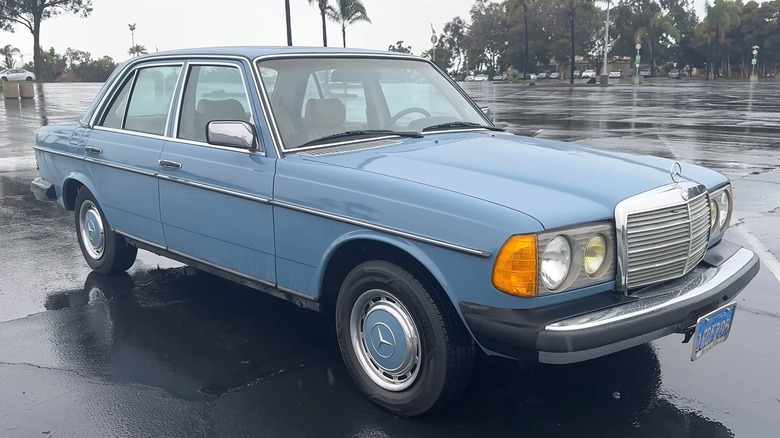
When the Mercedes-Benz W123 first rolled out in 1976 as a 1977 model, it took over from where the W114 and W115 left off, and held its ground all the way through 1985 before Mercedes finally handed the torch to the W124 in 1986. By the time it was all said and done, more than 2.7 million of them had moved off the lot, making it one of the most successful vehicles Mercedes ever put its name on.
The mid-sized car also came in just about every body style you could want — coupe, sedan, and wagon — and gave buyers a solid lineup of engines through models like the 200D, 240D, and 300D, whether you preferred diesel or gas. Whatever version ended up in your driveway, people today are still actively hunting for them, and that kind of demand doesn't lie when it comes to holding value.
For anyone looking to buy one, the W123 is actually an affordable classic car, and according to Hagerty, you can find a good 1983 example for around $10,900. But still, nicer ones have been pulling in serious money lately. At Bring A Trailer, a 1982 300TD Turbo wagon changed hands for north of $99,500 back in early 2024, and the 1983 300CD Turbo coupe isn't far behind, either, reaching over $56,500. As recently as 2026, a 1980 280CE fetched $79,666 and a 1983 300TD wrapped up at $55,000.
Methodology
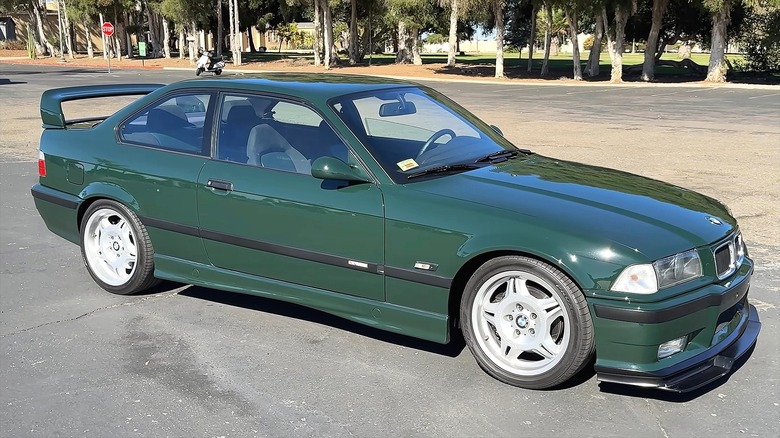
Our goal going into this piece was pretty straightforward — find cars that people actually own, the ones collecting dust in garages across the country, and show them just how much money they might be sitting on without even realizing it.
Our research started with identifying which older vehicles have shown consistent and verifiable resale strength over time. To do that, we tracked down recent auction highs and valuation trends for each model using some of the most trusted names in the classic car space: Hagerty, Bring A Trailer, and Classic.com. Hagerty in particular helped establish a solid baseline for what an average example of each car typically runs for, while the auction results painted a clear picture of just how high the ceiling can get when a clean, well-kept version hits the market.