

5 Best Compact Phones To Buy In 2026
The year is 2013. Phones like the HTC One and Nexus 5 are paving the way for what Android smartphones are supposed to look and feel like. On the other side of the fence is the iPhone 5s in all of its iOS glory. Despite major differences, all these smartphones rocked a screen size of under 5 inches. Heck, the Samsung Galaxy Mega, with its humongous footprint as its leading selling point, had a screen size of 5.8 inches. Fast forward a decade and a few years, and the iPhones and Samsungs of the world are specced with 6.9-inch displays — the new normal.
I don't mind big phones — they are better for watching movies and playing games, and they allow for bigger batteries. Software features like one-handed mode and UX practices that favor reachability have further helped make larger devices easier to live with. However, every time I hold a smartphone that doesn't require me to perform finger gymnastics, I am in awe at how much more comfortable the experience is. Given the inflation in screen sizes, though, we just have to make peace with what qualifies as a compact smartphone nowadays.
I'd say anything around 6.3 inches, provided it's a bezel-less panel, qualifies as compact by today's standards. With advancements in battery technology and more options than ever, 2026 is a great year to shop for compact smartphones. You can find more details on how I picked the mentions for this list at the end of the read.
Apple iPhone 17e
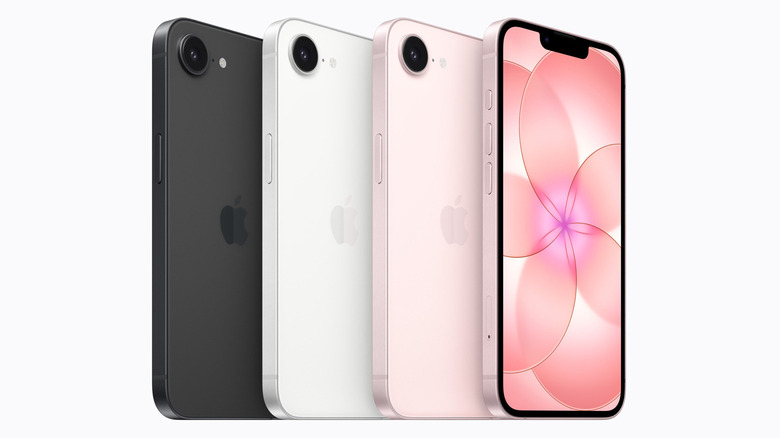
Though the iPhone SE is more reminiscent of a compact phone, Apple discontinued the series in favor of a more updated design with the iPhone 16e we reviewed. The phone received mixed feedback given its higher launch price and the omission of MagSafe, which has since become a staple iPhone feature, and Apple rectified these issues with the iPhone 17e this year. With a single camera and a 60Hz display, it still very much is a budget offering from the brand, but at 6.1-inches, it is also the smallest current-generation iPhone you can buy.
What it doesn't compromise on is build quality. The 17e still uses an aluminum frame and a glass back, both of which contribute towards a premium experience. Despite its dated notch design, you get slimmer uniform bezels all around, and the display is fortunately still an OLED panel. The phone offers an IP68 rating, so it should be able to withstand a drop or two in the bathtub. Apart from the classic black and white colorways, the iPhone 17e also offers a soft pink this time around.
Pricing starts at $600, but you do get twice the base storage capacity at 256GB compared to the 16e. Apple's in-house A19 chip is also no slouch — you can expect great performance out of the 17e, as highlighted in PhoneArena's review. While I cannot make do with a 60Hz phone in 2026, I know plenty of folks who would value a compact iPhone with a solid camera experience.
Samsung Galaxy S26
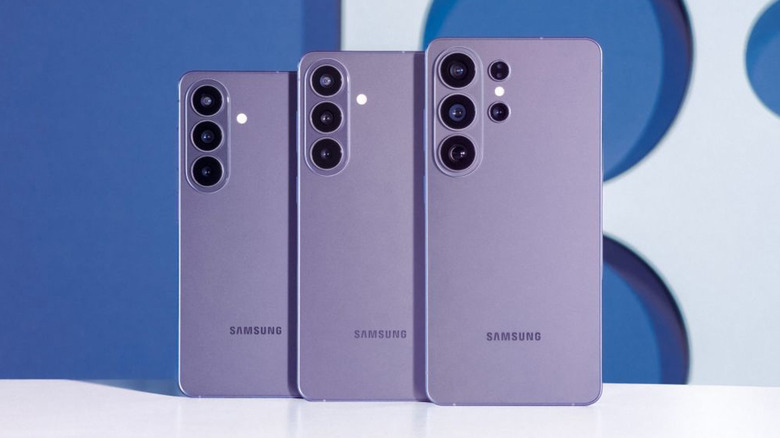
You might also want to consider the Samsung Galaxy S26 if you're shopping for a compact smartphone. It features a 6.3-inch AMOLED panel that refreshes at 120Hz. With slim bezels all around and a substantially smaller cutout to house the front camera, the Galaxy S26 offers you more screen real estate while being nearly identical in dimensions to the iPhone 17e. It uses a glass back panel that's protected by Gorilla Glass Victus 2 and an aluminum frame. At 167 grams, it is considerably lighter than most regular-sized smartphones.
Though there is nothing inherently flawed with the S26, a lot of tech enthusiasts feel it doesn't pack in enough upgrades from its predecessor. This makes last year's Galaxy S25 a worthy alternative if you can find it at a discounted price, especially given its smaller 6.2-inch footprint. That said, the Galaxy S26 does run on the latest silicon — the Snapdragon 8 Elite Gen 5. You get a triple camera system comprising a 50-megapixel wide, 12-megapixel ultrawide, and a 10-megapixel 3x telephoto lens.
Pricing starts at $900 for the 256GB model, and it comes in half a dozen color options if you're buying straight from Samsung's website. One UI continues to be one of the most feature-packed Android skins, and Samsung promises up to 7 years of OS updates to the S26 lineup. Like BGR mentioned in its review, if you're looking for a refined Samsung smartphone, there's very little to complain about with the Galaxy S26.
Google Pixel 10 Pro
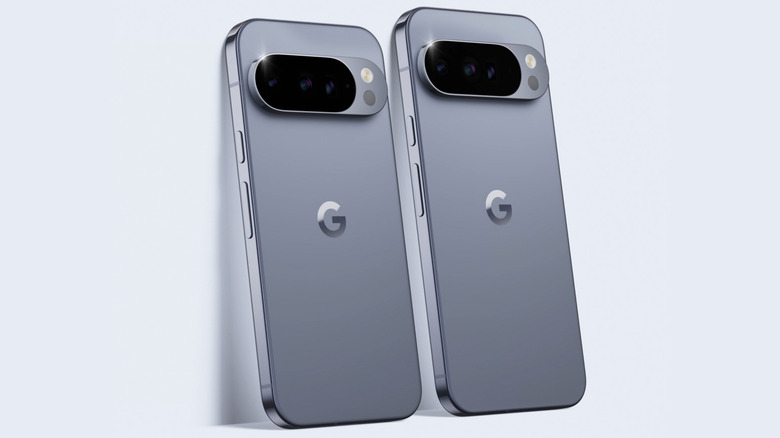
It's a little hard to believe how Google's Pixel series is already in its tenth generation. Like Apple, Google offers a decent variety of smartphones at different price points. The $1,000 Pixel 10 Pro is the company's most powerful smartphone, but unlike its XL sibling, it comes with a relatively compact 6.3-inch display. It's OLED, 120Hz screen has great outdoor visibility and generally delivers as good of a display experience as most flagships. You get a glass sandwich build with an aluminum frame for support. At 207 grams, however, the Pixel 10 Pro does make its presence known in your hands.
In our review of the Pixel 10 Pro XL, which shares the same camera system as the smaller 10 Pro, we went over how it still delivers a great photo and video capturing experience that progressively seems to improve every year. Another neat addition to this year's Pixel 10 lineup is the MagSafe-esque Pixelsnap feature.
Owing to lackluster performance and poor battery life reports, Google's Pixel lineup has never been my favorite, but if you're looking for a clean Android experience and a camera system that can rival that of the iPhone, you don't have many options. You can also consider the regular Pixel 10 or the budget-oriented Pixel 10a we reviewed, both of which also have identical footprints. Regardless of which model you opt for, Google promises up to 7 years of Android updates.
Motorola Razr Ultra
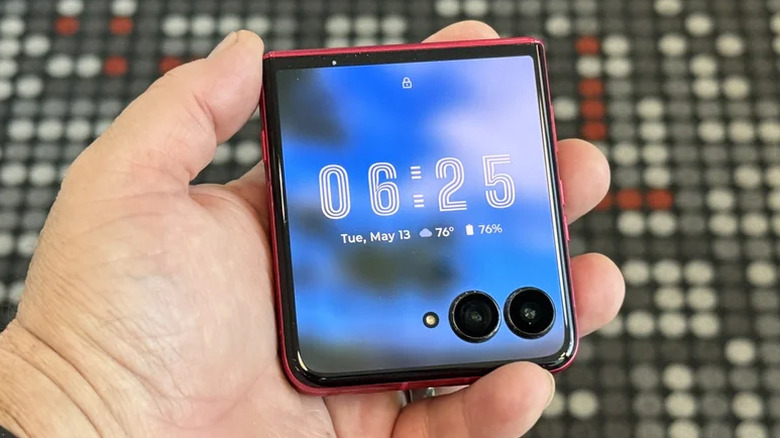
Flip phones are a rare breed that technically aren't smaller than regular slab-style phones when unfolded, but they do become far more pocketable when snapped shut. This is why I think this list deserves at least one foldable. Unlike the first few generations where the flip functionality was more of a novelty, current-generation options actually have outer displays large enough to handle useful tasks like navigating, replying to messages, or controlling music playback. The Motorola Razr Ultra is a flagship-grade flip phone that retails at $1,500.
When unfolded, it's actually taller than most phones, but the 7-inch display is narrower than regular smartphones. When collapsed, you get a small but functional 4-inch outer screen that actually goes around both the rear cameras — or the front cameras, depending on how you use the phone. Surprisingly, both displays are nearly identical LTPO AMOLED panels with a refresh rate of 165Hz. The inner display does get comparatively brighter at 4,500 nits compared to the outer screen's 3,000 nits.
Since it uses a foldable screen, the inner display uses a plastic coating. You do get an aluminum frame, and the outer display is regular glass protected by Gorilla Glass Ceramic. The lower half of the phone, also the only part that isn't a display, is made out of a wood, satin, or leather-like texture, based on the colorway. In our review of the Razr Ultra, we rated it a 9/10, citing great build quality, cameras, and battery.
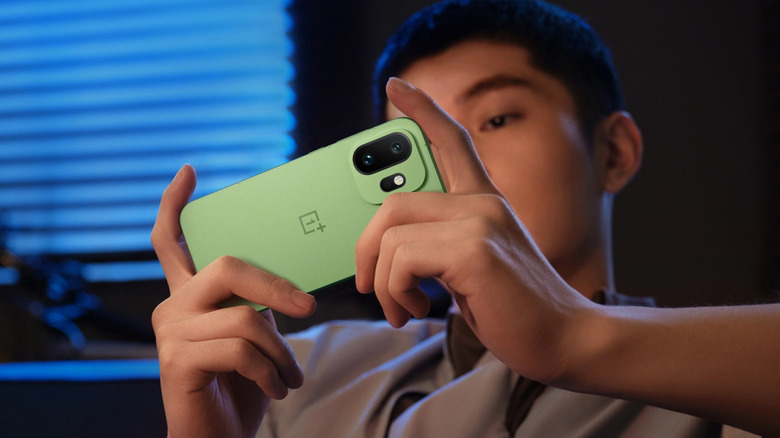
OnePlus 15T
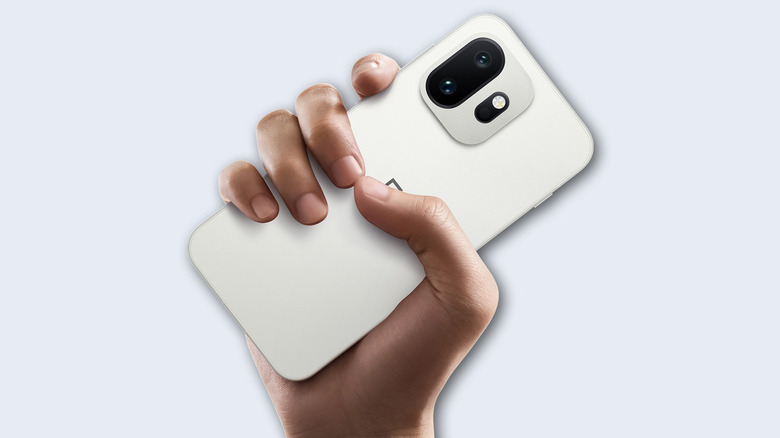
OnePlus is one of the better-known Chinese OEMs that has switched to using silicon carbon batteries for its phones. We reviewed the OnePlus 13s last year, but the updated OnePlus 15T is the brand's newest compact flagship. With a display size of 6.32 inches, the phone is noticeably smaller than the OnePlus 15 that the company sells in the U.S. as its primary flagship. Moreover, the OnePlus 15T actually has slimmer bezels than even the iPhone 17 Pro.
The phone is constructed out of an aluminum frame and a glass-fiber back panel. You get IP68 and IP69K ratings, which shield it against dust and water. The phone weighs 194 grams and is available in colorways of brown, green, and white. Unfortunately, the phone is currently only sold in China, and a global launch seems unlikely. The phone starts at CNY 4,300, which works out to around $630.
Despite being compact, the OnePlus 15T doesn't sacrifice its internals. It's powered by the latest Snapdragon 8 Elite Gen 5 SoC and can be decked out with up to 16GB of RAM and a terabyte of fast UFS 4.1 storage. Funnily enough, at 7,500 mAh, it packs in a bigger battery than the 6.78-inch OnePlus 15. Thanks to silicon carbon technology and a charging speed of up to 100W, early reviews suggest battery life is exceptional. Even the OnePlus 15 that we reviewed lasted nearly two days with moderate usage.
How I picked smartphones for this list
A decade ago, a 6.3-inch smartphone would have been considered uncomfortably large, so it's a little amusing how technology has progressed since. It's rare to find flagship-grade smartphones of these sizes anymore. Apple tried with the iPhone 12 mini and 13 mini — both of which were crowd favorites — but failed to hit the company's sales expectations and ended up being discontinued. We had the Asus Zenfone 9 and Zenfone 10 smartphones too, both of which were under 6 inches — this formula, once again, didn't sustain.
This is why it's refreshing to see high-end smartphones come in more pocketable form factors. Though screen size and build materials were the primary considerations, all phones on this list also offer great performance, solid camera quality, and reliable battery life. I've also referred to reviews by expert publications such as BGR and PhoneArena that conduct in-depth testing of products before making a recommendation.