

6 Mazda Engines You Should Steer Clear Of
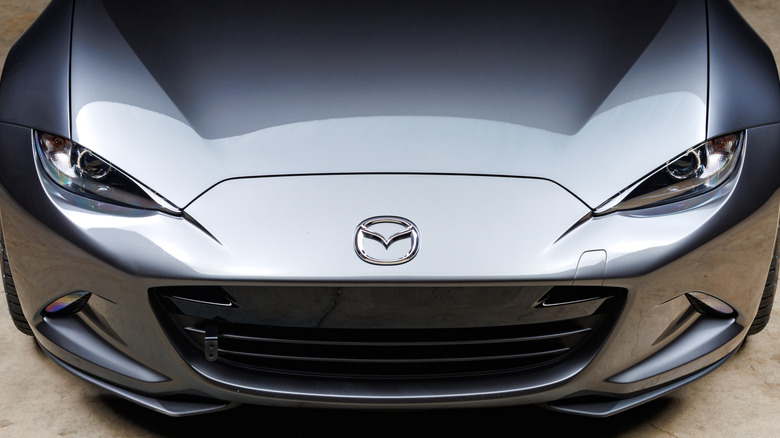
Mazda is known for many things, not least for championing the iconic rotary engine in cars like the RX-7 and RX-8. The Japanese automaker has a good track record with more conventional piston engines too, of course, and 2010s innovations like the Skyactiv engines have generally proved very dependable. Even the best of the best have their off days, however, and that applies to Mazda and its engines as well. For all the deserved respect that reliable Mazda engines such as the 1.8-liter F8 and 2.0-liter LFF7 engines have earned over the years, there have been a few missteps along the way that have dinged the brand's reputation and caused unfortunate owners some pretty significant headaches.
If you're looking to get a used Mazda, you're likely better off avoiding units with these engines under the hood. Of course, this doesn't make them bad cars, nor are we saying that all examples of these engines will have failed or are bound to fail. You could very well buy a car with one of these and have many years of trouble-free running. However, if you're looking to keep the odds in your favor, these are ones you'll want to think twice about, at the very least.
Early 2.5-liter Skyactiv-G engines
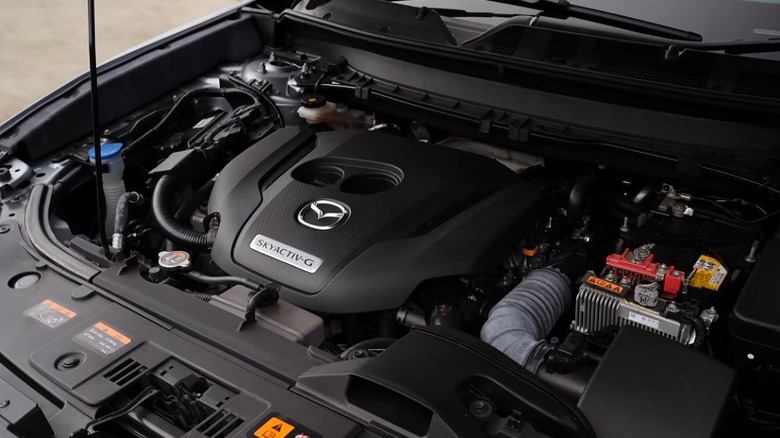
Mazda's Skyactiv-G engines have a reputation among owners for being reliable, with some putting 200,000 miles or more onto their Skyactiv-G-equipped Mazdas without any serious issues. As with many cars and engines, however, not all years of these engines are quite as dependable. Earlier versions of the 2.5-liter Skyactiv-G, in both turbo and naturally aspirated forms, seem to be prone to cracked cylinder heads, which can result in oil and coolant leaks. It doesn't seem to take that long for the cracks to develop, either, with some complaints alleging cracked heads occurring well below 100,000 miles — and being accompanied by hefty repair bills.
Mazda, for its part, issued a TSB for turbocharged 2.5-liter Skyactiv-G engines, confirming that the fault was present on cars built before June 2020 (CX-5 and CX-9) and March 2020 (Mazda6). The automaker also stated that it had made changes to the engine to address the issue going forward. For affected engines, the solution was a whole new cylinder head assembly, including valvetrain components, which it made available for turbocharged and cylinder-deactivation models in 2022.
While these cracked cylinder heads are the most significant issue, there are other signature foibles of the engine to be aware of. First is, of course, the reputation for carbon buildup that is common to many gasoline direct injection engines. Another trait is its tendency to dilute the engine oil with fuel if a driver regularly takes their 2.5-liter Skyactiv-G-equipped Mazda on short trips.
13B-MSP Renesis
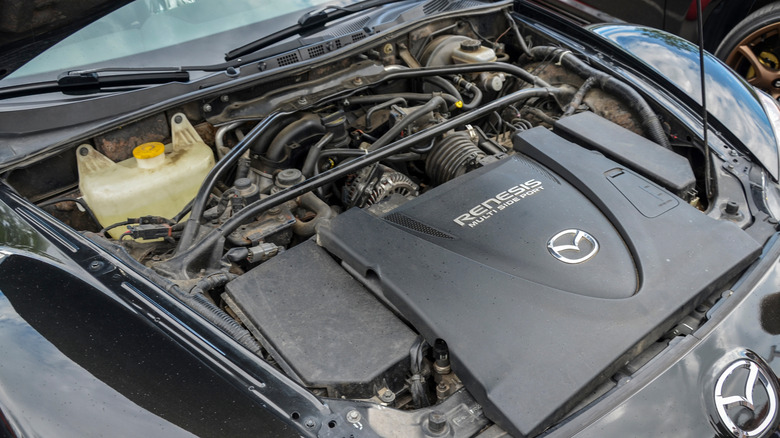
Mazda's performance reputation may rest almost entirely on its many rotary engines (including the durable R26B in the Le Mans-winning Mazda 787B), but that doesn't mean that the Japanese automaker struck gold with its rotaries every time. The 13B-MSP Renesis that powered the Mazda RX-8 is one of those rare occasions where Mazda didn't quite get things right.
Even before any reliability woes reared their ugly head, however, there was already one significant reason to doubt the 13B-MSP when it debuted in the 2003 RX-8: its numbers. The engine was naturally aspirated, with power dropping to a maximum of 238 hp — a downgrade from the turbocharged 255 horsepower of the final-edition RX-7 and a big drop from the 276-horsepower peak of earlier RX-7s like the Type R.
The RX-8 turned out to be a great car, but the Renesis engine under the hood is not without issues. The engine has a reputation for sub-par reliability, with the main culprit being wear-prone apex seals. There are plenty of owner complaints related to this issue, with the general symptom being a loss of compression, leading to starting difficulties and increased oil consumption. Some owners managed to get a decent amount of miles from their engines before facing problems, admittedly, but many had engine failures — sometimes repeated ones, too — well before the 100,000-mile mark. Regular maintenance can help keep these going, though, and a well-cared-for RX8 may be worth taking a chance on.
2.3-liter MZR engines
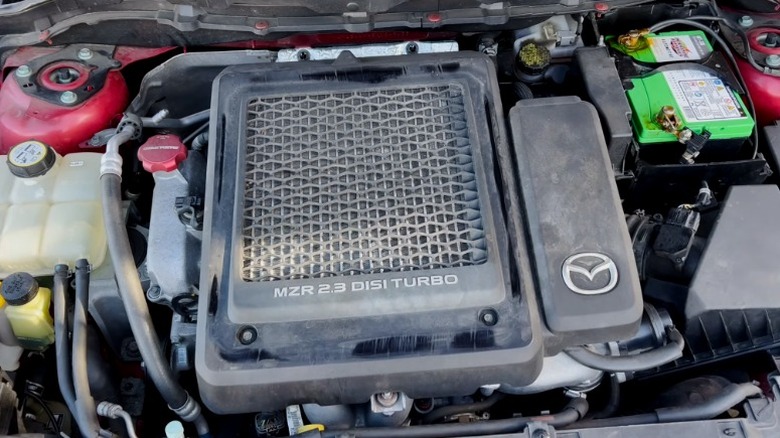
Mazda's 2.3-liter MZR engine was available in turbocharged and naturally aspirated variants, with both powering a selection of mid-2000s offerings like the turbocharged Mazdaspeed3 — one of Mazda's fastest-ever sports cars — and its more sedate, non-turbocharged sibling, the Mazda3. While reviews of the time generally appreciated how the engines performed, especially the turbo version, the years have not been kind to these four-pots.
A look at manufacturer communications posted to the NHTSA website is quite instructive here. The forced-induction MZR, for instance, had enough turbo and oiling issues for Mazda to acknowledge a tendency to emit blue smoke at idle or slow speeds — a fault owners attribute to failed turbo seals. Other issues present on both the turbo and naturally aspirated 2.3-liters include premature VVT system wear leading to a loud knocking at engine start and a timing chain that tended to stretch and cause a rattling sound.
These issues combined would probably be enough to give most buyers pause, but it doesn't end there. These engines, which Ford sold under the Duratec brand, are also known for guzzling oil and outright blowing up. Some enthusiasts suggest that this is due to rushed engineering that makes the engines prone to running lean and eventually failing quite spectacularly. These also suffer from the carbon deposit issues that plague other direct-injection engines, which can lead to rough running.
3.7-liter MZI V6
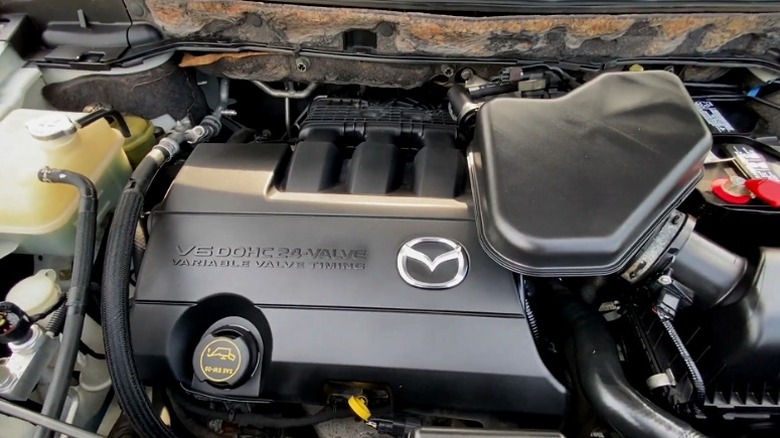
Ford and Mazda had quite a long relationship, with the American auto giant having some sort of stake in Mazda from the late 1970s until 2014. While Ford certainly helped keep Mazda afloat during troubled years, the link-up also saddled Mazda with a relatively troubled engine in the form of the 3.7-liter MZI V6 that powered the second-gen Mazda6 and first-gen CX-9.
The MZI was Mazda's take on the 3.7-liter Ford Cyclone and shares a weakness with some versions of Ford engine's: the water pump. Ford's designers spec'd an internal water pump for the V6, which caused problems when the water pump invariably failed due to age (usually at around 100,000 miles or so). Due to the position of the water pump, potential water leaks resulted in water mixing with oil. This, as you might expect, led to disastrous consequences, with tales of totally wrecked engines and massive, $10,000-plus repair bills. Replacing the water pump prematurely isn't exactly an easy or cheap task either. RepairPal estimates that you'll pay up to $4,000 to get a mechanic to do it for you.
While not a bad engine, it's hard to give a thumbs-up to an engine where routine wear can lead to catastrophic failures. This design flaw led a class action lawsuit against Mazda in 2022, which accused Mazda of being aware of the problem yet not acting upon it. The lawsuit, however, was dismissed in 2024, partly because the plaintiffs weren't able to satisfactorily prove that the issue was as widespread as they claimed.