

4 TV Brands That Outshine Samsung In Price And Quality
We may receive a commission on purchases made from links.
The majority of modern TVs are flat screens that go from 40 to 100 inches, but that doesn't mean there aren't a lot of differences between these models. Panel type, resolution, and max refresh rate are the stats most users bother to look at, but one could also take into consideration the in and out ports, panel response time, brightness and contrast, and a lot more. On many of these metrics, Samsung is hard to beat, but there is one area where the brand is not as competitive: price.
Take a look at a list of the highest-rated Samsung TVs, and you'll notice that most of them are quite expensive, priced at $1,500 or more. That's because, while Samsung has always been an innovator in the field, in the last few years, other companies have begun surpassing its budget offering.
Budget, in the field of TV sets, can mean a few different things. It can certainly be used to describe $100 tiny kitchen TVs, but that's not exactly what we have in mind. It can also mean $1,500 TVs comparable to some $2,000 models, like some of Samsung's most beloved offerings. On this list, however, you'll find brands whose strengths are in the $300 to $800 area, offering solid budget alternatives to "entry-level" $500 4K TVs and premium (but not quite top of the line) $1,000 screens. TVs in that price range are the perfect competitors to Samsung's weak points.
Vizio
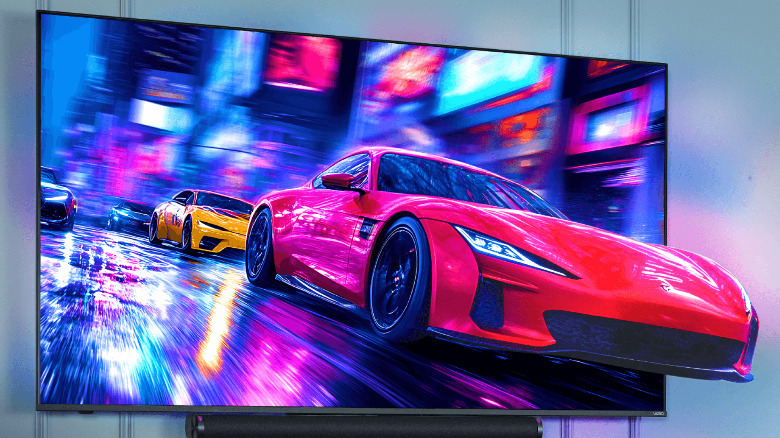
Vizio has been making TVs for a while, but the company's new mini LED TVs, like the VQM55C-10, are breaking new ground. Mini LEDs can achieve higher maximum brightness, good contrast, and avoid "haloing," an unpleasant effect that makes traditional LED TVs behave poorly when portraying dark scenes with splashes of light. This is because mini LEDs have many more light points than traditional LED TVs, giving them much finer control over brightness and contrast while bridging the gap toward the pixel-perfect blacks of OLED screens. These TVs have historically been quite expensive, but Vizio managed to make its latest 65-inch mini LED TV just $398, with the 55-inch model coming in at $278.
Samsung simply cannot compete with these prices, as its cheapest comparable mini LED TV, the M70H 55-inch, is sold for $450. That relatively affordable Samsung TV is still over $100 more expensive than the 55-inch Vizio mini LED while having similar specs (60Hz maximum refresh rate at 4K resolution). With pricing discrepancies such as this, you won't be surprised to learn that Samsung is nowhere to be seen on our list of the best brands of cheap TVs.
TCL
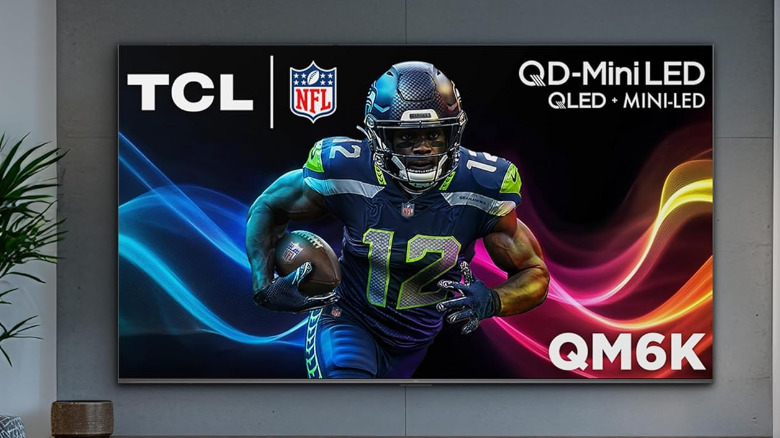
TCL makes a number of cheap TVs with surprisingly decent specs. Among these is the 55-inch TCL QM6K, an excellent model if you're looking for a mid-sized TV for under $500. The 55-inch variant is sold for about $450, has the Google TV operating system, and comes with a maximum refresh rate of 144Hz. It got a solid score on Digital Trends' review, and it also did quite well in RTINGS' more technical analysis. However, note that neither website reviewed the cheaper, more competitive 55-inch model.
Samsung's QLED Q7F 55-inch is the closest model in price (it's actually $50 cheaper at the time of writing and can often be found on sale), but the two aren't really comparable. The Samsung peaks at just 60Hz, and according to RTINGS' review, the screen is quite dim, and the contrast is weak. There's no support for variable refresh rate and HDMI 2.1, not that you would actually need it, seeing as this TV won't go above 60 fps at 4K. RTINGS also reports that even though the Q7F has a low-latency mode, the VA panel may lead to a blurry image. This isn't something that only experts on RTINGS and similar websites will notice, as it's been reported by some users, as well.
The TCL QM6K also uses a VA panel, but according to TCL, these TVs are equipped with modern HVA panel technology that reduces ghosting. Ultimately, everyone's individual perception of each TV will vary, but many reviews agree that the TCL QM6K produces a smooth image.
Hisense
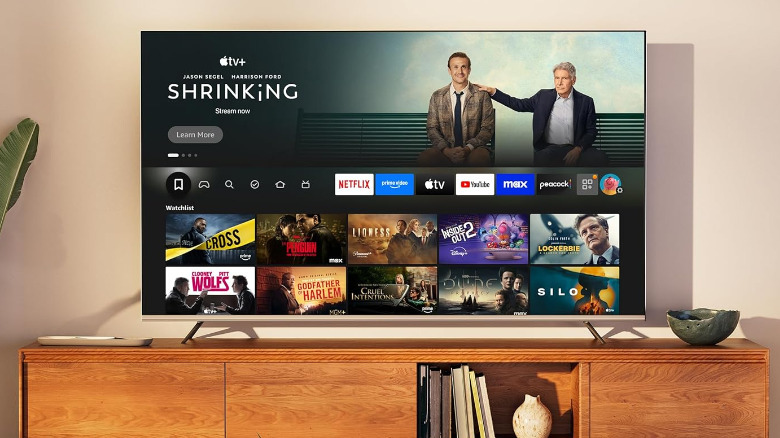
Hisense is a well-known brand of cheap televisions. The Hisense Class QD7QF, which was CNET's favorite TV for 2026, is an especially affordable mini LED TV with support for various HDR modes, decent brightness and contrast levels, and a good number of HDMI 2.0 ports. The larger sizes, from 75-inch, also have VRR up to 144 Hz and some HDMI 2.1 ports instead of 2.0.
The QD7QF gets mixed reviews from users. Some users like it, while others prefer alternatives from Hisense. That said, it seems to get better reviews than the Samsung U8000F, Samsung's only comparable TV in this price range, although user sentiment and reviews vary across different platforms.
The 55-inch Hisense currently costs $329 at full price on Amazon, while the same size of the Samsung is $348. However, both models are often discounted to close to $300. What really puts the QD7QF above Samsung's Crystal UHD TV, however, are the specs: The Samsung is stuck at 60 Hz on every model, doesn't support the HDR format Dolby Vision, and, according to reviewers, it can appear blurry when reproducing certain kinds of content. More importantly, it's not mini-LED.
On the other side of Hisense's offer is the premium U8QG TV line, the smaller of which, the 55-inch model, is currently priced at $710 on Amazon. Samsung's similarly priced M80H is so new it barely has reviews, but it doesn't quite match the specs of the U8QG. Hisense's more expensive mini LED TVs have a 165Hz panel, a staggering brightness level, and can be boosted to 288Hz on 1080p resolutions.
Roku
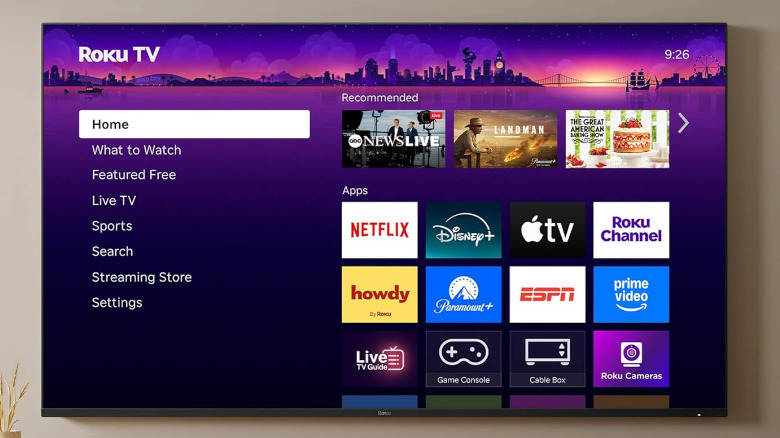
Roku has some good TVs to choose from and is especially competitive in the low-budget space. Its offer spans from the small and extremely cheap Select TVs, to the budget and mid-range, with the Plus and Premium lines. Neither is exactly cheap, with the 55-inch models coming in at $499 and $900 respectively, but they're also the kind of products that are always on sale. The Roku Plus 55-inch is usually sold between $350 and $400 on Amazon, while the 55-inch Premium hovers around $700.
For less than $400, the only comparable 55-inch Samsung TV is the 55-inch U8000F, which RTINGS has called "very basic." The review names low max refresh rate, poor contrast, and blurry motion as reasons for the low score. There aren't a lot of reviews for Roku's middle range of TVs, but the mini LED models in the Plus line received some positive coverage. The difference between the more expensive TVs of both brands is less stark.
Roku has another ace up its sleeve: the Roku OS. Roku smart TVs (and Roku devices) offer more control than regular smart TVs and are constantly updated with new features. Samsung doesn't have the worst OS of any major smart TV company, but its Tizen OS suffers from a lack of app support. When it comes to controlling your smart TV, some users note that Samsung can't quite compete with Roku.