

5 Pickup Trucks That Are Infamously Quick To Rust
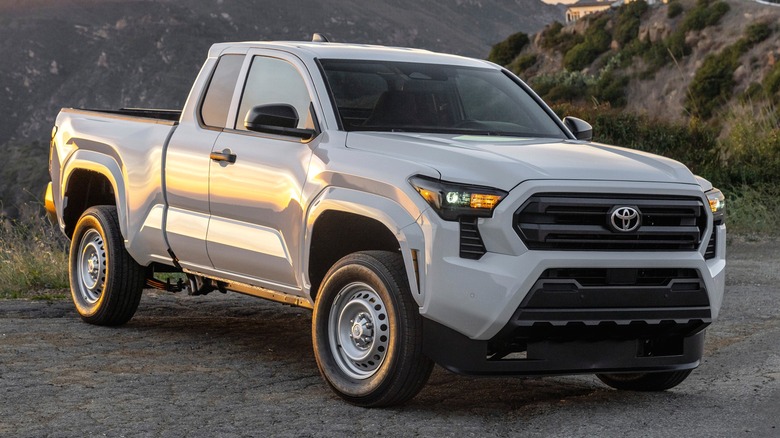
Pickups are generally designed to take on everything from job sites to rough terrain, but their being so tough doesn't always mean they can hold up well over the years. That's mostly because rust is one of those things that has a sneaky way of showing up when you least expect it, and when it does, it's rarely cheap to deal with. Sometimes it even pops up in spots most owners wouldn't think to check until the damage has already spread.
Truth is, not all trucks handle the elements the same. Some have developed a pretty consistent pattern for corrosion in the same areas: frames, underbody, bed seams, and rocker panels, and a lot of it comes down to thin factory coatings, cheaper materials, or designs that trap moisture. While others have a paper trail of recalls, extended warranties, and even complete frame swaps that pretty much tell the story themselves
With all of that said, the trucks on this list aren't bad vehicles by any means. In fact, most of them are solid, long-running workhorses with plenty of loyal owners behind them. However, once rust gets a foothold — especially with all that road salt and debris they deal with — it can cut their good years short pretty quickly. So whether you already own one, you're thinking about buying one, or you're just curious about which trucks are notoriously prone to rust, this list will break it all down for you.
Toyota Tacoma
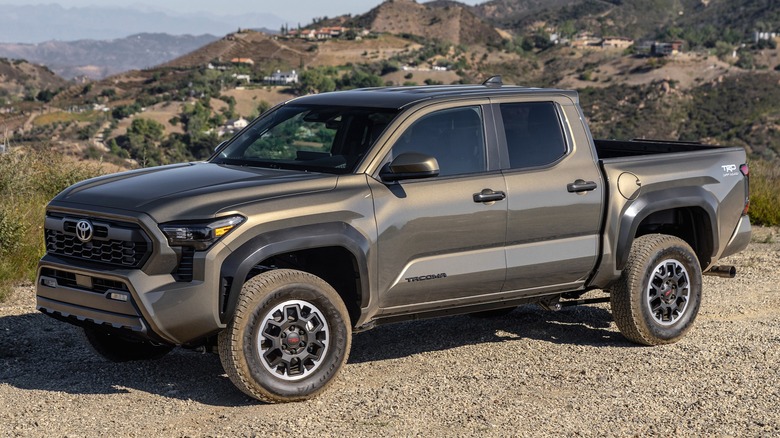
The Tacoma truck has long been known as one of Toyota's most trusted pickups on the road, but frame rust is a recurring topic. A lot of that can be traced back to 1995 to 2000 first-gen Tacomas, where rust was working its way into the chassis, suspension mounting points, and undercarriage in general.
Toyota eventually stepped in with a program in 2008 alongside an extra 12-year warranty. During that window, about 813,000 Tacomas were inspected, treated, and in many cases returned to owners with brand new frames at no charge. For the ones that were far too gone, Toyota made sure the payout cleared Kelley Blue Book valuations for those trucks in pristine condition.
But it didn't end there, though. By 2010, Toyota had to address roughly 700,000 second-gen Tacomas after rust had eaten deep enough into the leaf spring components to trigger gas tank breaches that had been quietly showing up since 2006. Two years later, another wave of 2001 to 2004 trucks got pulled back over for an entirely separate rust problem. By the time everything was said and done, the fallout had pulled in Sequoia and Tundra owners with rust grievances of their own, and before you know it, Toyota ended up settling up to $3.4 billion. So before you buy one, make sure you find out which model years are known for frame issues, because if you don't, you could end up paying about $15,000 for a full swap.
Ford F-150
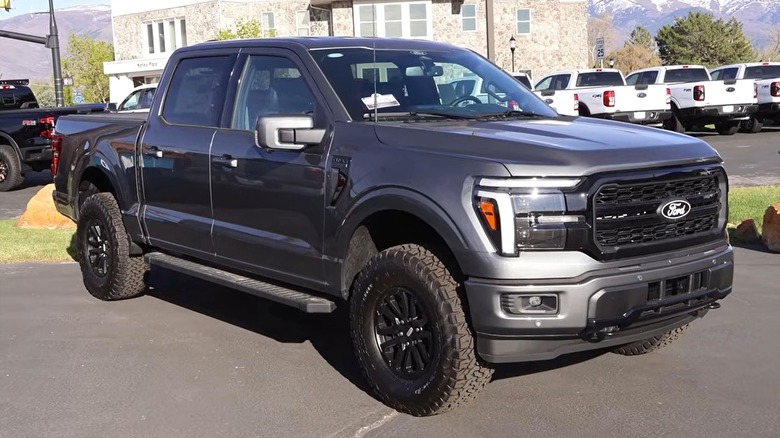
For nearly five decades, the F-Series has sat at the top of the U.S. truck market and has also built the kind of trust that makes buyers not think twice. So when this rust situation came up with the 2021 F-150s, it genuinely caught so many folks off guard. The 14th-gen F-150 rolled in with an aluminum shell, which was a smart call against moisture on the outside, but because that aluminum couldn't cover so much is why owners complain so much about rust in the truck's steel internals.
What made it harder to brush off was that those complaints weren't just trickling in from the usual salt-belt states or rough cold regions where corrosion is practically expected; they were coming in from multiple parts across the country. One owner spotted corrosion creeping in around the 3,000-mile mark, while another owner even flagged it as early as just 37 miles in its back-end diff casing. And even though Ford said that these surface corrosions won't compromise how those areas function, it's still a hard sell, especially for those who just bought the brand-new truck and haven't even done their first oil change.
Owners have pointed out rust on every spot from the rear axle housings and tubes to driveshafts, wheel hubs, shocks, and even smaller bits like bolts scattered across the undercarriage. Sure, there's a five-year sheet metal perforation warranty in place, but for anyone who'd rather not wait around to find out, an underbody coating runs around $500, and it is probably the most straightforward way to keep the problem from getting any worse.
Chevrolet Silverado 1500
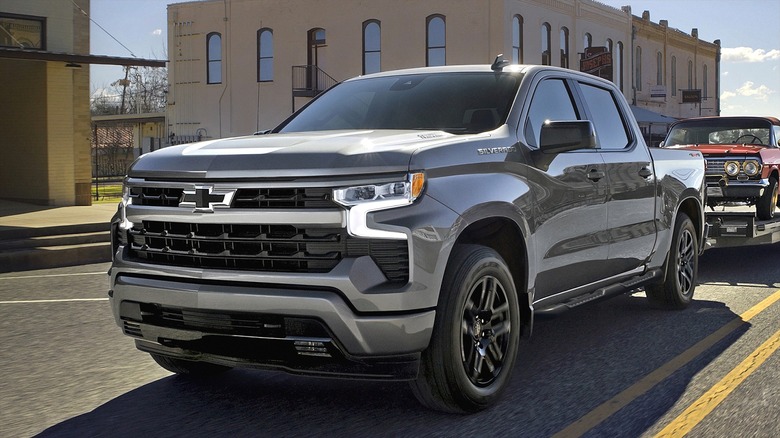
For the Chevrolet Silverado 1500, the whole rust issue started the moment owners started noticing peel-offs on their trucks, and that mostly traces right back to how the frames' wax coating was applied in the first place. According to GM, it all started with faulty frames that were not prepared properly for wax coating, which explains why Silverado 1500 owners from the 2011-2024 window are the ones you hear from the most when it comes to rust. However, for owners who still aren't aware, once parts of that improperly prepared wax begin to flake and peel away in patches, it's so easy for rust to progress and work its way into your chassis, in some cases even into the fenders and panels over time.
So if you are shopping for a used example, including any GMT900 generation, make sure you check the condition of its frame coating. And if you already bought one without doing that, chances are the rust and peeling have already set in. At that point, the move is to strip off the entire failing wax and address whatever the situation is there with the right metallic treatment and lay down a fresh coat. If things look worse than expected, swapping out the frame for a new one might just be the cleaner call. But having to do all of this when these trucks are still in their prime is what's frustrating owners. One even complained of rust at just 25,770 miles on a Chevy truck that's built to go about 300k miles in its lifetime.
Dodge Ram 1500
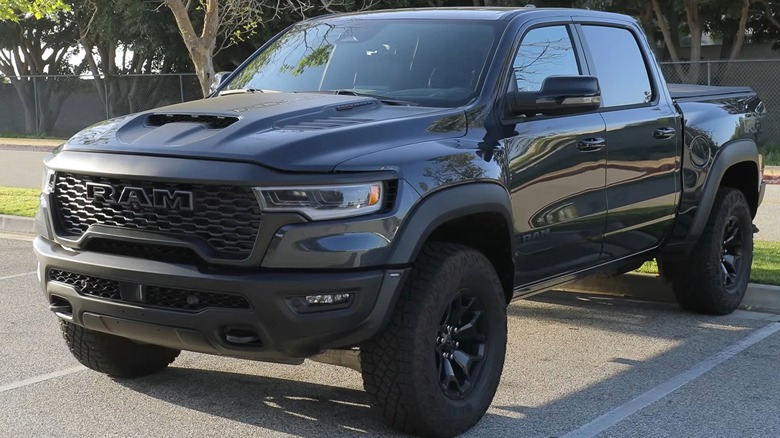
Ram trucks have been fighting rust since back in their Dodge days, and the Dodge Ram 1500 is no exception. It ran rampant through the 2000-2012 models — with 2006 being a particularly rough year — and it's a big reason why trucks from those affected years carry lower reliability scores compared to everything that came after the split.
Part of what makes modern trucks rate higher is the shift to aluminum, which keeps rust more surface-level. During the steel days, owners complained of widespread rust, especially across the underside. Some even reported seeing it within the first year of ownership, and these complaints came from all over the country, including California, which isn't known for harsh winters. In harsher, rust-prone places, damage to fuel storage tank brackets caused a recall of some 300,000 units (2009 to 2012).
Consequently, rustproofing has become almost a ritual for Ram owners, who often apply undercoating right after buying the truck, either through professional treatments like Ziebart or Krown, or through DIY primers or paint.
Nissan Frontier
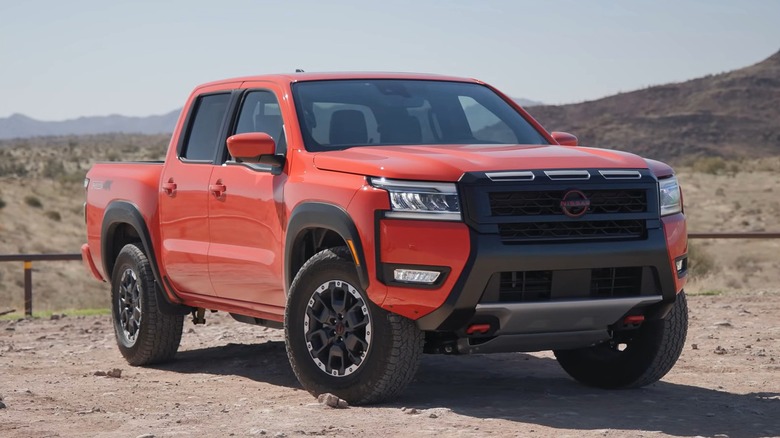
No one was really talking about the Frontier's rust problem until one UK owner went public in 2017. His Frontier's frame gave out completely in the middle of a tow, and that single account was enough to get the attention of roughly 18,000 Facebook users.
Attwood Solicitors estimated that the problem could affect as many as 193,000 owners globally, with mostly second-gens from 2005 to 2008. According to these owners, the failure mostly points back to the same narrow metal plating that locks the truck's bed into the frame. And that's because that particular spot is a moisture trap by nature. Hairline cracks quietly work their way through the metal, and eventually, under the right amount of load, that joint gives, and the chassis cracks straight through the midsection between the cab and the bed.
One 2018 Pro-4X owner found his mount hanging on by a thread, and another 2019 SV also cracked at the same spot. Despite the growing pressure from owners, Nissan pushed back against calls for a full recall. The company's position was that it didn't rise to the level of a safety concern, so what owners got instead was a program of complimentary checkups and one-off fixes.
Methodology
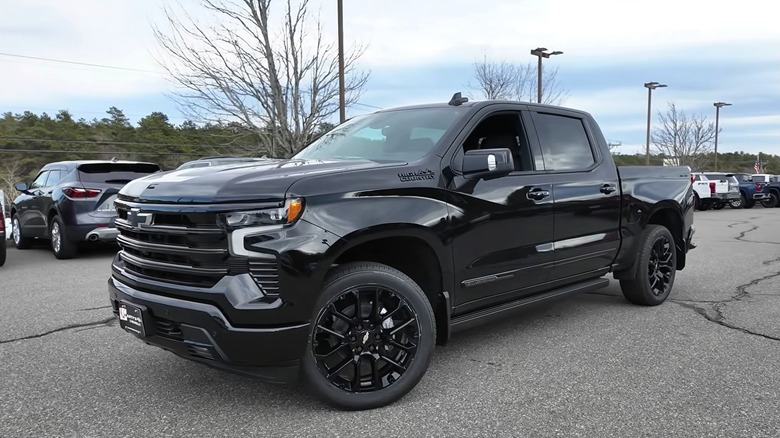
When putting this list together, the focus was on pickup trucks that have a bad habit of rusting way quicker than they should. These are the ones that keep popping up with the same complaints on owner forums, long-term reviews, recall records, used truck inspections, and also from mechanics who deal with this stuff daily. To make sure the piece held up properly, sources like NHTSA, Consumer Reports, Car Complaints, Cars.com, and the official brand websites were used to cross-check all the information.
Common trouble spots such as frame corrosion, bed rust, rocker panel decay, and poor drainage design were also factored in for each truck to make sure nothing was overlooked. Every truck on this list has a long, well-documented history of rusting out early because the goal here was to call out patterns that actually show up consistently and not highlight one-offs and call it a trend.