

4 Reasons Why Some Drivers Regret Buying A Tesla
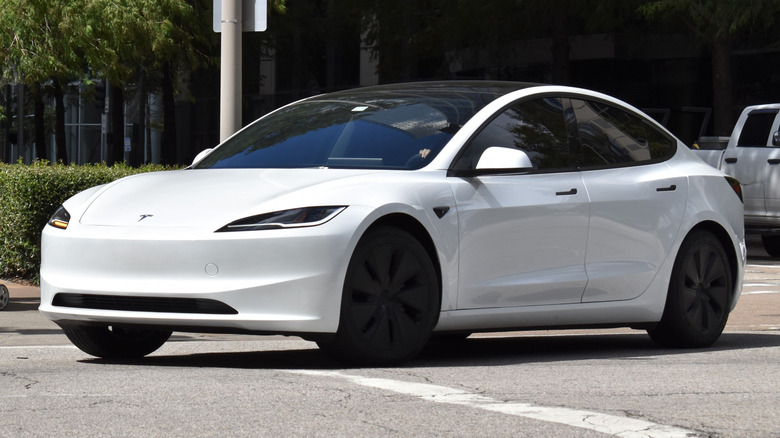
We have to give it to Tesla, it has some great-looking cars and some excellent marketing. People used to joke about hybrid, fuel-efficient cars being for weak-wristed men, and yet now, every man's man wants a lean, green, environmentally friendly EV machine. Tesla intentionally paired EV drivers with the image of young, wealthy businessmen who would otherwise cruise around in a BMW or Mercedes, and it arguably worked; buy a Tesla, and you likely turn heads. Sure, there are a few things you should know before buying a Tesla and a few things to know before driving one, but for the most part, these cars seem to sell themselves by word of mouth and brand image. For the people who do own a Tesla, however, a select few wish they never had.
We are intentionally being careful with our language here. The "some" in the title is the keyword. "Some" people feel this way, not "all," and that doesn't mean "many" or "most" regret their Tesla purchases. Nor are we going to source a Reddit thread where people (that could be bots) claim they wish they hadn't. We're sticking with reputable sources — news outlets, NHTSA complaints, lawsuits. Don't look at this as us saying, "Don't buy a Tesla," but rather a look at the facts that may give you pause when considering your own.
Manufacturing quality issues
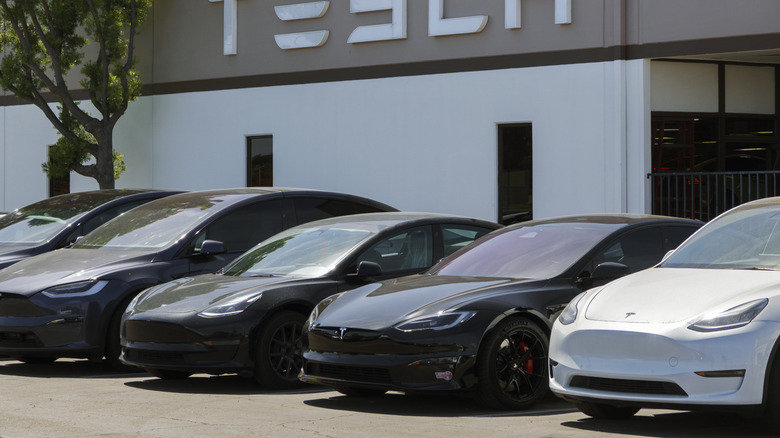
By now, it's probably well known that Tesla has had some manufacturing issues. The famous Tesla panel gaps are a great example. Even better is the Cybertruck, which got recalled extensively. An investigative report by Reuters in 2023 detailed how Tesla was secretly aware of a plethora of manufacturing issues on new vehicles where you wouldn't expect to find them — and worse, blamed owners rather than take responsibility. Some of these manufacturing issues have come into stark relief thanks to lawsuits, such as a door handle issue that allegedly trapped a person in a burning car. A similar lawsuit concerning the Cybertruck likewise alleges inoperable door handles that can fail in the event of a battery fire. The list goes on.
To give you something more cohesive than just a bunch of random sources claiming that Tesla has poor build quality, let's instead look at something a bit more definitive: the J.D. Power 2023 U.S. Quality Study. In it, Tesla ranked second to last when measuring problems per 100 vehicles (PP100). Ouch. Unsurprisingly, the same report gave no awards for Tesla's plant assembly line quality. Consumer Reports in late 2025 lent credence to this when Tesla ranked dead last when looking at used car reliability. Double ouch.
To be fair to Tesla, it has done recalls for some of the bigger issues. J.D. Power's 2025 U.S. Quality Study seems to indicate that Tesla is on the rebound with a 200 PP100 score versus the 257 of 2023. Perhaps in a few more years, Tesla will claim a much higher spot on the J.D. Power report, and have fewer viral TikTok videos of people demonstrating — exhaustively — the manufacturing defects in their $100,000 Tesla.
Full Self-Driving (FSD) unmet expectations
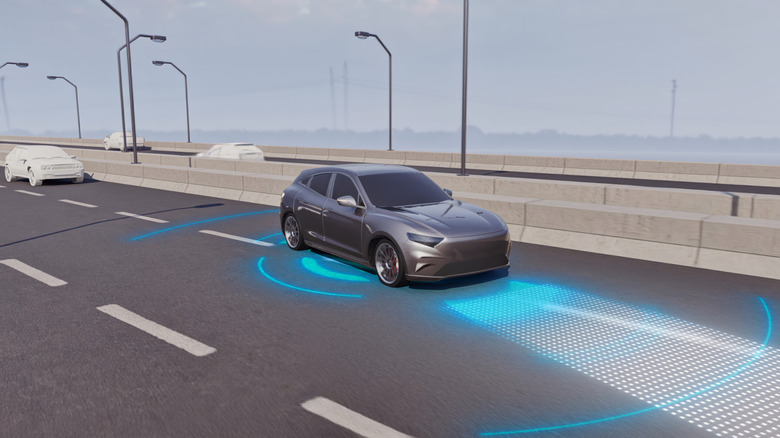
Tesla's Full Self-Driving (we'll refer to it as FSD) should arguably be renamed "kinda-sometimes full self-driving." Tesla even tacitly admits this by tagging "supervised" in parentheses onto the end. Anecdotally, you only have to search for "FSD test" on YouTube to find countless videos of everyday people taking their Teslas out onto public roads and being forced to intervene at some point — suggesting the "supervised" part really ought to go at the beginning. Evidently, there's plenty to suggest people really regret their Tesla purchases as a direct result of FSD.
We don't have to look far to find examples; Tim Eden from The Driven says that he wished he'd invested the thousands of dollars he spent on FSD in Tesla stock instead; one Ed Butler detailed at length on Tesla Motors Club his attempt to demand a refund for misadvertised FSD, only to have things settled out of court; there's currently an ongoing class action lawsuit in California for FSD. Some owners of older Tesla vehicles with HW3 (Hardware 3, or FSD-capable driving hardware) can't even use it, as FSD updates have stalled for them entirely.
Again, in the interest of fairness, it's not like FSD is terrible. Depending on whom you ask, some say it's one of the best consumer-purchasable systems on the market, period. Tesla also has a dedicated Vehicle Safety Report sourcing NHTSA data that would suggest its FSD is preventing crashes and saving lives. Alas, it seems the main issue is Tesla over-promising and under-delivering. CEO Elon Musk has loudly predicted FSD being mere years away from 100% driverless Teslas on multiple occasions, to the point that there's a dedicated Wikipedia article documenting how many he got wrong — and one Cybertruck FSD lawsuit blamed Musk directly.
Steering and suspension issues
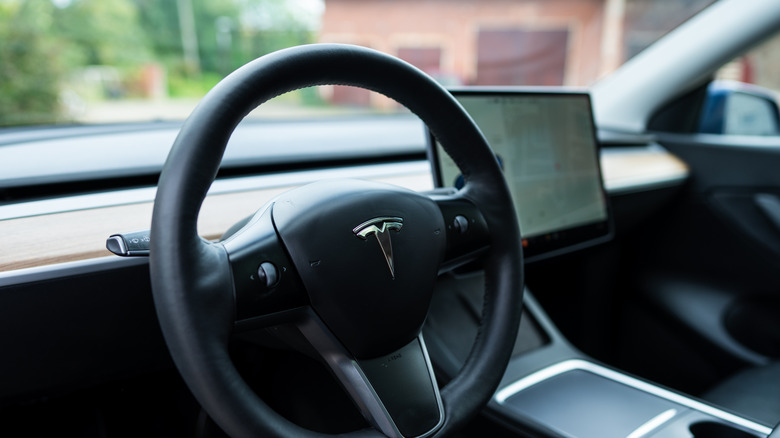
Another recurring issue with Teslas involves their steering and suspension. In some cases, it's the whompy wheel problem, and in others, complete suspension failure — as in, the car literally hitting the deck, grinding to a halt, and needing a full suspension rebuild. Those aren't the only ones. The NHTSA lists complaints alleging steering and suspension issues of all kinds, and they manifest in almost every way imaginable.
To simplify things, we limited ourselves to 2025 Tesla Model 3s. One person alleges getting a "steering assist reduced steering may require increased effort" alert on an almost brand-new vehicle; others claim hard-to-turn steering that makes the vehicle difficult and/or dangerous to drive, and prevents supervised driving features; another had to take their Tesla into a service center when the wheel started shaking and the vehicle felt unstable, only to discover that their almost brand-new vehicle had loose steering components that were not covered under warranty; there's even a common problem with the Tesla Model Y where the steering wheel itself could literally pop off. We could spend all day summarizing these complaints, but you get the point. Check the NHTSA complaints section yourself if you're curious.
These NHTSA complaints were bad enough that the NHTSA went on a four-year investigation into them. It concluded with only a light slap on the wrist in the form of a recommendation, but regardless, a four-year investigation by the federal government speaks volumes. Coupled with the manufacturing issues we discussed previously, it seems to suggest Tesla needs to put its steering and suspension manufacturing under a magnifying glass.
Elon Musk
Love him or hate him, we can all agree one word describes Tesla's CEO, Elon Musk: controversial. Business acumen isn't enough to smooth over his seeming double fascist salute at a political rally, reports that he pays people to level him up in video games, and his role in spearheading a government agency criticized for its impact on public sector jobs and spending — to name just a few controversies. But has Elon Musk's behavior actually caused owners of his cars to wish they hadn't bought one? Yes. The evidence is overwhelming.
Phoebe Wall Howard on her Substack tells the story of Bradley and Nicole Timm, who sold their Teslas as a direct result of Musk's antics. The brand where they bought their replacement car — Polestar — even claimed that new customers flocked to it to change brands because of Musk. Al Jazeera reported on disillusioned Tesla owners like Dennis Levitt, who love everything about Tesla but the Musk part. Fast Company's Anne Marie Squeo echoes them. Some people silently put bumper stickers on their car assuring passersby that they're not okay with the CEO. These aren't just random malcontents, either. A Creative Strategies study confirms that this sentiment has grown. Even would-be owners claim the reason they're canceling Tesla orders is sometimes Musk himself.
Even if someone might be okay with Musk, they could be caught in the crossfire of public discontent. Guardian Service reports that Tesla owners live in fear that their vehicle will be vandalized by Musk-hating strangers. It even drives some to get rid of the vehicle and not patronize Tesla again. For better or for worse, Elon Musk doubtless has a strong impact on brand loyalty, and Edmunds data shows Tesla trade-ins are, coincidentally, at all-time highs when Musk has been most controversial.