

12 Vintage Cars That Are Ridiculously Overpowered
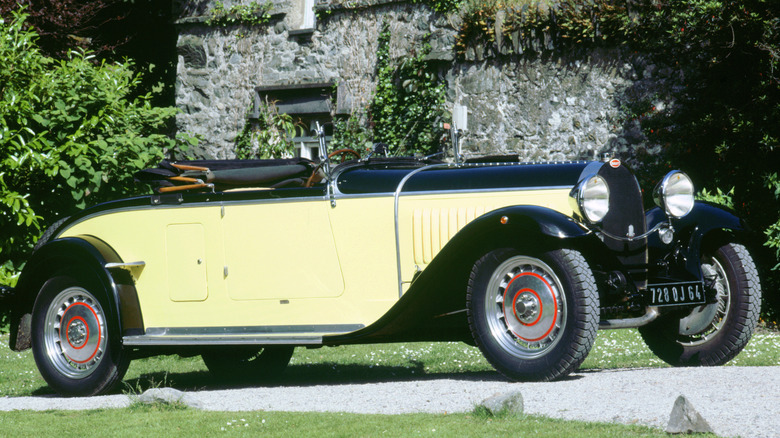
For those who think that the groovy 60s were a period of excess in the automotive world, allow us to introduce the roaring 20s. Readers are requested to remember that cars were a lot less mainstream then they were in the later half of the 20th century, and only the truly rich could afford them back then. Also, coachbuilding was still quite dominant, with the body and chassis being made by separate-but-intertwined houses. While largely gone today, coachbuilt cars do still exist in the form of Q by Aston Martin, Mulliner by Bentley, Sur Mesure by Bugatti, and other such niche examples.
Granted, a lot of the cars we're mentioning were the absolute epitome of engineering at the time, with complex engineering and a price tag to match. Many of the models also achieved reasonable success in motorsport, which we'll come to later on.
All this isn't to say that these cars were good or even safe, at least by modern standards. The mismatch between the engine horsepower and the rest of the tech (or lack thereof) was jarring. Remember, brakes on these vintage cars were usually mechanical cable systems or drum units, the suspension was usually an afterthought, and the tires were closer to bicycle wheels than modern ones. Then, performance was defined vastly differently; back in the day, the mega-popular Ford Model T was producing a modest 20 hp – and it sold over 15 million units across its production cycle. However, many of the cars on this list made more than five times that amount over a century ago.
Rolls-Royce Phantom I
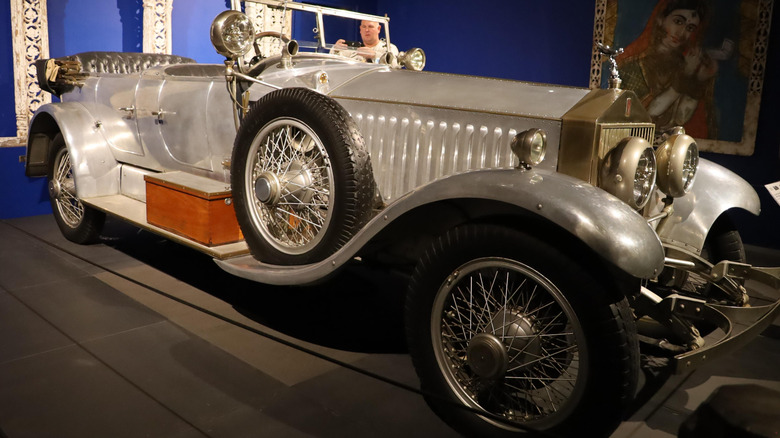
We start our list off strong, with the Series I Phantom by Rolls-Royce. Even for the time, the car was luxuriously appointed, famously being the choice of dignitaries and royalty. In 2025, the Phantom nameplate celebrated the truly impressive feat of its centennial anniversary, as the Series I initially launched in May of 1925. Even back then, the buyers of the Phantom had the opportunity to heavily customize their vehicle to their liking, which was actually quite easy to do. This was because Rolls-Royce only made the chassis of the car available to the buyer (at least in the initial years), and the customer would then have the rest of the car — including the interior — fabricated by a coachbuilder.
The Rolls, which is the least powerful car on our list, was already making about twice as much horsepower when pitted against the Ford Model T. Exact figures are hard to come by since dynos were not really a thing a century ago, but estimates say that the Phantom I made north of 40 hp. This came from a 7.7-liter six-cylinder engine, which is massive, even by today's standards. Certain custom variants could also make between 90 and 100 hp, which was quite impressive for the time. Just a few short years later, the Phantom model line would also be offered with a giant V12 debuting in the Series III in 1936, which would make about 126 hp in total.
Alfa Romeo 6C 1750 SS
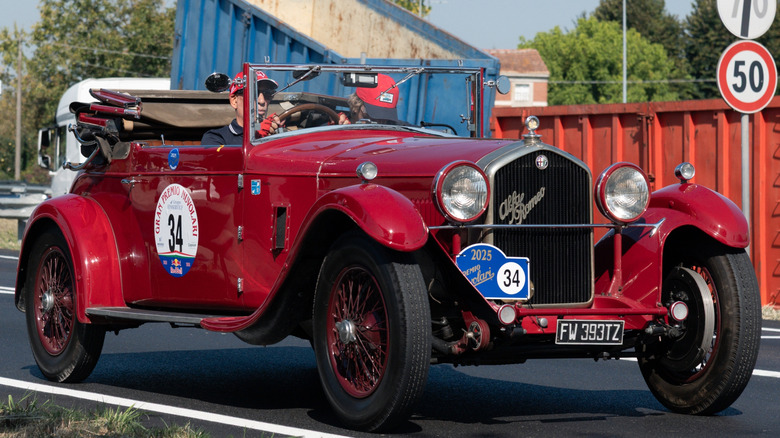
Alfa Romeo is known for making some truly beautiful vehicles, but the 6C 1750 SS is arguably their magnum opus. It was the successor to the 44 hp, 1.5-liter 6C 1500 of 1925. With sculpted bodywork that resembled many of the larger touring-focused cars of the time, the Alfa was quite the looker, especially when paired with its iconic whitewall tires. In terms of displacement, the 6C 1750 SS has the smallest overall footprint of any engine on this list, coming in at a relatively paltry 1.75 liters. This displacement was spread across six cylinders arranged in an inline configuration, which wasn't exactly radical, even back then.
Power figures, however, were extremely competitive for the time; the car managed to conjure up around 102 ponies under the hood. This was largely possible because of the supercharger that the 6C came fitted with from the factory, even though it was an optional addition to the SS model. Also, the wheelbase of the 6C 1750 SS (which debuted in 1929) was shorter than on the regular model, which would have given the car a more sporty feel than its larger counterpart. The following year, at the turn of the decade in 1930, custom coachbuilding house Zagato would make several open-top versions of the car that would be called the 6C 1750 SS Spider. These units are arguably the most desirable version of the model, given their uniqueness and rarity.
Stutz Black Hawk Roadster
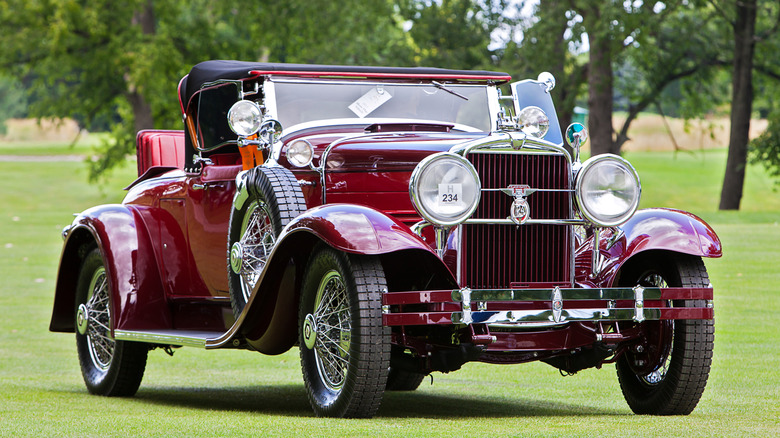
Headquartered in Indianapolis at the time, the Black Hawk Roadster made by Stutz was pushing the limits of what was considered possible for a car. It was radical — the word "Roadster" in the name indicated an open-top or convertible vehicle — and was notably also one of the rarest cars in Elvis Presley's collection.
Starting at the front, the fenders would blend seamlessly into the bodywork, becoming running boards all the way to the back where massive, swooping rear wheel arches dominated the back fascia. A notable styling choice was the boot not sticking out at all or being flat but rather tapering off at roughly the same rate as the rear wheel arches, giving the Black Hawk Roadster a unique look. There would also be a Speedster model made down the line with even more unique styling.
In terms of power, it was in the same range as the Phantom I and Alfa 1750 that we just took a look at — though it bested both, coming in at around 115 hp in total. Two engines were offered, with a six-cylinder making about 85 hp, and later a larger eight-cylinder that made the higher horsepower figures we just mentioned. It's worth noting that the six-cylinder engine was not a from-scratch development but rather just a version of Stutz's eight-cylinder of motorsport fame with two opposing pistons hacked off.
Isotta Fraschini Tipo 8AS
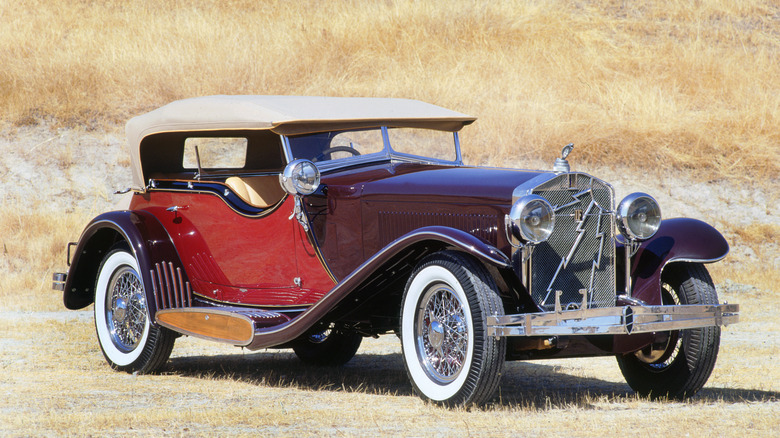
The top boss at Isotta decided to bet the farm on this model — indeed, its predecessor, the smaller Tipo 8, was the company's only offering for a while — and offered the car with a straight-eight engine. This power unit is one of the most notable inline-eight engines ever built for a number of reasons. While an interesting choice in terms of cylinder layout, the engine was obviously longer than a V-configuration; this showed up clearly in the bodywork and design. All Tipo 8 models had a long, boxy hood that extended for what felt like miles in front of the driver, with an extremely rear-biased seating position for the two passengers that the car was designed to carry.
Maneuvering this gargantuan vehicle probably felt like docking a small yacht, given how far back the driver sat from the front wheels. Many units also featured slightly curved running boards that didn't really do much to offset the oddly-sized front and rear fenders that they connected. The sides of the hood had massive ventilation slots cut into them, and chrome was tastefully used throughout the car. The initial model made about 80 hp from a 5.9-liter engine, while the displacement was bumped shortly down the line when the bigger, badder, and better Tipo 8A was launched, followed in short duration itself by the sport-oriented Tipo 8AS. Total engine displacement on the AS model was around 7.3 liters across the eight cylinders, with the power output now standing at approximately 120 hp.
Pierce-Arrow Model 125
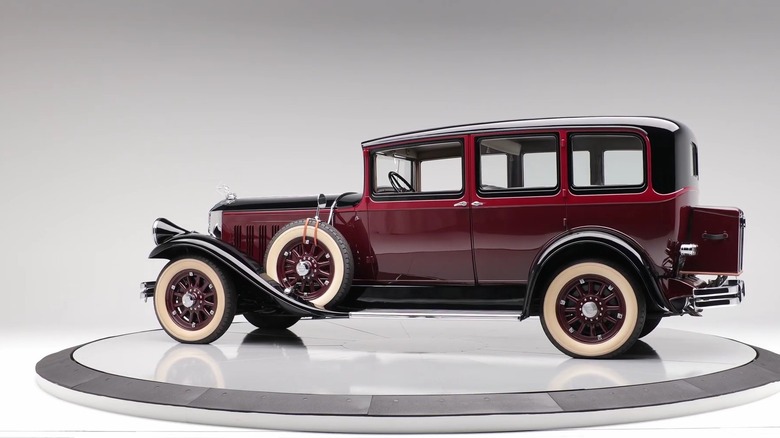
Based out of Buffalo, New York, Pierce-Arrow was an upstart appliance company that later divested into making motor cars. It's worth noting that several U.S. presidents used Pierce-Arrow vehicles as their official conveyance, which no doubt helped bolster the image of the company as being a luxury-oriented, performant, and expensive car brand. However, the heyday was not to last; a severe cash crunch led the brand to merge with Studebaker in the late 1920s, which is why both companies had such a similar design style for a brief period. Given access to all of Studebaker's R&D department, Pierce-Arrow came out with a number of new models in the 1930s, including the Model 133 and Series 143.
An important distinction to make is that until the merger, Pierce-Arrow was known for their six-cylinder T-head engine; which was actually the biggest production engine ever fitted to a production car. The Model 133 was particularly special, becoming the first offering from Pierce-Arrow to ship with an eight-cylinder engine (courtesy of Studebaker); it was not only lighter but more powerful too. Output for the Model 133 (and the Series 143) stood at 125 hp, coming from a 366 cubic inch (six-liter) eight-cylinder engine that was mated to a tri-speed transmission. The main difference between the two new eight-banger Pierce-Arrow models was the wheelbases, and a fact that confuses many people is that the Model 133 is oftentimes called the Model 125, likely a nod to the horsepower figure of the car.
Bugatti Type 46
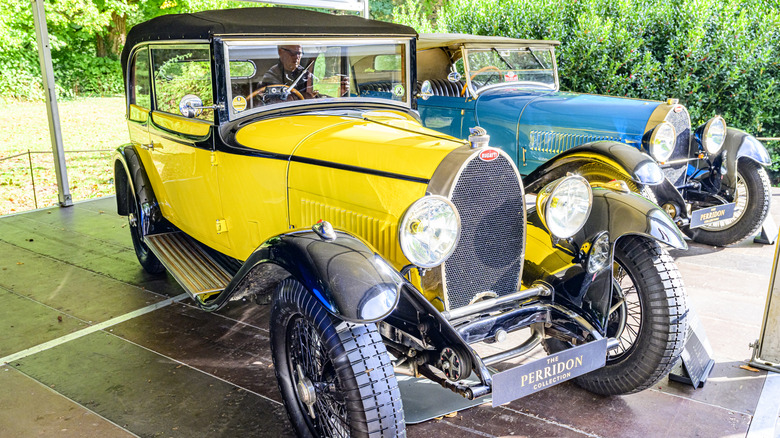
At the time that Pierce-Arrow was busy stuffing an eight-cylinder engine into a car with a 133 inch wheelbase, another fledgling auto company was attempting something a bit more daring. Bugatti, at the time a family-owned French car brand that had seen decent success in motorsport, came out with the Type 46. Very similar in design to the 8AS that we looked at above, this was actually the first real luxury vehicle from Bugatti; up until this point, the company was more into fast cars that won races.
It would be fair to say that the French knocked it out of the park with the Type 46 — it was luxuriously appointed, highly customizable, and had extremely good performance. 140 hp levels of extremely good performance in fact, which came about thanks to the 5.4 liter engine under the hood, spread across eight inline cylinders. Just like the Pierce-Arrow Model 133, the eight-cylinder engine had nine main bearings (as opposed to Studebaker's five main bearings in their eight cylinder) and also shipped with a tri-speed transmission unit.
The Type 46 was available either as a soft-top convertible model or as a coupe model known as a "Superprofilée" and both looked stunning. Die-hard gearheads will immediately recognize the coupe version (pictured above) as having inspired the legendary Bugatti Type 57 SC Atlantic, at least in part. All in all, the Type 46 was a very important car for Bugatti that helped cement the company's position as a performance luxury automaker.
Bentley 6.5 Liter
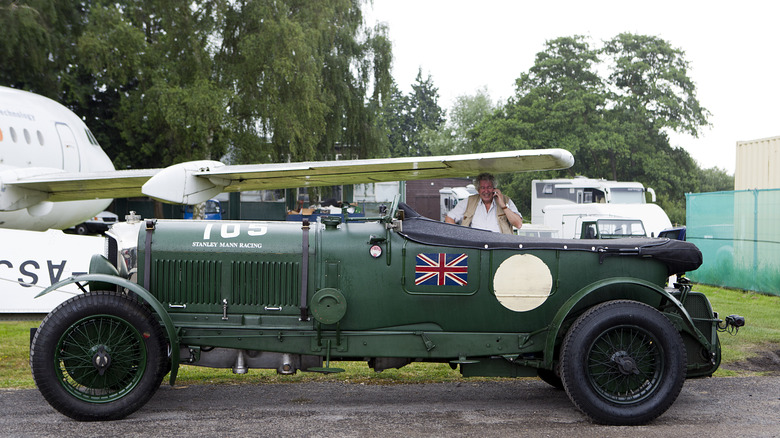
A legend in the world of motorsports is the 6.5 Liter from Bentley, developed during the 1920s. The car featured (as the name implied) a 6.5 liter engine that spread its displacement across six cylinders, mated to a four-speed transmission. The total power output for the 6.5 Liter stood at 147 hp, which was a mighty impressive figure for any vehicle — as a reminder, this was approximately seven-and-a-half times more powerful than the best-selling Ford Model T.
The engine was a tried and tested formula that had begun life at half the current displacement before arriving at the 6.5 liter form after a series of updates and displacement upratings. It would later be updated to the legendary Bentley Eight Liter, which we'll cover later on. We should mention that the 147 hp figure that we quoted earlier was the stock power rating on the 6.5 Bentleys; the motorsport versions came with a tuned engine that is said to have produced north of 200 hp.
The 6.5 Liters were an immediate success as far as motorsport was concerned, winning the Le Mans endurance race back to back in 1929 and 1930. This model got an extremely painstakingly put-together remake in the form of the modern Bentley Speed Six Continuation Series, which is essentially a historically-accurate 6.5 Liter Bentley that happened to be assembled today.
Cadillac V16
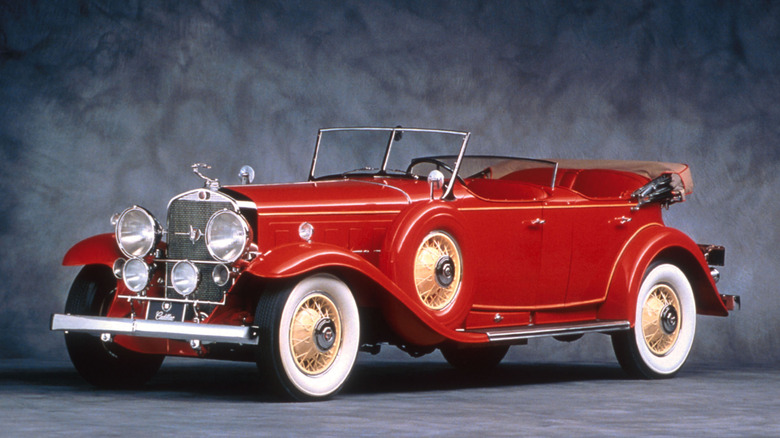
There has been an equal amount of joy and awe at the Bugatti V16 engine that will ship in the upcoming Tourbillon model. However, GM's Cadillac brand beat every other company to the batting cage with its launch of a V16 engine nearly a century ago. In fact, the engine was such a definitive part of the vehicle it powered that the model name was simply called the Cadillac V16 — talk about simplicity. Those 16 cylinders accounted for a total displacement of 7.4 liters, or 452 cubic inches, and had a power output of 165 hp in total.
Like many other luxury limousine-like vehicles of the time, the V16 was massively customizable to the whims of the buyer, with over ten different body styles available to pair with the massive engine. However, this came at the eye-watering base price of $6500 in 1930; adjusted for inflation, that works out to the sum of about $121,000 in early 2026, though readers should remember that the median income for the United States in 1930 was $4,887. These definitive first-generation Cadillac V16 models often sell for well beyond $500,000 today, if and when they come up for sale. An even more exclusive version of the V16 called the Sport Phaeton was also produced, and only 85 units were confirmed to have ever existed. No matter which way you look at it, the V16 was a hugely expensive, highly impractical, and extremely powerful grand American tourer.
Hispano-Suiza H6C
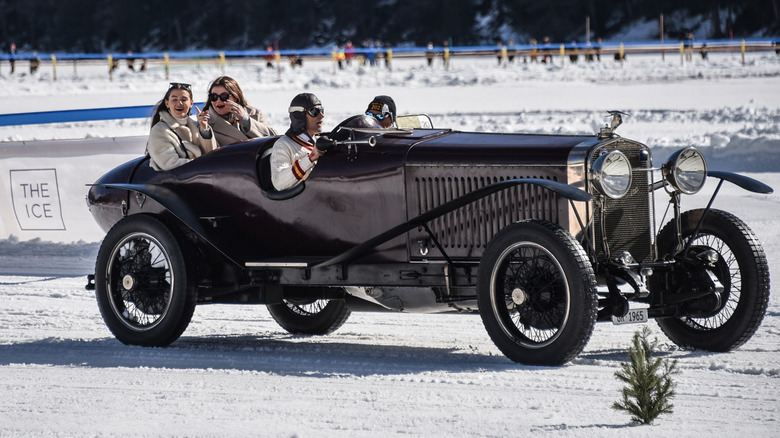
One of the more striking vehicles on our list is the Hispano-Suiza H6C, closely related to the Hispano-Suiza H6, which itself had similar performance. At first glance, it's obvious that either car took inspiration from the Bugatti vehicles of the time, or perhaps the reverse was true. All we can say for sure is that the H6C looked stunning, more of a design statement than a mode of conveyance for the rich, famous, and powerful.
Speaking of power, the vehicle shipped with an eight liter, six-cylinder engine arranged in an inline layout that made up to 195 hp depending on the tune specified and model year of the car. The whole thing was paired to a tri-speed gearbox, making it overall quite impressive for a car from the early decades of the 1900s. The H6C, released during the middle of the Roaring Twenties, got its start from the standard H6 that was introduced at the end of the First World War. That initial model used one half of a 12-cylinder plane engine that would eventually go into the H6B; it would be uprated to eight-liters of displacement in the H6C.
Bentley Eight Liter
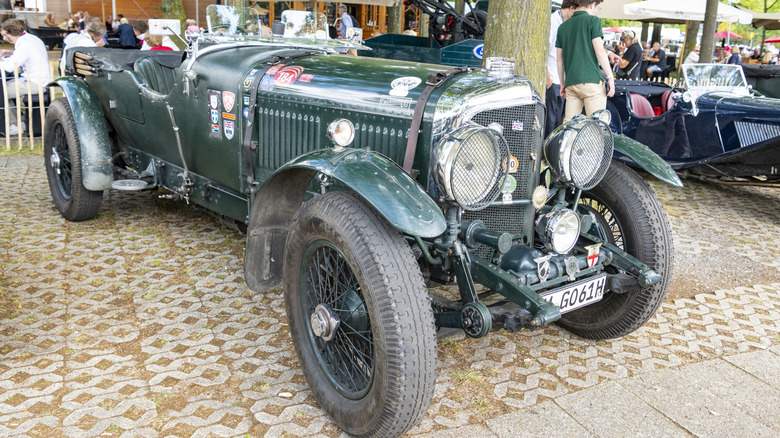
Next up, we have the largest-displacement Bentley car on our list — though it's surprisingly not the most powerful Bentley in this piece — in the form of the Bentley Eight Liter. Given the massive and instant success that was enjoyed by the Bentley 6.5-Liter that we looked at earlier, it only made sense to bump the displacement of the engine yet again. Remember, the Bentley racing program had started out with a modest three-liter powerplant, and it was this engine that would eventually balloon into the massive eight-liter behemoth that powered this vehicle.
Props to the engineers at Crewe in England where the vehicle was made, for they kept the naming scheme quite consistent, at least in these early years; the car with the eight-liter engine was simply called the Bentley Eight Liter. The engine did what it said on the tin, as it displaced almost eight liters (7.9 to be precise) across six cylinders, and made a whopping 225 hp in high-compression tune, which was an unheard-of number for the time. Unsurprisingly, the Eight Liter romped home to victory at virtually any race it entered, becoming one of the most dominant racing cars of all time, thanks in no small part due to the massive number of horses under the hood.
Bentley 4.5 Liter
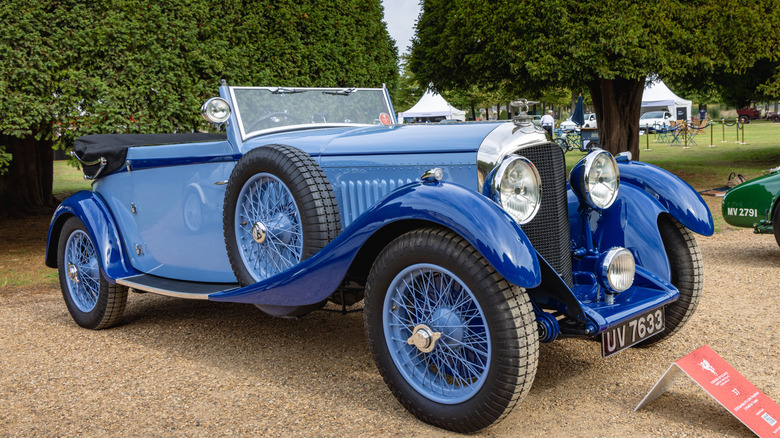
The most powerful Bentley on our list has only a little more than half the displacement of the automaker's Eight Liter that we just covered above, shipping with a 4.4-liter, four-cylinder engine. Those figures meant that not only was the Bentley 4.5 Liter the one with the most oomph; it also has the second-smallest displacement on our list, behind only the Alfa Romeo 6C 1750 SS. It was fondly known as the "Blower Bentley", a moniker it was christened with owing to the massive supercharger fitted to the engine that helped it produce its earth-shattering 240 hp.
For reference, a modern 2025 Toyota RAV4 base model only makes 203 hp, and it's almost a century newer than the Blower Bentley — shameful, if you ask us. The performance figures for the Bentley 4.5 Liter were a legendary-for-the-time top speed of 125 mph, along with a standing to 60 mph time of 12 seconds, which is close to some modern cars. Looking at you, Mitsubishi Mirage, and your 0-60 mph time of about 11 seconds.
Duesenberg Model J
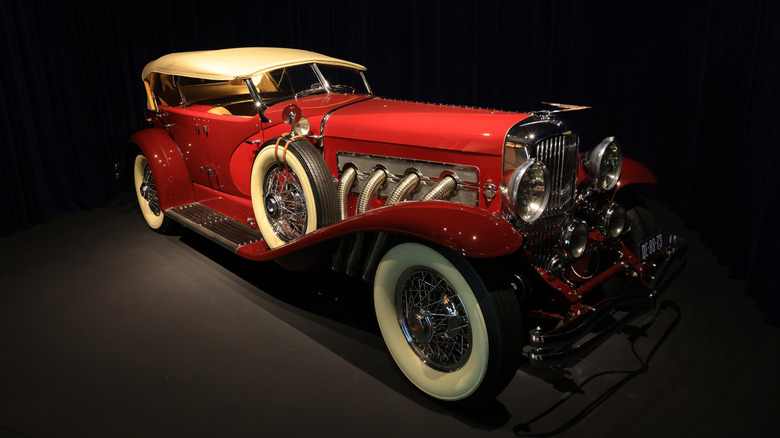
The most powerful car on our list is the Duesenberg Model J, produced mainly during the early 1930s. It was a car that looked fit for a supervillain with its sleek, slightly curvaceous bodywork and large glasshouse. The exhaust pipes slipping behind the front fender and running board on either side of the hood were a particularly stylistic show of flair — something that wasn't quite as common on other luxury tourers of the day.
The model featured the now-iconic suicide door design, coupled with a large, vertically-oriented chrome radiator grill at the front. It also featured a storage chest mounted to the back of the vehicle. Whereas many of the cars that we've listed so far shipped with a lone overhead cam, the Model J had twin overhead cams, and displaced a whopping seven liters across eight cylinders when it launched towards the end of the 1920s. Power figures stood at north of 250 hp, and the price for one of these was $8,500 in 1930 (or about $166,000 after inflation as of early 2026).