

5 Brands Owned By BP Oil & Gas Company
BP is, for better or worse, one of the most recognizable of the so-called oil and gas supermajors, alongside corporations such as Shell and Exxon Mobil — due in part to the infamous Deepwater Horizon oil spill and explosion that happened in 2010. BP was fined a total of $65 billion for the incident, and deservedly so, but that huge bill doesn't seem to have fazed the corporation much, at least if we go by the companies it owns or has a stake in.
Like its fellow Big Oil corporations, BP has fingers in many pies, with a range of smaller entities under its corporate umbrella as of 2026. Some of these have been BP subsidiaries since before 2010, while others have been more recent additions to the BP corporate family. Most, as you might expect, have something to do with fuels or the automotive industry. Some operate globally, while others are exclusive to countries such as Germany or the United States, and it's the latter we're focusing on this time around. Here are five BP subsidiaries that operate in the U.S.
Amoco
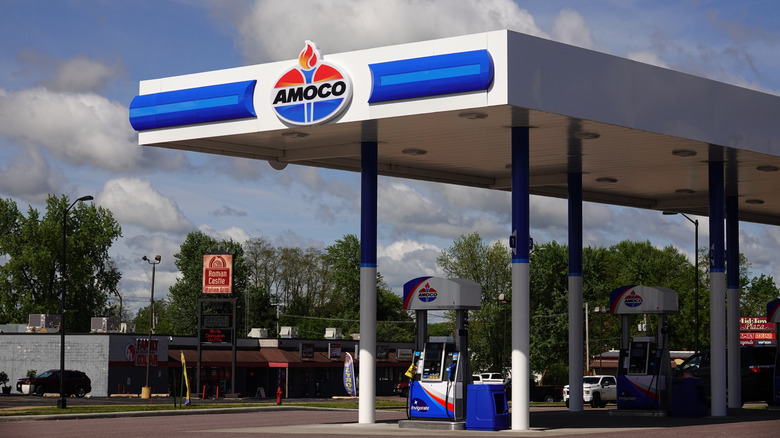
Gas station brands like Amoco and Speedway may seem as American as they come, but looking into their corporate ownership reveals that they're not quite as all-American as first impressions might indicate. Amoco, for example, is one of the U.S. gas station chains owned by British companies, and has been so since 1998.
Unlike some of the other brands that BP owns, the British company didn't purchase Amoco outright. Instead, the 1998 deal was a merger that, according to news reports of the time, created the U.K.'s largest company and put the newly formed BP Amoco in the top three of oil corporations globally. The merger was worth $110 billion, and the new company continued to be headquartered in the U.K.
Amoco, for its part, was a successor to the massive Standard Oil empire and had over 9,000 gas stations in the U.S. at the time of the merger. These outlets were not long for the world, however: BP began phasing out the Amoco branding in favor of its own brand in the mid-2000s, and it looked like the American chain was gone for good. That turned out not to be the case, though, as BP announced that it was reviving the Amoco brand in 2017. That said, Amoco is arguably a shadow of its former self, with just over 1,000 locations as of March 2026 — a far cry from its presence in the late '90s.
Thorntons
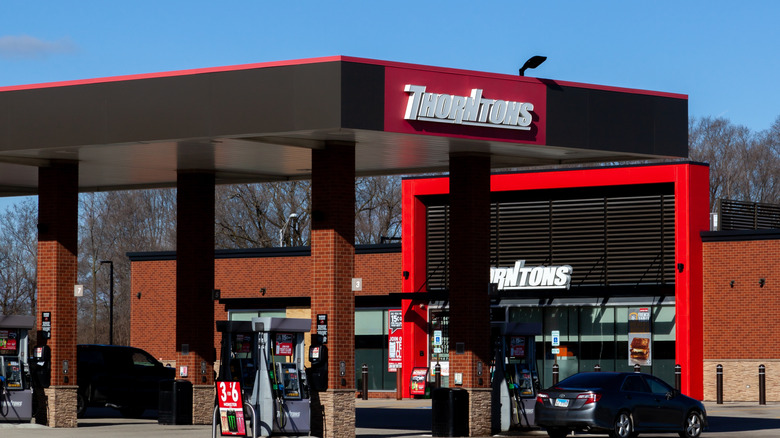
Amoco may be the more storied gas station brand under BP's corporate auspices, but the London-based company counts another American gas station chain as part of its portfolio. Thorntons, which operates a chain of convenience stores and gas stations in more than 200 locations in the Midwestern and Southeastern U.S., is a full subsidiary of BP and has been so since 2021.
Thorntons' first encounter with BP came in 2019, when a joint venture between BP and ArcLight Capital purchased the company for an undisclosed amount. At that point, the Louisville, Kentucky-based company had 191 stores in six states, namely Florida, Illinois, Indiana, Kentucky, Ohio, and Tennessee. This number had grown to 208 locations by the time BP bought out ArcLight in 2021, again for an undisclosed amount.
Thorntons doesn't seem to be one of the names mentioned when discussing the U.S.' best convenience stores, but the chain has been around for a while regardless. Its first outlet opened in 1971, in the form of a kiosk in Clarksville, Indiana. Thorntons expanded into the convenience store market in the 1980s, with outlets in five of the six states it currently operates in (minus Florida). In 2012, Thorntons established a foothold in Florida, namely in Clearwater, and has 12 outlets in the state as of 2026.
TravelCenters of America
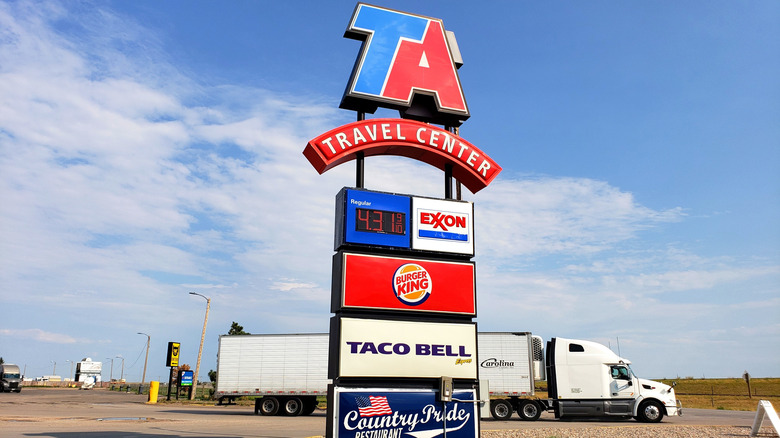
Truck stops are an integral part of any long-distance road trip, and BP has a hand in this market as well via TravelCenters of America. While TravelCenters of America locations likely won't ever make their way onto any list of iconic truck stop destinations, TravelCenters of America's 300-plus locations across the U.S. make it one of the largest such companies operating in the country.
TravelCenters of America was founded in 1972 as Truckstops of America and was later snapped up by Ryder. It eventually became part of the Standard Oil empire in 1984 and then ended up under BP's ownership when the British corporation purchased Standard Oil in 1987. But this wasn't for long, as BP sold Truckstops of America to National Auto-Truckstops Holdings Corporation in 1993. The company eventually adopted its current name in 1997.
In 2023, BP came knocking on its former subsidiary's door, bringing TravelCenters of America into the BP fold with a $1.3 billion cash acquisition. The deal was first announced in February and completed in May of that same year. TA has been busy expanding its U.S. presence ever since, with at least seven locations opened between November 2025 and March 2026 alone.
Ampm
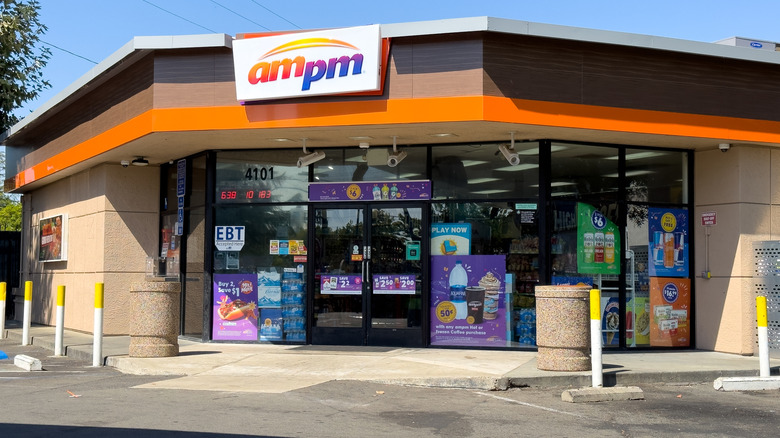
The other popular American convenience store brand in BP's portfolio — at least, as of early 2026 — is Ampm. The chain has been a BP subsidiary since the turn of the millennium, when BP Amoco purchased Ampm's former parent company, Arco, in a deal worth $27.6 billion at the time.
Ampm's roots go back to 1978, when an Ampm outlet opened at an Arco gas station in Southern California. By early 2010s, the chain had expanded beyond its Californian roots, with outlets at Arco and BP-branded gas stations in states across the Western and Midwestern U.S., including Oregon, Washington, Nevada, Illinois, Georgia, and Ohio. In 2012, BP sold the Arco brand to Tesoro but retained ownership of Ampm, licensing it out to Tesoro for the Southwestern U.S. BP also scaled back its Ampm empire, deciding to focus primarily on the chain's West Coast roots. The 2020s, however, have seen a reversal of this strategy.
BP began expanding eastward again in the 2020s, including making a bona fide East Coast debut with a Bronx outlet in 2022. BP has also reintroduced Ampm to Georgia, with two stores opening in Atlanta in 2025. That same year, Ampm stores (as well as Thorntons and TravelCenters of America outlets) also began carrying a new BP in-house brand called Epic Goods.
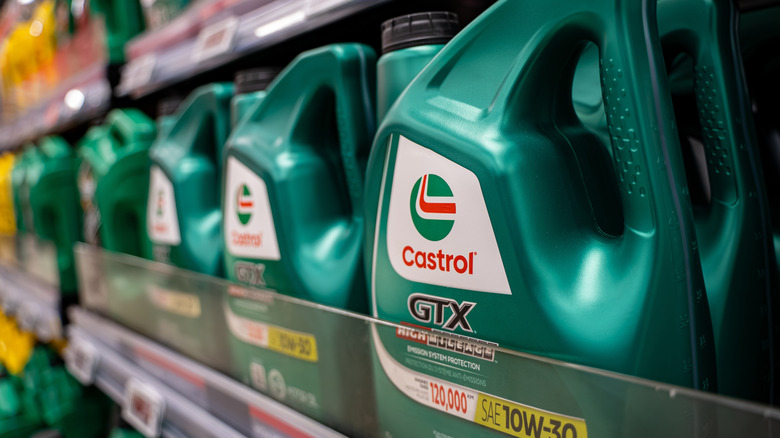
Castrol
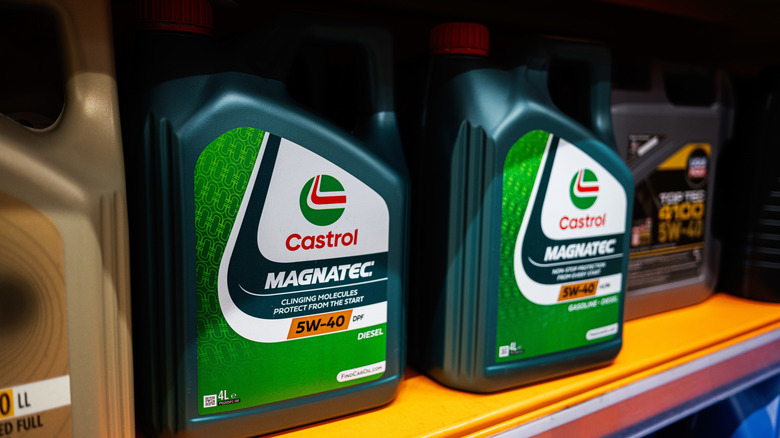
Unlike Shell, which owns at least six major motor oil brands, BP only has one brand in its portfolio. That said, it is easily one of the best motor oil brands out there: Castrol. BP purchased Castrol in 2000, when the company was known as Burmah-Castrol, but the brand had a long and storied history before becoming part of the BP corporate family. It was founded in 1899 as CC Wakefield & Company (named after its founder, Charles "Cheers" Wakefield) and grew significantly over the next half century or so, eventually renaming itself to Castrol in 1960.
The Burmah Oil Company purchased Castrol soon after, paying a cool $103 million — equivalent to more than $1 billion in 2026 money — for it in 1966. The company renamed itself Burmah-Castrol, and it carried this name until BP — known as BP Amoco at the time — paid £3 billion for it in 2000. This represented a roughly 60% premium on top of the company's average share prices leading up to the takeover, and it was mostly down to the strength of the Castrol brand.
As of 2026, however, BP is no longer the majority owner of Castrol. In December 2025, the British corporation announced that it had agreed to sell a 65% stake in the motor oil brand to American alternative investment firm Stonepeak, with the firm establishing a new joint venture with BP. The deal was valued at $10.1 billion, with BP netting a cool $6 billion, and being given the option of selling its 35% stake after a two-year lock period.