

5 Inline-6 Engines More Powerful Than The Toyota 2JZ-GTE
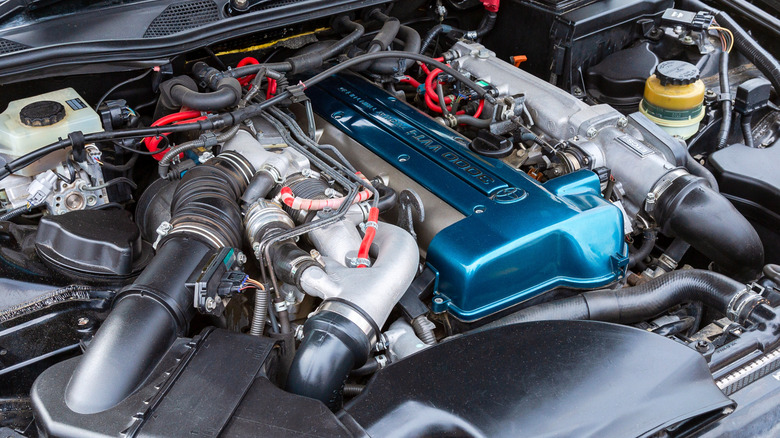
The Toyota 2JZ-GTE inline-6 engine is widely regarded as one of Toyota's best engines of the 1990s. Many gearheads and enthusiasts take things even further, though, placing the 2JZ-GTE among the greatest six-cylinder engines ever produced by any automaker or during any era. Given the 2JZ's technical and cultural accomplishments, it's not hard to see why.
The twin-turbocharged, 3.0-liter 2JZ-GTE first debuted in 1991 under the hood of the Japanese-market Toyota Aristo luxury sedan, but it didn't start earning widespread global recognition until Toyota put the engine in the groundbreaking fourth-generation Supra in 1993. In stock form, the 2JZ helped turn the Mk4 Supra into a world-class performance machine, and its legend only grew from there. Even after Toyota discontinued the engine in the early 2000s, the 2JZ became an icon in the tuning scene thanks to its vast power potential when modified — and was ushered, alongside the Supra, into Hollywood stardom in the original "The Fast and the Furious" film.
More than 20 years have passed since Toyota phased out the 2JZ-GTE, but its popularity remains strong. But times change, and many automakers have developed inline-6 engines with factory horsepower figures that put the 2JZ-GTE to shame. To show just how far things have come, we've selected five engines that outgun the 320 hp and 315 lb-ft of torque that the American-market Supra Turbo developed when it was released in 1993.
BMW B58 3.0-liter
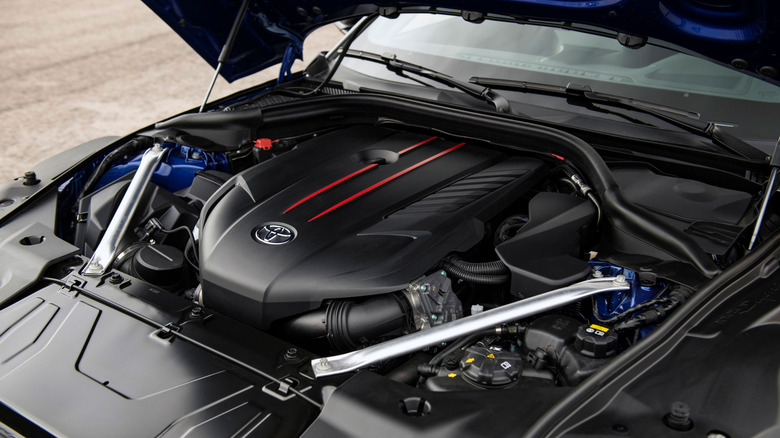
There couldn't be a more appropriate modern inline-6 to compare to the 2JZ than BMW's B58 engine. That's because this is the engine that powers the latest fifth-generation Toyota Supra — a car that doesn't just have a BMW-sourced engine, but shares its entire platform with the BMW Z4.
While Toyota purists will always have a hard time accepting a Supra with a BMW engine, there's no doubting the B58's power and smoothness. The reason Toyota chose BMW as its partner for the reborn Supra in the first place was that Toyota knew the new Supra had to have an inline-6 engine. BMW, of course, happened to build an excellent one.
The B58 displaces the same 3.0 liters as the 2JZ, but uses a single twin-scroll turbocharger rather than the 2JZ's twin turbochargers. Under the hood of the 2026 GR Supra, the B58 is rated at 382 hp and 368 lb-ft of torque – and real-world dyno testing has shown those numbers may even be slightly conservative. With its BMW power, the Mk5 Supra can hit 60 mph in 3.8 seconds, per Car and Driver's testing, which is substantially quicker than the Mk4 Supra Turbo ever was. Along with the Supra, variations of the B58 can also be found under the hood of dozens of different BMW models.
Mercedes-Benz M256 3.0-liter
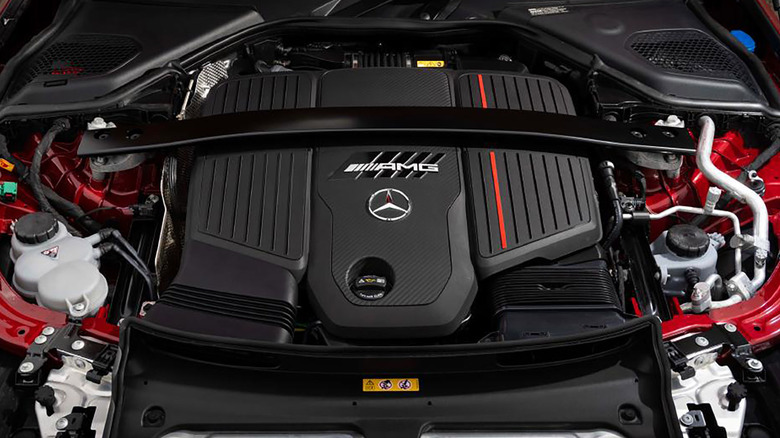
If you want to see an example of just how capable a modern inline-6 engine can be, and why the inline-6 is experiencing a bit of a renaissance, look no further than the Mercedes-Benz M256. While the 2JZ-GTE made its power with the latest twin-turbo technology of its time, the M256 uses both turbocharging and hybrid assistance to become one of the most powerful inline-6 engines ever put in a production vehicle.
The M256 has the same cylinder layout and 3.0-liter displacement as the 2JZ, but that's about where the similarities end. The Mercedes-AMG E53 plug-in-hybrid supplements the turbocharged M256 with electric power for a combined total of 577 hp and 553 lb-ft of torque, and that output can be bumped up to 604 horsepower when in Race Start mode. Even without the hybrid power, the M256 in the E53 AMG is rated at a stout 443 hp on its own.
Is it fair to compare this modern, state-of-the-art Mercedes-Benz AMG hybrid engine to a Toyota engine that was developed more than 35 years ago? Probably not. Some might even argue that the boost from its electric motor should disqualify it from any comparison. Yet if nothing else, looking at the old 2JZ-GTE side-by-side with the M256 is a perfect lesson in just how much the auto industry has evolved since the early '90s.
Dodge Hurricane 3.0-liter
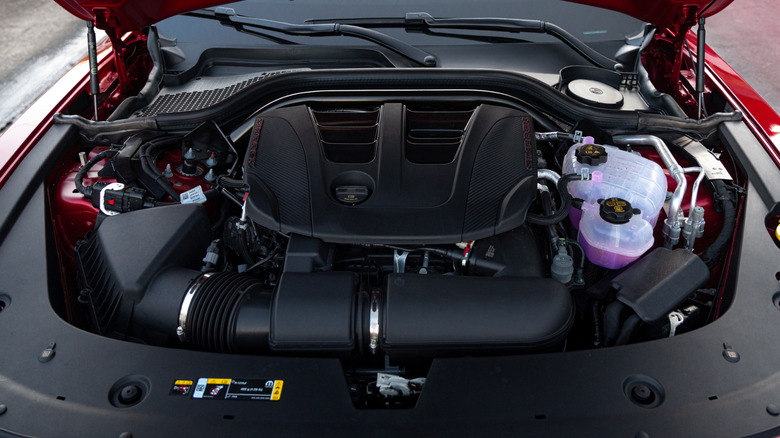
When you think of modern Dodge performance, surely the first thing that comes to mind is a big HEMI V8, perhaps topped with a big supercharger. Dodge parent company Stellantis, though, is hoping to add the new Hurricane inline-6 engine to the brand's storied performance legacy — and on paper, at least, the engine has the numbers to do it.
As of 2026, the twin-turbocharged 3.0-liter Hurricane engine can be found in a few different Stellantis vehicles, but its most enthusiast-oriented application is in the 2026 Dodge Charger. In the standard output Charger R/T, the Sixpack-branded Hurricane engine makes 420 hp and 468 lb-ft of torque, which outguns the old 2JZ by a full hundred horsepower. Then there's an even more powerful version in the Charger Scat Pack, which makes 550 hp and 531 lb-ft of torque.
Between turbos, electrification, and possible V8 revivals, Dodge in the mid-2020s is a brand in search of a new performance identity. Time will tell whether the Hurricane engines can win over traditional V8 muscle car fans or whether a new group of enthusiasts will turn these motors into an American version of Toyota 2JZ-GTE, but the company certainly looks to have high hopes for its new generation of internal combustion performance engines.
Mazda Skyactiv 3.3-liter
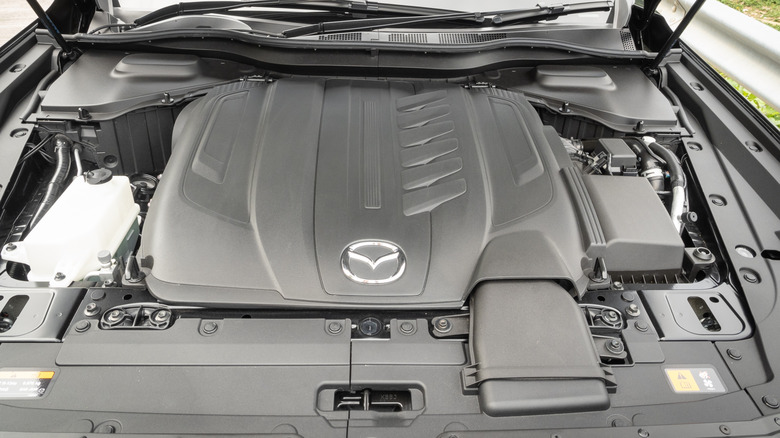
One modern inline-6 that's flown under the radar a bit is Mazda's Skyactiv G engine. The standard version of this turbocharged, mild hybrid 3.3-liter straight six makes 280 hp and 332 lb-ft of torque, while the higher output version makes a 2JZ-beating 340 hp and 369 lb-ft of torque. This makes it the most powerful production engine that Mazda has produced over its long history.
If there's one major downside to Mazda's ambitious inline-6, it's that the company has, as of 2026, only used the 3.3-liter in SUVs like the CX-70 and CX-90. Our testing found the 3.3-powered Mazda CX-90 to be a great-driving vehicle for its class, but there's no escaping the reality that it's still a large SUV, far removed from beloved sports cars like the RX-7 and MX-5 Miata. That's a likely reason why the engine hasn't yet received the enthusiast attention it probably deserves.
Even if the Skyactiv 3.3 engine is a gem on its own, Mazda would likely need to get the engine under the hood of a proper sports car if it wants even a chance of knocking legendary engines like the Toyota 2JZ or Nissan's RB26 off the top of the Japanese inline-6 mountain. Perhaps, given Mazda's growing engineering relationship with Toyota, we might see a jointly developed Mazda-Toyota inline-6 powering the sixth-generation Supra.
BMW S58 3.0-liter
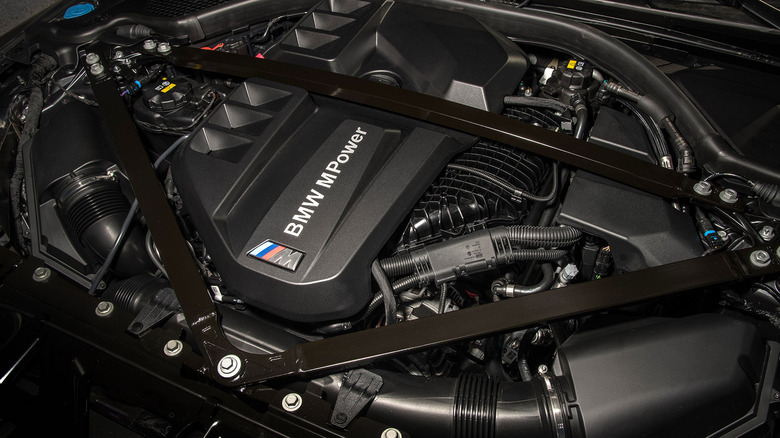
The BMW-sourced B58 engine that powers the Mk5 Toyota Supra (and other BMW models) is potent, but it's not the most powerful inline-6 BMW makes. Found in BMW's specialty models like the M3 and M4, the high-performance BMW S58 engine takes the bones of the B58 and elevates things several notches.
In the standard 2026 BMW M4, the S58 makes 473 hp and 406 lb-ft of torque, climbing to 523 and 479, respectively, in the M4 Competition xDrive model. In either trim, the S58 positively blows the 2JZ-GTE away in terms of output, and that's not surprising at all. There is, after all, around 30 years of technological advancements separating the two engines. However, if you wanted a direct, modern equivalent of the Supra's once-groundbreaking 2JZ, the BMW S58 would probably be it. From a historian's perspective, both 3.0-liter inline-6 engines power some of the most impressive performance cars of their time.
For a while, there was hope and serious speculation that Toyota might borrow the S58 engine to make an ultra-high-performance version of the Mk5 Supra, but BMW ultimately denied the request, opting to keep its hottest inline-6 engine for its own vehicles. With the Mk5 Supra being discontinued altogether in 2026, the concept of an M3-powered Supra will remain an unexplored possibility.