

4 Travel Gadgets You Should Think Twice Before Buying
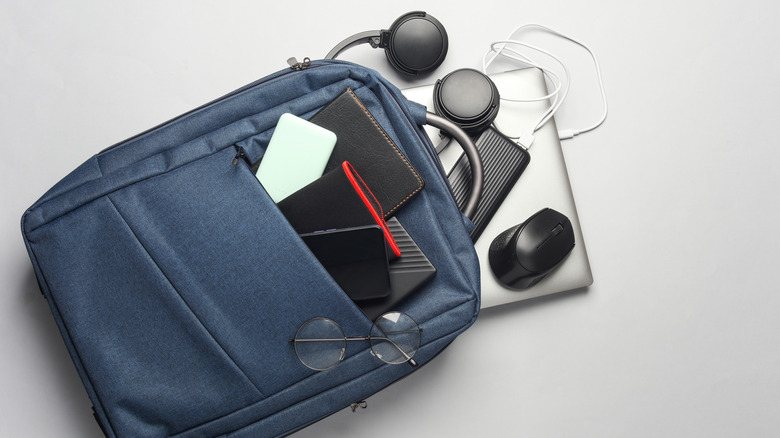
Long-haul flights and other forms of travel have become dramatically less boring and easier to endure — partially thanks to improved comfort and engineering, but mostly due to the fact that our smartphones and accessories keep us distracted. A good pair of noise-canceling headphones will block out the constant hum of the engine, and a fully charged tablet with downloaded Netflix movies will keep you entertained. Perhaps add a compact power bank to the mix that can restore some or all of your device's battery.
As innovation has accelerated, so has the number of gizmos tagged as being "travel essentials." Think about it — do you really need a motorized suitcase with built-in GPS that follows you around the airport, only for you to worry about charging yet another gadget before your trip? A comfortable neck pillow is understandable, but one with built-in headphones that sounds exponentially worse than a dedicated pair of headphones is harder to justify.
Similarly, a quick search on Amazon for travel gadgets will fetch you dozens of exciting options, but not all of them are worth the money or carrying space. Read on as we explore a few travel accessories that you might want to avoid buying — or at least think twice about before adding them to your cart.
Power banks that are overkill
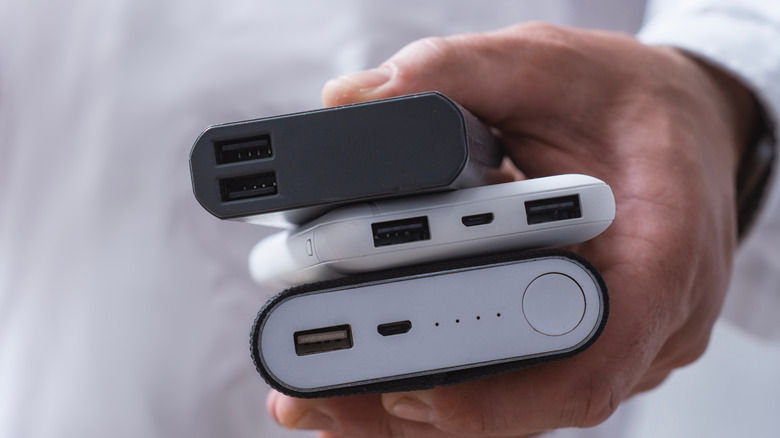
A power bank is likely one of the most useful travel gadgets you can buy, but it's very easy to go overboard. For starters, you need to worry about airline restrictions to ensure you can even carry your power bank with you on a flight. According to the Federal Aviation Administration, you can only bring rechargeable lithium-ion batteries that do not exceed 100Wh in capacity with you on a flight.
Since most power banks are advertised with mAh as the capacity unit, conversion gets a bit confusing. To calculate watt-hours (Wh), you need to multiply the capacity in milliampere-hours (mAh) by the listed voltage and divide the result by 1,000. Since most lithium-ion power banks operate at 3.7V, a 20,000mAh power bank would translate to roughly 74Wh. If you scale this number up, a 30,000mAh power bank exceeds the airline limit.
Moreover, power banks with higher capacities are heavier and take longer to charge fully. While a 50,000mAh brick gives you reassurance during your travel, you may rarely come close to using its full capacity on a trip — given that you can find wall outlets basically everywhere. Investing in a universal travel adapter might be a better idea.
Smart luggage

From automatic online check-in for flights to the giant flying machines that get us around the globe — everything about air travel is a technological marvel. If that weren't enough, companies came up with smart luggage — bags with motorized wheels that can follow you around. Some come with built-in USB ports, so you don't have to carry a power bank in your hand. If you are a very frequent traveler — sure, a self-driving suitcase can be worth it, even just as a novelty.
However, there are dozens of suitcase listings online that add the tag "smart" just for there to be a passthrough USB port or a dedicated pouch to hold a separately bought GPS tracker. That's not to say that all smart luggage options come with caveats. If you research right and stick to highly rated smart bags, they could prove to be a worthwhile investment.
If you are particularly drawn towards suitcases or backpacks that feature GPS tracking, you could DIY the same functionality by picking up one of the many tried-and-tested Bluetooth trackers, like an Apple AirTag. Not only do these often have better ecosystem advantages than proprietary solutions, but they can be bought for cheaper and can be repurposed for other valuable items. Smart suitcases also don't come cheap. Add to it the fact that you need to worry about charging them or making sure the mechanical bits don't act up, and you might just be complicating your travel further.
AI-powered travel companions
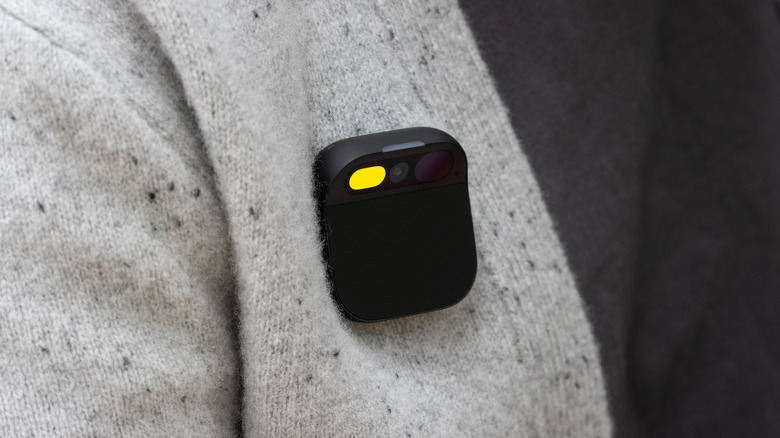
Ever since generative AI took off a couple of years ago, it's become nearly impossible to sit through a product launch without hearing the "AI" buzzword at least a dozen times. Sure, when implemented the right way, AI-assisted devices can be extremely useful, but travel gadgets that are powered by AI are far more hit-or-miss than the marketing suggests. In fact, companion devices like the Rabbit R1 and the Humane AI Pin turned out to be some of the worst AI gadgets released recently.
AI language translating devices happen to be a decently populated market right now. These gadgets often come in the form of wireless earbuds or small handheld devices with a built-in AI model that does the translation for you. Earbuds with real-time translation seem to be genuinely useful additions if you travel a lot, but only as long as the product you're eyeing is reliable and accurate enough to handle real-world conversations.
A big reason to steer away from niche AI-enabled travel gadgets is the fact that you already own the ultimate solution in your pocket — your smartphone. Most of what these specialized AI devices claim to handle can also be accomplished by purpose-built AI apps on your phone. Apple even pushed an update to enable live translation on AirPods — which is almost certainly going to offer a better experience than gadgets from no-name brands.
Mini appliances and travel routers
Besides large capacity power banks, smart suitcases, or AI travel companions, there are plenty of smaller travel gadgets that might sound like a good idea until you actually take them on a trip. Mini appliances like foldable kettles or portable espresso machines not only take up valuable luggage space, but also require you to check for voltage compatibility depending on where you're traveling to. Then there's the hassle of cleaning and drying them after every use — plus, for the price of one espresso machine, you might as well enjoy unlimited coffee the old-fashioned way in a cafe.
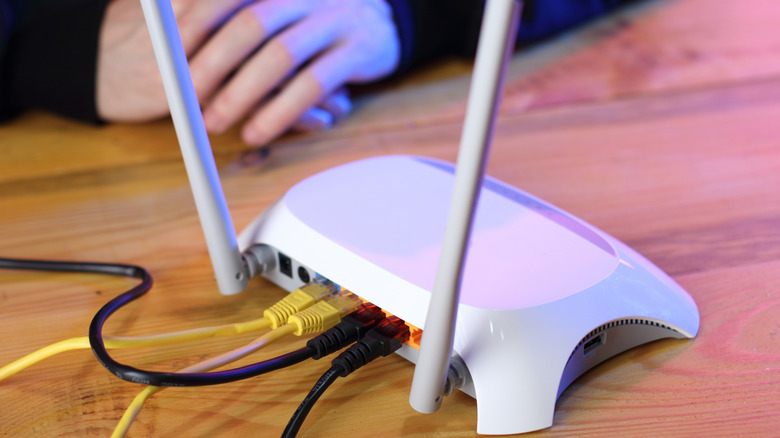
You may also not be able to carry a Swiss Army knife on an airplane with you. If you really do want to bring one along, you must store it safely wrapped inside your checked baggage. Travel routers are another popular category, though unlike most other items we've mentioned thus far, they do serve a purpose. However, if you're mostly just going to be using Wi-Fi on a laptop or another phone, it's much easier to use your phone's hotspot connection instead. If you're flying abroad, apps for roaming and eSIM plans can come in handy.
Travel gadgets should aim to bring you convenience, and if you're constantly charging them or worrying about airline regulations, that's just added friction. It's also a good idea to go through a product's customer feedback section or refer to professional reviews before you add a gadget to your cart.