

5 Volkswagen Engines Owners Say You Should Steer Clear Of
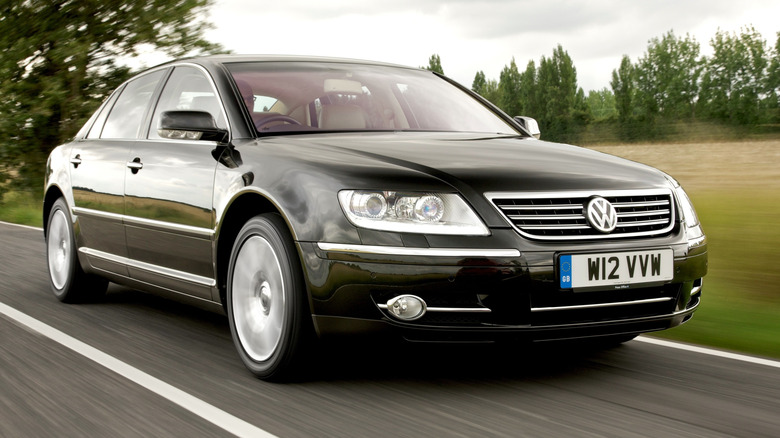
Although Volkswagen has its fair share of reliable models, it's not an auto manufacturer that's necessarily famed for overall reliability. That mixed record extends to its engines; some of these are rated highly by drivers and enthusiasts, while others are worth staying away from. The exact reason for steering clear of each engine varies, ranging from high maintenance costs, design flaws, or build quality issues. In especially inauspicious examples, it can even be a mix of all three.
While there are some common problems that Volkswagen owners can expect, buyers who pick any VW with one of these five engines may well find themselves with a slew of additional problems to deal with. Some of the engines here have featured on our list of used Volkswagen models to avoid; others are rarer, more obscure picks that won't be appearing on the radar of most used car buyer anyway. Either way, unless you like spending a lot of time and money on maintenance, owners recommend giving these five engines a pass.
Volkswagen W8
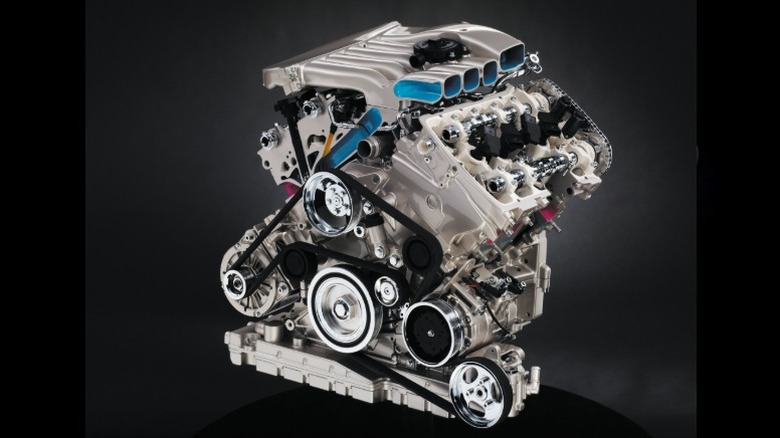
One of Volkswagen's rarest engines is also one that's worth staying away from. The W8 was only fitted to the Passat W8, which (in theory) could have been a great car if it hadn't been notoriously unreliable. The W8 engine was developed alongside Volkswagen's W12 and W16 power plants, with the twelve-cylinder variant appearing in a handful of VW Group cars including the Bentley Continental; the W16 was later put to use in the Bugatti Veyron. Absurdly expensive maintenance might have been tolerable for owners of Bentleys and Bugattis, but for Passat buyers, it was a dealbreaker.
Jonathon Klein, executive editor of The Drive, said he spent over $8,000 in the space of eight months trying to keep his Passat W8 on the road. According to Klein, his car "ate spark plugs like they were Pringles" and needed one of its cylinders re-rung, which could only be carried out by the manufacturer. Likewise, former Jalopnik contributor Mercedes Streeter bought a Passat W8 with a manual transmission and found a long list of issues, both with the engine and with other parts of the car.
In a thread on the Passat World forum about buyers' advice for the W8 Passat, opinions are mixed on whether the extra hassle is worthwhile. However, all posters agree that any prospective buyer should be prepared to carry out a lot of extra maintenance and be prepared for a very large bill should anything go wrong that they can't fix themselves. For most Passat buyers, that will simply be too much of a commitment to be worthwhile.
Volkswagen EA189
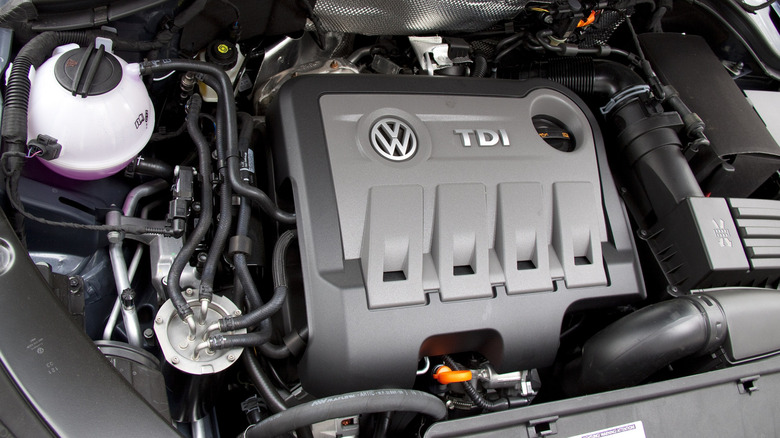
While Volkswagen's W8 engine is likely to be a maintenance headache, it is at least appreciated among enthusiasts; that alone should be enough to convince a few determined buyers that it's worth a gamble. However, plenty of other unreliable Volkswagen engines have no such redeeming features. Take for example the EA189, which is most famous for being at the center of the brand's infamous Dieselgate scandal.
After it emerged that the engine emitted far more pollutants in real-world running than it did during test cycles, Volkswagen was forced to fork out billions of dollars to fix the issue or buy back non-compliant cars. The brand quickly developed a fix to correct the emissions issue, which it began to roll out via a recall. However, after the work had been carried out, a number of reports emerged about owners having issues with power loss or engine judder. There were enough reports of post-fix problems that Volkswagen launched an extended two-year warranty period in some markets to cover any damage caused by the emissions recall.
Thankfully, it's easy to avoid cars with the EA189 engine, since it wasn't hugely popular in America anyway. Volkswagen recalled just 482,000 EA189-equipped diesel cars in the U.S. in comparison to the 8 million it had to in Europe. Various models including the VW Jetta, Golf, and Beetle were sold with the engine, alongside several Audi models. Given the potential issues caused by the recall, they're all probably best avoided if you're on the hunt for a used car.
Volkswagen Wasserboxer

When buying an older vehicle, some level of unreliability is always to be expected. This extends to campers vans as well as cars, including Volkswagen's much-loved line of campers. Discussing his Transporter T2 Vanagon, Canadian auto journalist Fred Mercier told Inside Hook that the VW campers are inherently not reliable because "they are old vehicles with lots of mileage on them," adding that if you're looking "to go on camping trips and not worry, you shouldn't buy this because you are going to worry."
A number of those reliability issues revolve around the Vanagon's water-cooled boxer engine. They sold well at launch, with Volkswagen making more than 250 engines for Transporter vans per day at its Hanover plant by 1983. Thanks to the enduring popularity of the Vanagon, there are also still plenty of people around who know how to work on them, but that doesn't alter the fact that something will probably go wrong at some point. Owners point to engine-specific issues, with two well-known weaknesses being leaking head gaskets as well as coolant leaks; the likelihood of both depends on the maintenance habits of previous owners.
Unlike some of the other engines here, it's not true that everyone should stay away from VW's water-cooled boxer engines. Rather, owners advise that buyers who want a reliable engine for longer road trips would be better served by newer models in the Transporter line. Meanwhile, enthusiasts that like to work on their own vehicles and don't mind when those vehicles break down should find that there's plenty to keep them busy if they buy an old water-cooled VW.
Volkswagen EA111 1.4-liter 16V
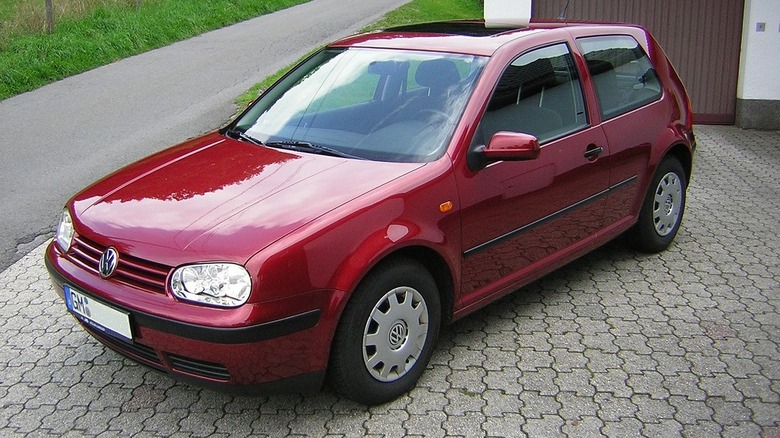
While Europeans get plenty of cool cars that Americans miss out on, not every one of these exclusives is worth lusting over. Not every Euro-spec engine is either, with the EA111 1.4-liter 16V being one that's probably best left on the other side of the pond. It featured in the Euro-market Mk4 Golf, where it developed a reputation for suffering issues like cam belt failure and oil leaks. Even when it was functioning as intended, its lack of power meant that it needed to be pushed a lot to keep up with traffic.
Like virtually all aging cars, its reliability can also be significantly impacted by the maintenance habits of its previous owners. It's safe to assume that, by now, any 20+ year old base-spec Golf will have had at least one owner that didn't keep up with the required maintenance, and that will make it even more prone to faults.
According to one forum poster on UK MkIVs, "all [1.4-liter] Golf engines are prone to using a bit of oil," as well as having various other problems including head gasket failure. In the same thread, other Mk4 owners quickly chimed in with their own reported issues, adding that the only real saving grace was that cars equipped with this engine are cheap to buy.
Volkswagen W12
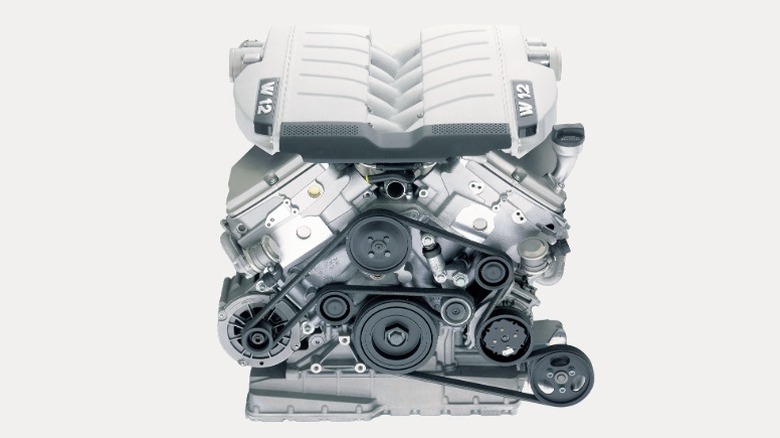
Several engine builders have experimented with the W12 layout, with Life building one for its ill-fated Formula 1 effort in 1990, but Volkswagen is the only automaker to bring a W12 to the mass market. It appeared in various Volkswagen Group models, including in the VW Phaeton, Audi A8, and Bentley Continental GT. The good news is that, according to Stuart Worthington, a specialist at an independent Bentley dealer who was interviewed by Classics World, the W12 is "essentially bullet-proof" with the correct maintenance.
The bad news is that as cars equipped with the engine get older, they're much more likely to fall into the hands of owners who may be unable to afford that maintenance. And when things do start to go wrong, they cost a fortune to put right. The W12 engine is notorious for needing its engine fully removed for a number of key repair jobs, which sends the maintenance bill significantly higher. Figures north of $10,000 for some fixes are not unusual. It's also one of the most difficult Volkswagen engines to work on, and so the pool of shops willing to even take a look at it will be small.
Yet even with its cons, the W12 does have some pros. It generates a lot of power when it's running right, and that power is delivered smoothly too. Any enthusiast with extremely deep pockets might find its unique layout and ample performance enough to make it a worthwhile investment; for everyone else, it's best to stay well away.
How we picked these notorious Volkswagen engines
Look across online forums and social media and it isn't hard to find horror stories for a variety of Volkswagen engines. However, some are particularly notorious, coming up time and again as being tricky to keep running in the words of owners. Some are expensive to maintain, some suffer from well-known reliability issues, and some tick both boxes. To produce this non-exhaustive list of notoriously fussy Volkswagen engines, we drew from a variety of sources including advice from owners forums, recall history, and buyer's guides written by automotive professionals.