

Is The Steam Deck Still Worth Getting?
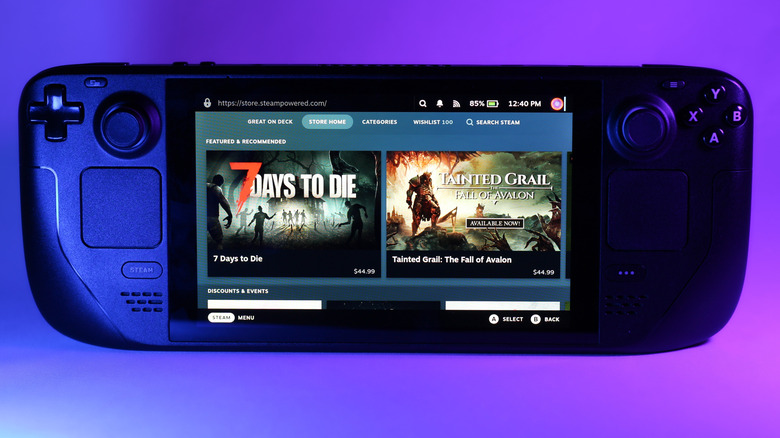
For the past few years, if you asked someone for the best handheld gaming PC, there's a good chance they'd say, "just get a Steam Deck." Its $400 launch price was hard to beat, so competitive, in fact, that Valve admitted the pricing was "painful." Though it was far from the most powerful handheld, it was so good that even in 2026, years after the Steam Deck first released and the market produced more performant options, people still recommend it. But is it really still worth getting when great options like the ROG Ally X and Legion Go S exist? That's the million-dollar question we aim to answer.
There's no simple yes-or-no answer. In many ways, the Steam Deck continues to provide excellent value this year, but that comes with increasing caveats that make it only ideal for a certain type of gamer — and a mixed bag for the rest. Further, Valve will likely continue to hold off on its long-awaited Steam Deck 2 for years to come; waiting a year or two isn't a solid strategy. Let's discuss the reasons you should buy a Steam Deck, and what reasons should make you hold off.
For last-gen or indie gaming, absolutely
The Steam Deck certainly has its cons, but one area where it absolutely crushes it is running older AAA and indie titles. Indies especially. Barring a few exceptions, I've never bought an indie game the Steam Deck couldn't run well. The indie scene is arguably better than big game publishers, too; some of the best experiences I've ever had — best stories, characters, performance, gameplay — came courtesy of indie games. They generally cost less and are made by passionate developers who tend to listen to community feedback. If you buy a Steam Deck with the intention of playing more indie games, particularly those in your backlog, you will not be disappointed. I don't imagine this situation will change for years to come.
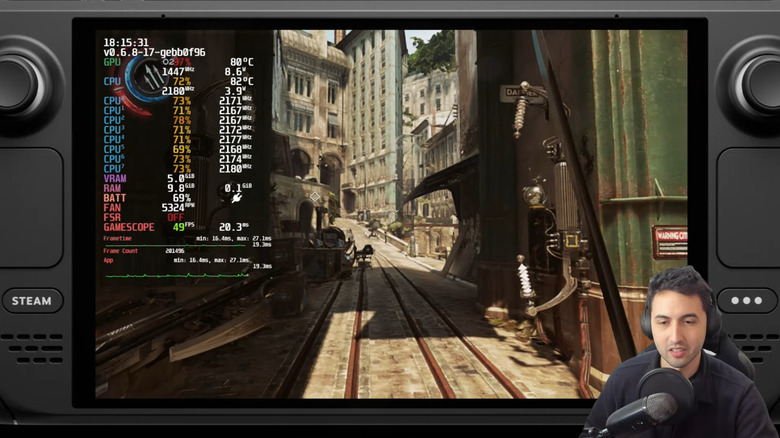
For "older AAA" games, we'll draw a line in the sand at anything made prior to the PlayStation 5 or Playstation 5 Pro era, so 2020 or earlier. Virtually everything in that category works flawlessly out of the box, often at higher graphics settings. Take, for example, a personal favorite of mine, "Dishonored 2," a title that, if released today, would still look amazing. I've personally been able to push the graphics settings to high — without upscaling — and get a solid 45 FPS.
That's all at the Steam Deck's native 800p resolution, of course, but many games in this indie/older AAA category will run just fine at a full 1080p with a docked Steam Deck; I'm able to run "Insurgency: Sandstorm" and "Metal Gear Solid V" this way at high settings. So for a gamer who's primarily interested in indie games and older titles, the Steam Deck's for you. Modern AA games, such as "Avowed," also tend to run well.
Current-gen stuff is increasingly iffy
A surprising amount of modern AAA titles (i.e., post-2020) work on the Steam Deck, though prepare for the lowest graphics settings, sub-30 FPS, and copious FSR upscaling and/or frame gen. Verified 2025 titles such as "ARC Raiders" and "Indiana Jones and the Great Circle" all run well enough, but I'd definitely recommend playing recent AAA titles on a more powerful handheld, laptop, or desktop PC. You could get by with only a Steam Deck, though.
That said, Valve's Steam Deck Verified rating system should not be treated as gospel. The verified tag does mean that you can play a game, but in my experience, Valve's definition of playable sometimes stretches the meaning of the word to its breaking point. My favorite personal example is "Marvel's Spider-Man 2." The only way you can get this game running at any acceptable frame rate is to use dynamic resolution scaling, which means that the game often looks like a horrendously blurry mess. Could you play the whole game on a Steam Deck? Yes. But would you want to? Probably not.
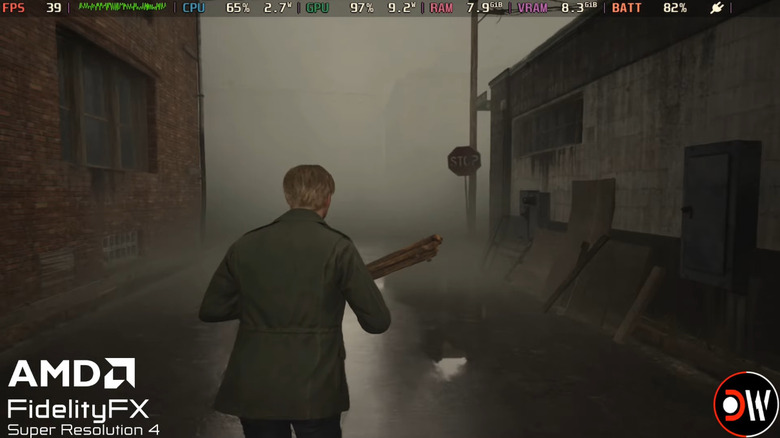
It's a complete shot in the dark whether a recent AAA title will be playable on the Steam Deck. "DOOM: The Dark Ages," a genuine next-gen title, seemed like a lost cause until id Software created a handheld preset, but you can't trust the devs of every game to do this. There's a will, where there's a way, of course. The 2024 "Silent Hill 2" remake, for example, is officially unsupported, but I got an okay-ish experience with FSR 4 and a performance mod. I've been surprised by how many officially unsupported games I've gotten working this way — though it's never ideal. The Steam Deck is fast approaching the day when it won't play any modern AAA games.
Many anti-cheat games are still a no-go
Linux really snuck up on us as a great Windows 11 alternative for gaming, thanks in large part to the Steam Deck's amazing, Linux-based SteamOS. Speaking anecdotally, I can count on one hand the games that do not run on Linux whatsoever. Better yet, the overwhelming majority of games run out of the box on Linux without requiring any settings tweaks. There's one area, however, where Linux falls flat on its face with gaming: anti-cheat.
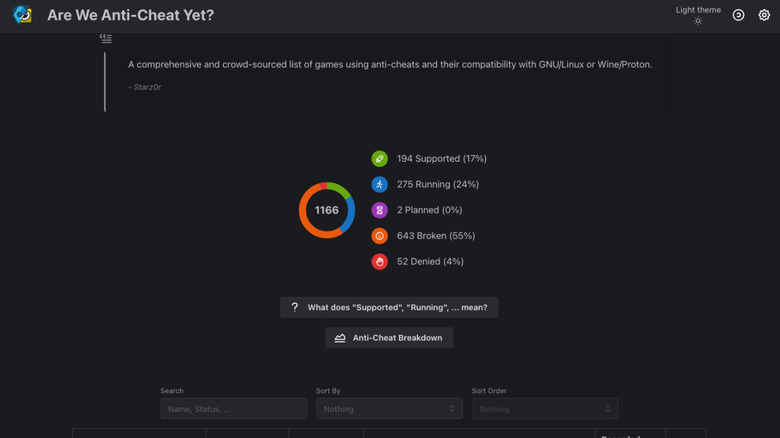
Anti-cheat is software that runs in the background and detects and stops suspicious activity (e.g., cheating software) in an online multiplayer game. Without getting too deep in the technical weeds, Linux is able to play Windows games by translating them, but it cannot meet kernel-level requirements that anti-cheat programs often impose. The website Are We Anti-Cheat Yet? catalogs 1,166 online multiplayer games, of which only 17% fully support anti-cheat on Linux. The majority do not, and that's highly unlikely to change any time soon.
So which games would you be unable to play? Think "Fortnite," "Battlefield 6," "Apex Legends," and "League of Legends," to name a few. These are big, popular titles, so if you play them a lot, the Steam Deck isn't for you. Having said that, there are a lot of major games that do support anti-cheat on Linux. "ARC Raiders," which has been garnering more players than "Battlefield 6," works flawlessly for me out of the box. Some of the most popular online multiplayer titles on Steam — "Counter-Strike 2," "Dota 2," "Marvel Rivals" — also work, in fact. But frankly, it's a coin toss whether or not the Steam Deck will support your favorite online multiplayer game.
The Steam Deck's value proposition may weaken

The Steam Deck's advantage is bang for buck. Just look at its competitors' ever-increasing price points and diminishing returns; there was the ROG Ally starting at $600 in 2023, then the ROG Ally X at $800 in 2024. Later, handhelds like the ROG Xbox Ally X hit the $1,000 range in 2025, and some (like the Legion Go 2) shot way past the $1,000 mark. The Steam Deck may be weaker than these handhelds, but it can play most of the same games for sometimes less than half the price. Until now.
RAM prices are out of control in the U.S., and the Steam Deck may have succumbed to them. If you go to the Steam Deck's U.S. store page at the time of writing, you will find every single model out of stock. That includes Valve's Certified Refurbished ones. On third-party sites like Amazon, Steam Decks are reaching absurdly inflated prices. Valve hasn't explained the sudden Steam Deck evaporation, but many suspect the RAM crisis that delayed the Steam Machine likely made it costlier to manufacture Steam Decks, thereby forcing Valve to reevaluate pricing once existing inventory sold out.
As such, recommending the Steam Deck has now become more challenging. Even if you're okay with the caveats outlined above, you'd have to contend with paying more. Who knows, the Steam Deck could end up costing an extra $100. Maybe more. We simply don't know. People are panic-buying what they can to stock up for the long winter of the RAM crisis, so it may be your safest bet to just wait for things to stabilize. If you can find a used Steam Deck for a good price, though, and replace the battery, you'd have an excellent gaming device.