

5 Of The Best Handheld Game Consoles Ever Made, Ranked
We may receive a commission on purchases made from links.
As a lead player in the gaming industry, Nintendo has been around for over four decades, and yet its most popular systems are handheld devices. Mobile games achieve billions of dollars in revenue each year, and people are still looking for must-have handheld gaming accessories that won't break the bank. But outside of portability, what makes dedicated consoles like these worth buying?
There are many factors to consider when looking at any portable device, such as game libraries, features, and comfort. Drawing on market knowledge and personal experience, we are taking a look at the five best handheld game consoles ever made.
5. PSP/Vita
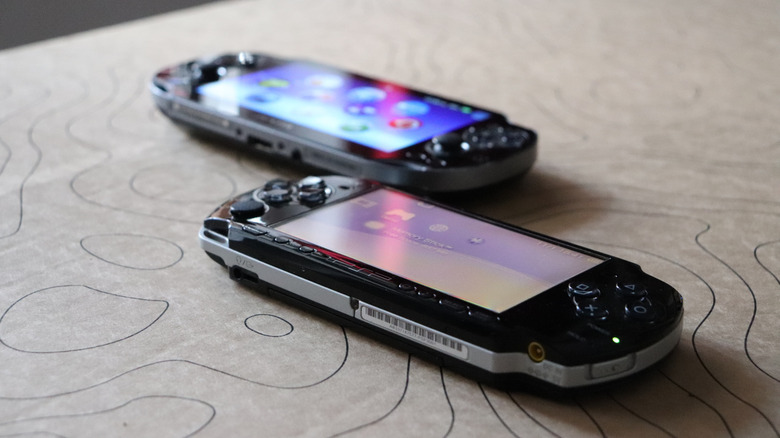
The PlayStation Portable, later succeeded by the PS Vita, was Sony's attempt at overtaking Nintendo's dominance in the handheld scene — and it was a fairly successful attempt. Even outside of the original device's library, the various nostalgic PSP features made it worthwhile for more than just gaming. The PS Vita followed that up with a touch screen, improved controls, and the ability to play games on the PlayStation 4. Unfortunately, their legacy has dried up, with Sony currently relying entirely on the PlayStation Portal for handheld functionality.
The design hindered the original PSP's great library. Many games didn't play well with the single joystick, with players having to contort their hand just to competently handle some of their favorite titles. Plus, while not everyone had a problem with them, the miniature discs used by the PSP had a reputation for flimsy quality and noisy operation. The latter issue was somewhat answered by a smaller iteration of the device known as the PSP Go, but it did so by removing the disc drive entirely, potentially cutting out a great portion of players' physical libraries.
As for the PS Vita, there are many reasons why it was a failure. The focus on remote play meant it was primarily advertised as an add-on to the PS4 rather than its own thing, and its lack of popular exclusive titles meant there wasn't much reason to choose it over a competitor. It wasn't a bad console, but it just had too much going against it.
4. DS
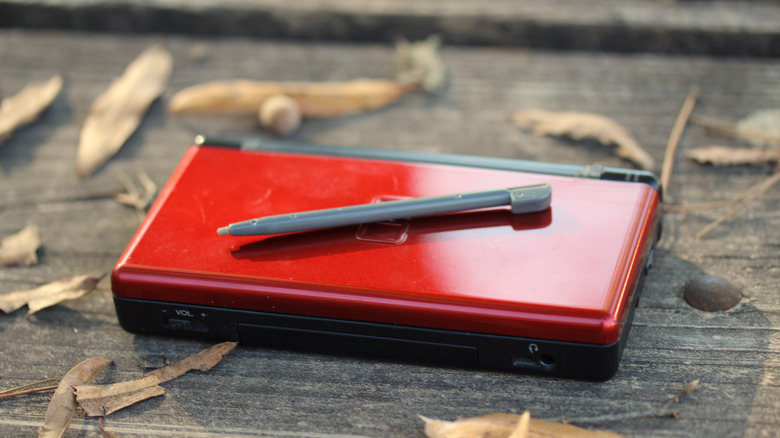
Arguably, the PSP deserves a spot above the Nintendo DS. Its multimedia capabilities were limited, and extra features like web browsing flopped on the DS, too. But its library and unique design more than made up for these shortcomings, with countless games taking full advantage of the dual screens and touch capabilities. Plus, while the PSP had a decent library of online-capable games, it could hardly match the ecosystem cultivated by series like Mario Kart and Pokémon. The DS wasn't simply a portable console; it justified its presence by turning hardware gimmicks into core functions, allowing for truly unique experiences.
However, it was still a bit bare-bones beyond its core library. The later release of the DSi sought to fix that by adding features like a camera and a more Wii-like home menu, but it also removed backwards compatibility with GBA games. It also didn't have much of its own dedicated library, instead acting as more of a direct upgrade — or side-grade, depending on who you ask — to the original DS. These consoles were absolutely fantastic with their lineup of games, but that was the limit of the DS's appeal.
3. Steam Deck (and other handheld PCs)
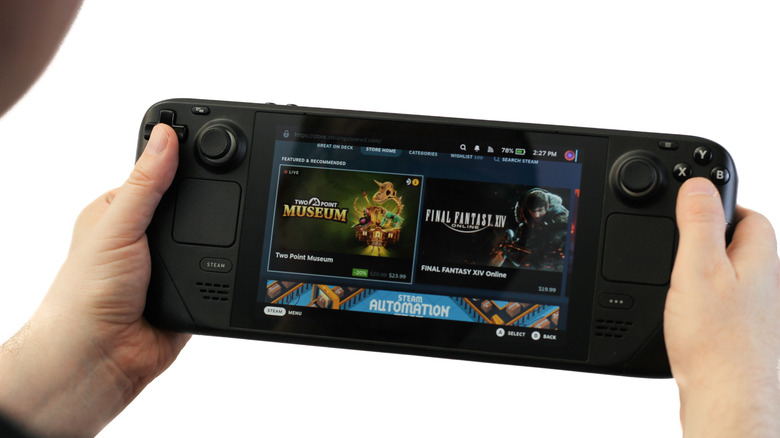
The Steam Deck is exceptionally different from every other console on this list. It's practically a handheld PC in the shape of a controller, and as such, there's more you can do with it than any dedicated console from Sony or Nintendo. Between all the ways you can customize your Steam Deck and the absolutely insane library from Valve's online store, it might feel odd to see this anywhere below the number one spot. But for all it has, there's a lot that the Deck doesn't provide.
Out of the box, Steam's handheld console comes with a charging cable and a carrying case. There's no included stylus and no extra controller, and even the dock for it is sold separately. Plus, while there are plenty of Deck-verified games, they were still released on Steam — a PC-focused platform. And without the inclusion of a dedicated keyboard-and-mouse setup, plenty of those "verified" titles simply don't play as well as they should, and they take up more of the Deck's limited storage than they would on a more dedicated platform.
Other handheld PCs like the Asus ROG Xbox Ally may be more powerful (and more expensive) than the Deck, but they aren't too dissimilar beyond that. They all share similar upsides and downsides, and there's no guarantee that a brand-new game will work on these devices even if they can be installed. You can fix some of these problems yourself through extra software and simply buying more accessories, but it's a lot of additional work just to play something you already own. When you're willing to put in that work, though, the experience is nearly unrivaled.
2. Switch/Switch 2
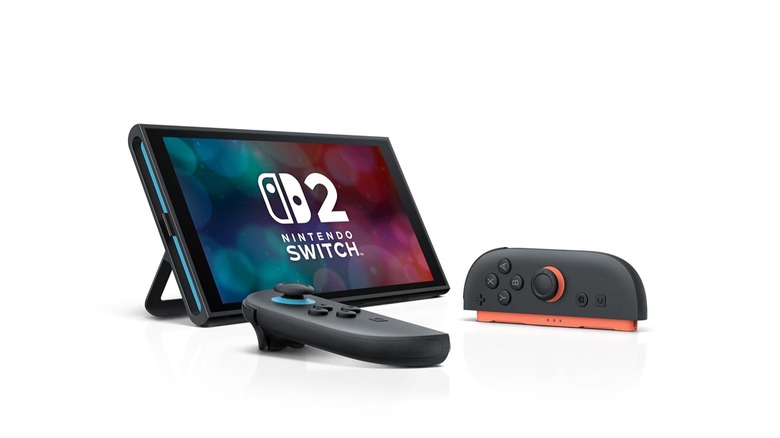
The Switch is currently Nintendo's best-selling console, and the Switch 2 is shaping up for similar success. Their main draw comes from how they aren't just handhelds; they technically take the place of a dedicated home console, too. Unlike the Steam Deck, each Switch also comes with a dock, and the controllers can be detached, so you aren't tethered to that dock while you play on a larger screen. And while its library isn't quite as impressive as the Deck's in terms of sheer size, there's still an absolutely massive number of games that are all natively supported as best as publishers or developers could manage.
The Switch's downsides are similar to those of the original DS. The menu is lackluster, boasting none of the charm or ambient music of prior Nintendo consoles, and apps for services like YouTube are just about the only things you can make use of for any non-gaming fun. Most of the ways to customize your Nintendo Switch are focused entirely on hardware modifications, and there isn't much of an officially-sanctioned way to go further on the software side. Once again, it's a simple gaming device rather than a multimedia menace.
The Switch 2 faces similar constraints. It's more powerful and has access to more available titles, but it doesn't offer much on its own. The dedicated tech demo to show off the hardware is a separate purchase, and although it provides mouse functionality with its controllers, few games were designed to make use of it whatsoever. Unlike the DS, the console's additional features and gimmicks don't add much. This might change in the future as the Switch 2 finds more support, though, as a certain other Nintendo console did.
1. 3DS
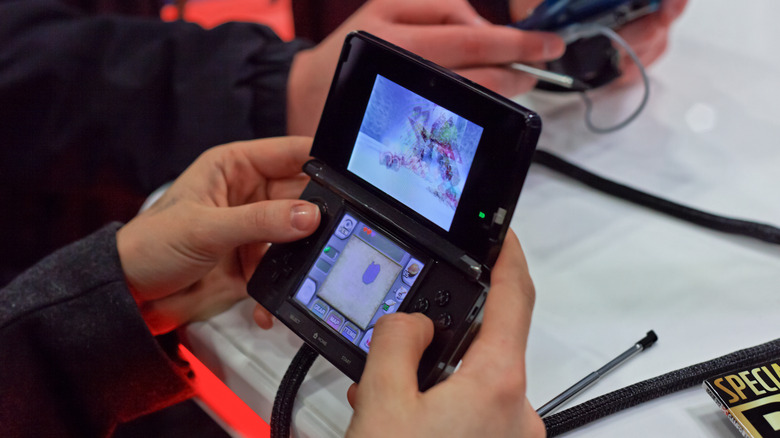
The Nintendo 3DS had a very rocky start with a disappointing launch lineup. Throughout the handheld's lifespan, though, it would eventually get one of the best libraries of portable-only games out there, with many of them building on the dual-screen functionality and touch support. This gimmick wasn't quite as game-changing, and later versions came without the function. But glasses-less 3D is still a remarkable gimmick, especially when considering how similar technologies can cost thousands of dollars.
However, the 3DS had a bit more to offer on the software side. Exclusive downloadable videos and custom home menu themes were just the tip of the iceberg. StreetPass was the biggest draw of the portable console, allowing you to share your custom Mii avatars with other players and use them in built-in free games. The 3DS also allowed you to play with augmented reality, and later models even let you swap their face plates for further customization. The unique features allowed it to stand out from the DS, and when combined with its strong library of titles, it's not too difficult to consider the 3DS as the best handheld out there.
It's not all good news, though. The 3DS is long past its prime, and online services and downloadable games are no longer officially available. Still, the 3DS was absolutely stellar in its prime, and it'll be tough for contemporary handhelds to come anywhere close to that greatness.
Methodology
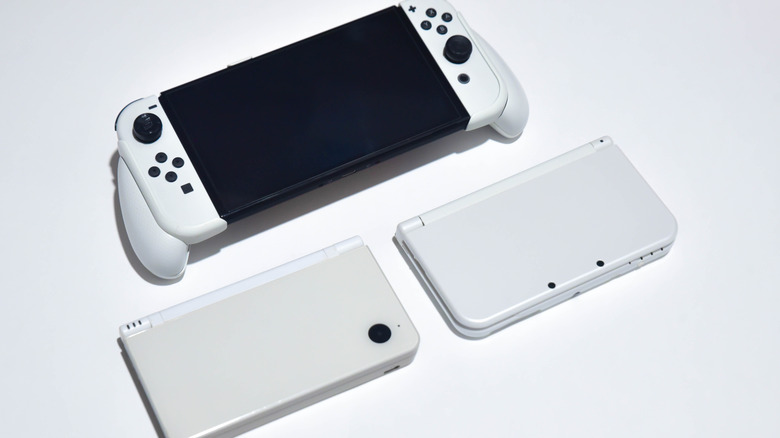
Primarily, we ranked each system on its core features. In other words, this ranking doesn't take separately purchased accessories, additional controllers, or emulation capabilities into account. (Otherwise, the Steam Deck would've easily taken the top spot.)
Instead, we focus on what comes straight out of the box and what natively-supported games are available for them. Additional software features and customization options are also given special attention.
Of course, there is some subjectivity here. You probably won't consider the 3DS as a top pick unless you enjoy Nintendo's exclusive franchises, and you might not think of the Steam Deck as a strong contender if you have a more powerful gaming PC. Personal preference accounts for a great deal of why people even buy these consoles. In the end, what truly makes for the best handheld console depends on what you want from it, though it's still worth considering the variety and functionality of other consoles.