

12 Underrated Tools Every Electrician Should Own, According To Professionals
We may receive a commission on purchases made from links.
Like every trade, electricians have a specific set of tools that they need to do their jobs. These include anything from multimeters to test electrical current to circuit testers to make sure sockets are properly installed. You also have a wide array of hand tools to consider, and other specialized tools. For the most part, these tools are properly appreciated for their importance. After all, nearly every electrical socket plate uses a standard screw to hold it in place, so a screwdriver is a must when doing electrical work.
Over the years, professionals have found various tools that complement their work that may not be on every list of essential electrician tools, but probably should be. Electricity is everywhere, so electricians cover a lot of ground in residential, commercial, industrial, and public spaces, and as such, some may have picked up on cool ideas that other electricians may want to know.
So, if you're into the idea of building (or improving) a toolkit for electrical work, below is a list of tools that you may not see recommended all the time but are starting to pick up traction in the electrician community. Most of them are fairly inexpensive as well, which is a boon in an industry where you usually provide your own tools.
Magnetic Pick Up Tool
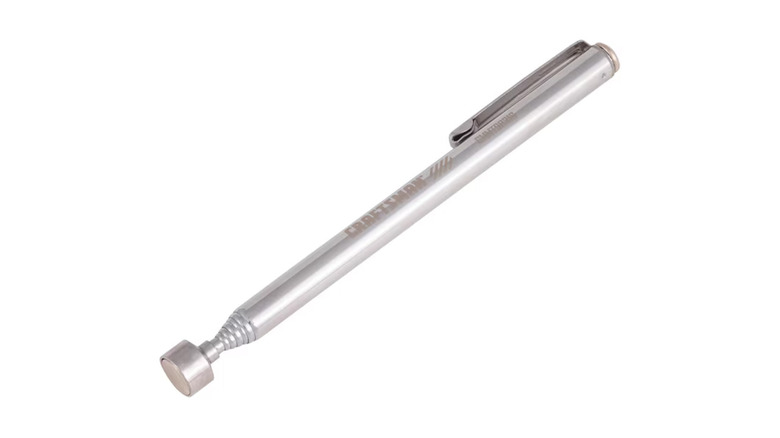
One of the most common tools we found recommended that isn't in a standard electrician's toolkit is a magnetic rod of some sort. The logic with this one is pretty simple. If you drop a screw, a piece of wire, or something similar behind a wall, you can use a magnetic rod to pull it back out. Residential electricians especially work behind drywall pretty often since that's where most of a home's wiring is located, so it's reasonable to want a tool to fish out whatever you dropped back.
These come in many shapes and sizes, from full-sized poles to smaller, extendable rods. Bonus points go to magnetic rods with a hook on them, where you can use the hook to grab and pull wiring that may not be as easy to get with just a regular magnet. You may not even need a magnetic rod like that. Some folks recommend using any piece of hooked metal that can reach behind the wall to grab a cable that's too far down.
These can be quite long, so it's probably something you'd keep on the truck until you need it, but it's better to have a hook and not need it rather than need it and not have it.
A hook and pick set
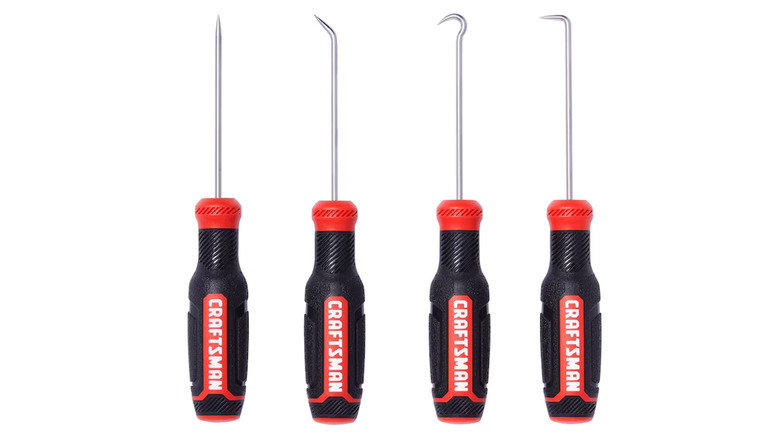
A pick set is a generally underrated set of tools, and not just for electricians. There are a ton of reasons to have a small, pokey thing on your tool belt, but most of them boil down to act as a finger when your finger is too big to do the thing you need it to do. This can mean helping you unsnap an electrical connector, clean out a small hole packed with gunk, or even functioning as a mini pry tool to open a fussy latch or loosen a stubborn electrical outlet plate. It's one of those tools that has plenty of uses that you'll figure out when you don't have one.
Hook and pick sets are pretty readily available at any hardware store. The Craftsman Automotive Hook and Pick Set is a reasonable option at under $15, and Home Depot's Husky has a 7-piece set available for around $25. You can even find a basic set at Harbor Freight for as little as $2. The benefit to a hook and pick set is that you have varying shapes that are useful in different scenarios. The hook one can even be used to claw out something from the wall if need be.
Battery-powered band saw
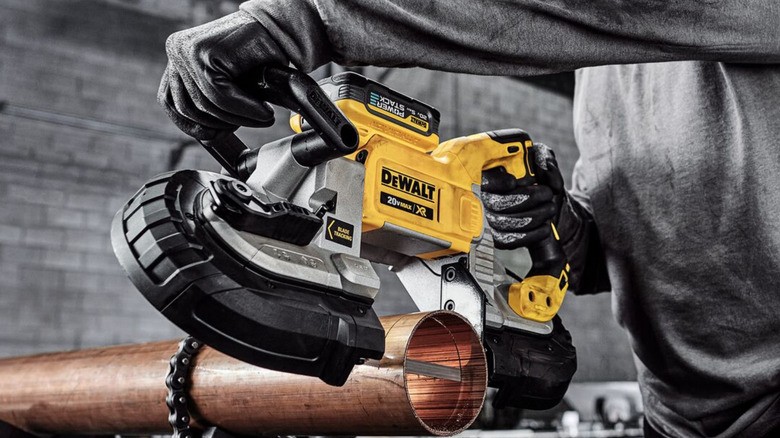
Electricians have to cut more things than you would expect, and for the most part, a good pair of wire cutters or a hand saw will do the job. However, electricians commonly have to work with electrical conduits, which are metal or (properly rated) plastic pipes that route cables through walls and underground. These tubes safeguard cables from potential damage. For simpler jobs, cutting them with a hand saw is no big deal, but electricians who often work with electrical conduits praise the battery-powered band saw as the savior of their shoulder.
There aren't a ton of these on the market, and the ones we saw most often recommended were the DeWalt 20V Max XR Cordless Band Saw and the Milwaukee M12 Fuel 3-inch Cut Off Saw. The former seems to be recommended for heavier duty jobs and thicker pieces of conduit, while the Milwaukee is more for residential use, where conduit is rarely more than an inch or two wide. Either way, it's way faster and easier to use a tool like this rather than cutting by hand, and some electricians have replaced their hacksaws completely with a band saw.
A 1/4-inch socket set
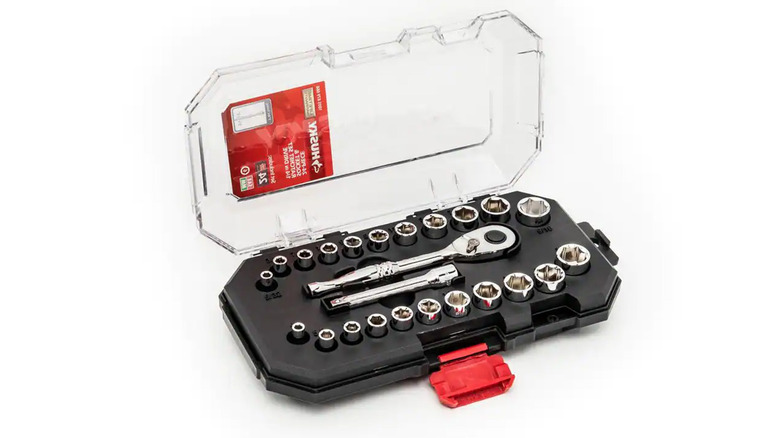
A solid ratchet set is useful on most job sites, regardless of what type it is. This is especially true in industrial and commercial work, where socket use is much higher than in residential settings. For most electricians, it's one of those tools that you won't use all the time, but consistently enough to warrant having one, while industrial electricians tend to use theirs often enough to want to purchase of a stronger and larger socket set. You'll have to decide based on your usage.
For small jobs, the recommendation we saw most often was to get something smaller, like Husky 1/4-inch Socket Set. This set comes with SAE and metric sockets, and it's all kept in a small, easy to carry case, so you don't lose anything. Lowe's sells the Kobalt 50-piece Metric and SAE Tool Set that also comes with a hard case, but also includes with a multi-bit screwdriver and an adjustable wrench as well. You'll probably want a more robust screwdriver with you, but there is an adapter to use the screwdriver with the sockets, giving you more options.
Either way, a small socket set is definitely worthy of truck space, and you'll be glad to have it when you need it.
A small parts organizer
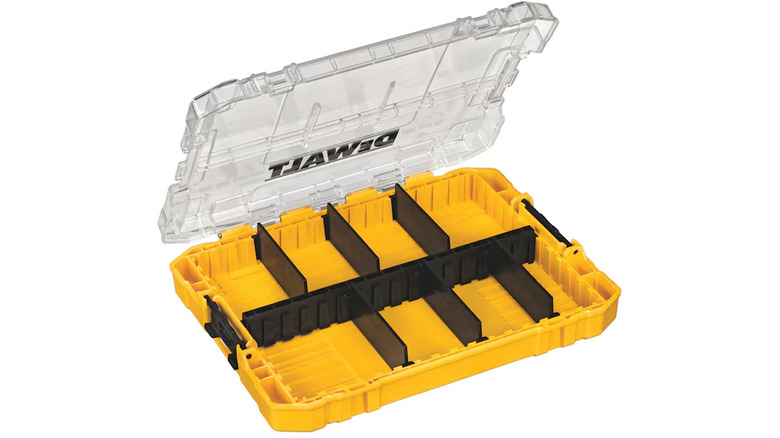
Part storage is probably something most electricians think about, but the recommendations for storage solutions were some of the most peculiar on this list. Many electricians use small boxes with removable and adjustable dividers, but a shocking number recommend small tackle boxes. The idea is to keep a larger toolbox out in the truck and then only take the parts you need into the job with you in a very small storage container, small enough to stuff into a backpack or onto a tool belt. Many electricians don't need fistfuls of parts anyway, so a smaller bin to carry around keeps the load lighter.
There appear to be many options for mini toolboxes and tackle boxes that fit these criteria. The DeWalt 10-Compartment Small Parts Organizer fits the bill pretty well and can be had for $11. DeWalt also sells a slightly larger case for about the same price that's small enough to carry under your arm. You can also find a variety of small tackle boxes, such as the Small Hard Fishing Tackle Box by Drchoer, which has 10 compartments, can be collapsed on itself like a clamshell, and that latches together and is small enough to carry in one hand. Ones that are small enough to stuff in a tool belt are admittedly a little harder to find.
A hemostat
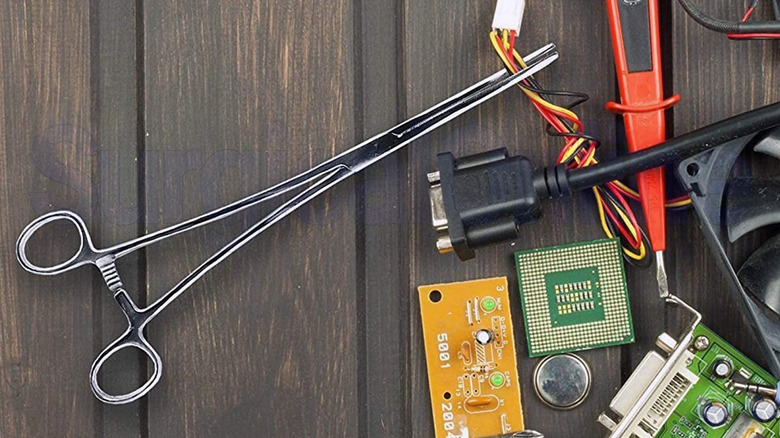
It could be argued that hemostats are some of the most underrated tools of all time in any context. They're useful for just about everything, whether it's sewing, reaching small spaces, clamping things for soldering while keeping your fingers away from it, and all sorts of other stuff. I've used them to help remove fishhooks from fish that I've caught. Any time you could use a device to grab and hold something without letting go, a hemostat is the tool to reach for. Apparently, electricians sometimes give one another a gentle ribbing about using them, but an equal number recommend keeping one on you.
Virtually any hemostat will do the trick, as they are all largely the same. For electrical or other jobsite purposes, you can get a reasonably decent pair from Gearwrench for about $25. Some tool companies make needle nose plier sets that can perform similar functions, but hemostats are unique in that they can be locked closed after clamping onto something. For electrical work, grabbing wires and holding onto them is the most common use, but fishing stuff out from behind a wall is also common practice with these. They're also used pretty frequently by instrument technicians and are sold as wiring hemostats on websites like StewMac.
Insulated Terminal Block Xeno Screwdrivers
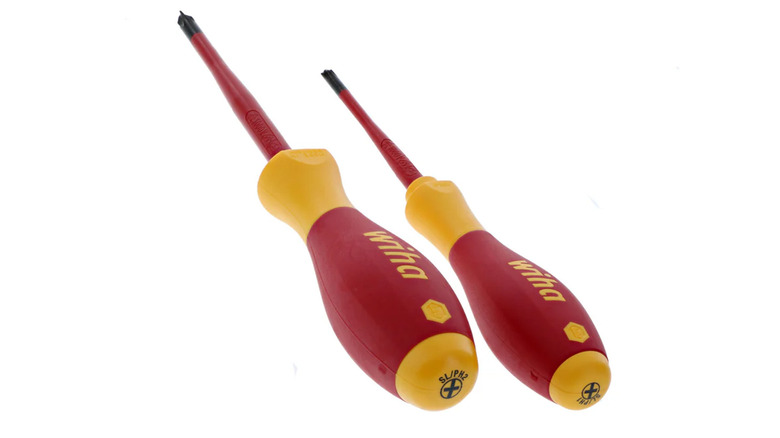
There is a good chance that a good, insulated screwdriver isn't really that underrated, since it is recommended quite a bit, but often doesn't show up on toolkit recommendation threads on places like Reddit. These screwdrivers work like any other screwdriver, with one notable exception. They are specifically made to protect the user from high voltages (that said, you should also use extra layers of insulation, like gloves). There are standards for this, like the ASTM F1505, VDE 0682/part021, DIN 7437, and EN/IEC 60900 standards, all of which are designed to rate tools for use around high voltage. It's pretty logical that an electrician would want something like this in their toolkit.
The tool most often recommended for this task is the Wiha Insulated Terminal Block Xeno Screwdriver. These are brightly colored, covered in insulation to prevent getting shocked, and are rated for all of the standards listed above. Residential electricians might want to use them, but for commercial and industrial electricians, insulated tools are extremely important, since they are at greater risk of electrocution. Wiha screwdrivers are also relatively inexpensive, at around $32, so it won't break the bank to add these to your tool belt.
Magnetic gloves (preferably fingerless)
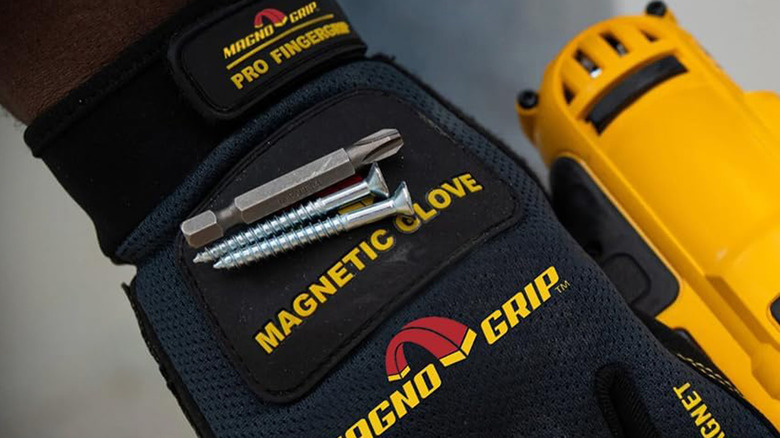
Most types of work, be in home improvement projects or professional projects, often feel like they would be much easier with a third hand. This is solvable in many different ways with clamps, holders, and various other tools. One unique option that electricians recommended a few times was a magnetic glove. These are gloves that are just like any other pair of work gloves, but have a magnet in the glove on the back of the hand that's strong enough to hold screws, bolts, bits, and other small metal objects. This gives you a place to stash things where they are easily reachable when you're in the middle of work.
There are a lot of work gloves on the market, but for this application, the MagnoGrip Fingerless Work Gloves work well. They leave your fingers bare so you can do delicate work while still having the magnetic glove portion. They are frequently unavailable, though, so another good option is the brand's magnetic wristband. The idea is similar, except it's worn on the wrist, leaving your hands entirely uncovered. Choose the one you like most and are most comfortable with, and you'll have something to hold your tools for you while you work.
A deburring tool
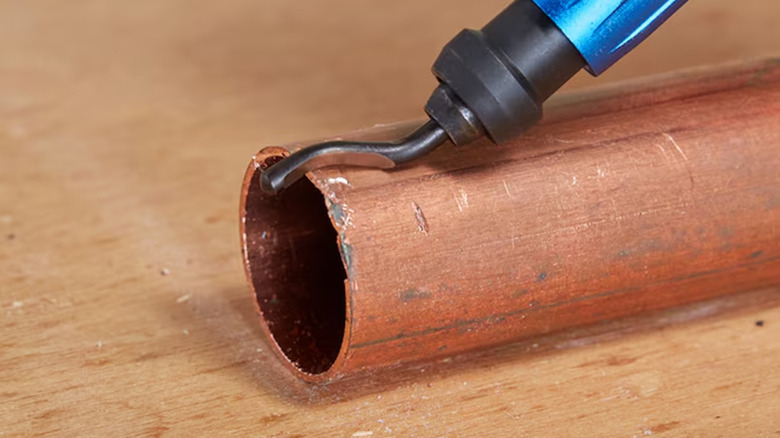
Not every tool is going to make a major difference, but some are worth having on the tool belt anyway. Enter the deburring tool. This little guy probably won't make or break an electrician's tool kit, but enough electricians recommend it that it's worthy of a mention. This is usually a plumber's tool that is commonly used to clean up rough edges caused by cutting various types of material, like metal and plastic. Usually, imperfections in the cut create burrs, and burrs can cut you or cause other damage if not properly dealt with. Deburring tools fix that problem.
Electricians often use electrical conduit, which can be plastic or metal, and so a deburring tool would operate the same way as it does in any other profession. Home Depot's Husky sells a deburring tool for under $10 and Lowe's Kobalt has one for just over $10. There aren't a lot of variances in deburring tools, since they all do the same thing in about the same way. Thus, you can choose whichever one you want. Since they're so small, they won't take up a lot of space on your tool belt. It's definitely recommended for electricians who deal with a lot of electrical conduits.
Alligator clip test leads
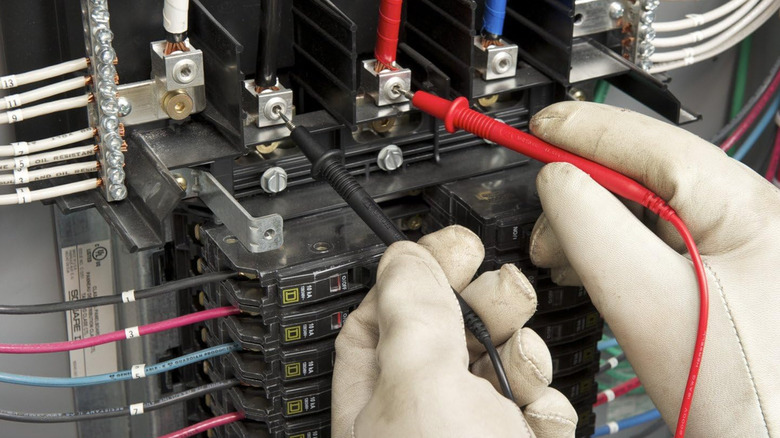
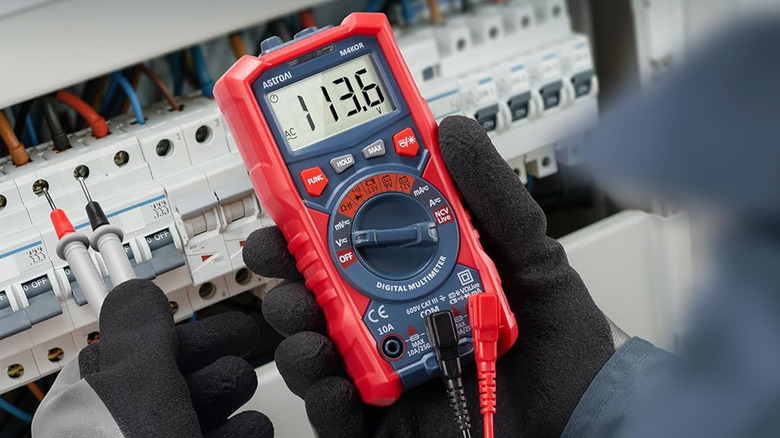
It's no secret that electricians use multimeters all the time, regardless of the type of work they do. These little devices are super useful in detecting electrical current, with multiple measurements to choose from. I own one for the rare occasion I work on electrical stuff in my house, and I can't imagine doing this type of work at all without one. There are some great ones that you can buy, but there are also some accessories you can get for them that make your life a little easier, a popular one being alligator clips.
These attach to the end of your multimeter and let you stick the leads to the thing you're measuring, so your hands are free to operate the device or do whatever else. These are sold as separate leads or as devices that you connect to the existing leads. The attachable ones are recommended more often, since you can stash them on your tool belt when you don't need them, and they don't take up a lot of space.
Vampliers
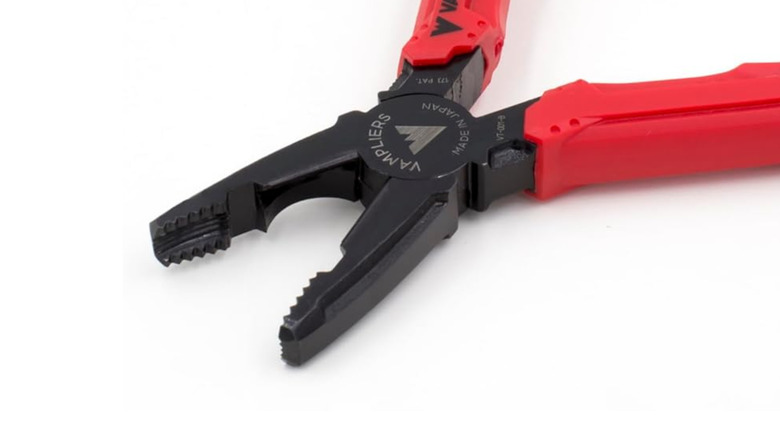
Vampliers are some of the coolest pliers ever made. They operate as a normal pair of pliers most of the time, with horizontal teeth to grab onto things like you'd typically see in pliers. However, these also have vertical teeth that are made to grab onto stripped screws. The teeth bite into the screw, allowing the operator to turn it even after a screwdriver fails. Any profession that deals with screws could probably use a pair of these, and electricians are no different. Some electricians use them to also grip wire.
You can buy a pair of Vampliers on Amazon for a little under $40, and people tend to like them when using them for their intended use case. They aren't all encompassing, so this would likely be a side tool in case your normal pair of pliers don't work. While they have been gaining traction in recent years, most electricians still swear by the classics, like Klein Linesman pliers or a solid pair of Knipex pliers, since they're more suited for electrical work specifically. So, some electricians aren't terribly fond of the Vampliers, even though they do work for their intended purpose. If you don't mind spending $40 on a good, albeit secondary pair of pliers that'll help you deal with a stripped screw, then these are a solid purchase.
Battery-powered nail gun
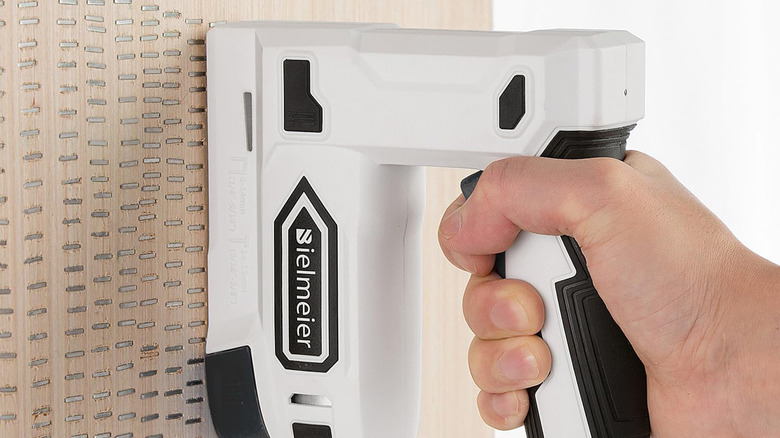
Running wire can be a chore, especially if you have to run a lot of it. Stapling wire to framing is a common practice, and that means having to use a lot of staples to run a lot of cable. Thus, it makes sense that many electricians recommend bringing along a staple gun of some sort if your company doesn't provide one. In particular, something that is battery powered that can do the lion's share of the work. There are pros and cons when it comes to battery-powered staple guns versus regular ones, but in general, electric staple guns are superior for jobs where you have to use a ton of staples.
Staple guns are sold in all big box stores, from Home Depot to Harbor Freight, so you have a lot of options here. The Bielmeier Electric Staple Gun is a good, cheap candidate. It's a lithium-powered staple gun that charges over USB, and it can do staples as well as nails. It's also relatively inexpensive, being sold for under $30. If you want something a little more robust, major brands also sell cordless staplers, including DeWalt's cordless cable staplers and Ryobi's Cordless Compression Drive. Those are a little more expensive, but are also more powerful, which will probably be helpful at the jobsite.
How we chose these tools
The first thing we had to do was put together a list of tools that aren't constantly being recommended to electricians. These people work with electricity, so things like a circuit tester or a multimeter are functionally required for the job, which means they're not underrated at all. From there, we had to find recommendations for tools that weren't too niche and weren't being over-hyped by the person posting this.
We also made sure these tools were recommended by honest to goodness electricians. This involved quite a bit of sleuthing, since people can pretend to be whatever they want on the internet. Not every tool above is severely underrated, but not everyone carries them, and more people probably should, in one way or another.